What's in Nutmeg Oil? The Compounds Behind the Spice
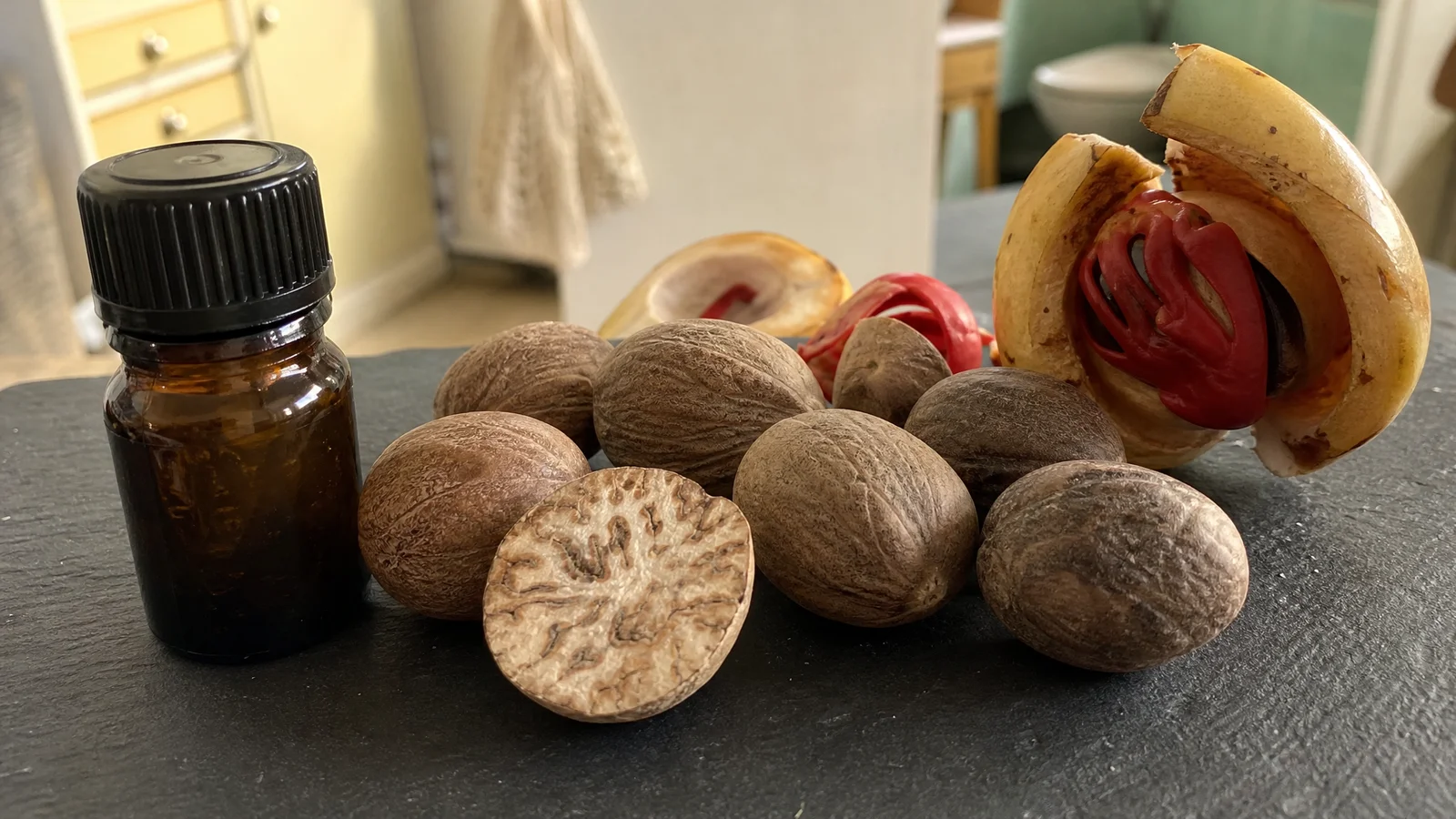
Open a bottle of nutmeg oil and the first thing you notice is how much brighter it smells than the jar of ground nutmeg in your kitchen. There is a fresh, almost piney lift on top, and the familiar warm spice underneath. That is chemistry at work, and it is more fun to understand than you might expect.
Nutmeg Essential Oil
Our own Nutmeg Essential Oil, in sizes from 0.5 oz to bulk.
From $10.99
Shop Now →Try it with your nose
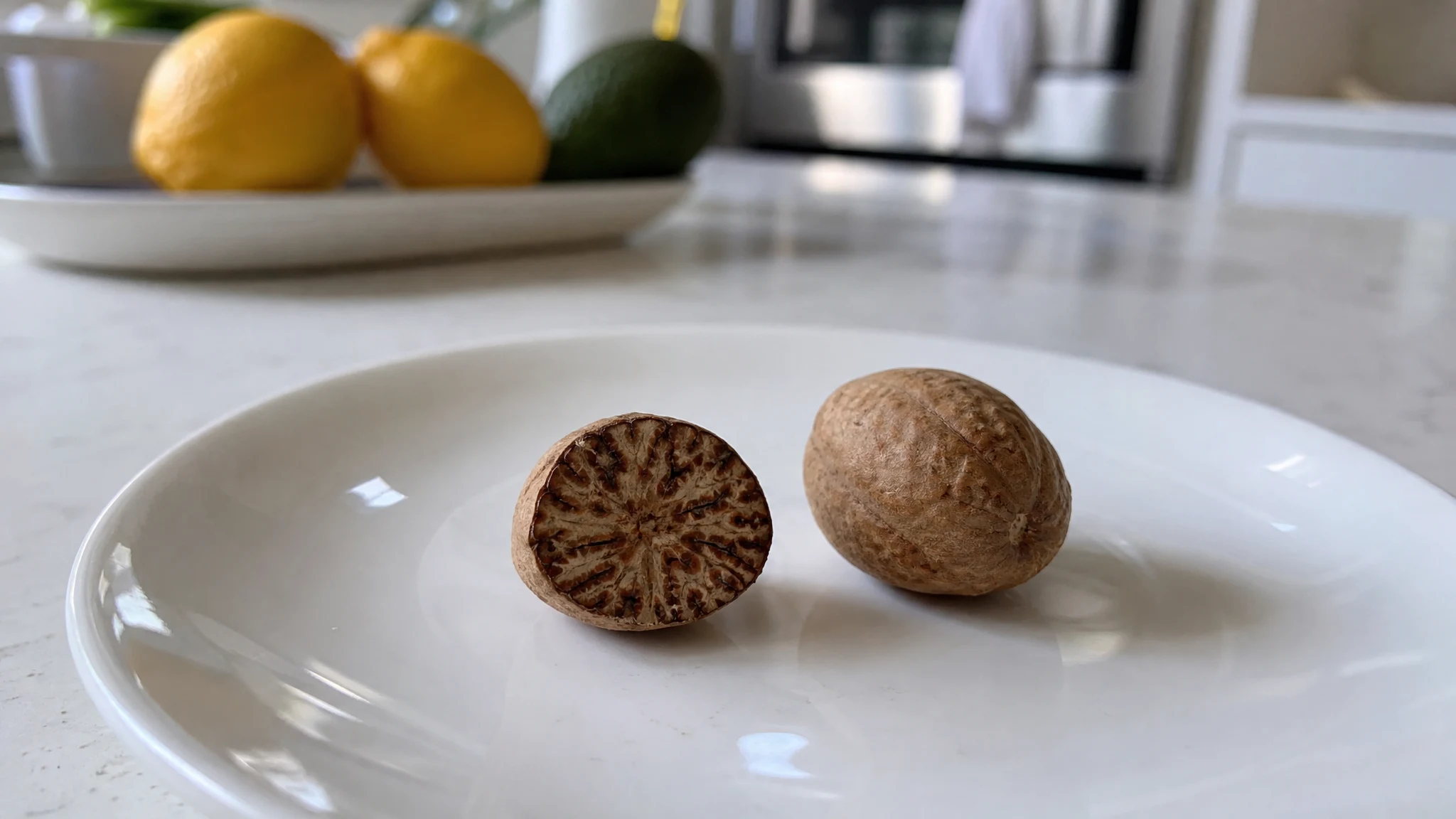
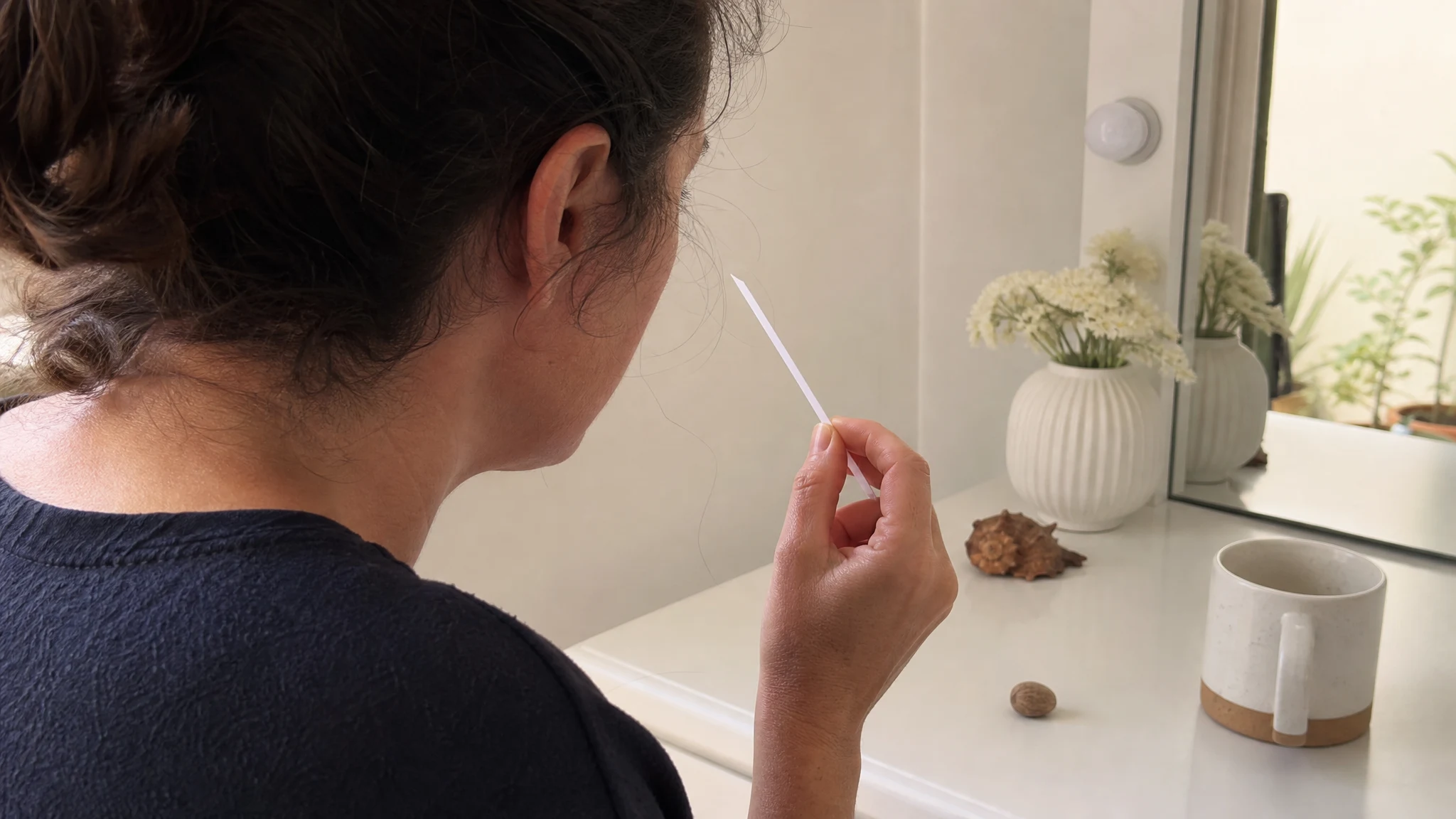
The easiest way to understand all this is to smell it. Grate a little nutmeg onto a plate, put a drop of the oil on a paper blotter, and move between the two. Notice the fresh, piney lift at the start, then the warmer, rounder spice a few minutes later. You will not be able to name a single compound, and that is fine: what you are noticing is the whole oil, with all its parts working together.
A lot of lift, a little depth
When the European Food Safety Authority described nutmeg oil, it assessed seven batches of steam-distilled Indonesian oil and named seven compounds as the backbone. Together they make up about 79% of the oil. Three are terpenes you may know by name from other plants: sabinene and the two pinenes, each making up roughly a fifth or less of the oil. Limonene, 4-terpinenol and gamma-terpinene fill in the rest. This is the bright, fresh side of nutmeg oil, and it is the reason we describe our own as having a fresher, brighter lift than the kitchen spice.
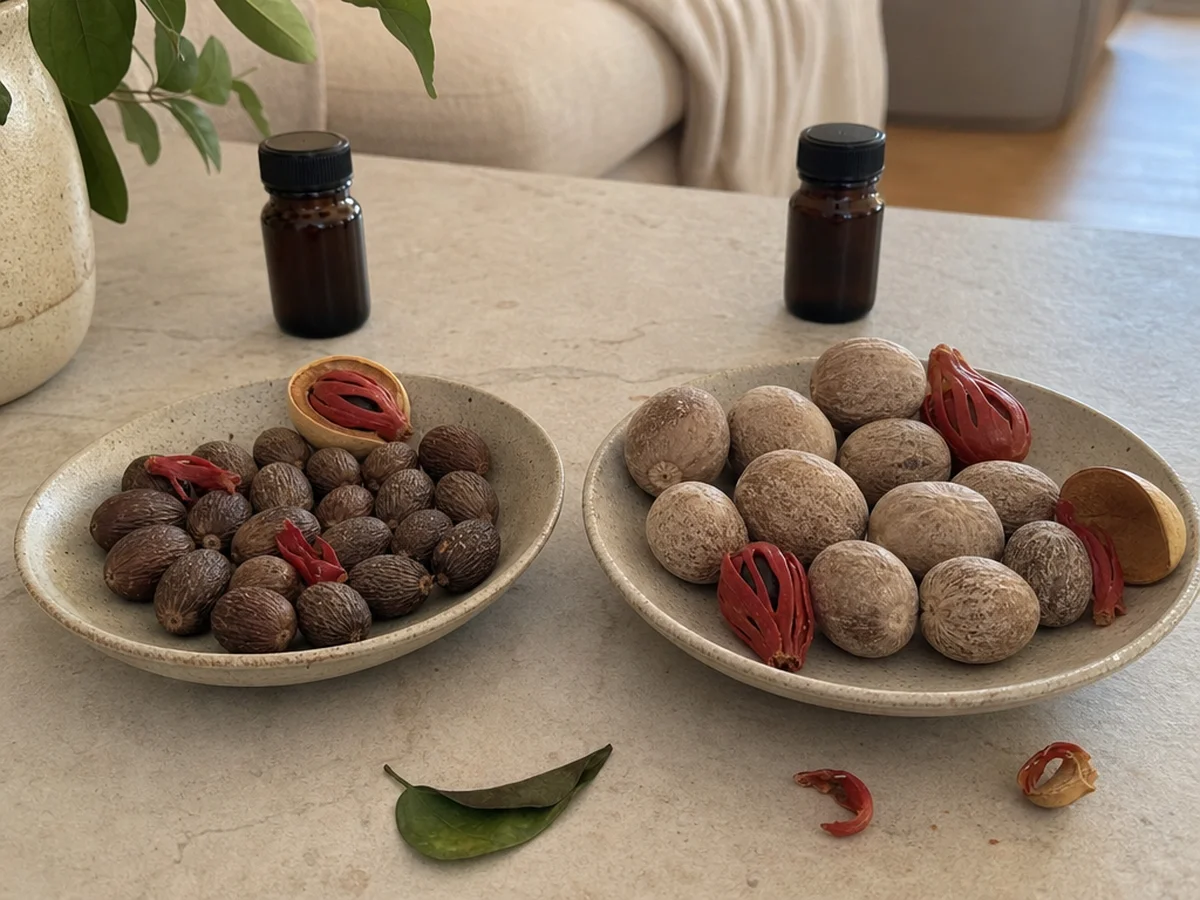
The warm, peppery depth comes from smaller players, and myristicin is the best known. It is the one compound in the spec group that is not a terpene, and it is the marker EFSA used for the oil. We would not pin a smell on any single compound, because the sources we have do not connect individual percentages to perception. The whole oil has been described by one fragrance supplier as spicy, rising, hot, peppery and woody, which matches what your nose tells you.
Why the smell is hard to pin down
Ask five people to describe nutmeg oil and you will probably get five slightly different answers: piney, peppery, sweet, woody, spicy. That is normal for an oil made of many parts. Our advice is to smell it beside something you know, like the grated spice or a slice of orange peel, and let the comparison do the describing for you.
Why one bottle may not match another
Nutmeg oil is made from the seed, and the seed changes with where and how it grows. A 2022 review gathered single samples from around the world and the spread is striking. Sabinene, the leading terpene, came in at about 21% in a West Java seed oil and about 43% in a Sri Lankan kernel oil. Myristicin ranged from about 3% in that Sri Lankan sample to about 20% in an Andaman and Nicobar one. These are single samples from different studies and methods, so they show how wide the range can be, not what to expect from any particular bottle.
The method matters too. The same seven EFSA batches gave myristicin of 8.3% to 10.7% by one analytical method (GC-FID) and about 13% by another (GC-MS). EFSA considers GC-FID the more reliable for these figures. So a percentage with no method and no batch attached is hard to compare with another, and that is worth remembering the next time you see a number on a product page. Our GC-MS post walks through how to read a report.
The few compounds that set the limits
A handful of minor compounds, safrole, methyl eugenol and elemicin along with myristicin, are the ones regulators look at, and they are why the guidance on nutmeg oil is more careful than for many oils. Safrole is the one that sets practical skin limits: IFRA allows natural extracts as long as the total safrole in the finished product stays at or below 0.01%. For an oil with about 2% safrole, which is the average EFSA reported, that works out to roughly 0.5% oil in the product. That is our arithmetic, and the Tisserand Institute's nutmeg chart gives 0.8% for adults with East Indian oil. This is why we suggest the low end of our usual 0.5% to 2% range for skin use and why we do not call 2% safe.
Why we like knowing what is behind a smell
We enjoy the chemistry because it makes better questions possible. You do not need to memorise percentages. What helps is remembering that a number only means something with a batch and a method attached to it. Next time you meet a nutmeg oil with a tidy-looking table of figures, ask which batch it describes and how it was measured, and the table becomes much easier to read.
What our certificate shows
The Certificate of Analysis we have for one batch of our nutmeg oil lists density (0.887), refractive index (1.478) and optical rotation (+11.80 degrees), each within the range printed beside it. Those fall inside the windows EFSA describes for nutmeg oil. It is a single batch and does not list individual compounds. If you need a GC-MS report or a safrole figure for the batch you plan to buy, ask us in writing through the contact page before ordering and get the answer in writing. Our nutmeg oil is in the shop, and larger sizes are listed on our bulk page.
If you enjoy the plant side of this, our nutmeg versus mace comparison covers the two parts of the same fruit, and the scent profile describes the aroma in everyday terms.
Under the warm spice there is a lively, mostly terpene character, and that is what makes a drop of nutmeg oil feel so fresh.
Nutmeg Essential Oil
Nutmeg Essential Oil from our own shop, in sizes from 0.5 oz to bulk.
From $10.99
Shop Now →Sources & Further Reading
- EFSA FEEDAP Panel, 2023. Safety and efficacy of a feed additive consisting of an essential oil from the seeds of Myristica fragrans Houtt. (nutmeg oil) for all animal species (FEFANA asbl)
- Ashokkumar K et al., 2022. Nutmeg (Myristica fragrans Houtt.) essential oil: A review on its composition, biological, and pharmacological activities. Phytotherapy Research 36(7):2839-2851
- IFRA, 2024. IFRA Standards - 51st Ammendment
- Tisserand Institute. Assessing the Safety of Essential Oils - the Nutmeg Case
- Robertet. Nutmeg oil - Robertet Groupe - Nutmeg oil ingredient for perfume