Nutmeg Oil vs Mace Oil: Seed or Aril?
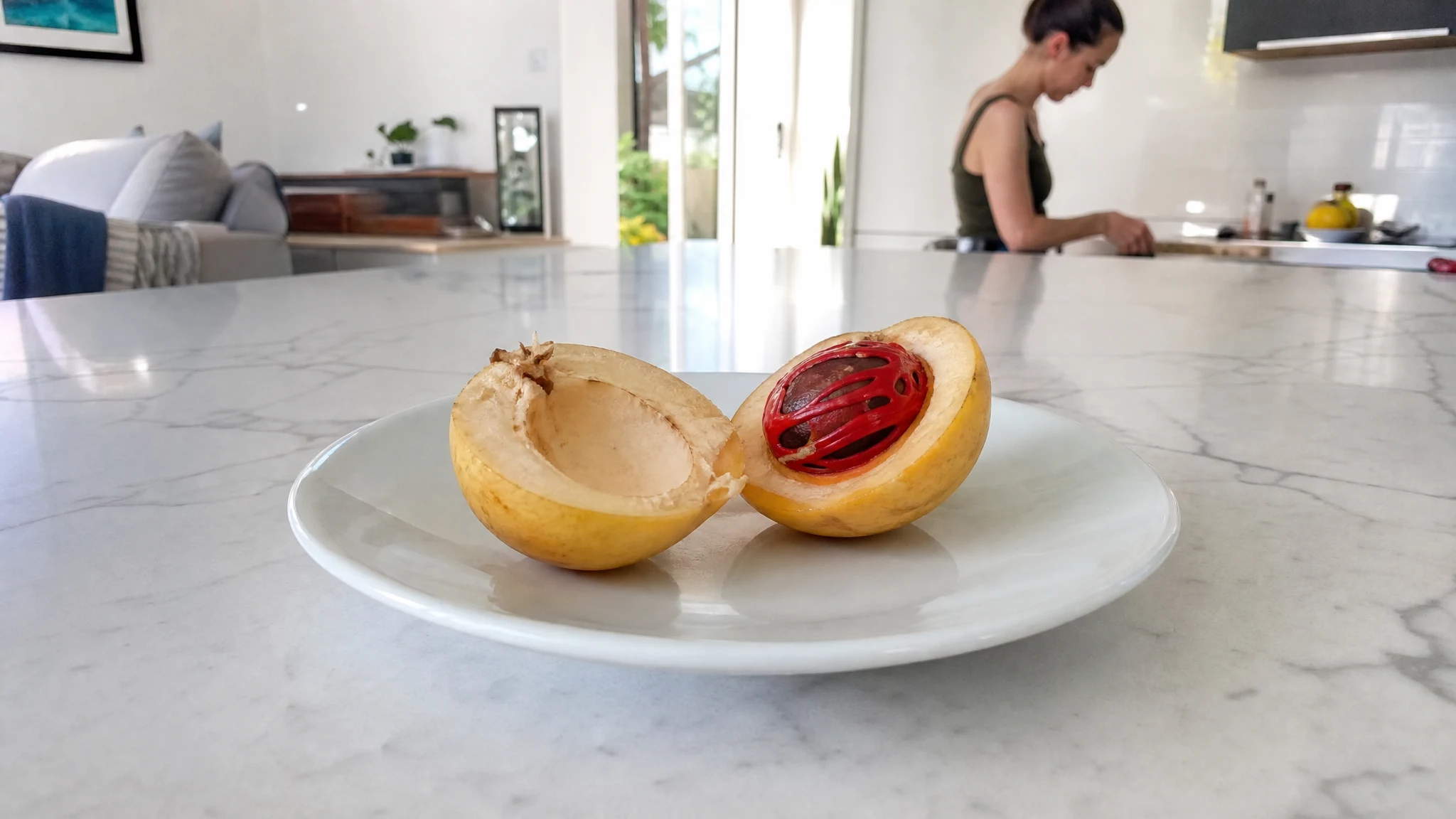
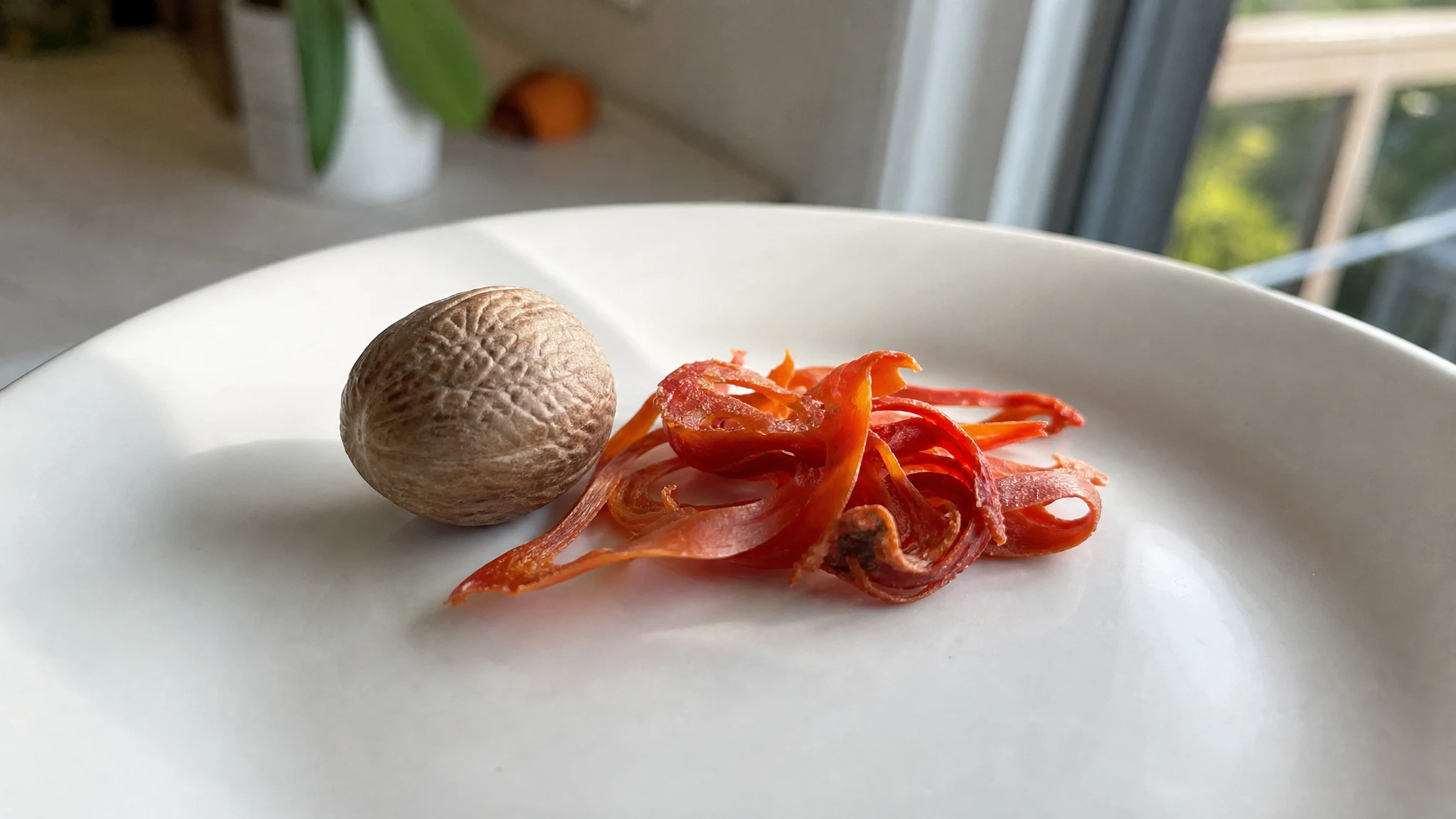
Crack open a nutmeg fruit and you will find a seed wrapped in a lacy, bright red covering. The seed is nutmeg. The covering, called the aril, is mace. Both come from Myristica fragrans, both end up in spice racks, and both can be distilled into an essential oil, but the two oils are not the same material.
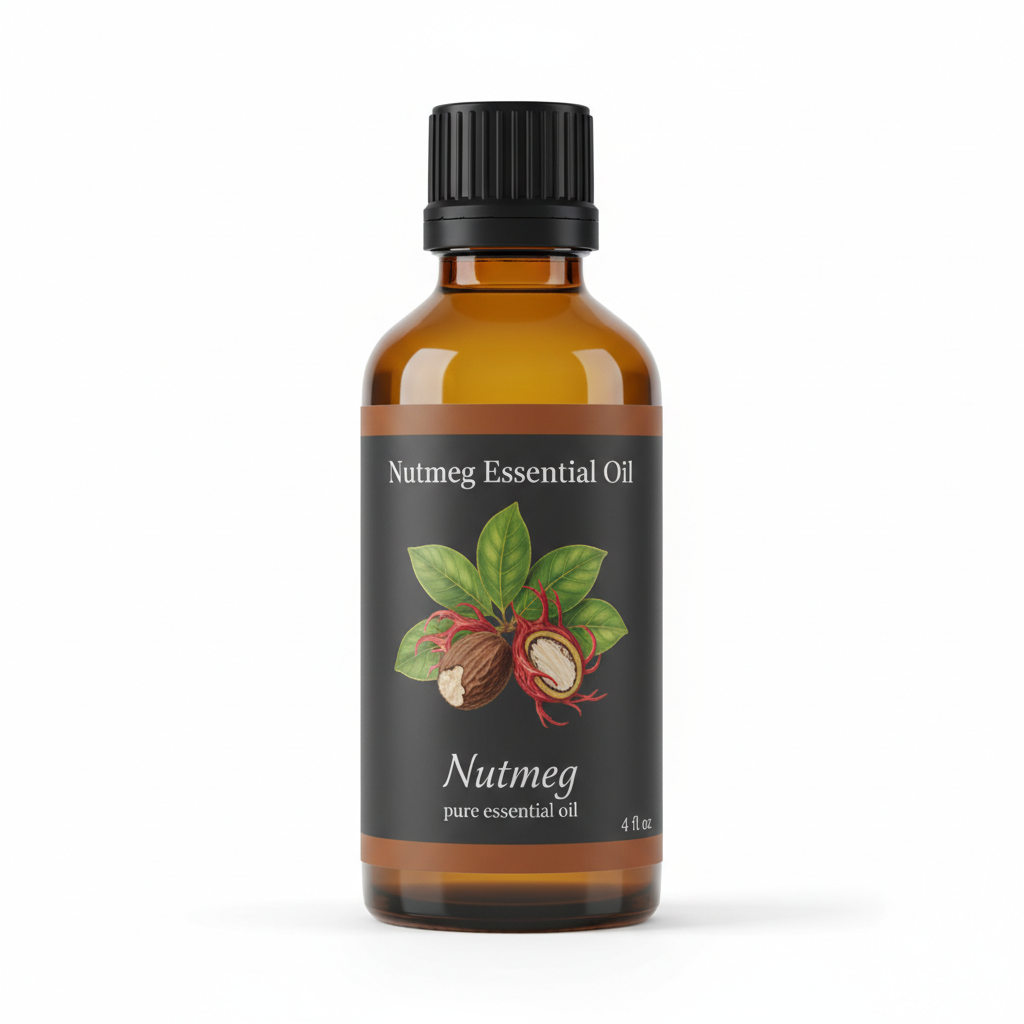
Nutmeg Essential Oil
Our own Nutmeg Essential Oil, in sizes from 0.5 oz to bulk.
From $10.99
Shop Now →What each oil starts from
The European Food Safety Authority's opinion on nutmeg oil describes the tree as the source of two spices: nutmeg, the whole or ground seed, and mace, which comes from the red aril around it. The oil in that opinion is nutmeg oil from the seed. The original application had also named mace oil, but that part was withdrawn, so the opinion does not assess mace oil at all. Regulators treat them as separate items elsewhere too: the US flavouring list in 21 CFR 182.20 has one entry for nutmeg and another for mace.
Our nutmeg oil comes from the seed side of the tree. We do not sell mace oil, mace spice or any other part of the fruit.
Picture the fruit
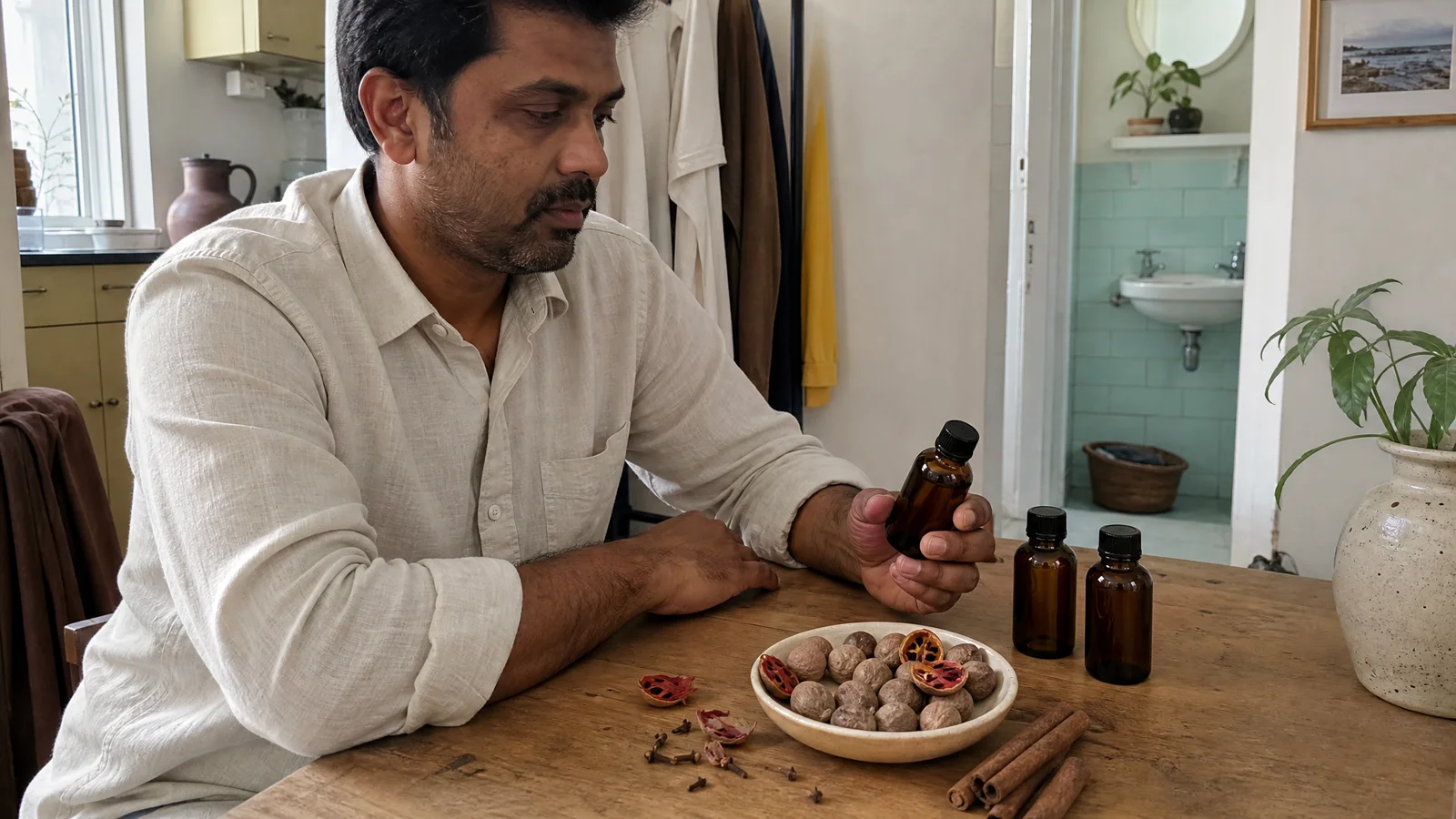
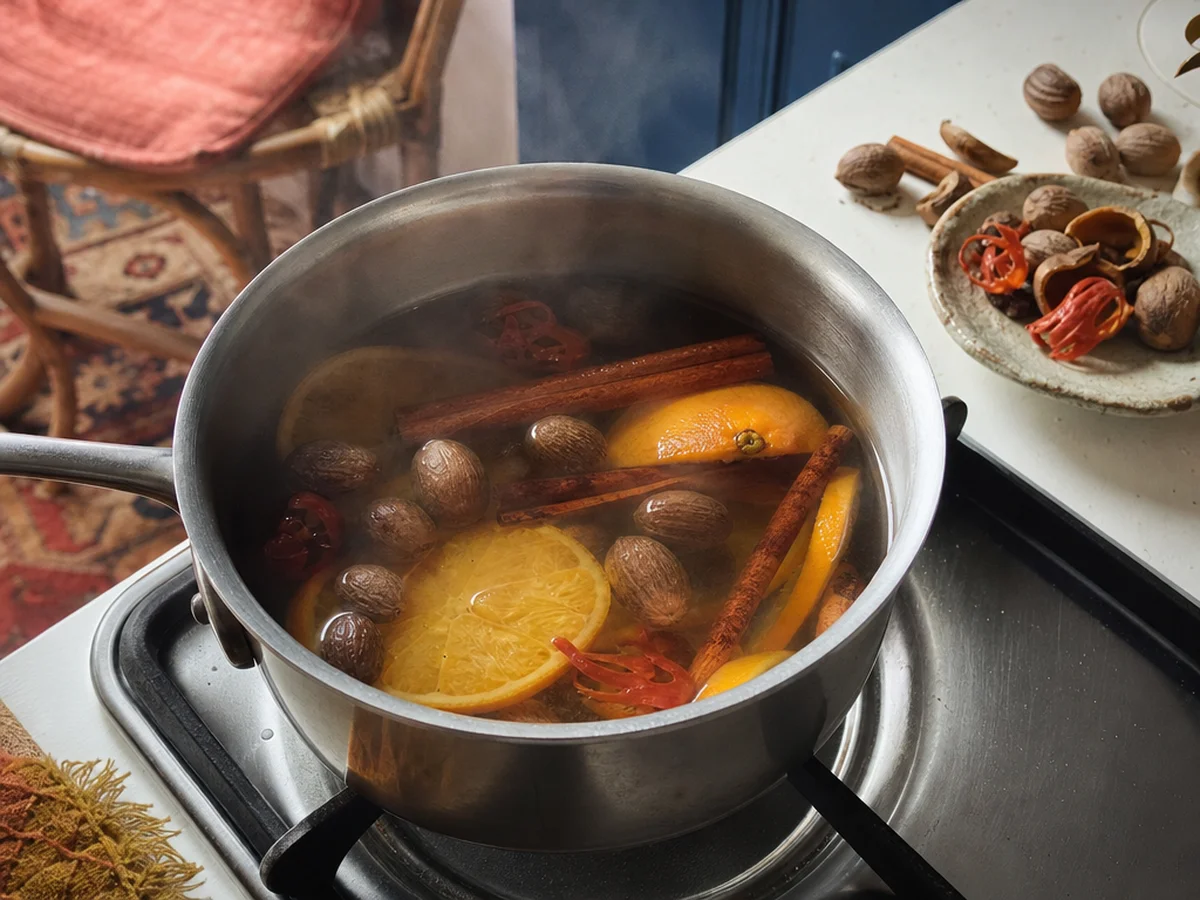
It is easier to remember the difference if you can see it. A nutmeg fruit looks a bit like a small apricot. When it ripens it splits open to show a glossy brown seed wrapped in a bright red, lacy web. The seed is nutmeg, and the web is mace. Two parts, one fruit, and two quite different spices in the jar. The same idea carries over to the oils: one fruit, two materials, and the label has to say which part was used.
How the chemistry differs
A 2022 review of nutmeg essential oil pulled together yields and compositions from many studies. Kernel (seed) oil yields were reported at 6.2% to 7.6%, and mace oil yields at 8.1% to 10.3%. Kernel oils were described as mainly sabinene, alpha-pinene, beta-pinene, limonene and myrcene. Mace oils were set apart by higher levels of 3-carene, 4-carene, safrole, beta-phellandrene and terpinen-4-ol.
Put plainly, the two oils overlap but lean in different directions. Mace oil tends to bring more of a few compounds that nutmeg oil carries only modestly, and that includes safrole. The review's own examples show how wide the range can be: one study reported safrole at 3.9% in mace oil against 0.5% in kernel oil from the same region, while a Pakistani mace oil came in at 18.2%. Those are single samples, so they show what is possible rather than what is typical. The takeaway is that two bottles labelled "mace oil" can differ from each other at least as much as they differ from nutmeg.
Why we would not swap them
Safrole matters because it is the compound that drives the usage limits for nutmeg-type oils. EFSA classifies nutmeg oil as a category 1B carcinogen for labelling because safrole is present at 0.1% or more, and IFRA's safrole standard allows natural extracts only while the safrole total in a finished product stays at or under 0.01%. Since the safrole content of mace oil can differ so much from nutmeg, a rate worked out for one cannot be borrowed for the other.
That is the heart of our advice. If a recipe calls for nutmeg oil, use nutmeg oil. If you decide to use mace oil, ask the supplier for a GC-MS report for that lot and do your own arithmetic from its safrole figure. And be careful with the common assumption that mace is the gentler of the two: nothing we read supports that, and the safrole examples above point the other way for some samples.
Keeping the names straight
A small habit saves a lot of confusion: whenever a recipe or a label says "nutmeg," ask yourself "which part?" and "which oil?" If the answer is not written down, it is perfectly reasonable to ask the seller. Good sellers like the question. It is the kind of detail that people who care about their materials enjoy talking about.
And if you are simply cooking, the spice rack already sorts this out for you: nutmeg in one jar, mace in another, each with its own flavor.
What this means when you shop
A label that says only "nutmeg oil" is incomplete, because the plant part matters. Look for the botanical name, the part used and the type, and our label-reading guide walks through what to check. For more on where the products around nutmeg diverge, our CO2 extract comparison covers a different kind of nutmeg product, and our overview of nutmeg oil places the seed oil in context.
A pleasant detail for label readers
Part of the pleasure of botanical oils is the language on the label. A botanical name, a plant part and a batch code might look dry, but they tell a story about what is inside. Once you start reading them, you will notice which sellers take the trouble to include them.
When you want that warm, sweet, spicy character in a blend, the seed oil is the one we offer, and it is a good starting point because its profile is well described.
Nutmeg Essential Oil
Nutmeg Essential Oil from our own shop, in sizes from 0.5 oz to bulk.
From $10.99
Shop Now →Sources & Further Reading
- 21 CFR § 182.20 - Essential oils, oleoresins (solvent-free), and natural extractives (including distillates).
- Safety and efficacy of a feed additive consisting of an essential oil from the seeds of Myristica fragrans Houtt. (nutmeg oil) for all animal species (FEFANA asbl).
- Nutmeg (Myristica fragrans Houtt.) essential oil: A review on its composition, biological, and pharmacological activities.
- The complete IFRA Standards: Up to and including the 51th Amendment, January 2024