Toothache and Nutmeg Oil: See Your Dentist First
Nutmeg has a long reputation in toothache folklore, so it is no surprise that people search for the oil when a tooth hurts. Our answer is short and friendly: please do not put nutmeg oil in your mouth or on a tooth. Our oil is sold for scent and craft use, our safety guidance says never to take it internally, and a toothache is a signal that a dentist can read and an oil cannot.
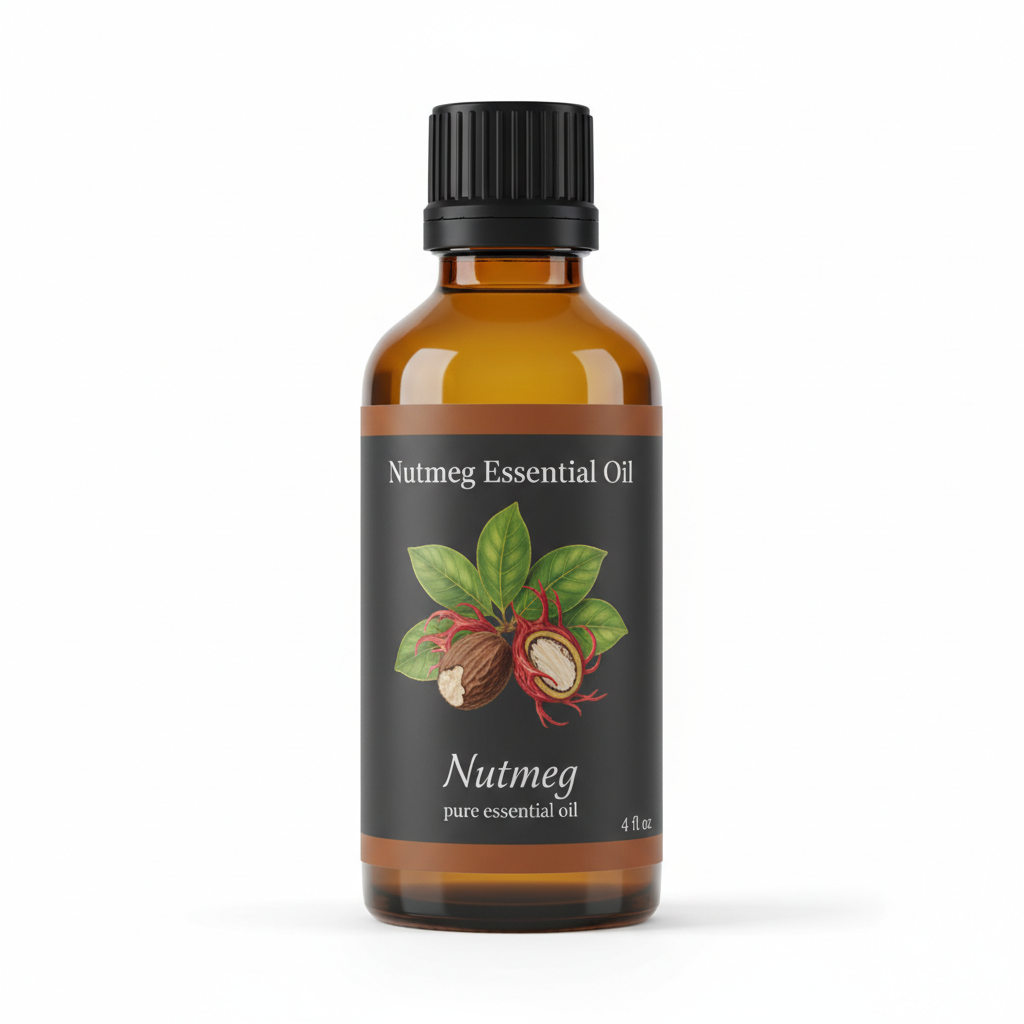
Nutmeg Essential Oil
Our own Nutmeg Essential Oil, in sizes from 0.5 oz to bulk.
From $10.99
Shop Now →What a toothache can mean
MedlinePlus lists the possible causes of a toothache as an abscessed tooth, tooth decay, tooth trauma such as wear, injury or fracture, and pain referred from elsewhere, including an earache, a sinus infection or even a heart attack. It advises seeking care for a severe toothache, one that lasts longer than a day or two, or one that comes with fever, earache or pain when opening your mouth wide, and says the dentist is the right person for most causes (Toothaches: MedlinePlus Medical Encyclopedia).
The NHS gives a similar threshold. See a dentist if the pain lasts more than two days or does not go away with painkillers, or if it comes with a high temperature, pain when biting, red gums, a bad taste or a swollen cheek or jaw. Go to A&E if swelling affects the area around the eye or the neck, or makes it difficult to breathe, swallow or speak, and do not drive yourself (Toothache - NHS).
Reasoning from that list, the practical point is simple. Everything on it needs someone to look at the tooth. Anything that merely masks the ache for a few hours can delay the examination that finds the cause.
Why nutmeg shows up in dental papers
There is real laboratory interest in nutmeg and oral bacteria, which is probably where the folklore gets new energy. A well known 2006 paper isolated a compound called macelignan from a methanol extract of nutmeg and measured its activity against Streptococcus mutans, a bacterium linked to tooth decay. In the dish, its minimum inhibitory concentration was 3.9 micrograms per milliliter, much lower than the figures the authors reported for eucalyptol, menthol, thymol and methyl salicylate in the same comparison (Anticariogenic activity of macelignan isolated from Myristica fragrans (nutmeg) against Streptococcus mutans). It is a fascinating piece of natural product chemistry. It is also a single purified compound from an extract, tested in a laboratory, and it says nothing about whether the essential oil does anything useful on a tooth or gum.
The oil's own safety notes
The same concentrated nature that makes nutmeg oil so aromatic is why it needs respect. Our own safety guidance describes it as a concentrated botanical material, to be diluted before it touches skin, kept from eyes, children and pets, and never taken internally. A neat oil has no place in the mouth. If a child or a pet has swallowed any, Poison Control in the US is on 1-800-222-1222.
What to do while you wait for the appointment
We know a toothache does not respect the clock, and the hours before you can be seen feel long. This is the moment for ordinary, sensible steps, not for reaching into the spice cupboard. Call the dental office and tell them plainly how long it has hurt and whether you have swelling or a fever, since that helps them decide how quickly to see you. Write down when it started, what makes it worse and what you have taken, because a clear note saves time in the chair.
If you are unsure what is suitable for the discomfort, a pharmacist is happy to talk it through, and that conversation costs nothing. These are small, practical things, and they put you in better shape for the visit than any home experiment would.
Folklore, and why it deserves a gentle hearing
Old household remedies often carry a grain of something real, and nutmeg's long history as a spice of the Banda Islands and the spice trade gave it plenty of time to collect stories. We enjoy those stories. What we would not do is let a story stand in for an examination, because a toothache can have causes, an abscess among them, that only a dentist can find. The lab chemistry is intriguing, the folklore is charming, and neither is a reason to put a concentrated oil where it does not belong.
Why a bottle is the wrong tool here
There is a simple reason we are firm about this. A bottle of nutmeg oil is made to be dripped, diluted and smelled, and every one of those habits points away from your mouth. Open it and you will notice how strong it is from the first breath, and that strength is the clue: it was made to scent a room, not to sit against delicate gum tissue.
What we are happy to suggest
Book the dentist, and if the pain is severe or comes with swelling, go straight to urgent care. In the meantime, a pharmacist can talk you through what is suitable to take for the discomfort. When the appointment is behind you, nutmeg can return to its proper job as a warm, spicy scent. A few drops in a diffuser fill a room with the smell of holiday baking, as our simmer pot guide describes, and our storage guide keeps the bottle fresh. For the full picture on swallowing nutmeg oil, see our ingestion article.
Nutmeg Essential Oil
Nutmeg Essential Oil from our own shop, in sizes from 0.5 oz to bulk.
From $10.99
Shop Now →