Nutmeg Spice vs Nutmeg Oil: What Sets Them Apart
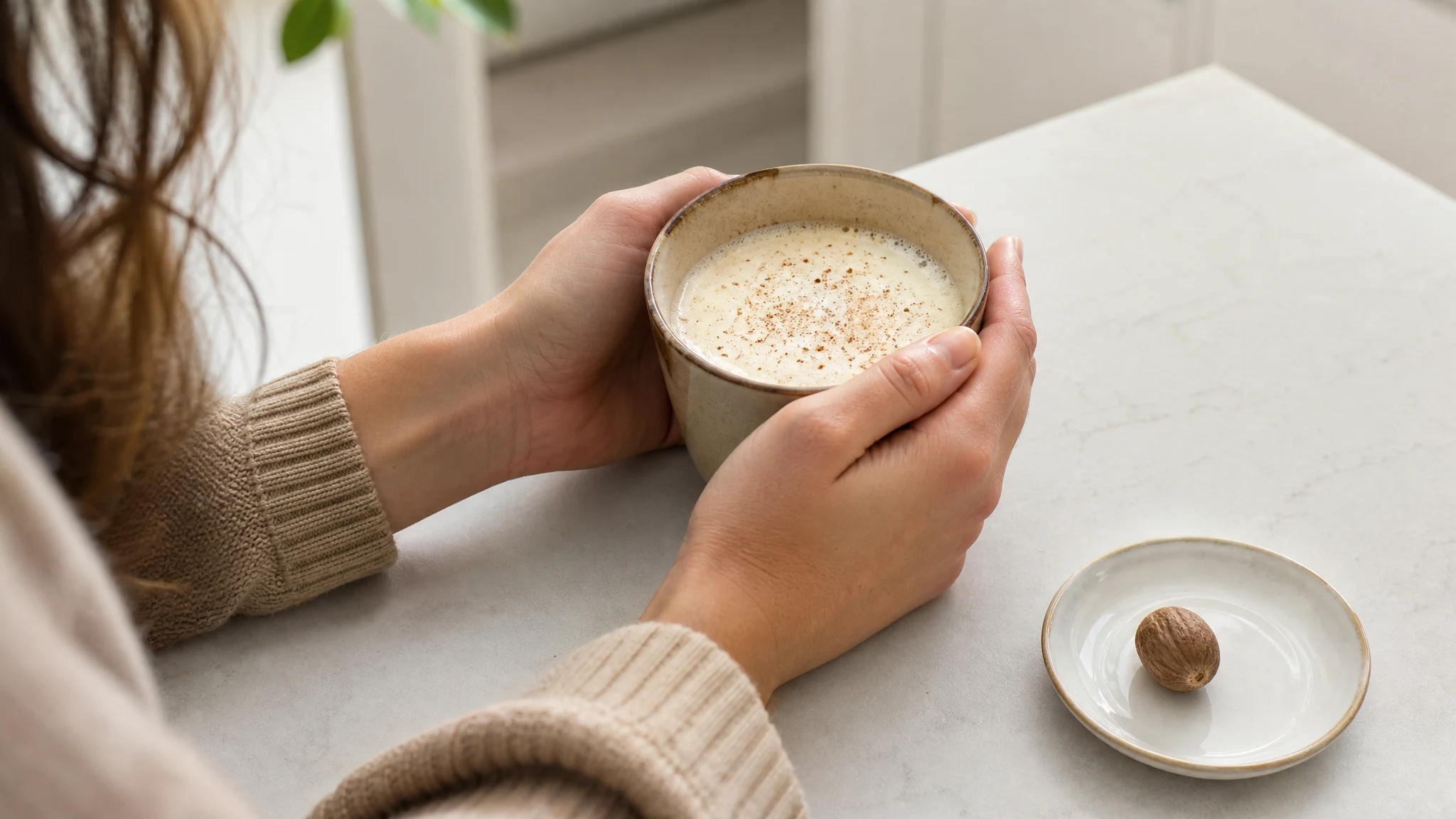
Say "nutmeg" and most people picture a jar in the spice rack, a little grated over eggnog or a cream sauce. Nutmeg essential oil comes from the same seed, and it smells wonderful, but it is a different material with a different job. Keeping the two apart is the most useful thing we can tell anyone who loves the spice and is curious about the oil.
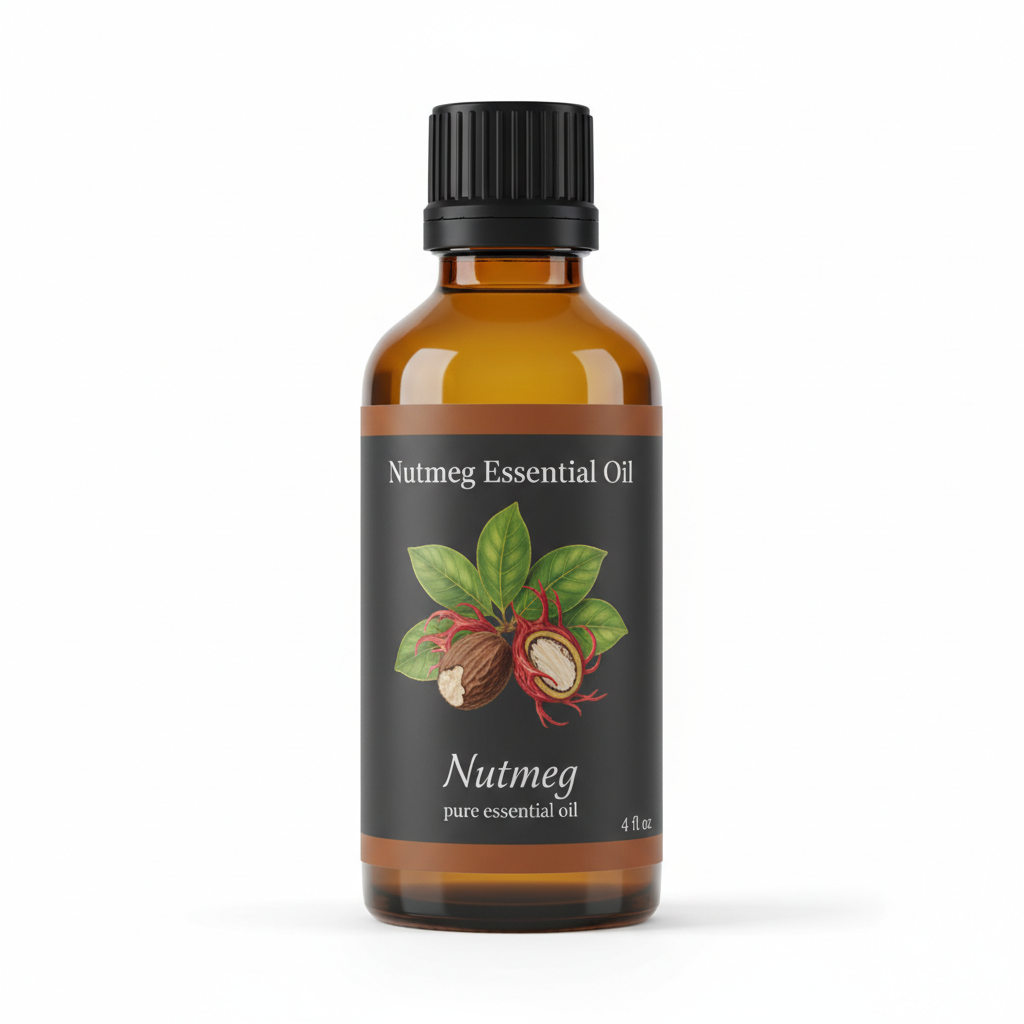
Nutmeg Essential Oil
Our own Nutmeg Essential Oil, in sizes from 0.5 oz to bulk.
From $10.99
Shop Now →One seed, two kinds of oil
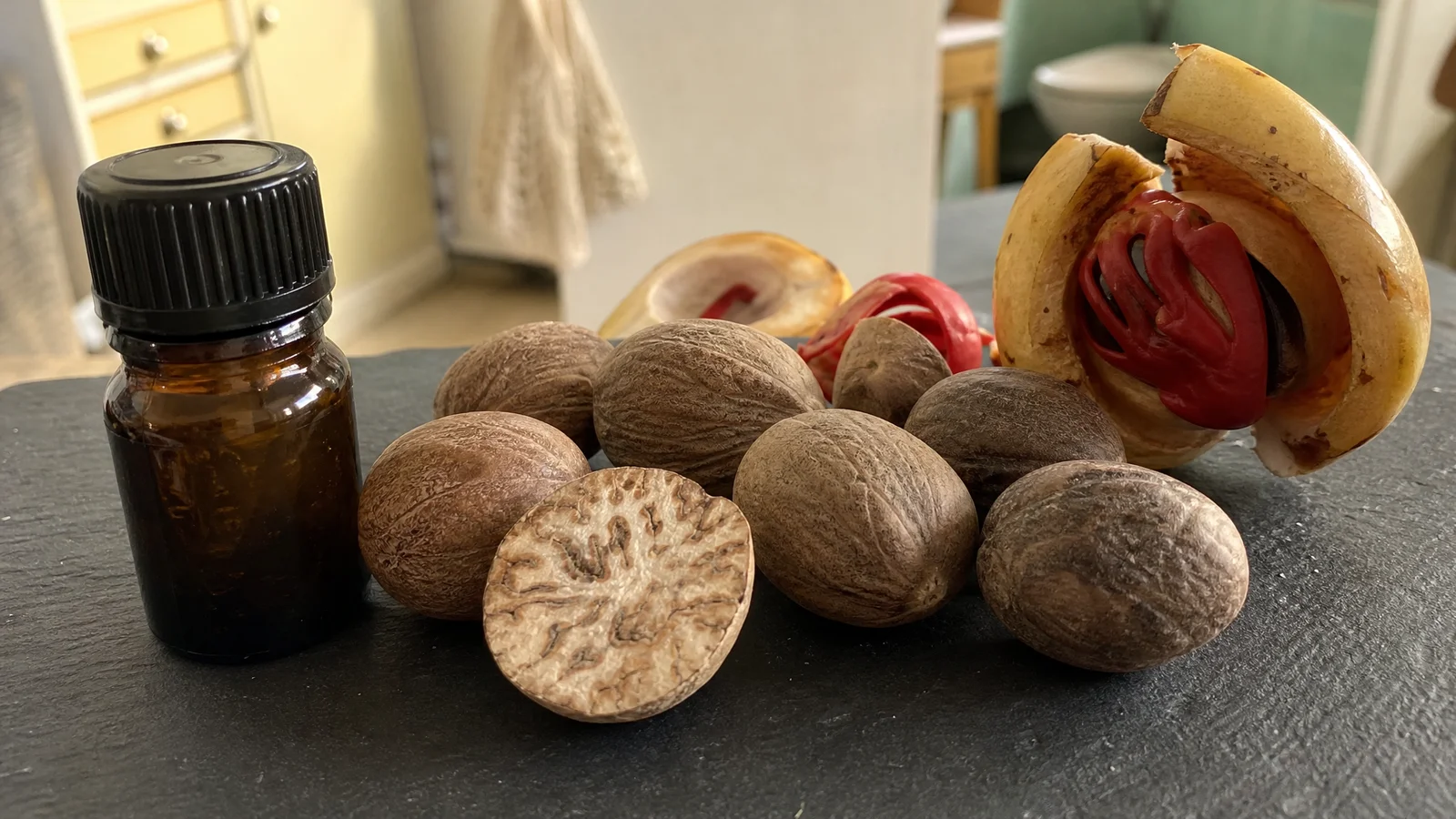
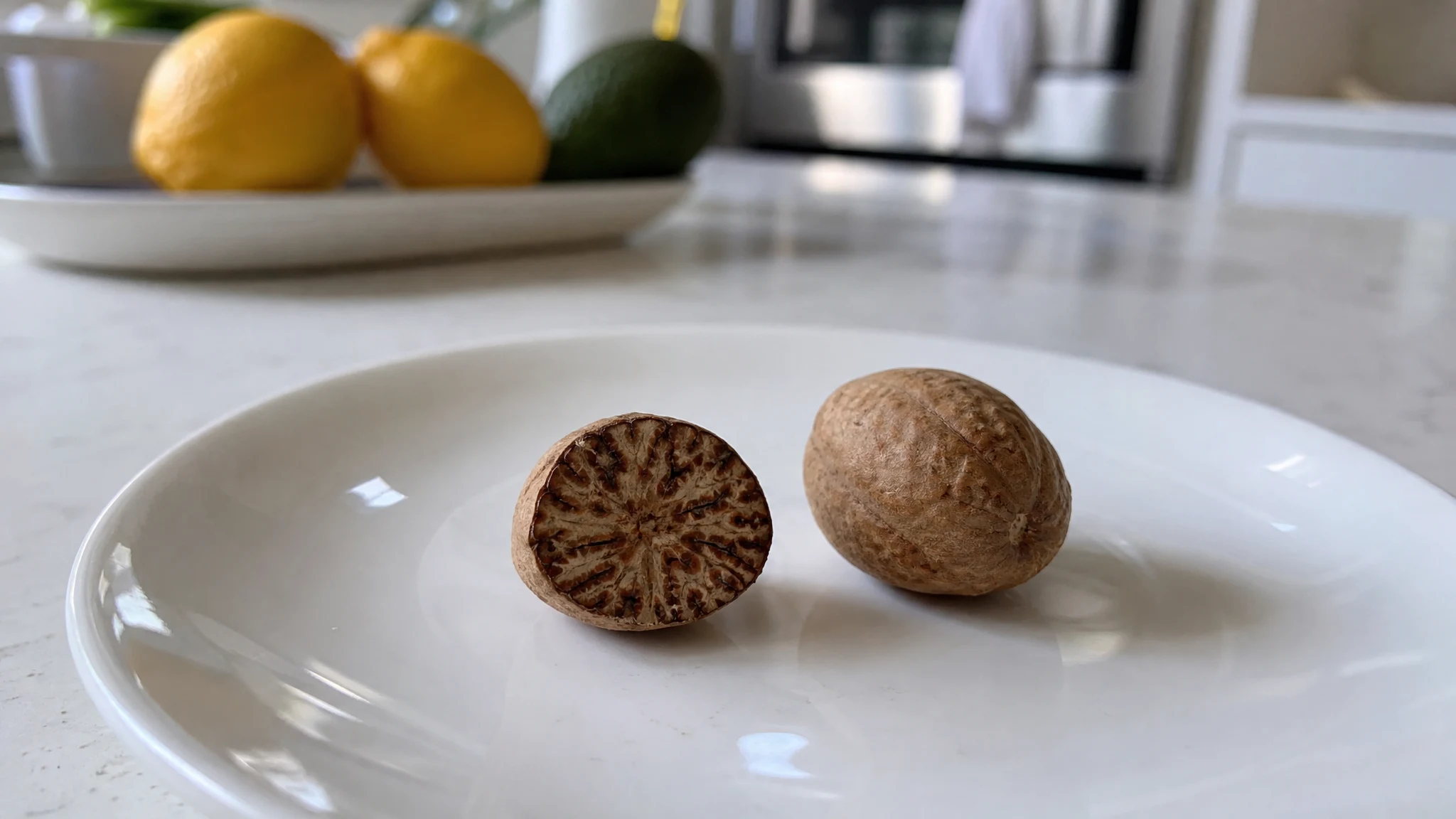
A nutmeg seed holds two oily fractions. The Missouri Poison Center puts them at 20 to 40 percent fixed oil, the fatty part, and 8 to 15 percent volatile or essential oil, the fragrant part that steam distillation captures. It also notes that the volatile fraction is the part responsible for nutmeg's toxic effects when someone eats far more than a cooking pinch (NUTMEG ABUSE - Missouri Poison Center). Put plainly, the essential oil is the concentrated, aromatic essence of the spice. A grating of nutmeg on a latte delivers a trace of it, spread through food. A bottle of the oil delivers all of it at once.
That is why the oil and the spice do not trade places. The FDA does list nutmeg among the essential oils, oleoresins and natural extractives that are generally recognized as safe for their intended use as food flavorings (21 CFR 182.20 - Essential oils, oleoresins (solvent-free), and natural extractives (including distillates)), but that is a rule about licensed food flavoring. Our oil is sold as an external aroma and craft oil and is not for internal use, so we never suggest adding it to food, tea or water. Our guide to why nutmeg oil stays out of the kitchen goes through that question in detail.
Open the jar, then open the bottle
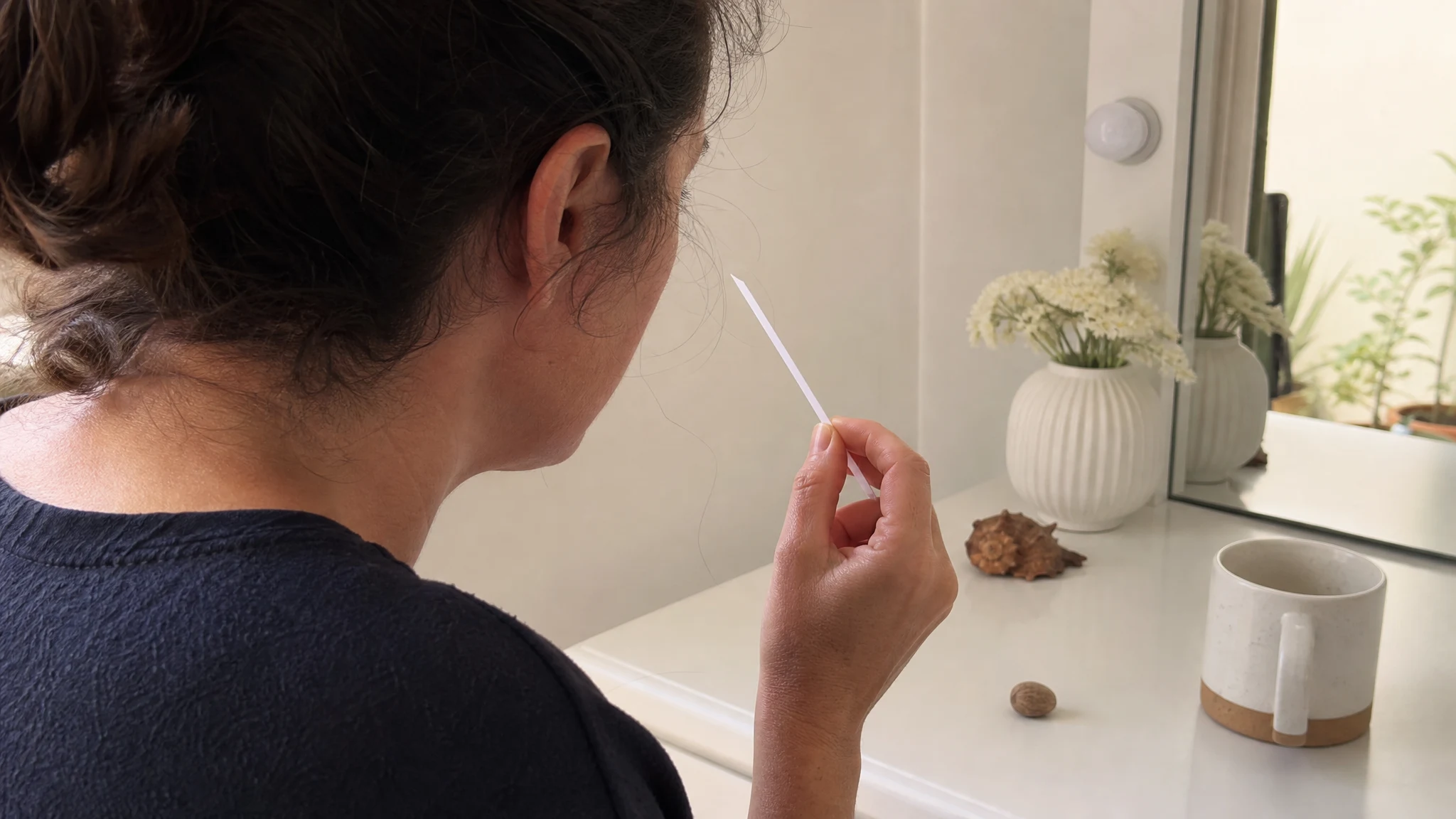
The quickest way to understand the difference is to smell both. Open a jar of ground nutmeg and you get a soft, familiar, slightly dusty warmth. Now open the bottle of oil, from a little distance, and you will notice how much more intense and lifted the smell is. It is brighter, a bit sharper at the edges, and it arrives all at once. Nobody would confuse the two after a single sniff.
That intensity is why the oil is measured in drops, handled with a clean dropper and capped right away, while the spice is measured in pinches. They share a seed and a name, and nearly everything else about handling them is different.
What the research on "nutmeg and the gut" really covers
Nutmeg has a long place in traditional medicine, and you will find plenty of pages that connect it to digestion. When you follow those claims back to their sources, they lead to the spice and to preparations of it, usually in animals, and almost never to the essential oil.
A 2002 study in rodents tested a crude nutmeg suspension and two extracts. The suspension and a petroleum ether extract, but not the water extract, reduced loose stools in animal models, and the petroleum ether extract blocked contractions in isolated guinea pig intestine (Pharmacological studies on Myristica fragrans--antidiarrheal, hypnotic, analgesic and hemodynamic (blood pressure) parameters). A 2025 mouse study gave a water extract by mouth for two weeks before a stomach insult and reported lower inflammatory markers (Myristica fragrans water extract modulates multiple biological processes to pre-protect anhydrous ethanol-induced gastric ulcers via Akt/JNK/Nrf2 pathway activation). Those are extracts in mice and rats, not oil, and not people.
The one oil study that touches the subject is a Japanese mouse experiment in which breathing nutmeg oil vapor, or two of its aroma compounds, increased appetite. Appetite is not digestion, and mice are not people, but it is a charming reminder that smell and eating are tightly linked (Appetite-enhancing effects of nutmeg oil and structure-activity relationship of habituation to phenylpropanoids). It also makes sense of something every cook knows: a warm spice smell can make a kitchen feel hungry before anything is on the stove.
A quick guide to which one you need
- Baking, eggnog, sauces: the spice, from the grocery, grated fresh if you can.
- A warm room scent for autumn: the oil, a few drops at a time in a diffuser.
- Candles, soaps and perfume projects: the oil, measured by weight.
- Anything you plan to eat or drink: the spice, never the oil.
Where the oil really shines
This is the part we enjoy. Nutmeg oil gives off a warm, sweet, spicy aroma, and our nutmeg oils are sold neat for people who want to put that scent to work: autumn diffuser blends, candle making, a natural perfumery spice accord, and handmade soaps or a diluted massage oil. For skin use we recommend diluting to 0.5% to 2% in a carrier oil and starting at the low end, with a patch test first. Our pages on nutmeg versus mace oil and CO2 extract versus essential oil show how other nutmeg materials differ, which helps when a recipe names one and you are holding another.
Respecting both
We love both materials, and we think each deserves its own place. Keep the spice in the kitchen where it tastes of home, and keep the oil on the craft shelf, labeled and capped. Good habits like that make both more enjoyable.
If your real question is about digestion, that belongs with a doctor or pharmacist, who can tell you what suits you and what interacts with your medications. If you want the spice, the grocery shop has it. And if you want a room that smells like the holidays, that is what the bottle is for.
Nutmeg Essential Oil
Nutmeg Essential Oil from our own shop, in sizes from 0.5 oz to bulk.
From $10.99
Shop Now →Sources & Further Reading
- NUTMEG ABUSE - Missouri Poison Center
- 21 CFR 182.20 - Essential oils, oleoresins (solvent-free), and natural extractives (including distillates)
- Pharmacological studies on Myristica fragrans--antidiarrheal, hypnotic, analgesic and hemodynamic (blood pressure) parameters
- Myristica fragrans water extract modulates multiple biological processes to pre-protect anhydrous ethanol-induced gastric ulcers via Akt/JNK/Nrf2 pathway activation
- Appetite-enhancing effects of nutmeg oil and structure-activity relationship of habituation to phenylpropanoids