Nutmeg Oil and Sleep: What the Research Says
Nutmeg and sleep go together in kitchen folklore, usually in a warm milk. It is a charming tradition and a good excuse to look at what the research says, because the answer is more cautious than the folklore. In short, the studies that mention nutmeg and sedation are about animals and extracts, and the sleepiness people associate with nutmeg shows up in poisoning notes.
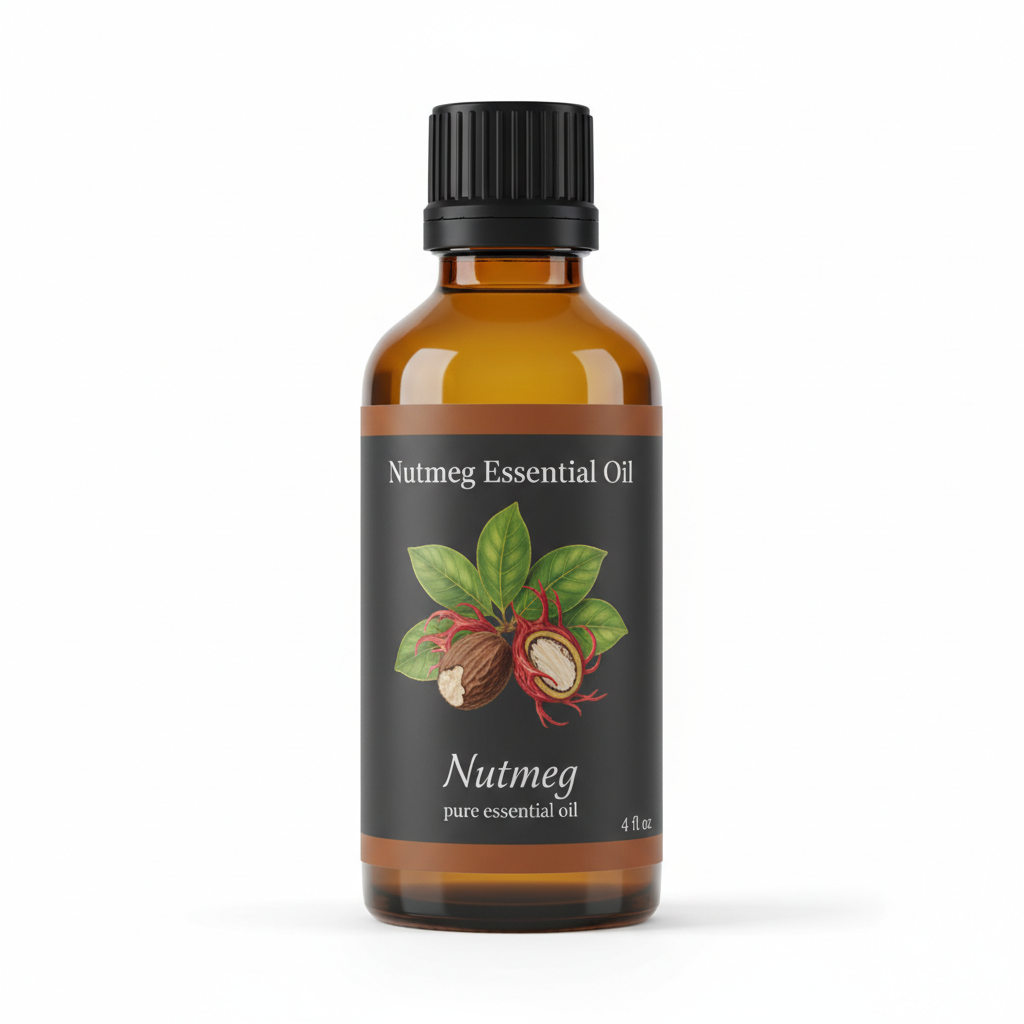
Nutmeg Essential Oil
Our own Nutmeg Essential Oil, in sizes from 0.5 oz to bulk.
From $10.99
Shop Now →A note before we begin
We say this as people who like the oil: the wish for a quiet evening is a fair one, and nutmeg's cozy reputation makes the question natural. It is just that a scent that smells like bedtime is not the same as one that has been shown to do something, and the difference deserves a plain look.
What the aromatherapy and sleep reviews cover
Large reviews of scent and sleep exist, and they are worth knowing. A 2019 meta-analysis pooled 31 randomized trials of aromatherapy and reported a significant effect on sleep quality. The same authors noted that only four trials had a low risk of bias, that the studies differed greatly from one another, and that the inferences should be applied with caution (Effects of aromatherapy on sleep quality: A systematic review and meta-analysis). The summary does not single out nutmeg. A pooled number built largely from other oils, most often lavender, says nothing about this one, and scent trials are hard to blind because a participant who smells an oil knows it is not nothing.
What the nutmeg studies tested
The nutmeg-specific work is older and smaller. A 1978 paper gave whole nutmeg oil to young chickens and found that it lengthened the sleep brought on by ethanol, which is a different thing from causing sleep (Enhancement of ethanol-induced sleep by whole oil of nutmeg). A 2002 rodent study found that a petroleum ether extract lengthened sleeping time induced by two barbiturates, and described the extract's sedative property as significant (Pharmacological studies on Myristica fragrans--antidiarrheal, hypnotic, analgesic and hemodynamic (blood pressure) parameters). That is an extract in animals, prolonging drug-induced sleep.
The closest to everyday use is a 2010 mouse study in which the animals breathed nutmeg seed oil in a wheel cage. Their running fell by roughly 63 to 69 percent, and blood samples showed that the compound that built up most was myristicin, followed by safrole (Identification of compounds in the essential oil of nutmeg seeds (Myristica fragrans Houtt.) that inhibit locomotor activity in mice). Less running is not sleep, and the dose was an oil load in a small enclosed cage, not a room. What it does show is that the constituents that quiet a mouse are the same ones that make nutmeg a topic for poison centers.
Why we keep the story simple
The Missouri Poison Center lists drowsiness among the nervous system effects of eating large amounts of nutmeg, next to agitation, anxiety and hallucinations (NUTMEG ABUSE - Missouri Poison Center). So the sleepiness that is tied to nutmeg in the literature is a symptom of eating too much, and that is not a path we would ever point anyone toward. Our oil is for external use and is never to be swallowed.
There is a second reason, which is regulatory. The FDA decides whether a product is a cosmetic or a drug by its intended use, and it gives the example that saying a scent will help a consumer sleep makes an aromatherapy product a drug (Is It a Cosmetic, a Drug, or Both? (Or Is It Soap?)). We sell a cosmetic aroma oil and we describe it as one. So you will not find a bedtime routine here.
How to read the next sleep claim
If you see another page connecting a scent with sleep, a few quick questions sort most of them out. Who or what was studied: people, animals or cells? Was it the oil, a different extract, or a mixture of oils? What was actually measured, and was it sleep? And is the writer selling something? A page that answers all four clearly is rare, and asking them is a useful habit for any wellness headline.
What we are glad to talk about
We are delighted to talk about how nutmeg smells: warm, sweet and spicy, with a depth that makes a room feel settled. That is the sort of thing our diffuser and simmer pot guide covers, and our inhaler page is a gentle way to carry a scent with you. If you are having trouble sleeping, a doctor or pharmacist can help you work out why, and that conversation is worth more than any bottle.
Where nutmeg shines for us
We think of nutmeg as a cold-weather kitchen scent, something for an afternoon when you are baking, wrapping gifts or making a candle. It suits a busy, cozy room, and that is the spirit in which we like to offer it.
For a bedroom scent, diffuse sparingly and keep the oil away from children and pets. Our note on medications is worth reading if you take anything that acts on the central nervous system.
Nutmeg Essential Oil
Nutmeg Essential Oil from our own shop, in sizes from 0.5 oz to bulk.
From $10.99
Shop Now →Sources & Further Reading
- Effects of aromatherapy on sleep quality: A systematic review and meta-analysis
- Enhancement of ethanol-induced sleep by whole oil of nutmeg
- Pharmacological studies on Myristica fragrans--antidiarrheal, hypnotic, analgesic and hemodynamic (blood pressure) parameters
- Identification of compounds in the essential oil of nutmeg seeds (Myristica fragrans Houtt.) that inhibit locomotor activity in mice
- NUTMEG ABUSE - Missouri Poison Center
- Is It a Cosmetic, a Drug, or Both? (Or Is It Soap?)