Nutmeg Oil in Perfume: How Much Is Too Much?
Nutmeg is one of the great supporting spices in natural perfume. A touch of it makes an orange top feel rounder and a sandalwood base feel warmer, and it never needs to shout. That is lucky, because in a perfume nutmeg oil has a ceiling, and the ceiling comes from a compound called safrole rather than from how much of the smell you want. Here is how to work with it.
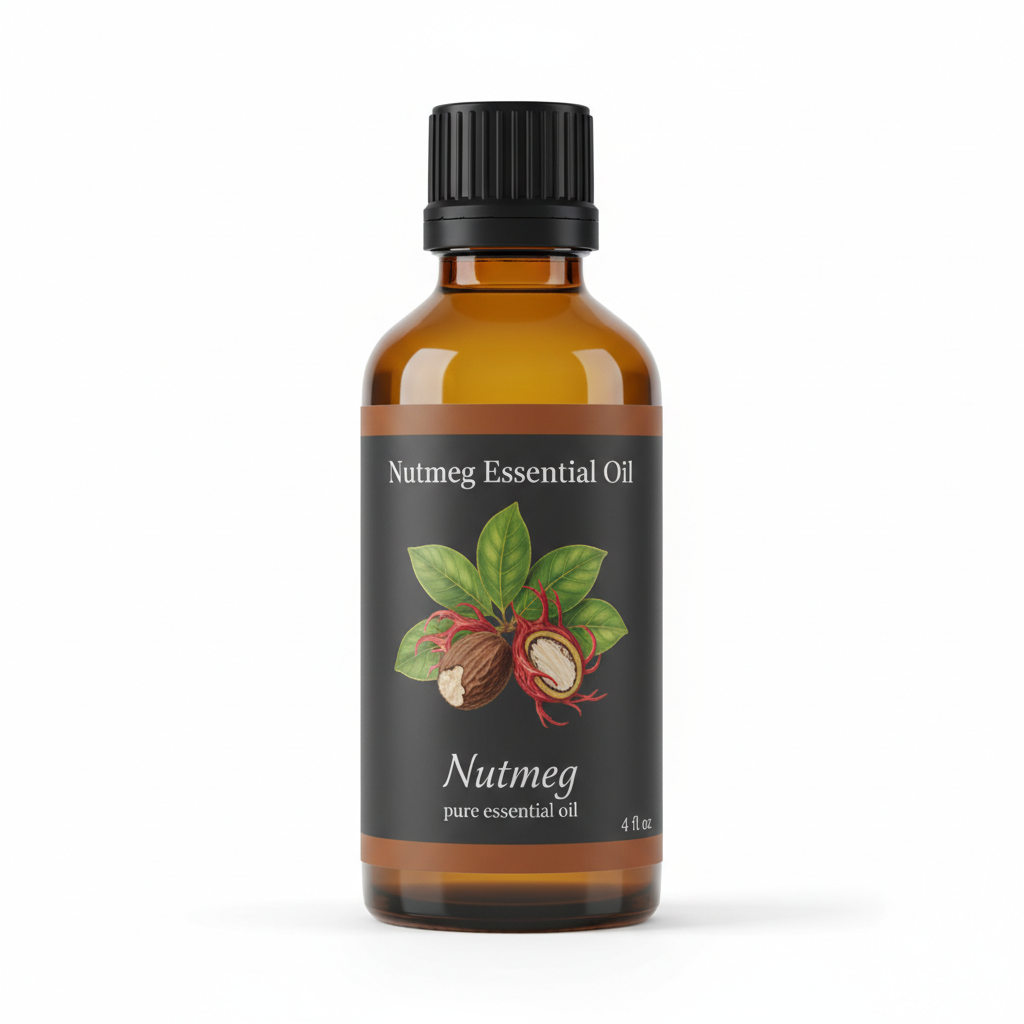
Nutmeg Essential Oil
Our own Nutmeg Essential Oil, in sizes from 0.5 oz to bulk.
From $10.99
Shop Now →Start with the ceiling
IFRA, the fragrance industry's standards body, has no standard named for nutmeg oil. Its safrole standard, though, lets natural extracts be used as long as the total safrole in the finished product does not exceed 0.01%, in every product category. The only published batch figures we know of come from EFSA, which measured seven Indonesian batches at 1.69% to 2.30% safrole, with a mean of 2.02%. Dividing 0.01 by the safrole fraction gives the highest share of oil: about 0.495% of the finished perfume at the mean, and 0.435% at the top of the range.
That is arithmetic from published documents, not a limit anyone has set for nutmeg, and it assumes an oil like EFSA's batches. The certificate of analysis we hold for one batch of our nutmeg oil lists density, refractive index and optical rotation but no safrole figure, so if you are building a formula you plan to rely on, ask us in writing through the contact page for constituent data before ordering. The methyl eugenol standard is looser here: for fine fragrance (category 4) it is 0.011%, which allows about 4.8% oil at EFSA's mean methyl eugenol of 0.23%, well above the safrole figure.
Learn the spice on its own first
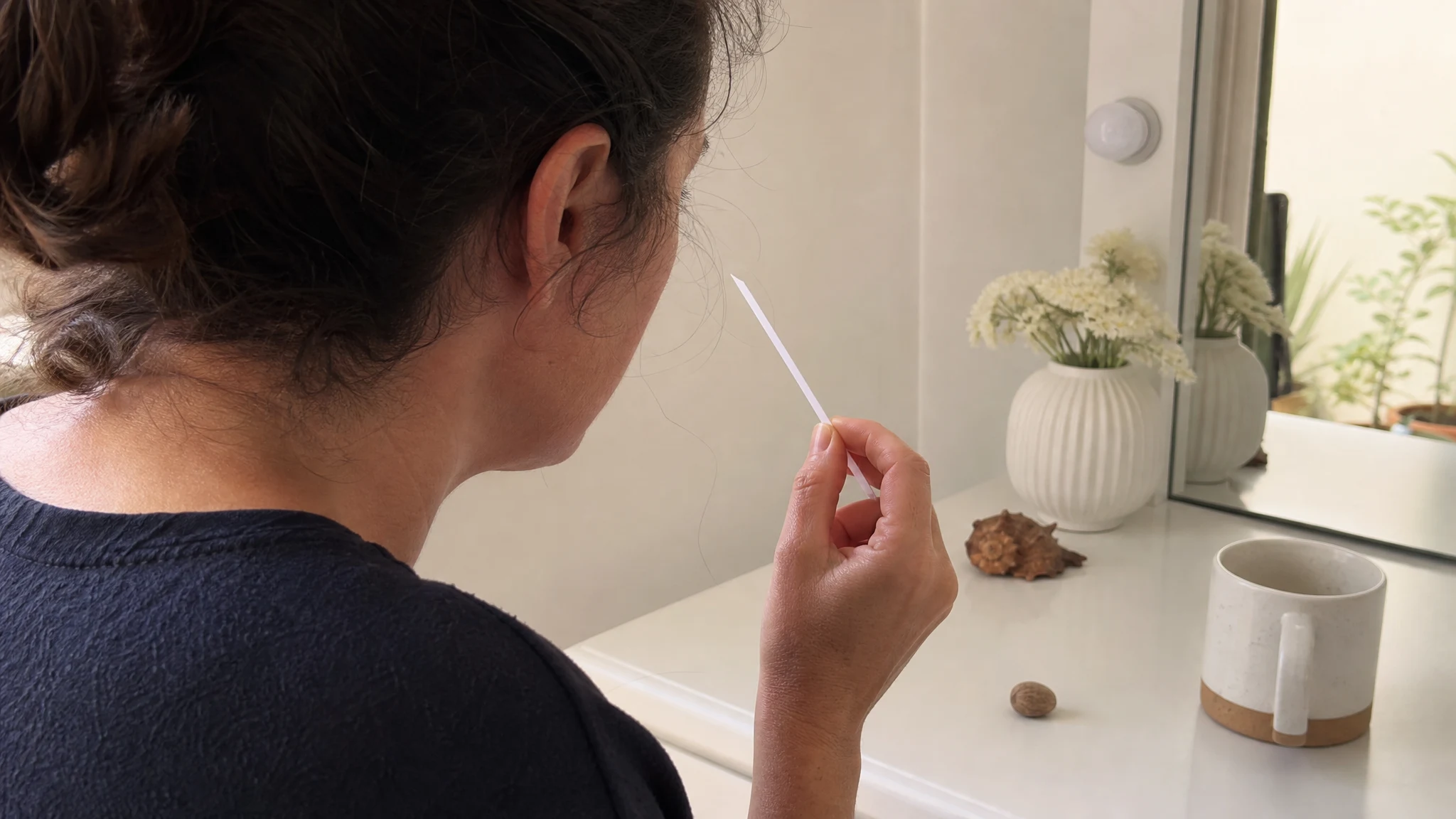
Before you build a formula, spend a little time with nutmeg by itself. Dip a paper blotter in the oil, smell it right away, and then again after ten minutes and an hour. Notice how the first bright, fresh impression fades and the warmer spice remains. Perfumers call this watching a scent develop, and it is the quickest way to learn where nutmeg belongs in a blend and how much room it needs.
What that means in drops
A drop of our oil weighs about 0.044 g (density 0.887 on our batch certificate, with the rough 20 drops to the milliliter), though weighing is always better than counting. For 10 g of concentrate:
| Concentrate in the finished perfume | Most nutmeg oil per 10 g (2.02% safrole) | At 2.30% safrole |
|---|---|---|
| 10% | 0.495 g, about 11 drops | 0.435 g, about 10 drops |
| 15% | 0.33 g, about 7 drops | 0.29 g, about 6.5 drops |
| 20% | 0.25 g, about 5.6 drops | 0.22 g, about 5 drops |
Our suggestion is to treat these as a ceiling and spend well under it, using nutmeg as an accent of about 2.5% of the concentrate rather than a heart note.
A bright spice accord, by weight
Here is a formulation worked out from the cap above, for 10 g of concentrate that will be 15% of the finished perfume. We sell only the nutmeg, so the other materials come from a perfumery or aromatherapy supplier, and each supplier should provide its own IFRA certificate and constituent data.
| Material | Grams |
|---|---|
| Sweet orange oil | 6.05 |
| Sandalwood | 3.00 |
| Vanilla (absolute or CO2 extract) | 0.60 |
| Nutmeg oil | 0.25 |
| Clove bud oil | 0.10 |
| Total | 10.00 |
The nutmeg here is 0.25 g, which is 0.375% of the finished perfume and under both safrole figures above. At a 20% concentrate the same 0.25 g would be 0.5%, so trim it to 0.20 g. For a darker version, shift weight from orange to sandalwood and vanilla and keep the nutmeg where it is. How it smells is your nose's decision; our pages say simply that nutmeg makes a warm spice accord. The pairing guide, the scent profile and the clove and cinnamon comparison help with the scent side.
Write everything down
A perfume you love is hard to repeat from memory. Keep a notebook, and for every version write the date, the weight of each material, and what you thought of it after a day. Change one thing at a time. Small blends of a few grams cost little and teach a lot, and a good notebook turns a happy accident into a formula you can make again.
On the skin
Perfume goes on skin, so the skin figures matter too. The Tisserand Institute's chart gives East Indian nutmeg oil 0.8% for adults, 0.2% for ages 6 to 15 and in pregnancy, and X (do not use) for the youngest children; West Indian oil is 5% for adults. Because we do not state the type of our oil, we use the cautious row. A perfume with 0.375% nutmeg oil sits under the adult figure. Our own guidance is to patch test first, keep scent away from eyes and avoid nutmeg oil in pregnancy and around children, and for anyone taking medication that acts on the central nervous system.
If you plan to sell what you make, a regulatory consultant can walk you through labeling and rules for your region.
Let it rest
Blends change a little as they sit, so smell your perfume at intervals over a few days before you decide it is finished. Keep it in a small dark bottle, label it, and give yourself time. A formula that still pleases you a week later is a keeper.
One number from your supplier, the safrole percentage, decides how many drops a perfume can carry, so ask for it before you start.
Nutmeg Essential Oil
Nutmeg Essential Oil from our own shop, in sizes from 0.5 oz to bulk.
From $10.99
Shop Now →Sources & Further Reading
- IFRA, 2024. IFRA Standards - 51st Ammendment
- EFSA FEEDAP Panel, 2023. Safety and efficacy of a feed additive consisting of an essential oil from the seeds of Myristica fragrans Houtt. (nutmeg oil) for all animal species (FEFANA asbl)
- Tisserand Institute. Assessing the Safety of Essential Oils - the Nutmeg Case