Nutmeg Oil on Skin: Patch Tests and Dilution Basics
Nutmeg oil has a lovely reputation as a skin scent, the warm note people reach for in a cool weather body oil, and it deserves a careful introduction. Two questions come up whenever it meets skin. Is it gentle enough to wear? And does it do anything for a skin condition? The published record answers the first with practical advice and the second with one laboratory paper.
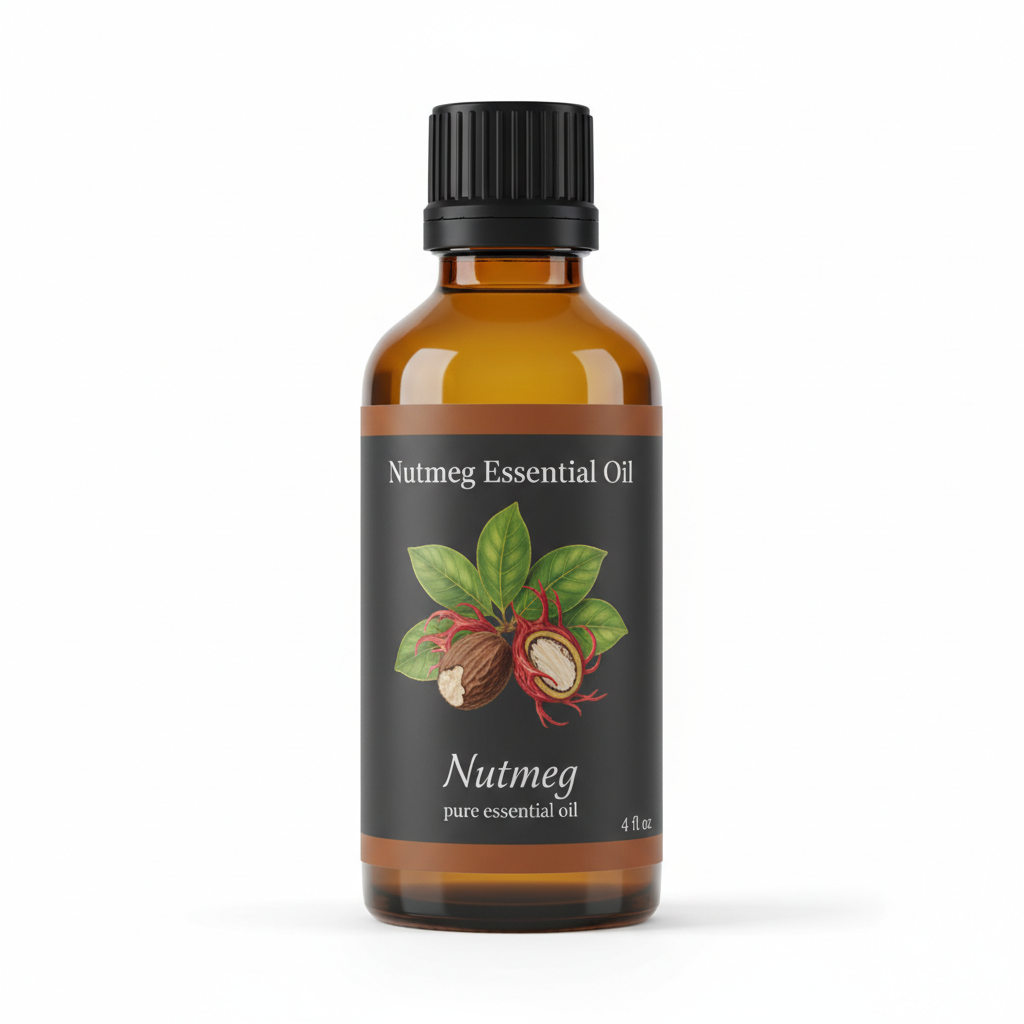
Nutmeg Essential Oil
Our own Nutmeg Essential Oil, in sizes from 0.5 oz to bulk.
From $10.99
Shop Now →What patch test clinics have seen
Dermatology clinics have been patch testing spices for decades, and nutmeg turns up repeatedly. In a 1990 study of 103 people with suspected contact allergy, those who already reacted to indicator allergens such as fragrance mix or balsam of Peru were far more likely to react to a spice, and nutmeg produced the most reactions of any spice in that group, 28 percent. Fragrance mix was a particularly useful indicator for nutmeg (Contact allergy to spices). A 1993 series of 55 patients tested spices at 10 and 25 percent in petrolatum, and nutmeg was among those with the most consistent positive results (Spice allergy evaluated by results of patch tests). These were ground spices and not essential oil, so applying them to a bottle of oil is inference, but a sensible one: the 1990 authors traced many of the reactions they followed up to the ether-extractable volatile fractions of the spices.
That is why we put so much weight on the patch test. It is the easiest step to skip and the most useful one to keep. Apply a small amount of your diluted blend inside the forearm and wait a day before using it more widely. If you already know that fragrance mixes bother your skin, nutmeg may not be your spice.
Choosing a spot to wear it
If you like the scent on skin, think about where it will sit. A diluted blend on a spot you can smell without effort, such as the inside of a wrist or the side of a forearm, gives you a gentle hint of spice. Keep it away from your face and eyes, and wash your hands after you handle it.
The acne paper people cite
If you search for nutmeg oil and acne, you will find a 2020 paper that is often described as if it were a trial. It was a laboratory study. The authors distilled nutmeg to obtain an essential oil, extracted what remained with methanol, and found that this leftover extract held back Cutibacterium acnes and Staphylococcus aureus in a dish, with an isolated compound being even stronger. The extract was chosen because it was lower in safrole and myristicin than the oil, and the authors saw it as an ingredient to develop for cosmetics, not as the oil ((+)-Erythro-Δ8'-7S,8R-Dihydroxy-3,3',5'-Trimethoxy-8-O-4'-Neolignan, an Anti-Acne Component in Degreasing Myristica fragrans Houtt.). No one in the study had acne, and nothing in it tells us how a bottle of oil behaves on a face. We sell nutmeg oil as a scent and make no skin treatment claim.
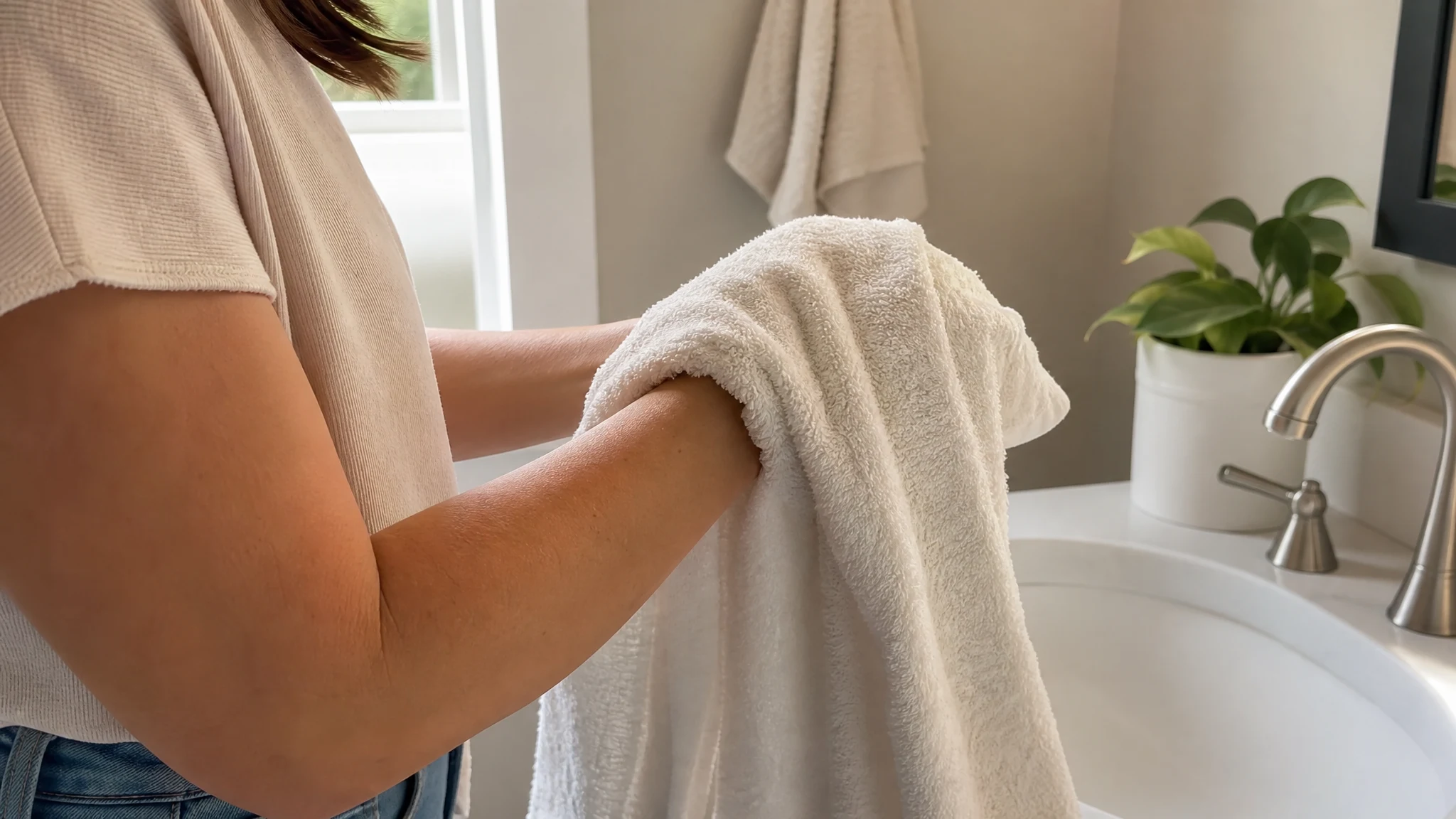
How to run a patch test
A patch test is simple, and doing it well takes a minute of attention:
- Wash and dry a small spot on your inner forearm.
- Dab a little of your diluted blend on it, never the neat oil.
- Leave it uncovered and keep it dry.
- Look at it after a day and notice any redness, itching or other change.
If anything looks or feels off, wash it away and do not use the blend. Do the test with each new batch you make, since a new blend is a new product.
Starting low, and why
Our recommendation for skin is 0.5% to 2% in a carrier oil. Published ceilings argue for starting at the bottom of that range. Tisserand's nutmeg chart gives 0.8% for adults with East Indian nutmeg oil, 5% for West Indian, and lower figures for children and pregnancy (Assessing the Safety of Essential Oils - the Nutmeg Case). IFRA also caps safrole at 0.01% in a finished product (IFRA Standards, 51st Amendment); with safrole near 2% of the oil in EFSA's analysis of seven batches, that works out to a ceiling around 0.5%, as arithmetic from an average.

In practice, one ounce of carrier oil holds roughly 590 drops of liquid, so 0.5% is about three drops. Three drops of nutmeg in an ounce of jojoba or sweet almond oil is a surprisingly present scent, and it keeps you comfortably under every figure above. Weigh if you can, patch test, keep it away from your eyes, and stop if your skin objects. Our carrier oil guide compares bases (we do not sell them), and soap and bath ideas show other ways to put the scent to work.
Making a small first batch
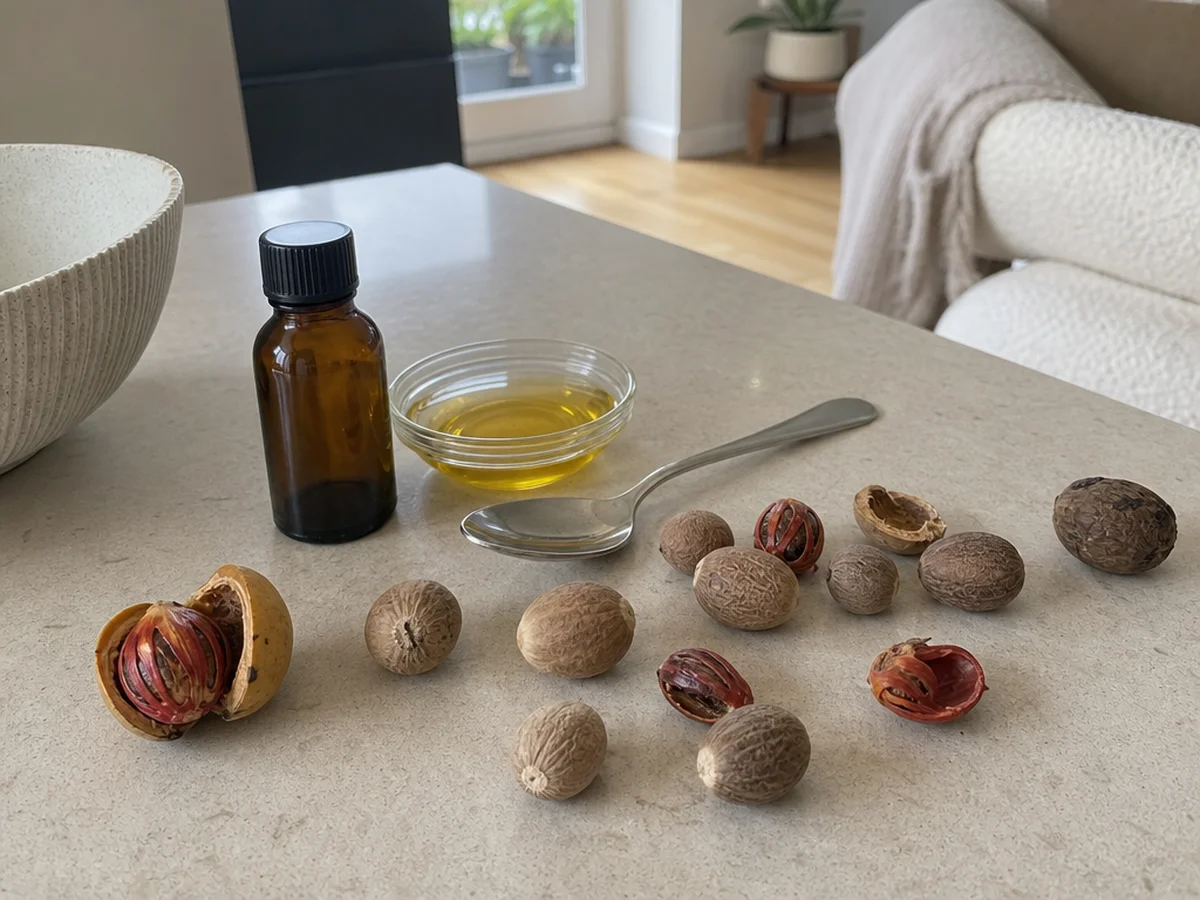
For a first try, keep it small: an ounce of carrier in a dark glass bottle, three drops of nutmeg oil, and a gentle swirl rather than a shake. Label it with the date and strength. Once it is on your skin, you will notice the scent reads softer than it did in the bottle, which is exactly what you want from a low dilution.
If you are pregnant, or choosing for a child, our pages on pregnancy and children cover the extra care involved. For any skin condition, a dermatologist or your doctor is the right first stop.
Nutmeg Essential Oil
Nutmeg Essential Oil from our own shop, in sizes from 0.5 oz to bulk.
From $10.99
Shop Now →