What Does Nutmeg Oil Smell Like? Notes and Pairings
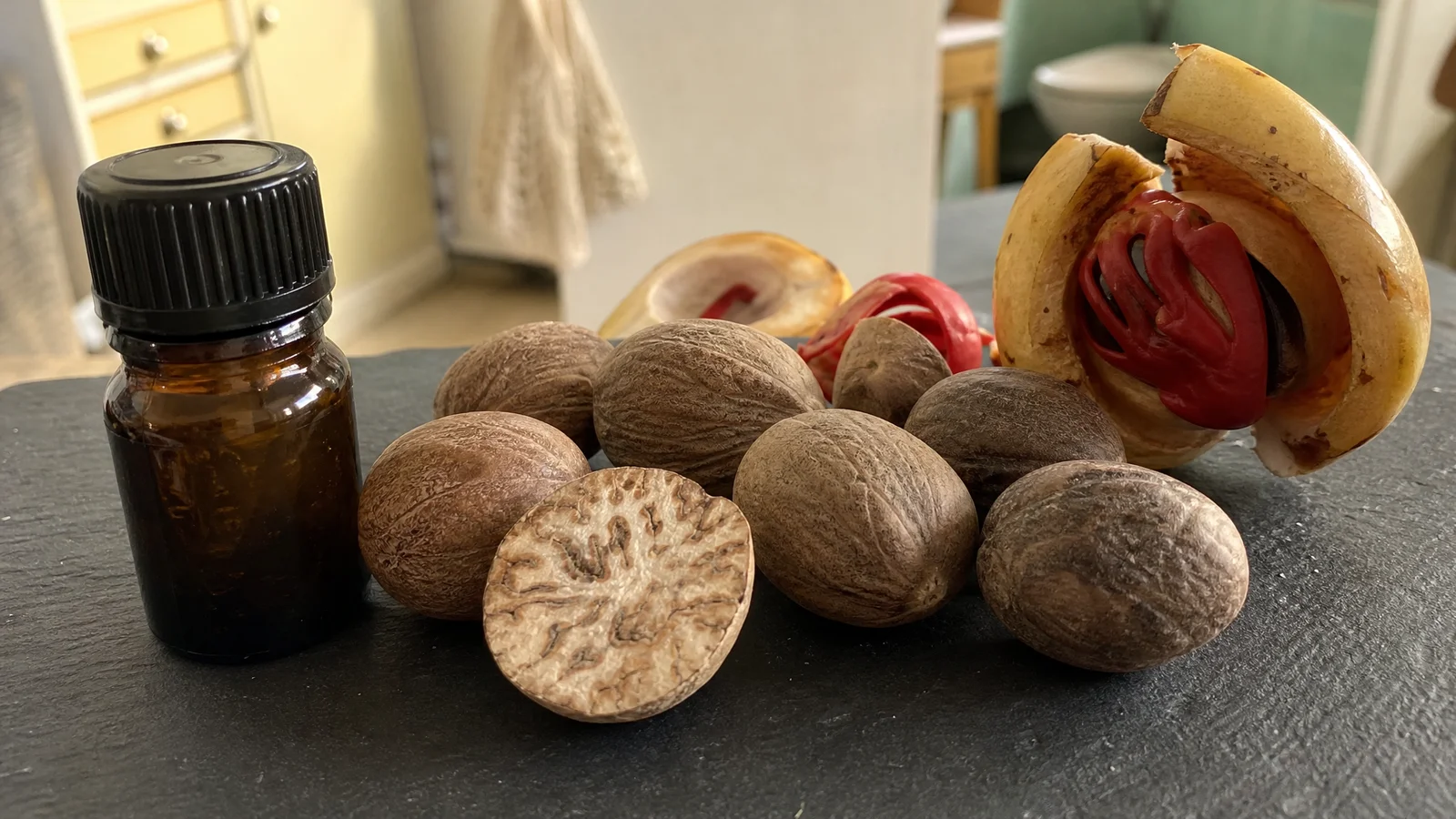
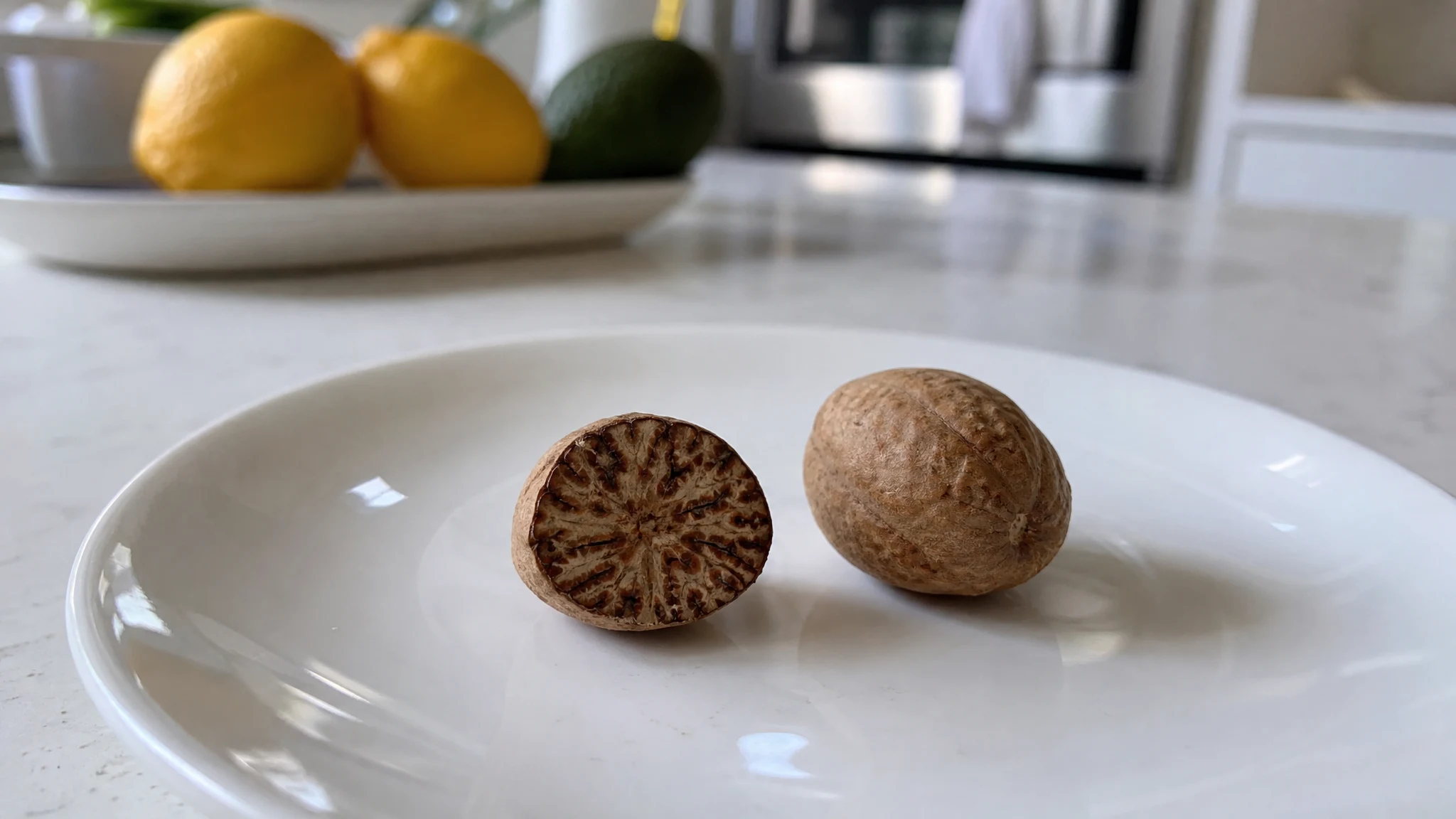
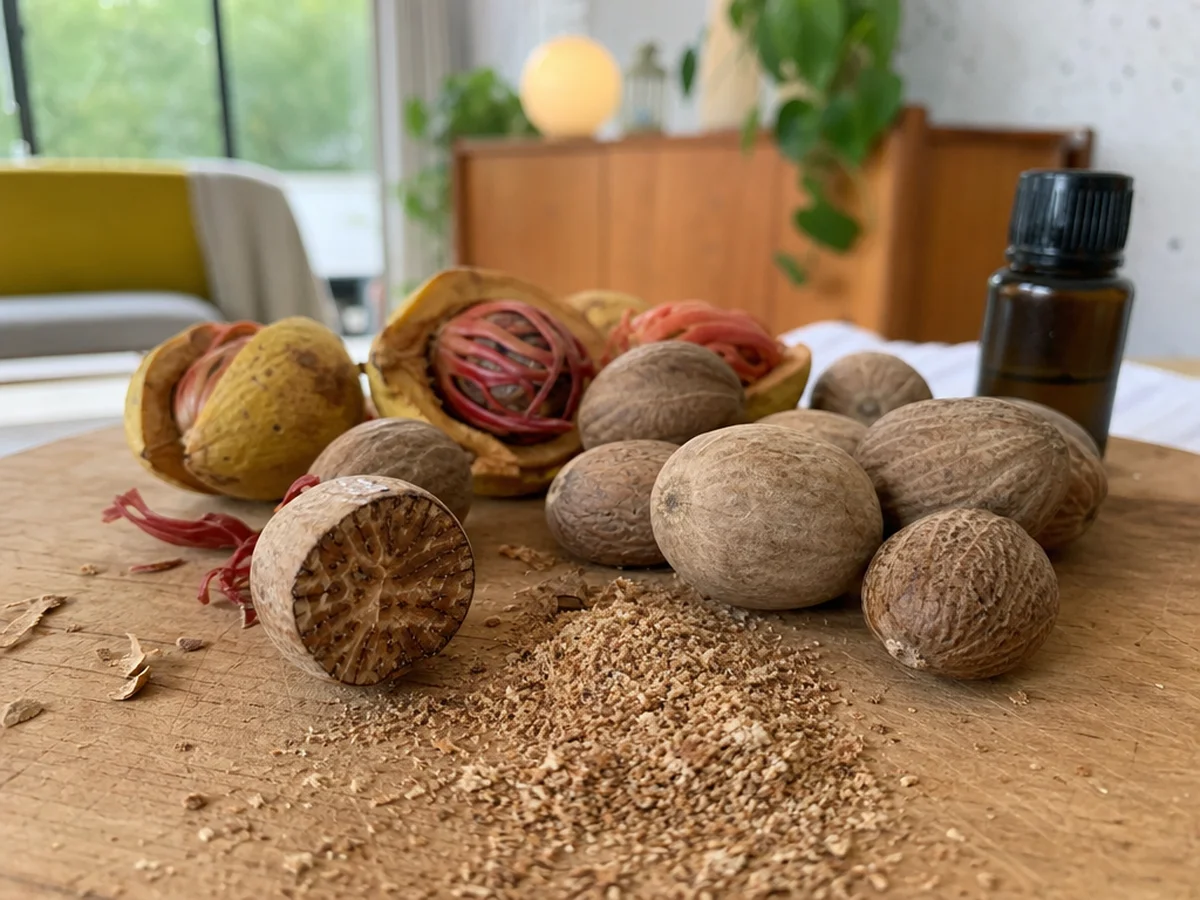
Grate a little fresh nutmeg onto a plate, then open a bottle of the oil beside it. They are clearly related, and just as clearly not the same. The spice is warm, dusty and faintly sweet; the oil is brighter, with a resinous lift on top and the warmth waiting underneath. That difference is the whole charm of nutmeg oil, and it comes straight from how the oil is made.
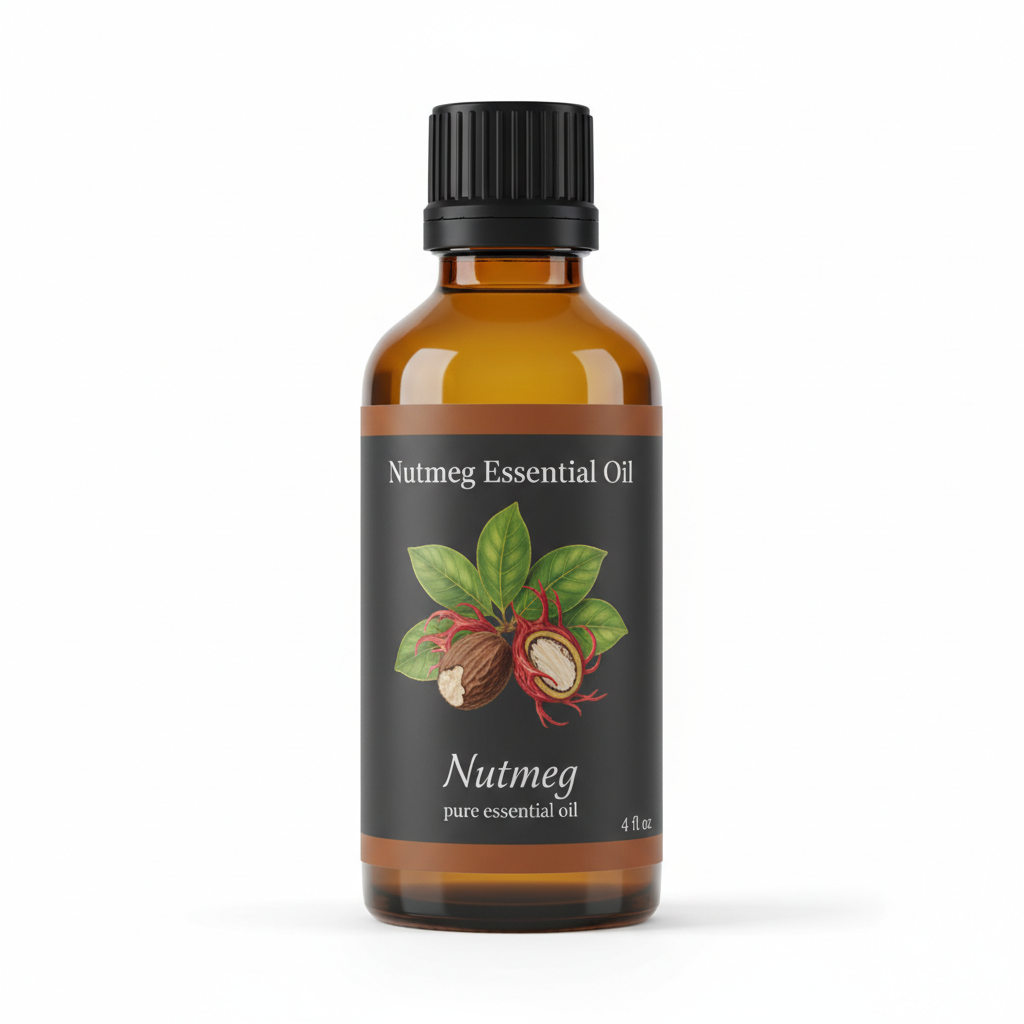
Nutmeg Essential Oil
Our own Nutmeg Essential Oil, in sizes from 0.5 oz to bulk.
From $10.99
Shop Now →How the oil describes itself
We describe our Botanical listing as warm, sweet and spicy. For our Purity listing we go a step further: warm, sweet and spicy-woody with a musky depth, brighter and less dusty than ground kitchen nutmeg, with a fresher terpenic lift. The Certificate of Analysis for one of our batches names the smell standard as "Spicy, Nutty, Sweet" and marks the batch as complying.
A fragrance raw-material supplier, Robertet, describes its Indonesian steam-distilled nutmeg oil as "Spicy, rising, hot, peppery, woody". A review of the nutmeg oil literature calls it a colorless-to-light yellow liquid with a distinct spicy odor. Every description keeps "spicy" and adds its own colors: sweet here, nutty there, peppery or woody elsewhere. That is how a complex smell tends to read, and it is a good reminder to trust your own nose over anyone's adjectives, ours included.
Why the oil smells brighter than the spice
Steam distillation captures the volatile part of the kernel, the part that evaporates easily and reaches your nose. A review of nutmeg oil yields puts kernel oil at about 6.2% to 7.6% of the kernel's weight, so the bottle holds a concentrate of a small slice of the seed. Reasoning from that, the starchy, fatty bulk of the kernel that gives ground nutmeg its dusty sweetness mostly stays behind in the still. What comes over is the top end: piney, fresh and aromatic. In seven Indonesian batches assessed by the European Food Safety Authority, sabinene and the two pinenes together made up roughly half the oil, with myristicin adding roughly another 8% to 14% depending on the method used.
Two bottles, two noses
The name "nutmeg oil" covers a range. The review's table lists sabinene from about 19% in an Andaman and Nicobar seed sample to about 53% in a Grenada seed sample, and myristicin from about 3% to about 20%. Those are different studies, methods and years, so they do not rank anything. They do suggest that two bottles from different sources can smell a little different, and that a nose is a fair way to meet an oil but not a way to tell where it came from.
A good way to get to know a bottle
This is our suggestion for meeting a new bottle properly.
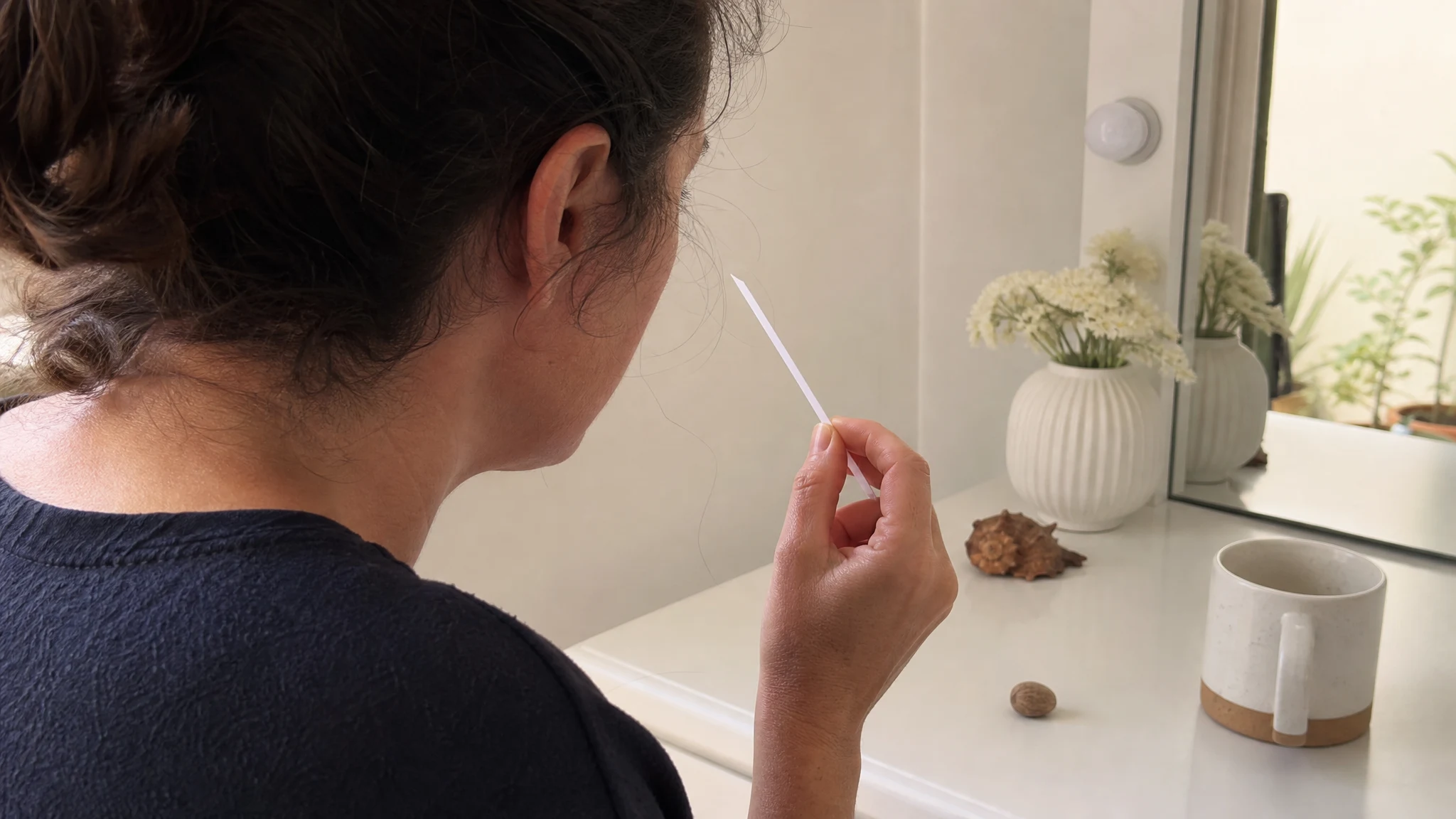
- Put one drop on a paper blotter or a strip of cardstock, hold it at arm's length and bring it slowly toward you. Nutmeg oil is concentrated, so there is no need to put the bottle under your nose.
- Smell it right away, then again after a few minutes, and again after an hour, and notice how the scent changes as the lighter notes fade.
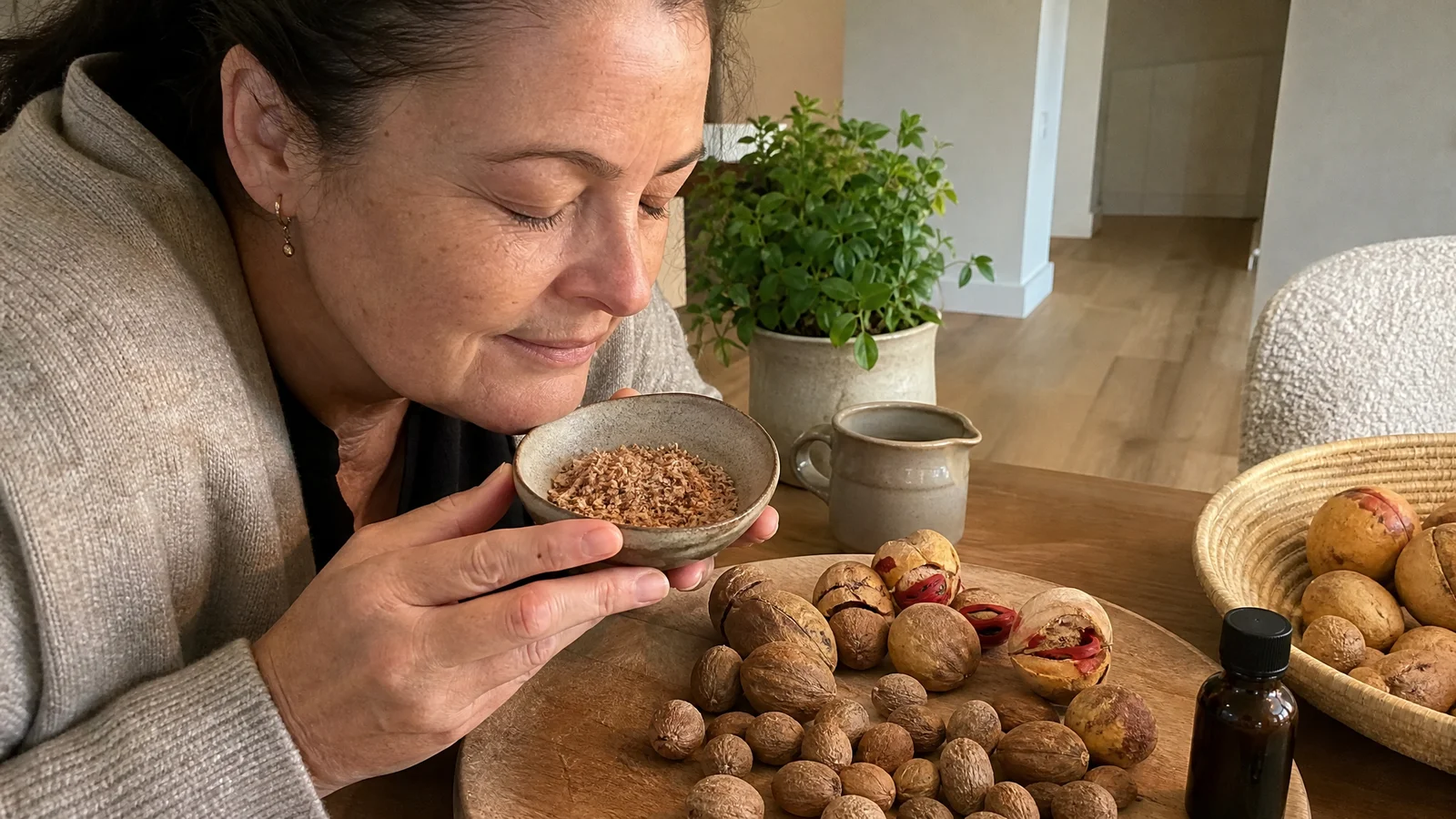
- Smell the grated spice next to it, and write down in your own words what the oil has that the spice lacks, and the reverse.
- Keep the notes with the bottle. They make a handy reference for the next order.
Words to try
Describing a scent is a skill, and a few words make it easier. As you smell the blotter, try these and see which fit: bright, piney, resinous, warm, sweet, spicy, woody, musky, dusty. Some will feel right and some will not, and that is the point. Write down the ones that stay with you. Your own words will serve you better than anyone else's.
What it likes to sit beside
We suggest pairing nutmeg with sweet orange, clove, cinnamon, ginger, vanilla, sandalwood, lavender and cedarwood. Orange adds juiciness, clove and cinnamon add heat, and vanilla and sandalwood add a creamy base. We sell the nutmeg oil only, so those partners come from a craft or aromatherapy supplier. Our pairing guide goes deeper, and the nutmeg versus mace post explains why the aril from the same tree smells different again.
Where to smell it
Smell it somewhere quiet, away from cooking, candles and perfume, because other scents crowd the nose. A cup of coffee beans or your own sleeve is the old perfumer's trick for resetting between samples. Take short sniffs, take breaks, and come back when your nose is fresh.
One note on strength
Pleasant and potent go together here. Nutmeg oil is meant for external, cosmetic and room-scenting uses and never for swallowing. For skin, our guidance is 0.5% to 2% in a carrier oil, and we start at the low end and a little below it, since IFRA's cap on safrole works out to about 0.4% to 0.5% oil in a finished product on EFSA's figures. Our GC-MS guide shows the arithmetic. If a lot report matters to you, ask us in writing through the contact page before ordering.
A season in a drop
For many people nutmeg is tied to a time of year: cold evenings, baking, a kitchen full of people. Notice what it brings back for you. That personal association is part of why this oil is such a pleasure to work with.
The best way to learn this oil is a small bottle, a blotter, a quiet few minutes and a nutmeg grater on the counter.
Nutmeg Essential Oil
Nutmeg Essential Oil from our own shop, in sizes from 0.5 oz to bulk.
From $10.99
Shop Now →Sources & Further Reading
- Nutmeg oil, Robertet
- Nutmeg (Myristica fragrans Houtt.) essential oil: A review on its composition, biological, and pharmacological activities, Phytotherapy Research, 2022
- Safety and efficacy of a feed additive consisting of an essential oil from the seeds of Myristica fragrans Houtt. (nutmeg oil) for all animal species (FEFANA asbl), EFSA Journal, 2023
- IFRA Standards, 51st Amendment (safrole note box)