Can You Swallow Nutmeg Oil? Why We Say No
Nutmeg lives in the kitchen, so it is natural to wonder whether the oil can live there too. It cannot. Our nutmeg oils are for scent and for careful, diluted use on the skin, and we do not recommend swallowing them in any amount or in any form. Here is the reasoning, because the question deserves more than a flat no.
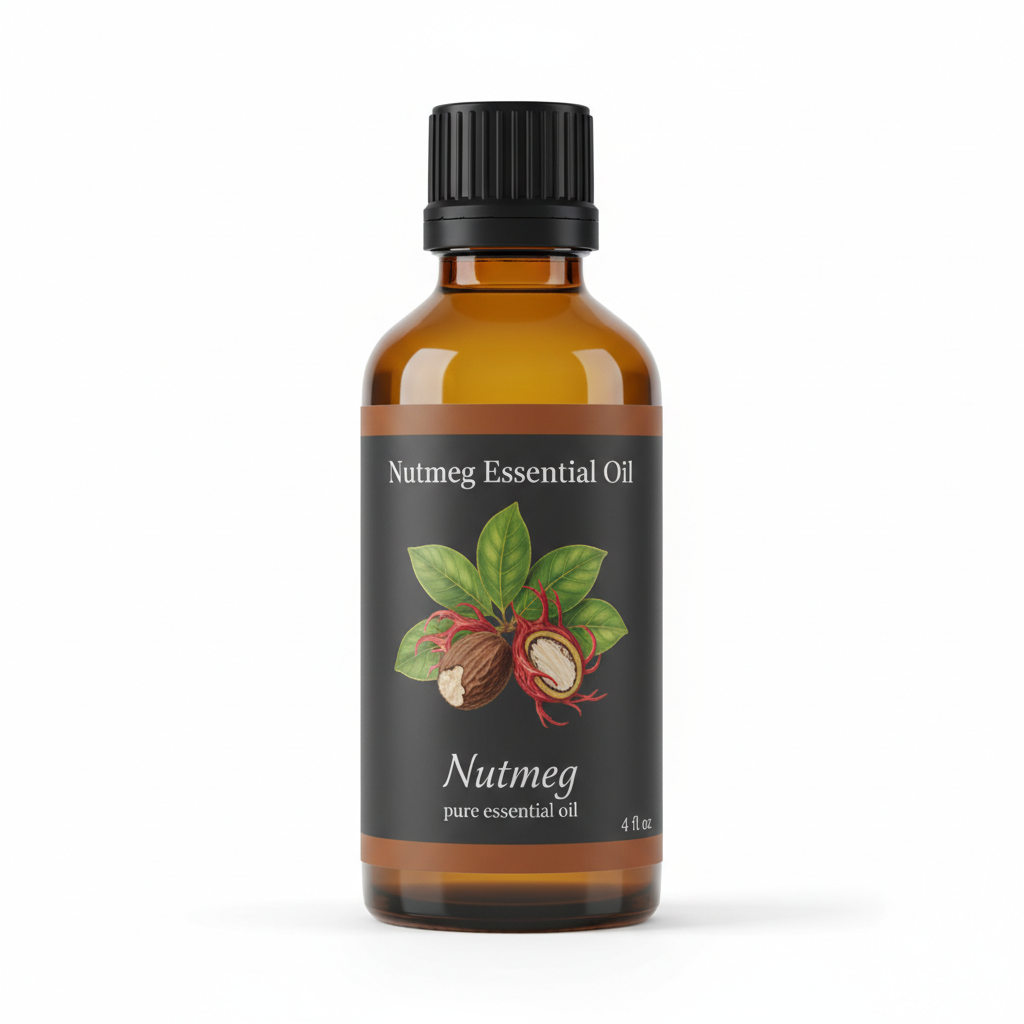
Nutmeg Essential Oil
Our own Nutmeg Essential Oil, in sizes from 0.5 oz to bulk.
From $10.99
Shop Now →Why the spice and the oil are not interchangeable
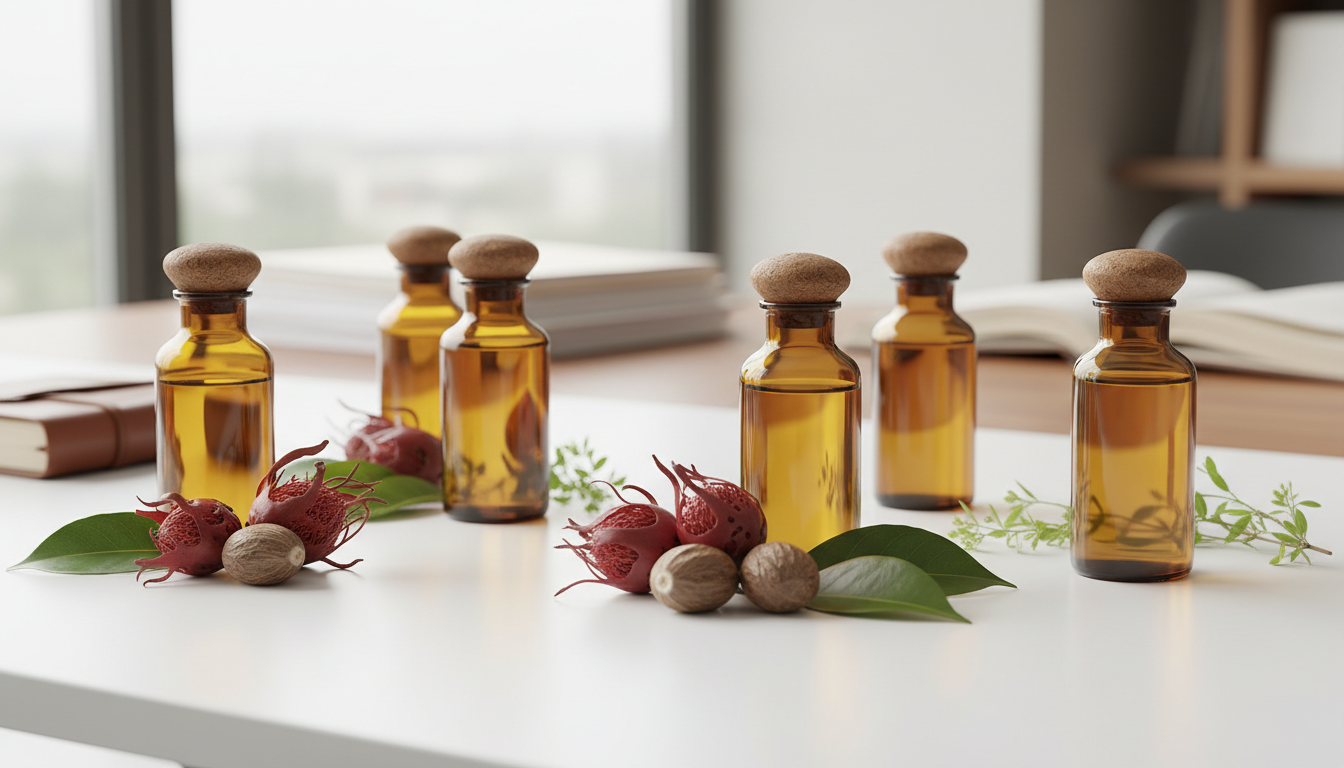
A grated pinch of nutmeg in a rice pudding and a bottle of nutmeg oil share a tree, a name and a smell. They do not share a strength. The oil is the volatile part of the seed boiled down to a concentrate. In the seven Indonesian batches analysed for the European Food Safety Authority, myristicin made up around 13% of the oil by GC-MS, alongside about 2% safrole (EFSA, 2023). Those are the compounds that give nutmeg its reputation for trouble when it is eaten in quantity, and a few drops of oil carry far more of them than a spoonful of ground spice.
Take a half-ounce bottle as an example. At a density of about 0.887 g per milliliter, it holds roughly 13 g of oil. That is simple arithmetic rather than a dose, but it shows how much concentrated material a small bottle contains.
What happens when people swallow too much nutmeg
Most of what is known comes from the spice, not the oil. A review of ten years of calls to the Illinois Poison Center found 32 cases of nutmeg ingestion. Seventeen were accidents, and ten of those involved children under 13. The other fifteen were deliberate, and five of those also involved other drugs. One patient who had combined nutmeg with other drugs needed ventilatory support in hospital (Ehrenpreis and colleagues, 2014).
The lesson we take from that is not a dose to avoid. It is that nutmeg is more potent than its place in the spice rack suggests, and that the authors point to two groups, young children getting into things by accident and adolescents mixing it with other drugs. Keeping the bottle out of reach matters as much as any instruction on the label.
The flavoring list, explained
You may have read that nutmeg oil is "generally recognized as safe." That is true in a narrow sense. US food regulations (21 CFR 182.20) list nutmeg among essential oils and natural extractives that are generally recognized as safe for their intended use in food. That entry exists for food manufacturers adding measured traces of flavoring under good manufacturing practice. It does not describe a bottle sold for scent, and it is no suggestion that anyone should take a drop of oil by mouth. Our oils are sold neat, labelled not for internal use, and we do not offer cooking uses.
Where the kitchen memory lives
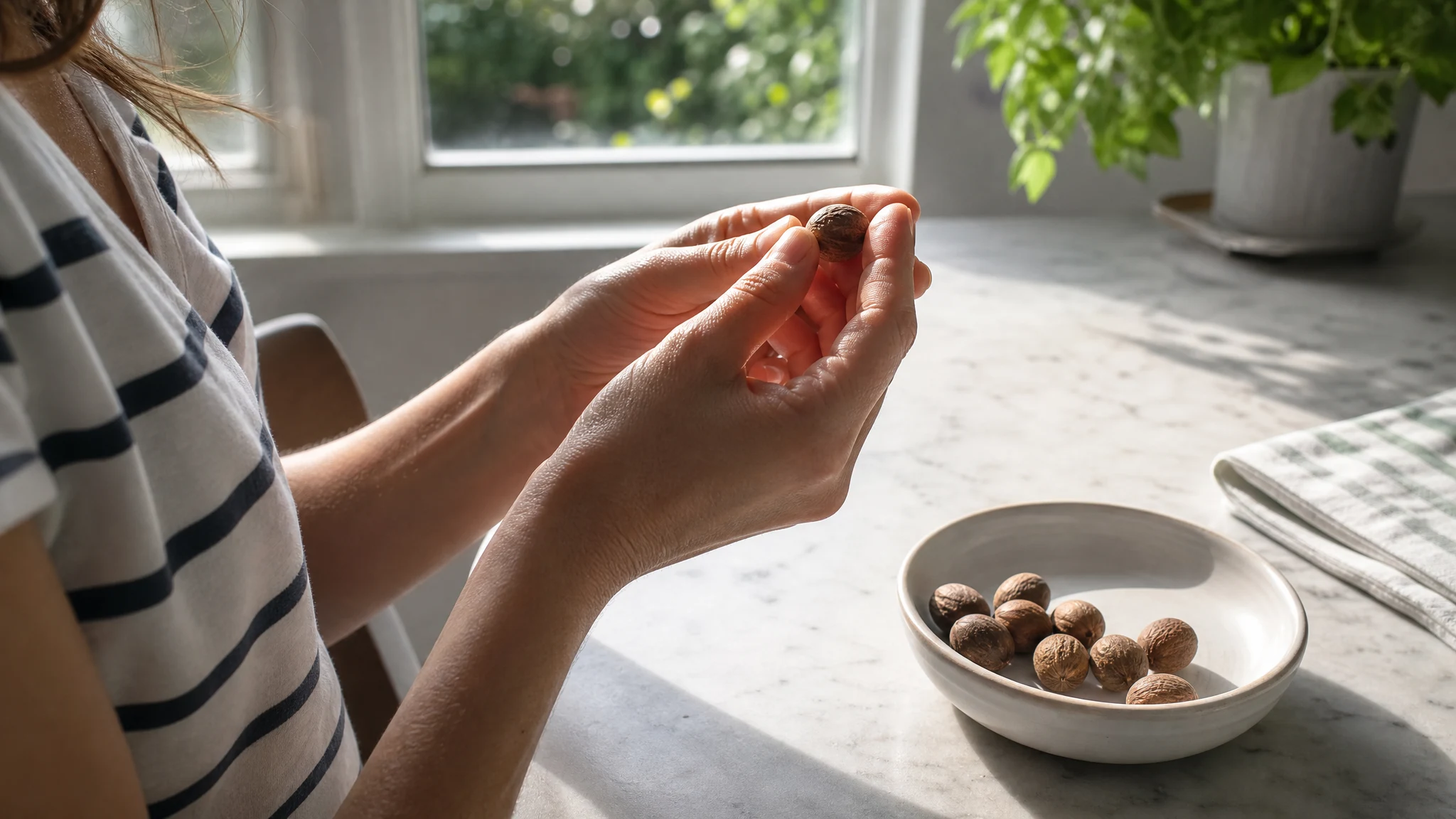
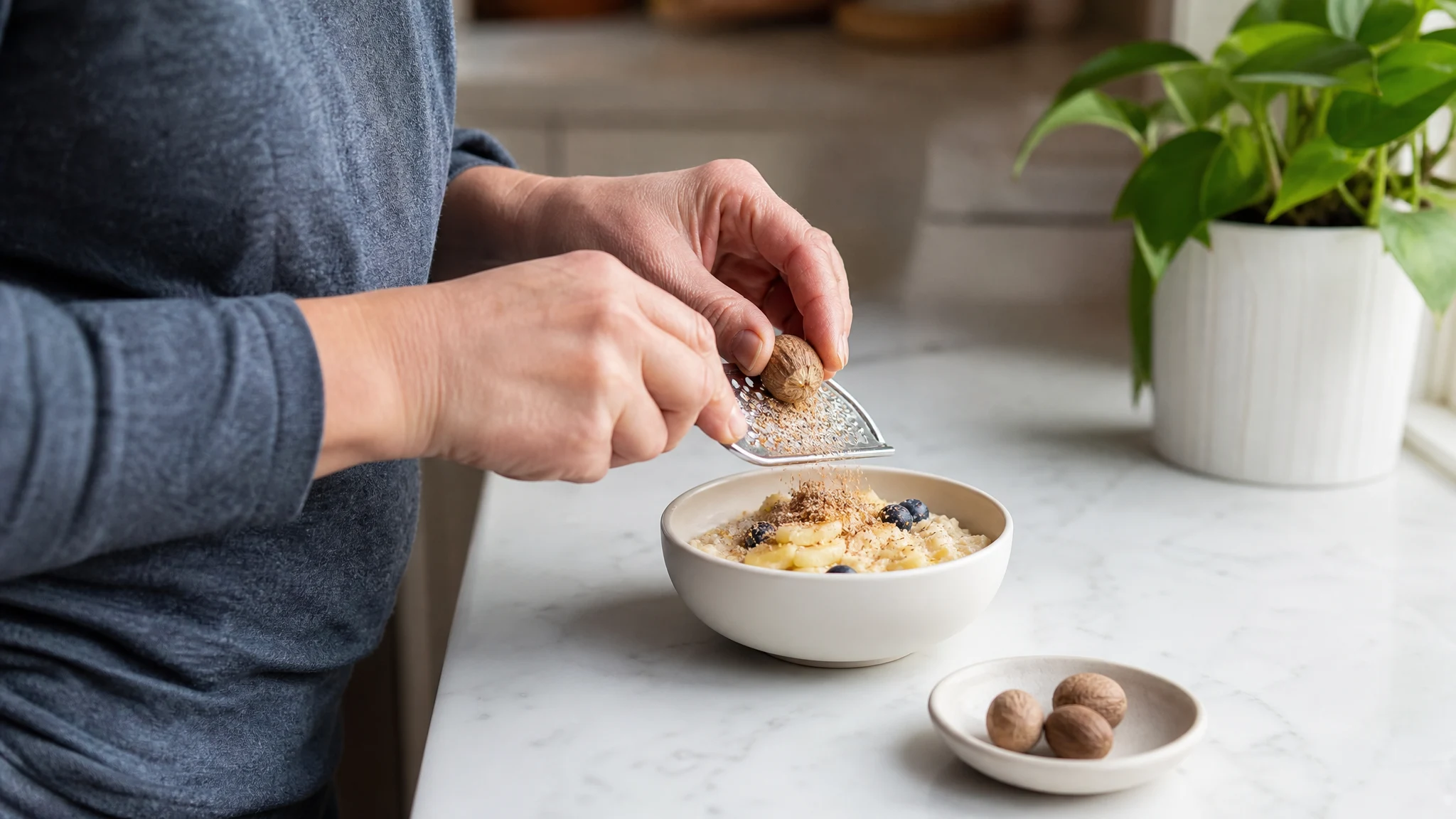
Most of us know the smell of nutmeg from somewhere warm: a pan of something baking, a mug of eggnog at the holidays, a grandparent grating a whole nutmeg over a custard. That memory is a big part of why the oil is so appealing, and it is a perfectly good reason to own a bottle. The pleasure is in the aroma. Open the cap, let the scent come to you, and you will find the whole kitchen is in there.
If you want the flavor, buy the spice
For banana bread, béchamel or eggnog, grocery-store nutmeg is the right ingredient and is used in the amounts a recipe gives. If it is the aroma you love, a diffuser or simmer pot will fill the room with it. Our diffuser guide covers that side, and the skin post covers how much to dilute for external use.
Keep the bottle away from the spice rack
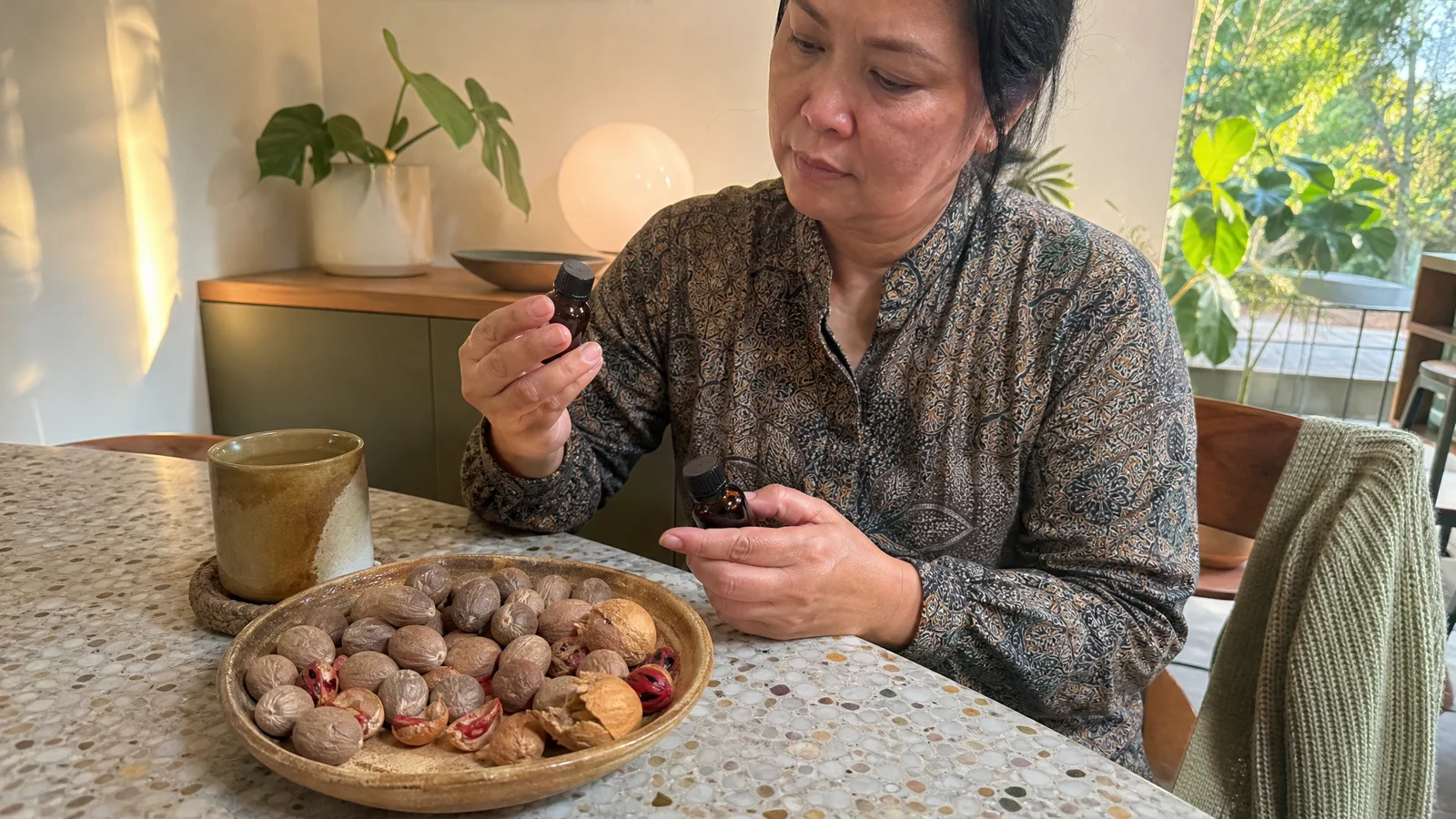
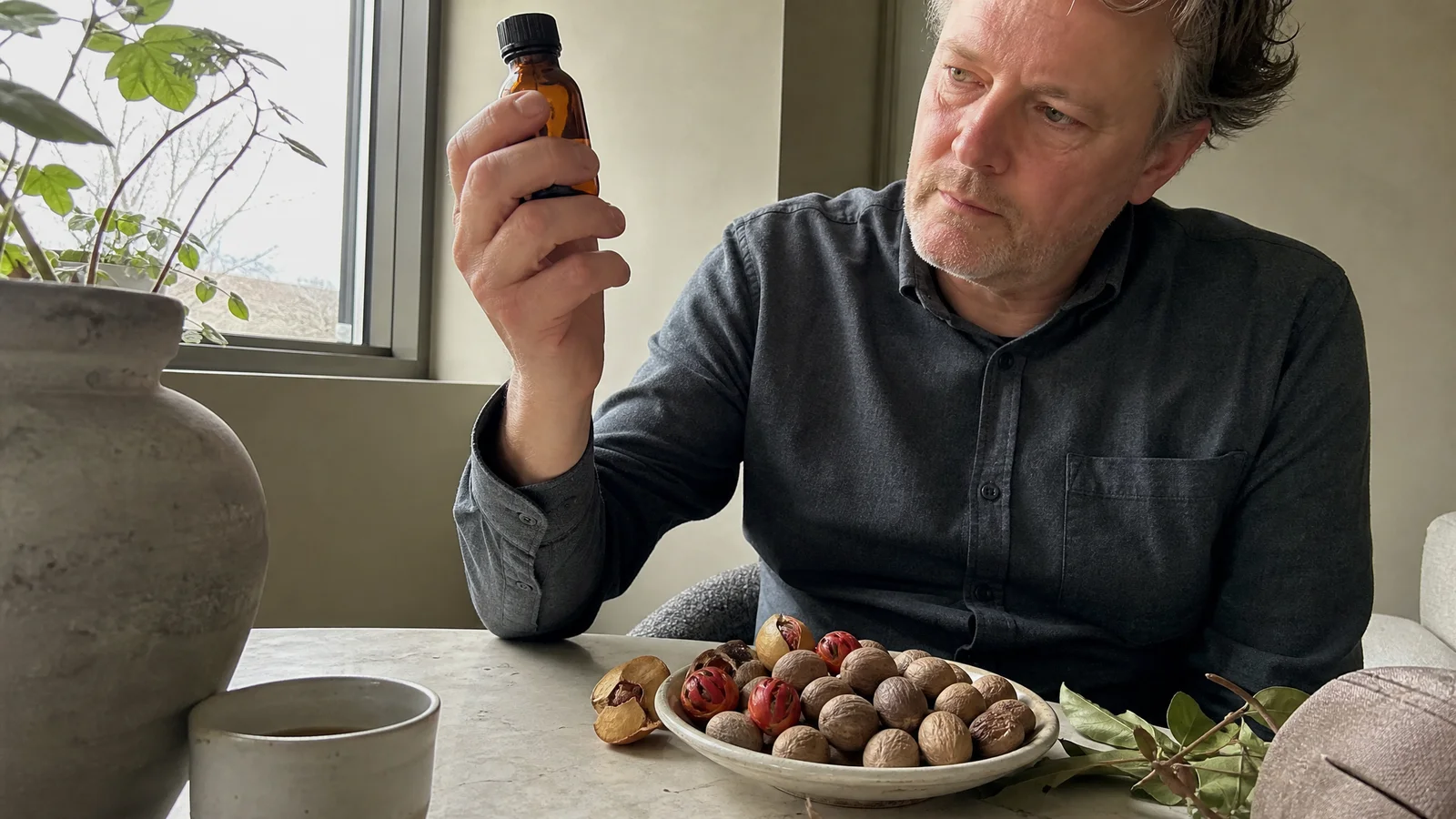
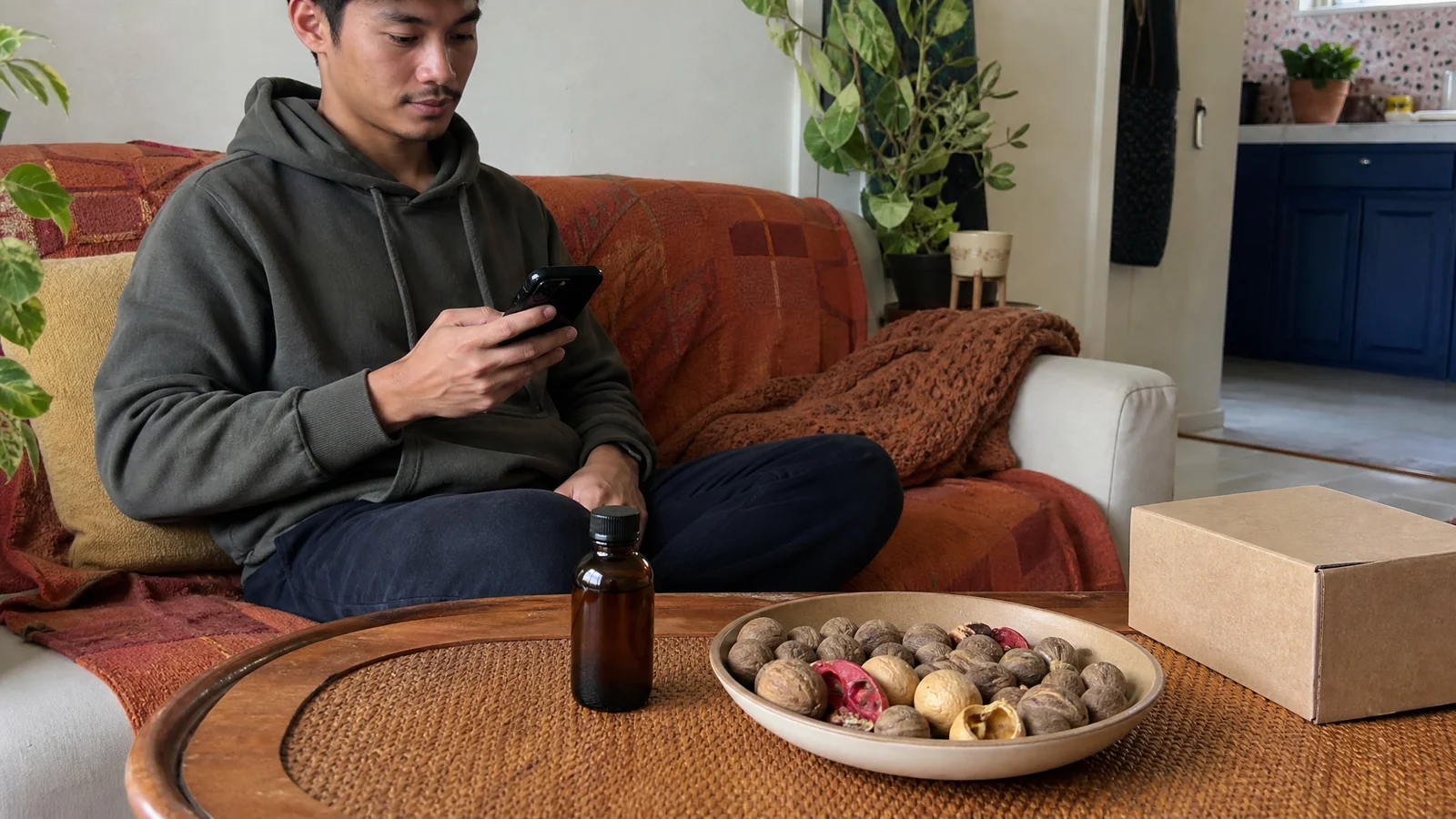
This is a small habit, and we think it is one of the most useful. Do not store nutmeg oil beside the vanilla extract and the jars of ground spices. Give it its own spot, high up, with the cap on tight, and make sure the label is clear. If you share a kitchen with other people, tell them plainly that the little bottle is not an ingredient. A bottle that lives in the cupboard where food lives is a bottle someone will eventually reach for by mistake, and a high shelf in another room costs you nothing.
The same goes for any bottle you decant into. Label it with the oil and the date, even if it is only for a week.
If someone has swallowed it
Call Poison Help straight away at 1-800-222-1222 in the United States, and keep the bottle to hand so you can read the label to them. Poison Control also advises storing any essential oil locked up, out of sight and reach of children and pets. If a child has gained access to the bottle, call even if they seem fine. For questions about medicines taken alongside it, a pharmacist is the right person, and the medications post explains why that matters. Households with young children will want the children's post too.
A bottle of nutmeg oil is a lovely thing to have on the shelf, as long as the shelf is high, the cap is on and the oil goes only where it is meant to: into the air, or well diluted on the skin of an adult.
Nutmeg Essential Oil
Nutmeg Essential Oil from our own shop, in sizes from 0.5 oz to bulk.
From $10.99
Shop Now →Sources & Further Reading
- Ehrenpreis JE, et al. Nutmeg poisonings: a retrospective review of 10 years experience from the Illinois Poison Center, 2001-2011. Journal of Medical Toxicology, 2014
- EFSA Panel on Additives and Products or Substances used in Animal Feed. Safety and efficacy of a feed additive consisting of an essential oil from the seeds of Myristica fragrans Houtt. (nutmeg oil) for all animal species (FEFANA asbl). EFSA Journal, 2023
- 21 CFR 182.20 - Essential oils, oleoresins (solvent-free), and natural extractives (including distillates)
- Poison Control. Essential oils: Poisonous when misused