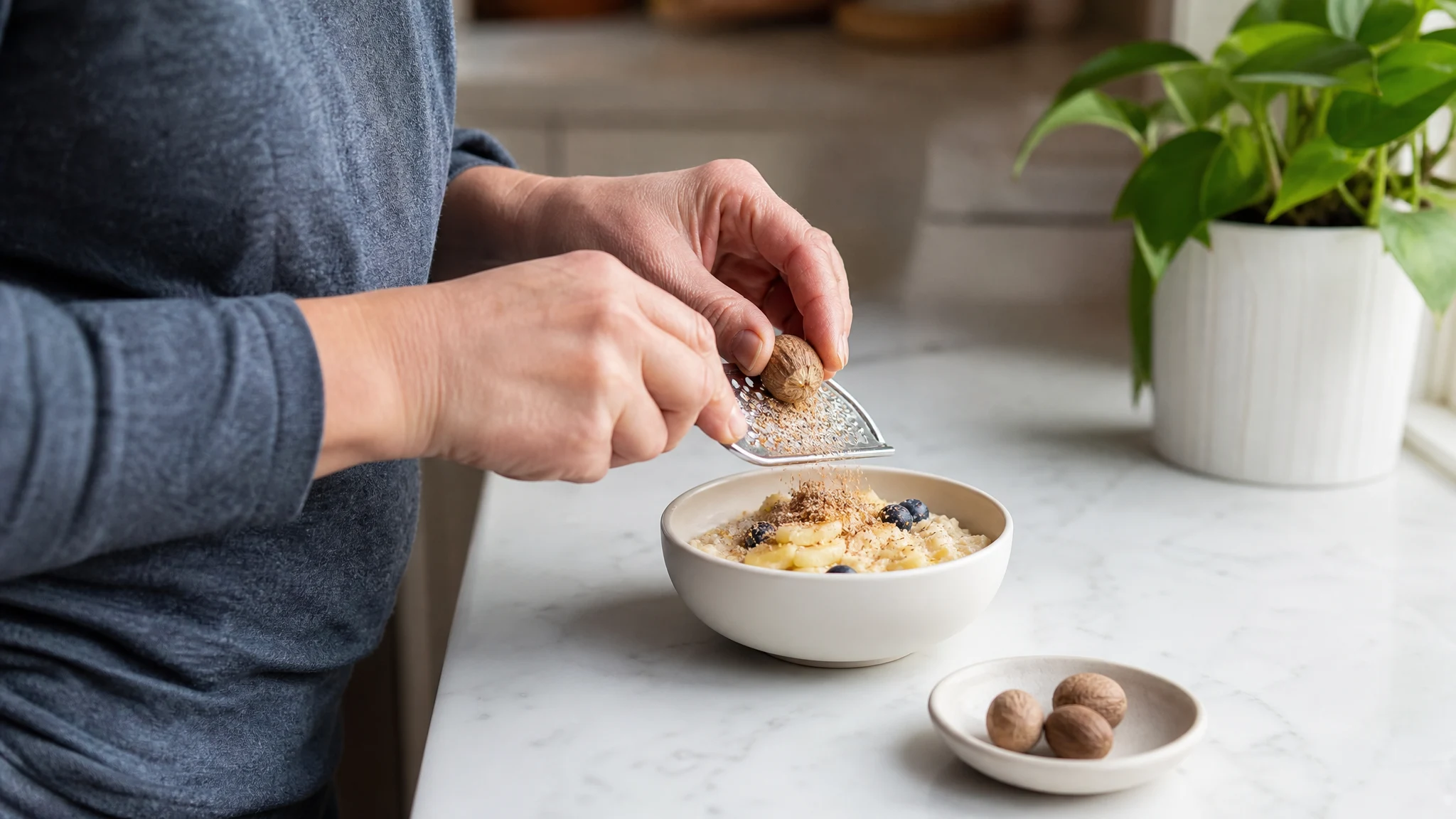
Nutmeg CO2 Extract or Distilled Oil? What Sets Them Apart
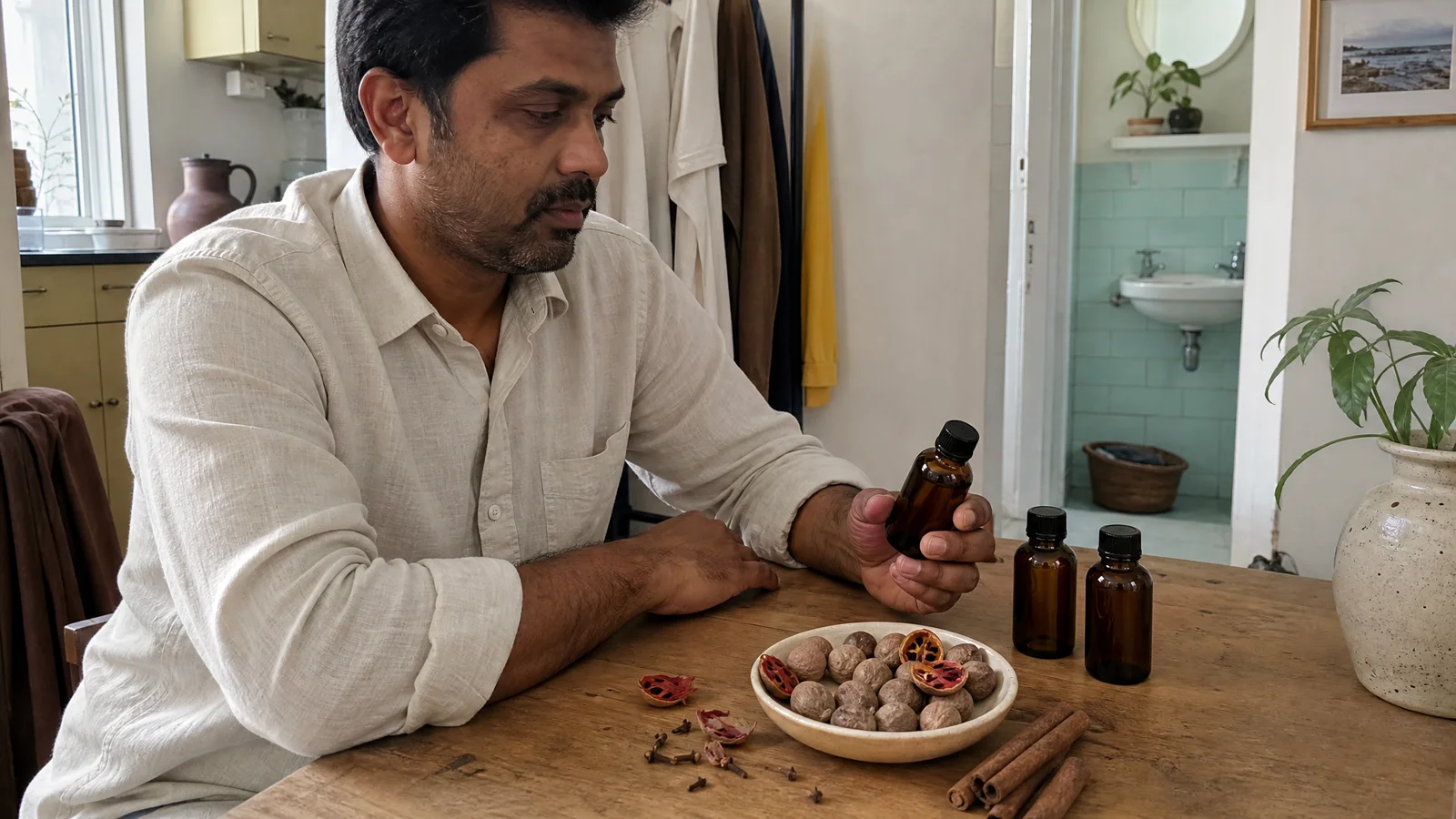
A bottle labelled "nutmeg" can hold quite different things. It might be a steam-distilled essential oil, a supercritical CO2 extract, a solvent oleoresin or a butter-like fat. They all come from the same seed and share a botanical name, and then they part ways. The process word on the label is the first thing to read, because almost everything else about the material follows from it.
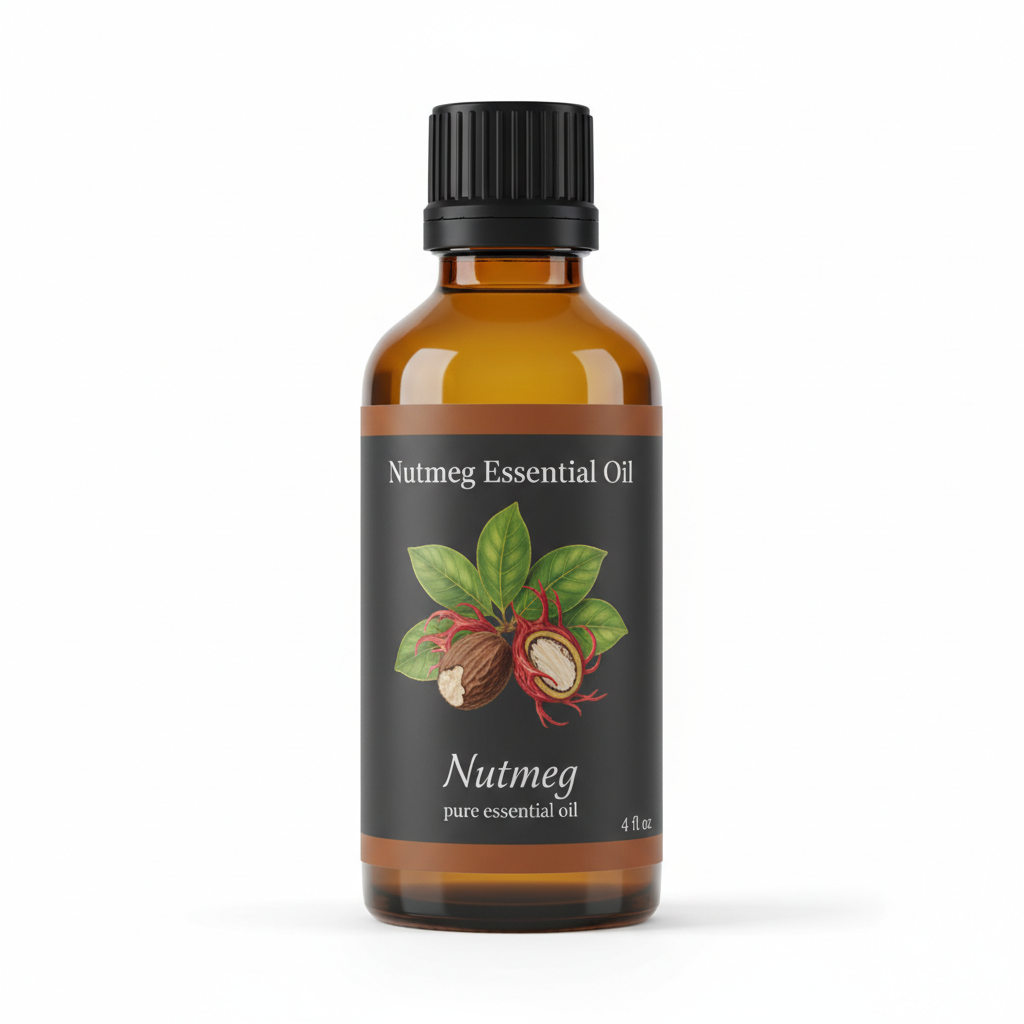
Nutmeg Essential Oil
Our own Nutmeg Essential Oil, in sizes from 0.5 oz to bulk.
From $10.99
Shop Now →Even the law keeps them apart
The US list of flavoring substances in 21 CFR 182.20 is headed "Essential oils, oleoresins (solvent-free), and natural extractives (including distillates)", and nutmeg and mace have their own entries. So regulators already treat an oil, a solvent-free oleoresin and a natural extractive as separate classes. That list is a food-flavoring provision, so it does not tell you what suits a candle or a body oil, but it shows that "nutmeg" alone is not a full description.
Three materials from one seed
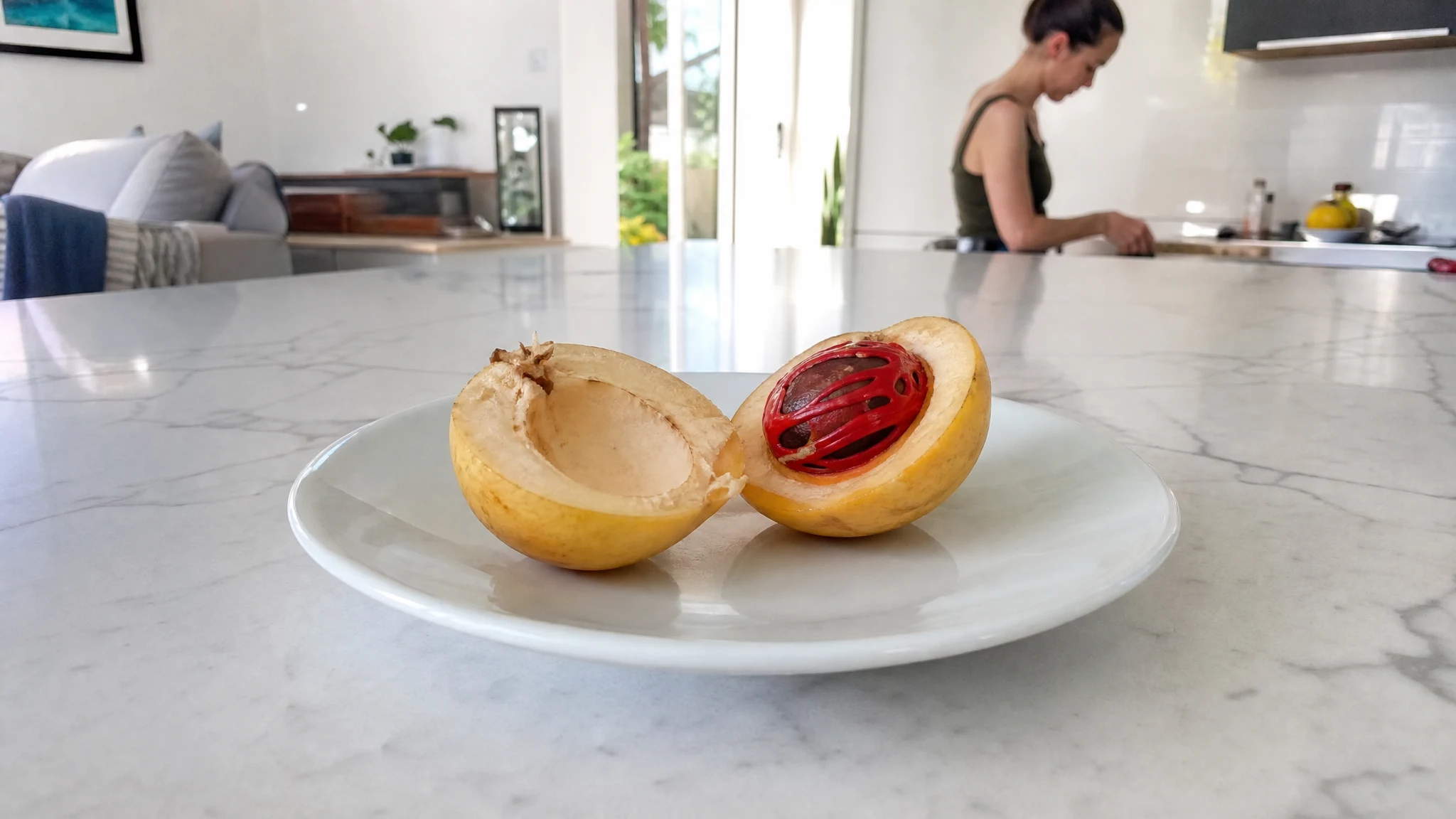
The essential oil is made by steam distillation. The 2023 European Food Safety Authority opinion on nutmeg oil describes steam distillation of dried, crushed seeds, with the oil separated from water afterwards. It is the product we sell: our nutmeg oils are distilled oils, sold neat.
A CO2 extract is made by passing carbon dioxide through the ground seed under pressure. A 2012 study in the Journal of Food Science did exactly this at 40 degrees C. At 90 bar it collected a volatile fraction, which was 1.4% of the charge by weight and held about 33% myristicin and about 16% sabinene. Raising the pressure to 250 bar in a later step gave 14.4% by weight of a butter-like material, mostly myristic acid. So one extraction run produced both an aromatic fraction and a fat, which is why a "CO2 extract" can mean more than one thing.
What the myristicin gap does and does not tell you
EFSA's specification for the distilled oil caps myristicin at 12%, and the CO2 volatile fraction held about 33%. It is tempting to conclude that CO2 concentrates myristicin. That is a reasonable hypothesis, but the two figures come from different seed lots, and one study cannot separate the effect of the method from the effect of the material. What the numbers do show is that a CO2 fraction is a different composition from a distilled oil, so a specification or a recipe written for one cannot simply be borrowed for the other.
How they differ in your hands
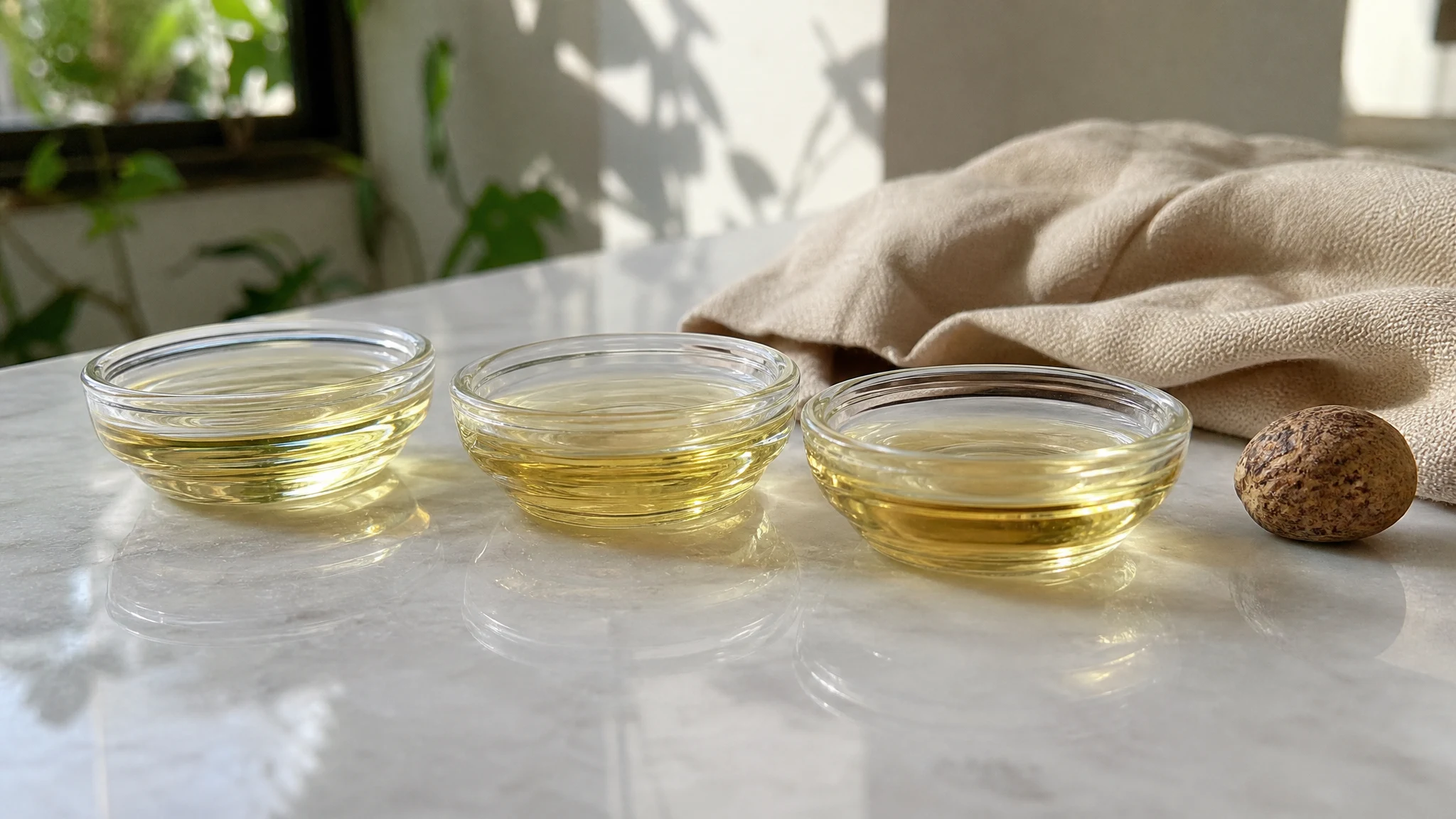
The differences show up before you ever look at a report. A distilled oil pours easily and spreads quickly on a blotter. A CO2 extract of the same seed can be more viscous and may smell richer, deeper and more like a jar of freshly ground spice. A butter-like fraction can be solid at room temperature and has to be warmed before it will blend with anything. If you ever find three bottles labelled nutmeg on a supplier's page, smell them and handle them side by side; the surprise is how different one seed can be.
Why it matters for safety limits
The IFRA Standards do not name nutmeg oil or any nutmeg extract. They cap a constituent instead: natural extracts are acceptable as long as safrole, isosafrole and dihydrosafrole total no more than 0.01% of the finished product. Dividing 0.01 by a material's safrole share shows the largest amount that stays under that line. As arithmetic, not a limit for any product on sale:
- A distilled oil with safrole between 1.69% and 2.30% (the EFSA batches) works out to about 0.59% down to 0.43% of the finished product.
- The CO2 volatile fraction in the 2012 study, at 4.1% safrole, works out to about 0.24%.
So on that one constituent, the extract would have a smaller allowance than the oil. The Tisserand Institute's nutmeg chart, which gives adults 0.8% for East Indian and 5% for West Indian type, is written for essential oil, and we have not found a published skin figure for a CO2 extract or butter. If you are working with an extract, ask the supplier for the batch data, and if it is thin, stay well under the oil's figures. For our oils we suggest 0.5% to 2% in a carrier with a patch test first, and we start at the low end.
Why we like the distilled oil
We are fond of the steam-distilled oil because it is the simplest of the three to understand. It is made by passing steam through crushed seed, it behaves like a thin, easy-pouring liquid, and it has a clean, bright, warm spice scent that is easy to place in a blend. A butter or an oleoresin can be lovely, but they are thicker, they pour differently, and they ask different questions of your recipe. If you are new to nutmeg, starting with the thin, pourable oil is the friendliest route.
A short buying checklist
- Ask for the botanical name, the part used and the process in words: steam distillation, supercritical CO2, solvent extraction or pressing.
- Ask for a GC-MS report for the batch, showing myristicin, safrole, elemicin and methyleugenol. If you want one for our oil, ask in writing through our contact page before ordering.
- Do not reuse a recipe's ratio across product types. A drop count written for a distilled oil says nothing about a CO2 fraction.
- Ask what the supplier intends the material for. A material made for flavor use is not automatically suited to a skin or candle formula.
We do not sell extracts or butter, so for those a specialist supplier is the place to go. If you want the steam-distilled oil, both of our oils are sold neat, so the dilution is yours to set, starting with our Botanical and Purity listings. Related reading: reading a nutmeg oil label, what nutmeg oil is, nutmeg versus mace oil and essential oil versus fragrance oil.
Whichever material you choose, the same rule holds: the label names a seed, and the paperwork tells you what was made from it.
Nutmeg Essential Oil
Nutmeg Essential Oil from our own shop, in sizes from 0.5 oz to bulk.
From $10.99
Shop Now →Sources & Further Reading
- EFSA Panel: Safety and efficacy of a feed additive consisting of an essential oil from the seeds of Myristica fragrans Houtt. (nutmeg oil) for all animal species (FEFANA asbl)
- Piras et al.: Extraction and separation of volatile and fixed oils from seeds of Myristica fragrans by supercritical CO2: chemical composition and cytotoxic activity on Caco-2 cancer cells
- 21 CFR 182.20 - Essential oils, oleoresins (solvent-free), and natural extractives (including distillates)
- IFRA Standards, 51st Amendment
- Tisserand Institute: Assessing the Safety of Essential Oils - the Nutmeg Case