How to Diffuse Nutmeg Oil: One Drop, Small Room
A diffuser fills a room, and everyone in the room breathes what it makes. That is what makes nutmeg oil in a diffuser such a nice little decision to get right: it is a cozy, warm-spice scent, and it takes very little oil to do the job. Here is how we would set it up, starting with the room and ending with the water.
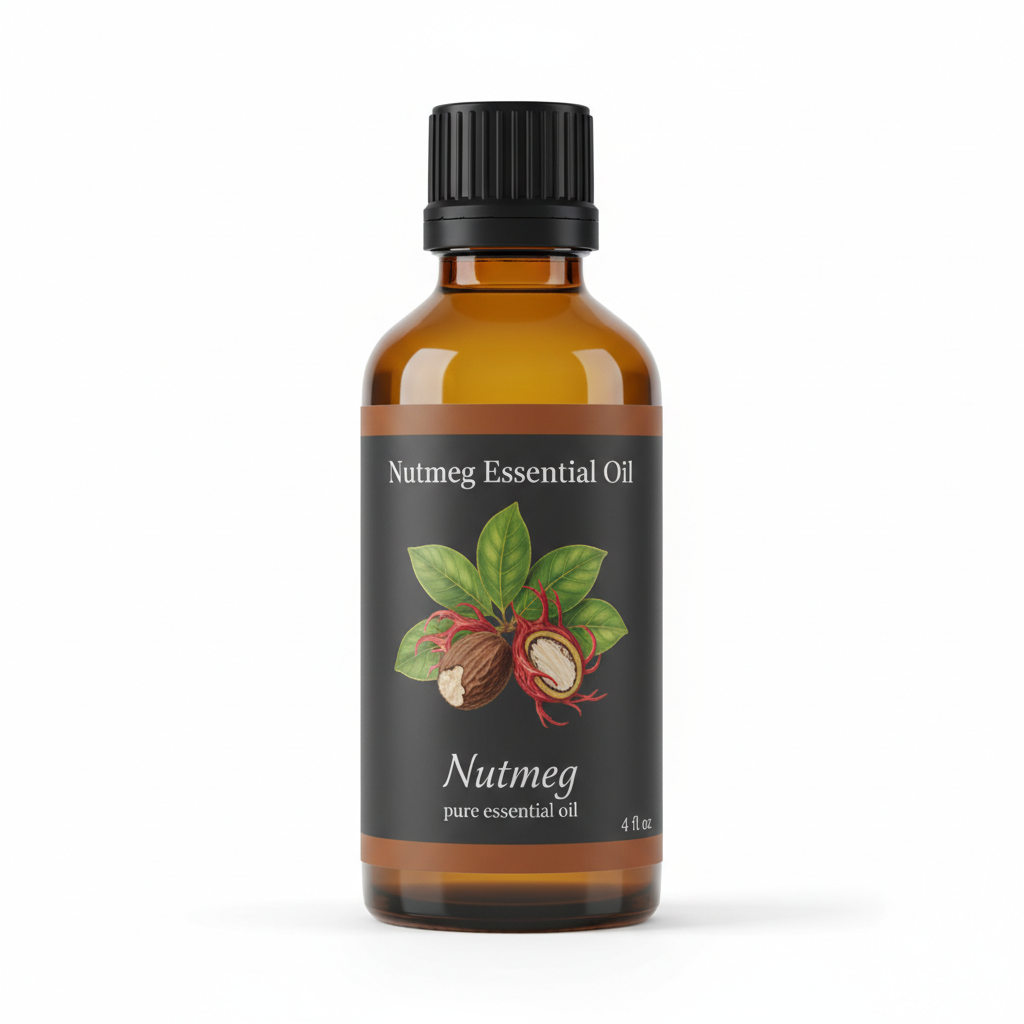
Nutmeg Essential Oil
Our own Nutmeg Essential Oil, in sizes from 0.5 oz to bulk.
From $10.99
Shop Now →Start with who shares the air
Before the device, think about the people and animals who will be in the room. We advise against diffusing nutmeg oil around anyone who is pregnant or nursing, around children, or around anyone taking medication that acts on the central nervous system, and our guidance for the oil itself is to diffuse it sparingly. If any of those describe your household, a spice-scented candle from a craft shop or a pot of mulling spices from the grocery is an easier way to get a similar mood. Our posts on pregnancy and children go through the reasoning.
Pets deserve the same thought. The ASPCA says that running a diffuser for a short time in a secured area is not likely to be a problem, that a pet with breathing problems may do better with no diffuser at all, and that it is best to avoid one in a house with birds. Its advice is general rather than about nutmeg, so we read "secured area" literally: a closed room the animal cannot wander into.
Pick a device
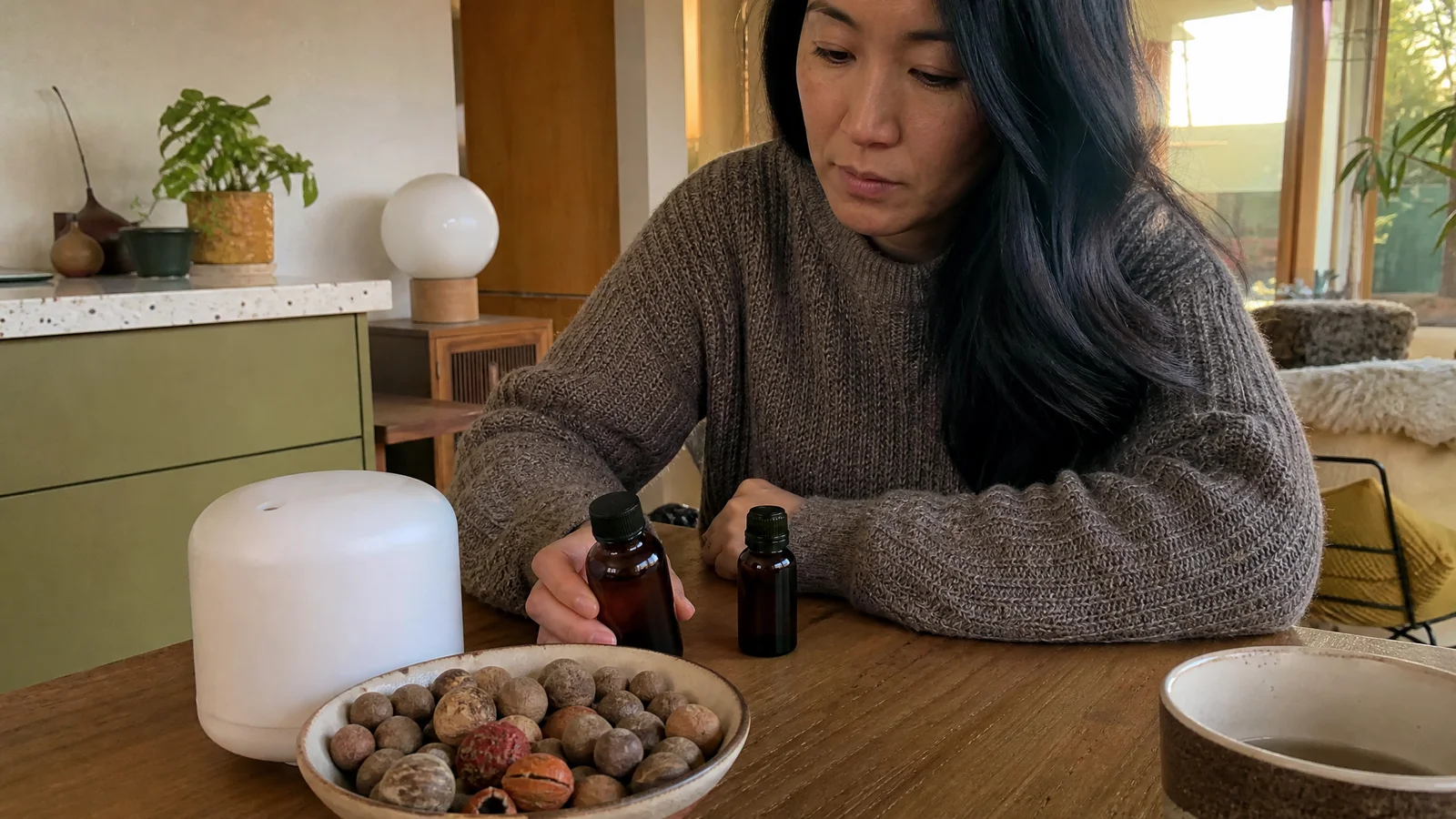
An ultrasonic diffuser, which uses vibration to turn water and oil into a fine mist, is the simplest place to start. It is also the type with the best-measured numbers. In a chamber study of one ultrasonic diffuser, lemon, lavender and eucalyptus oils each released a different amount of their main compounds in 15 minutes, and the water mattered a great deal: filling the tank with tap water instead of deionised water raised fine-particle output about fivefold in one test. Nutmeg was not among the oils tested, so it tells us the device is not a neutral humidifier rather than anything about nutmeg itself. The practical lesson is to follow the water advice in your diffuser's manual.
Reed diffusers and terracotta stones let the oil evaporate slowly with no power at all, which suits a hallway or a bookshelf. We sell the nutmeg oil but not diffusers, so you will find those at a home or craft shop.
Setting the scene
Where you put the diffuser matters almost as much as what goes in it. Choose a hard, level surface away from the edge of a table, a little distance from where people sit, and not directly under a shelf of books or fabric. Then start it, leave the room, and walk back in after a few minutes. Coming in fresh is the best test of whether the scent is welcoming or too much, because your nose gets used to a smell quickly when you stay beside it.
What about a simmer pot?
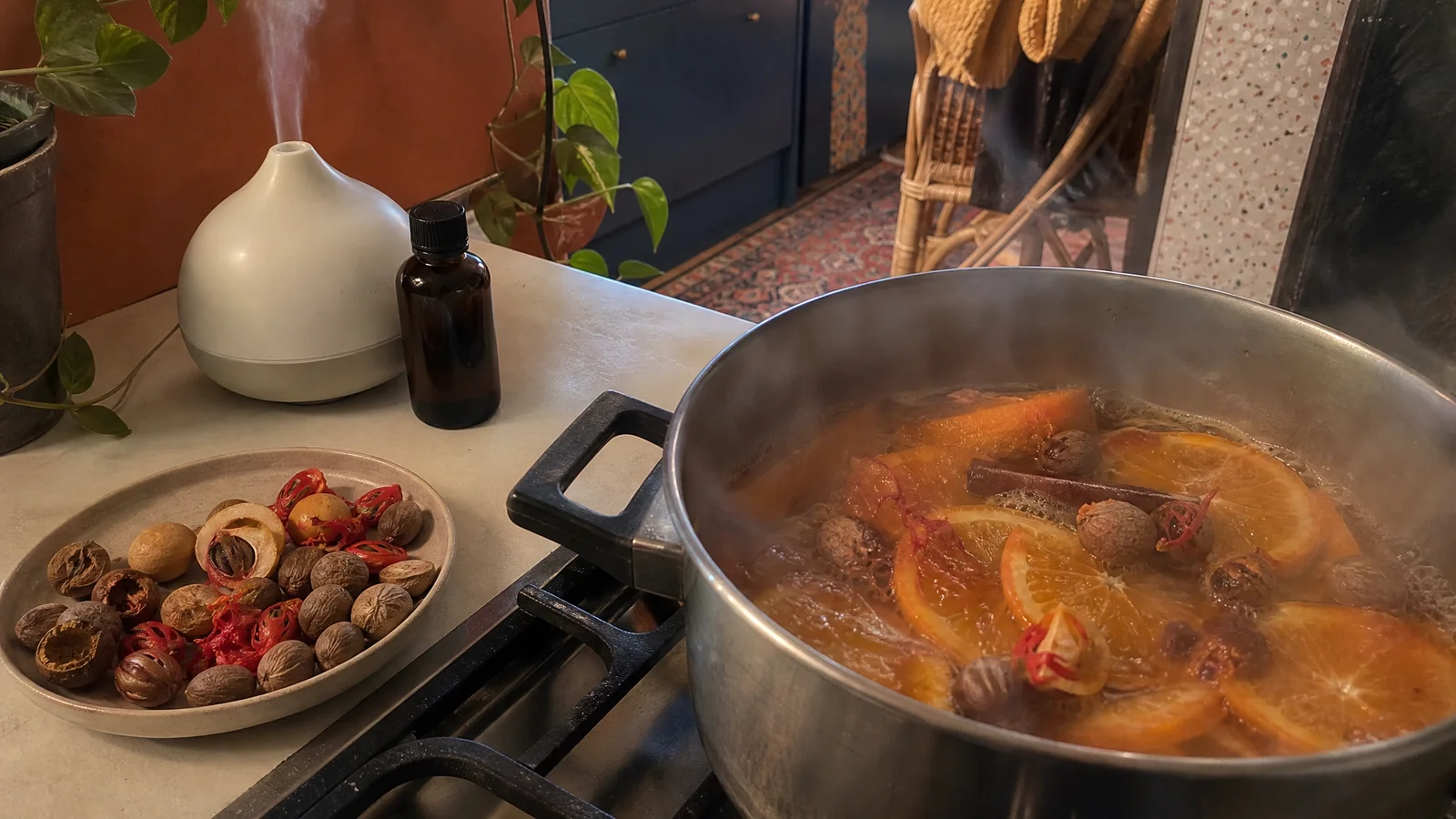
A stovetop simmer pot is a classic way to scent a kitchen, and the classic version is a pot of water with orange peel and whole spices. Nutmeg oil can join it as a drop or two on the water. We would keep the heat low, keep the pot attended, and keep the oil away from any direct flame or dry hot surface, because one supplier lists a flash point of about 34 C for its nutmeg oil, and that is a low number. This is our reasoning from that figure rather than a tested method.
How much oil
There is no published diffusion dose for nutmeg oil, so we start small. Poison Control notes that commercial vaporizer products with added oils are generally fine when used as directed, because a tiny amount of oil goes into a large volume of water. We take that as our cue: one drop in a full tank, a short session in a room you can leave, and only a little more if the first session went well. Tisserand's nutmeg guidance says the oil is safe to diffuse in moderation, and one drop is a comfortable reading of moderation. That is our suggestion, not a measured limit.
For perspective, a half-ounce bottle holds roughly 300 drops (about 0.044 g a drop, using the density of 0.887 on the certificate we hold for one batch), so a drop per session stretches the bottle a long way.
When to stop
If anyone in the home coughs, or notices eye, throat or head irritation, switch the diffuser off and open a window. EFSA lists nutmeg oil as an irritant to skin and eyes and as a skin and respiratory sensitiser for people who handle it, so a little restraint is in order. We keep it out of bedrooms and rooms where someone is asleep, because a sleeping person cannot tell you they are uncomfortable. Keep the bottle and the diffuser out of reach of children and pets; if anything is swallowed, Poison Control is at 1-800-222-1222 in the United States.
If you would like to blend, our pairing guide has ideas, and the autumn diffuser post carries the idea into a full season.
Keep the device tidy
When the session is over, empty the tank and wipe it out as your diffuser's manual describes, so the next scent starts clean and a spicy note does not hang around in a tank meant for something else. A tidy diffuser is also easier to enjoy, and it takes only a minute.
Start with one drop, a small room and a relaxed afternoon, and let the warm spice do what it does best.
Nutmeg Essential Oil
Nutmeg Essential Oil from our own shop, in sizes from 0.5 oz to bulk.
From $10.99
Shop Now →Sources & Further Reading
- Schwartz-Narbonne H, Du B, Siegel JA, 2021. Volatile organic compound and particulate matter emissions from an ultrasonic essential oil diffuser. Indoor Air 31(6):1982-1992
- ASPCA. Is the Latest Home Trend Harmful to Your Pets? What You Need to Know!
- Poison Control. Essential oils: Poisonous when misused
- Tisserand Institute. Assessing the Safety of Essential Oils - the Nutmeg Case
- EFSA FEEDAP Panel, 2023. Safety and efficacy of a feed additive consisting of an essential oil from the seeds of Myristica fragrans Houtt. (nutmeg oil) for all animal species (FEFANA asbl)
- Robertet. Nutmeg oil - Robertet Groupe - Nutmeg oil ingredient for perfume