How to Store Nutmeg Oil So It Stays Fresh
A good bottle of nutmeg oil should smell as lively in a year as it did the day it arrived, and a little care makes that far more likely. The enemies are simple: air, heat and light. Here is how we would keep a bottle at its best, and how to tell when it is time to retire it from skin use.
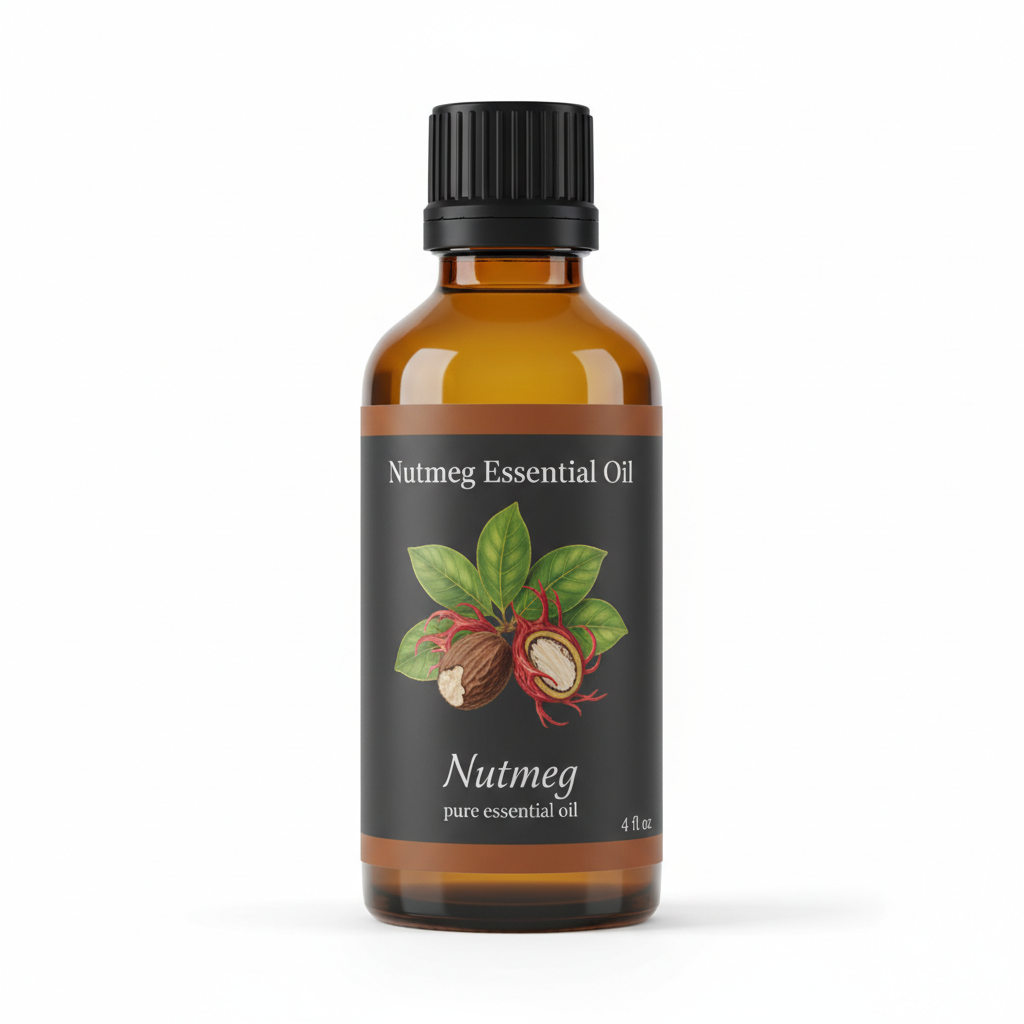
Nutmeg Essential Oil
Our own Nutmeg Essential Oil, in sizes from 0.5 oz to bulk.
From $10.99
Shop Now →How long does it last?
Our product pages say typically two to three years when the bottle is kept tightly capped in a cool, dark place away from heat and sunlight. Other voices are more conservative. The EFSA panel that reviewed nutmeg oil records a stated shelf life of at least 12 months, and the fragrance house Robertet lists 12 months for its Indonesian nutmeg oil. Neither gives a stability study behind the figure. Our advice is to treat the range as a guide: buy what you expect to use within a year or two, and trust your nose over the calendar.
The Certificate of Analysis we publish lists a best-by date of 07/31/2027 for its batch. That date belongs to a batch rather than to your bottle, so a note of your own is more useful, as you will see below.
What changes inside the bottle
Nutmeg oil is made largely of terpenes, the light, fragrant molecules that also give pine and citrus their scent. Terpenes react slowly with oxygen, a process called autoxidation. A 2017 review of fragrance allergy found that the oxidised forms of limonene and linalool are the major allergens among common fragrance terpenes, and rated oxidised limonene higher than the fresh material. That review did not test nutmeg oil, but limonene is one of the compounds nutmeg oil carries (a few percent in the EFSA batches). Reasoning from that, an oil that has spent a long time in contact with air is a poorer candidate for skin than a fresh one. That is the reason behind the habits below.
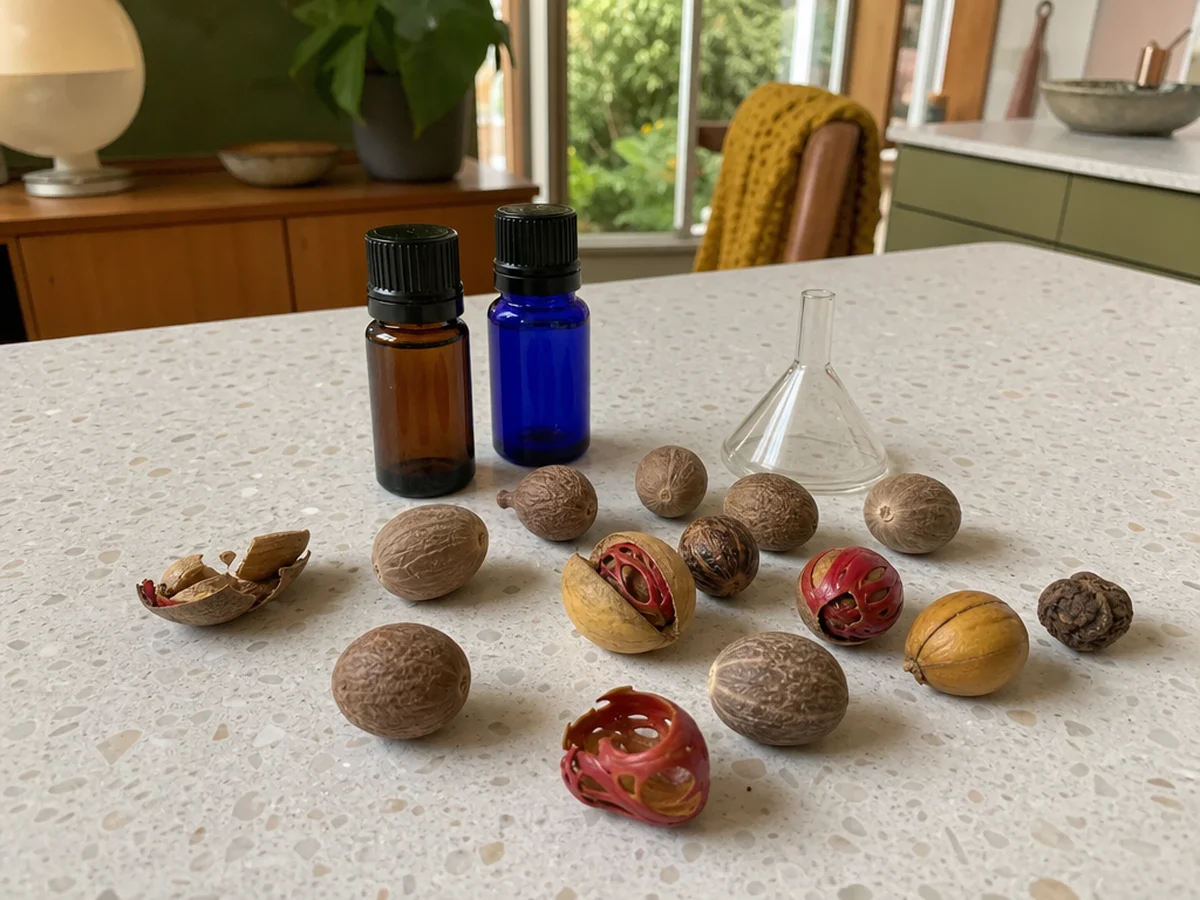
Our storage habits, in order of importance
- Cap it every time. Open, dispense, close. Leaving the cap off while you work is the biggest avoidable air exposure.
- Date it. Write the day the bottle arrived and the day you opened it. Your own dates are the ones you can act on.
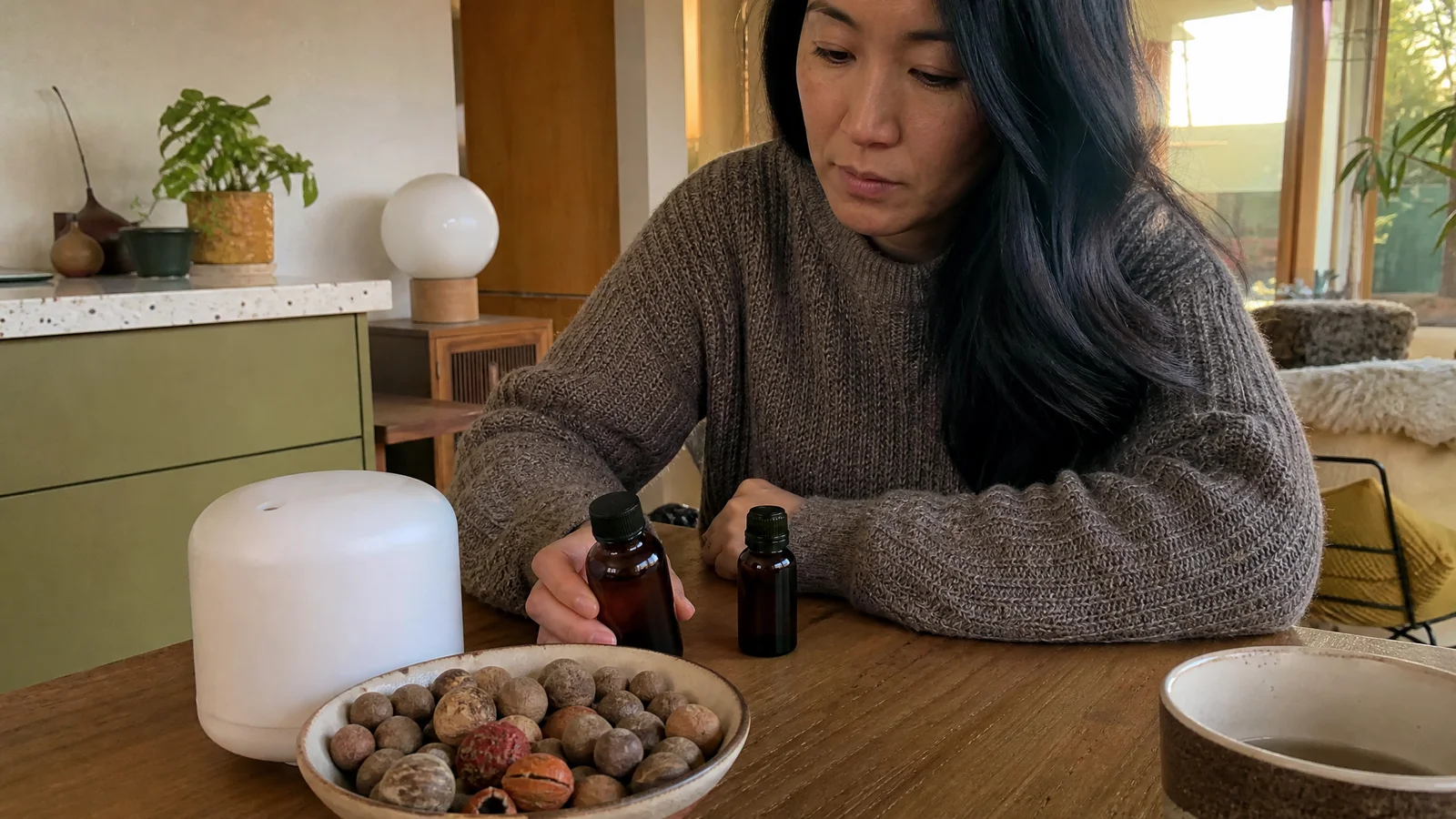
- Match bottle to volume. A half-empty large bottle holds a lot of air. As the level drops, move the oil into a smaller clean glass bottle with a tight cap. Choosing a size you will actually finish helps too, and the bottle size post does the arithmetic.
- Keep it cool and dark. A cupboard away from the stove, radiator and window is ideal.
Choosing a spot at home
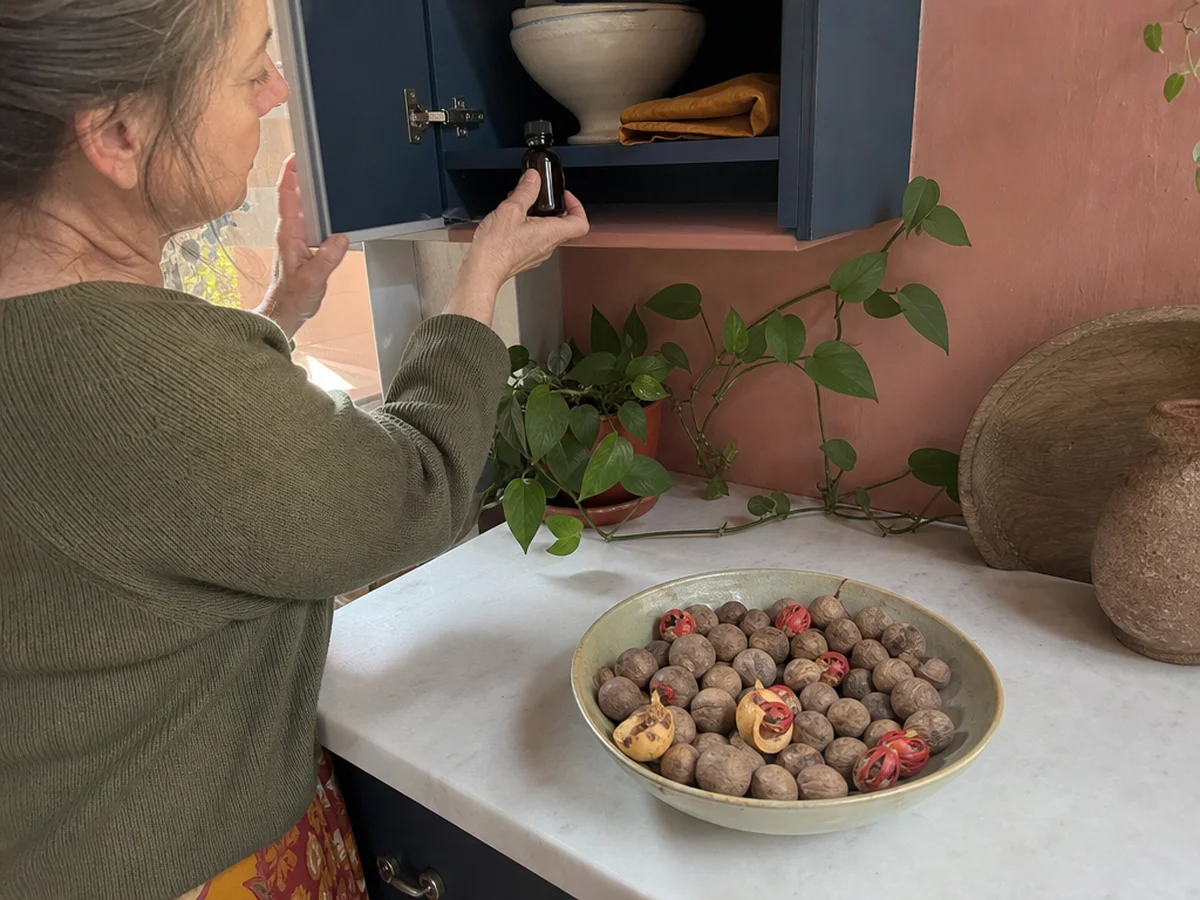
Walk around your house and look for the calm corner: a shelf inside a cupboard away from the oven, not above the kettle, not beside the window. A bedroom drawer or a closet shelf often works well. The best spot is one you pass every day without noticing, because oil you can find is oil you will remember to cap.
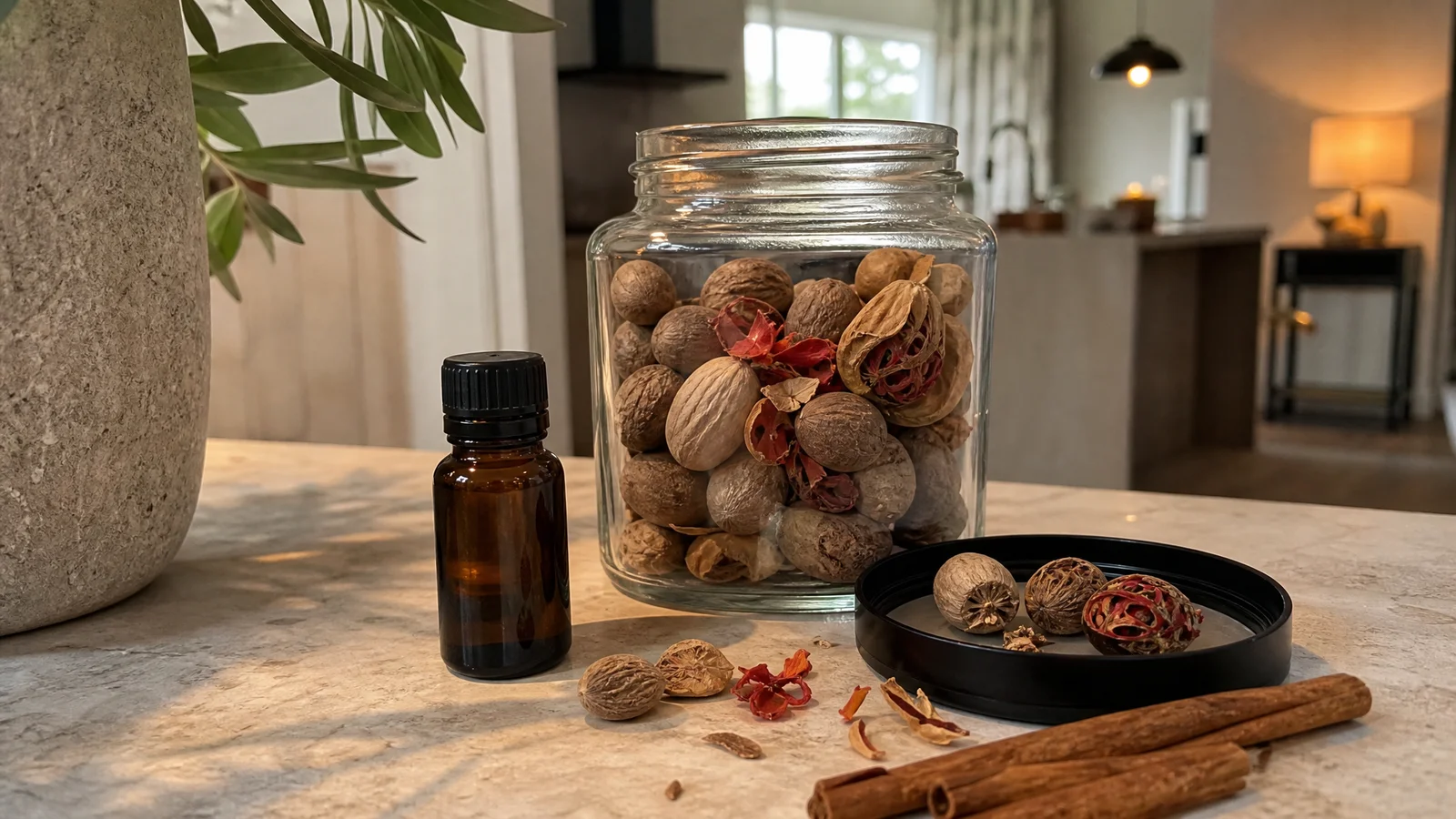
A small box or tin makes a nice home for a few bottles. It keeps them upright, keeps the labels readable and gives the dropper somewhere to rest if it ever leaks.
Why heat deserves respect
Robertet lists a flash point of 34 C for its nutmeg oil, which is the temperature at which the vapour can ignite. That figure belongs to their oil rather than ours, but it is a useful reminder that a bottle should not live on a sunny sill, beside a hob or near a candle flame. The same placement that makes sense for safety also keeps the aroma fresh.
Checking an older bottle
There is no simple home test. Colour is a weak guide, because shade varies naturally between batches: we describe our oil as typically a thin, pale yellow to nearly colorless liquid, and the batch on our Certificate of Analysis is listed as a yellow liquid. Smell is the practical signal. If the warm, sweet, spicy aroma has gone flat or sharp compared with when the bottle arrived, keep it off your skin. Older oil can still be fine for something like a simmer pot, but that is no reason to use more of it.
Opening and closing, gently
When you use the bottle, set it on a flat surface, wipe the neck with a clean tissue if any oil has run down and press the cap on firmly until you feel it seat. A sticky neck collects dust and can make the cap hard to close next time. Wipe the dropper tip too, and you will notice the bottle stays tidier and smells fresher for longer.
Storage is also a safety habit
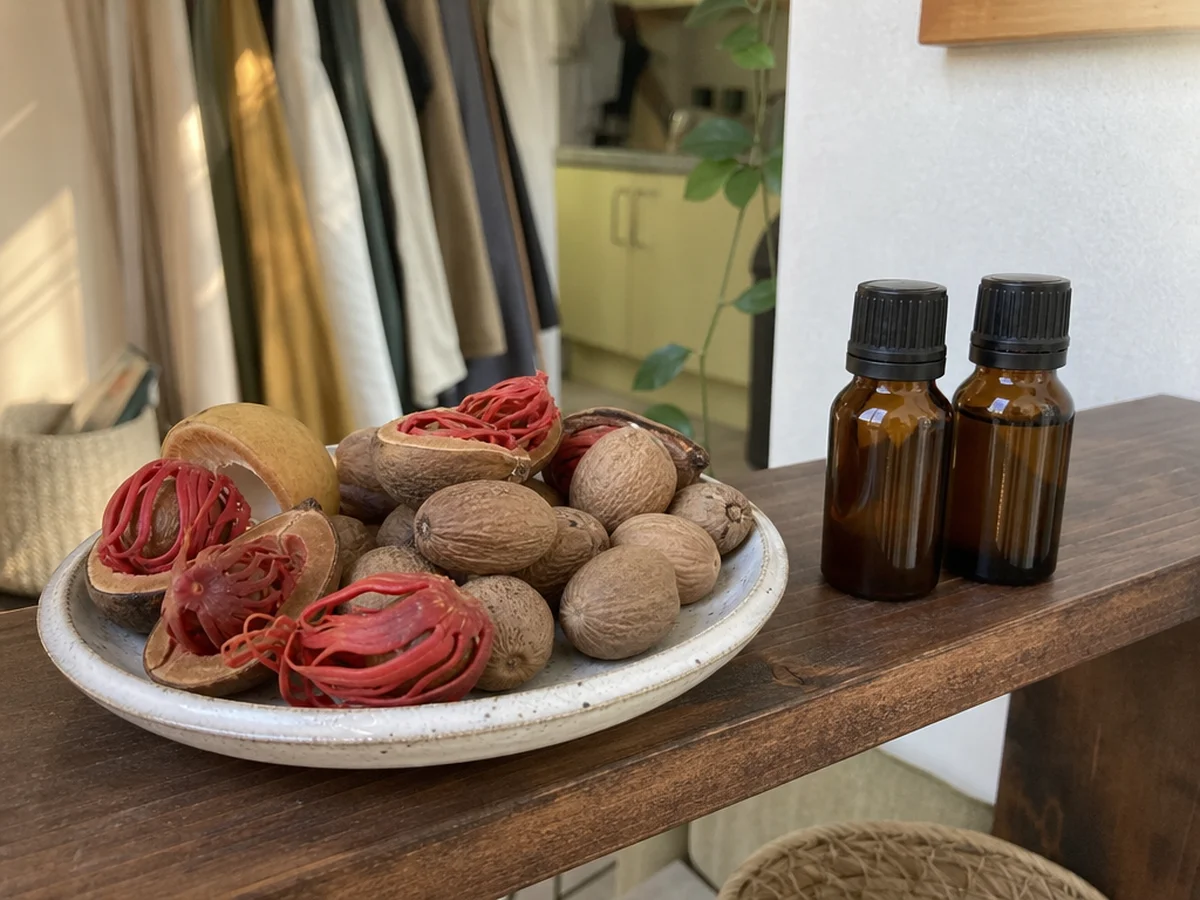
Poison Control advises that essential oils at home be locked up, out of sight and reach of children and pets. Nutmeg oil is not for swallowing, so a labelled bottle in a closed cupboard is part of the plan. If you diffuse it, the ASPCA says a short session in a secured area is not likely to be an issue for pets, though homes with birds or pets with breathing problems are better without a diffuser. Our ingestion post explains more about why we keep it out of reach, and the diffuser post covers shared air.
The short version is a dated, tightly capped bottle in a cool, dark cupboard, used within a year or two and kept off the skin once you are unsure of it.
Nutmeg Essential Oil
Nutmeg Essential Oil from our own shop, in sizes from 0.5 oz to bulk.
From $10.99
Shop Now →Sources & Further Reading
- EFSA Panel on Additives and Products or Substances used in Animal Feed. Safety and efficacy of a feed additive consisting of an essential oil from the seeds of Myristica fragrans Houtt. (nutmeg oil) for all animal species (FEFANA asbl). EFSA Journal, 2023
- Uter W. Contact allergy to fragrances: current clinical and regulatory trends. Allergologie Select, 2017
- Robertet. Nutmeg oil (product page)
- Poison Control. Essential oils: Poisonous when misused
- ASPCA. Is the Latest Home Trend Harmful to Your Pets? What You Need to Know!