Nutmeg Oil Blends: Best Oils to Pair With It
Nutmeg is the quiet one in a spice blend. It rarely leads, but take it out and the room suddenly feels less finished. That makes it a generous partner, and the list of oils that sit well beside it is long. Here are the pairings we like to point people toward, a few ways to put them together, and one small bit of arithmetic that matters if the blend is going on skin.
Nutmeg Essential Oil
Our own Nutmeg Essential Oil, in sizes from 0.5 oz to bulk.
From $10.99
Shop Now →The pairings we reach for
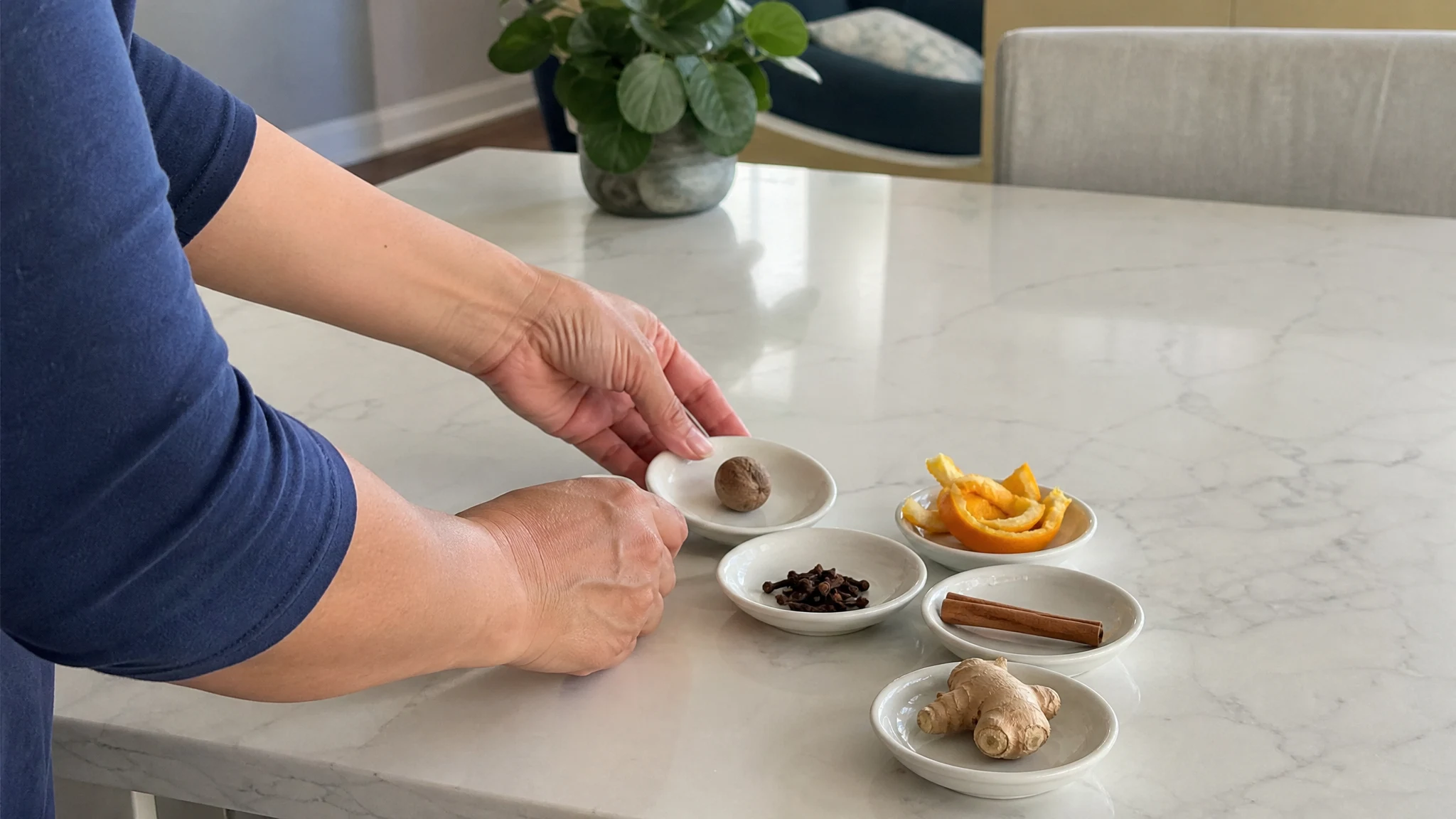
We describe our nutmeg oil as warm, sweet and spicy, and it blends well with orange, clove, cinnamon, ginger, lavender, cedarwood, vanilla and sandalwood. Each does something different for it.
- Sweet orange brightens nutmeg and makes it feel like fresh baking instead of a spice cabinet. It is the easiest first blend.
- Clove and cinnamon turn up the heat for a classic holiday scent. Nutmeg rounds their sharp edges into something softer.
- Ginger adds a lively, zesty spice that keeps a blend from feeling heavy.
- Vanilla and sandalwood give nutmeg a creamy, woody base, which is why they turn up in perfume work. Our perfume post goes further.
- Lavender and cedarwood bring a calm, green and woody backdrop for people who like their spice quieter.
We sell the nutmeg oil only. The others are easy to find at an aromatherapy or craft supplier, and many of them make good partners for a seasonal diffuser. The autumn diffuser post and the chai blend are good places to see them in action.
Try the blotter trick
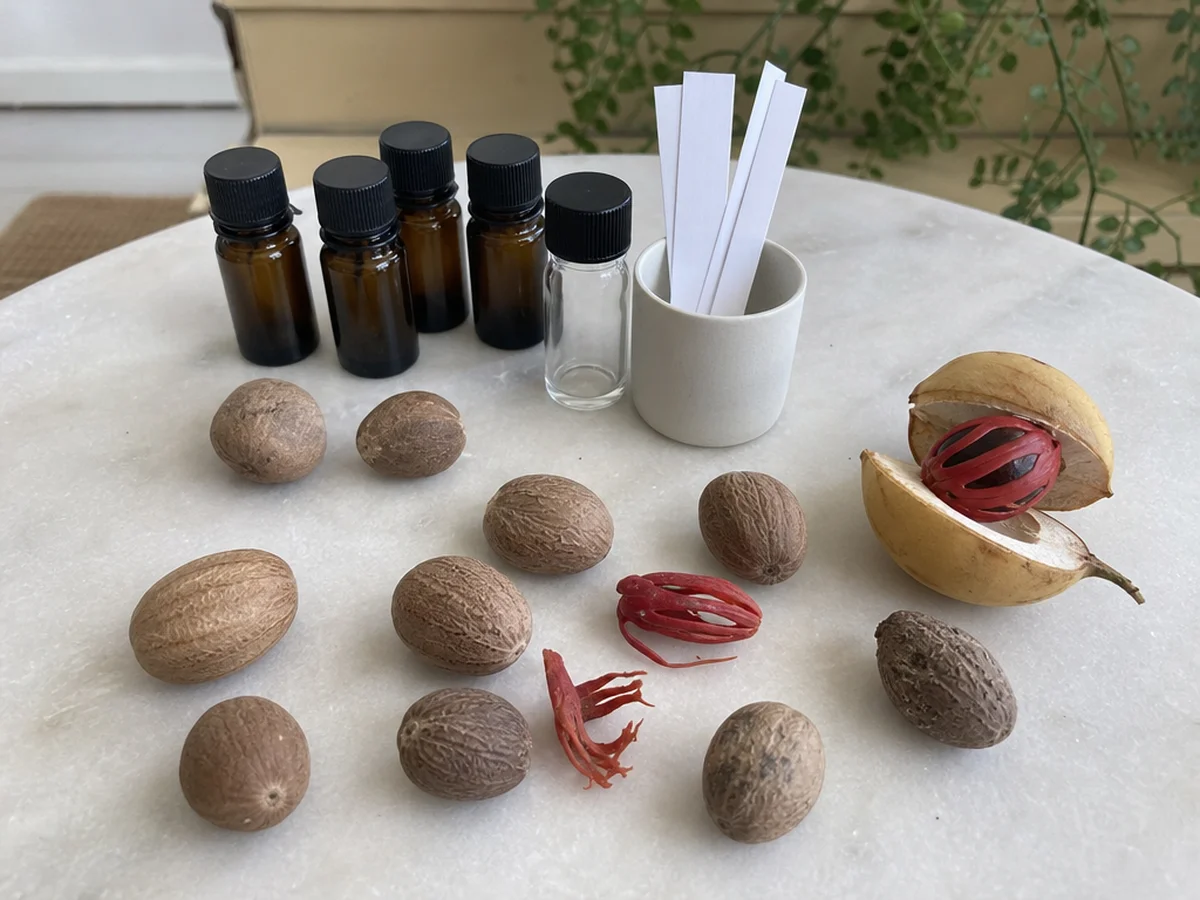
Before you commit drops to a diffuser, put nutmeg on one paper strip and a partner oil on another, and wave them together a few inches from your nose. This gives you a quick preview of the pairing without wasting a drop. Try sweet orange with nutmeg, then ginger with nutmeg, then vanilla, and notice how each one changes the character. The strips also keep well for an hour or so, so you can come back and notice how the pairing develops as the lighter notes fade.
Smell first, then ratios
A simple way to start is by drops in a diffuser: for example, four drops of sweet orange to one of nutmeg, then add a single drop of clove if you want more warmth. That is a starting idea of ours rather than a tested recipe, so adjust by nose. Because nutmeg is strong, begin with less than you think, smell the result, and build up. If a blend feels too sharp, orange or vanilla will soften it. If it feels flat, a touch of ginger or clove gives it lift.
Scent is personal, and lists of "oils that go together" can only go so far. The chemistry shows why. EFSA's published analyses show that sweet orange oil is almost all limonene, while nutmeg is mostly sabinene and pinenes, so the two share very little and still sit beautifully side by side. Contrast works as well as echo in a good blend.
If the blend is going on skin
For a diffuser, ratios are about taste. For a leave-on skin product, each oil in the blend carries its own limit, and the lowest one governs. Nutmeg's limits come from a few compounds, including safrole. IFRA, the fragrance industry's standards body, caps the total safrole in a finished product at 0.01%. EFSA reported an average of about 2% safrole across seven nutmeg batches, which works out to roughly 0.5% nutmeg oil in the finished product. The Tisserand Institute's nutmeg chart gives 0.8% for adults for East Indian oil. Our general skin guidance is 0.5% to 2% in a carrier, and with nutmeg we stay at the bottom of that range; we do not call 2% safe.
Safrole adds up across oils. EFSA found about 0.9% safrole in cinnamon leaf oil, for example, so a blend with both oils shares one 0.01% allowance. A worked example, using the average figures and our own arithmetic: in a product with 1% total fragrance, a blend of 20% nutmeg and 10% cinnamon leaf puts about 0.004% safrole from nutmeg and about 0.0009% from cinnamon leaf into the product, a total of about 0.005%, which leaves room. Push nutmeg up to 40% of the blend and the nutmeg alone reaches about 0.008%, leaving very little. This is why we suggest reaching for orange, ginger or vanilla first when a skin blend wants company, and asking suppliers for the safety data and IFRA certificate on every oil you use. Our roller blend post has more on skin use.
Keep notes as you go
It is surprising how quickly a good blend gets forgotten. Keep a small notebook by the oils and jot down the oils, the drops and a few words about how it smelled. Over a season you will build a little library of your own favorites, and you will know which pairings you reach for when the evenings turn cold. It is the simplest habit we know for getting better at blending.
A few finishing touches
Patch test a small area first, keep oils away from eyes, and keep every bottle away from children and pets. We advise against nutmeg oil for anyone who is pregnant or nursing, for children, and for anyone taking medication that acts on the central nervous system.
Pick a partner, start with less nutmeg than you expect, and let your nose decide the rest. If you blend often, larger sizes of the nutmeg oil are listed on our bulk page.
Nutmeg Essential Oil
Nutmeg Essential Oil from our own shop, in sizes from 0.5 oz to bulk.
From $10.99
Shop Now →Sources & Further Reading
- EFSA FEEDAP Panel, 2023. Safety and efficacy of a feed additive consisting of an essential oil from the seeds of Myristica fragrans Houtt. (nutmeg oil) for all animal species (FEFANA asbl)
- EFSA FEEDAP Panel, 2022. Safety and efficacy of feed additives consisting of essential oils from the bark and the leaves of Cinnamomum verum J. Presl (cinnamon bark oil and cinnamon leaf oil) for use in all animal species (FEFANA asbl)
- Tisserand Institute. Assessing the Safety of Essential Oils - the Nutmeg Case
- IFRA, 2024. IFRA Standards - 51st Ammendment