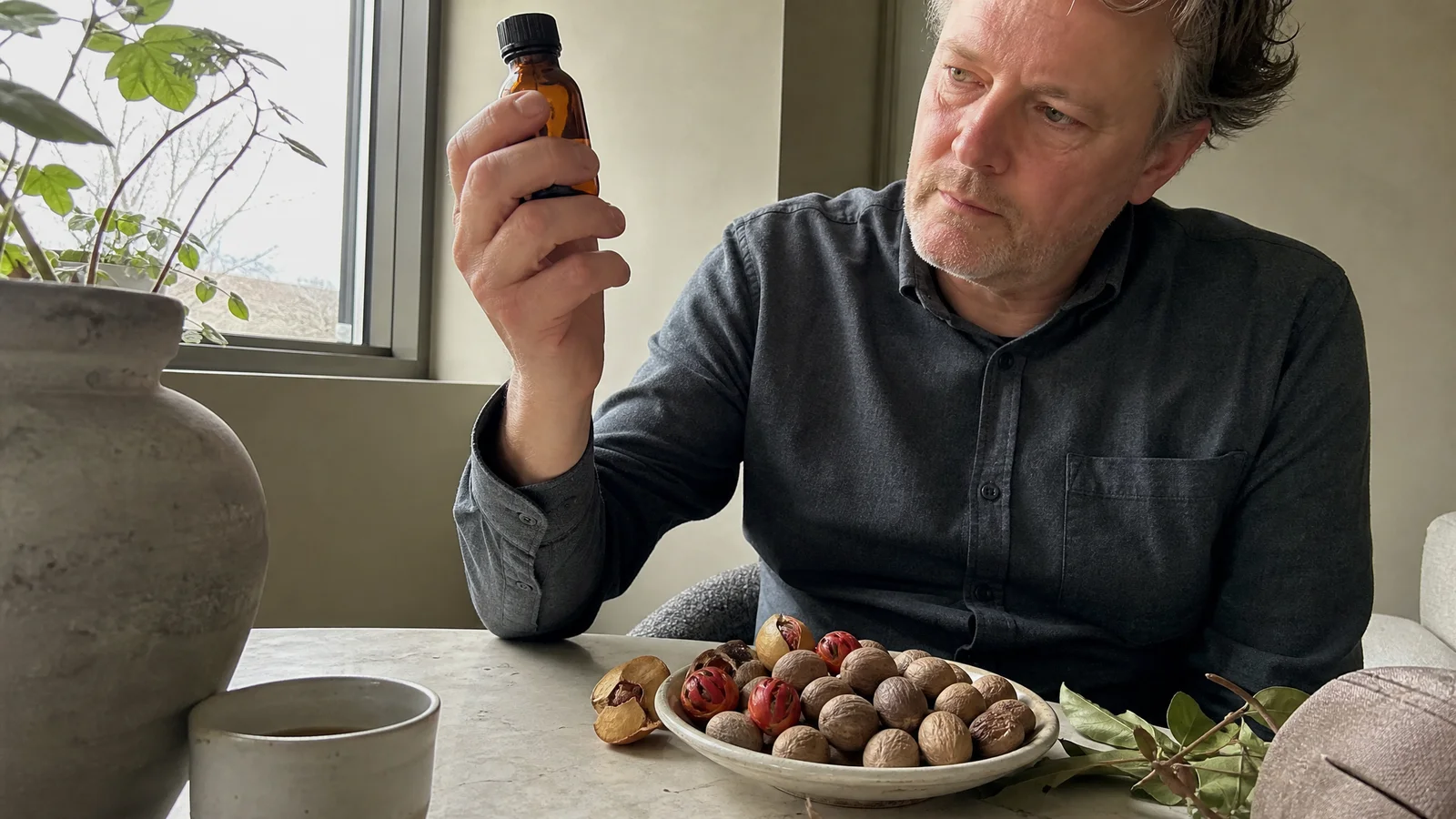
How to Check Nutmeg Oil Quality Before You Buy
Plenty of advice online tells you to drip nutmeg oil on paper or park it in the fridge to see if it is real. Those tricks tell you how an oil evaporates or whether it clouds in the cold, and nothing about what is in the bottle. The checks that work are quieter ones: a name, a plant part, a batch number and a report that matches it.
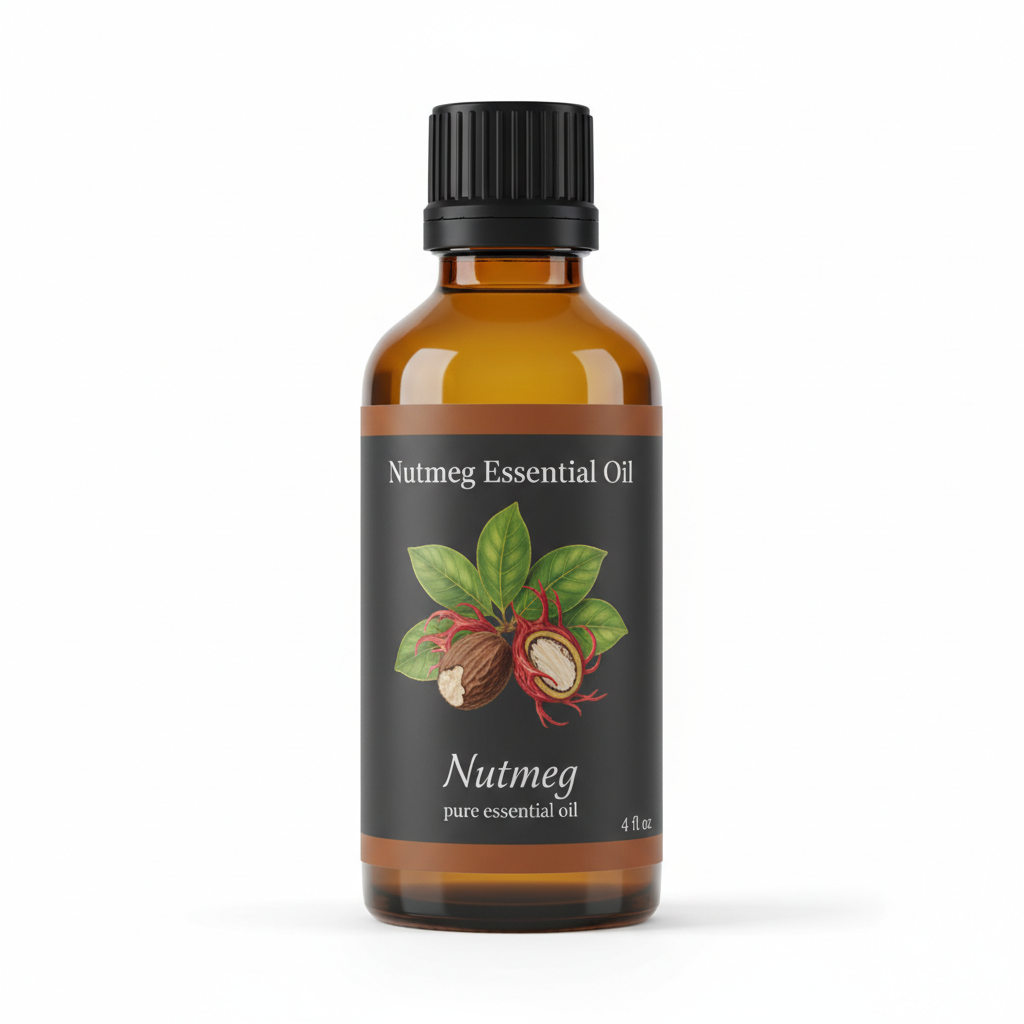
Nutmeg Essential Oil
Our own Nutmeg Essential Oil, in sizes from 0.5 oz to bulk.
From $10.99
Shop Now →Start with your senses
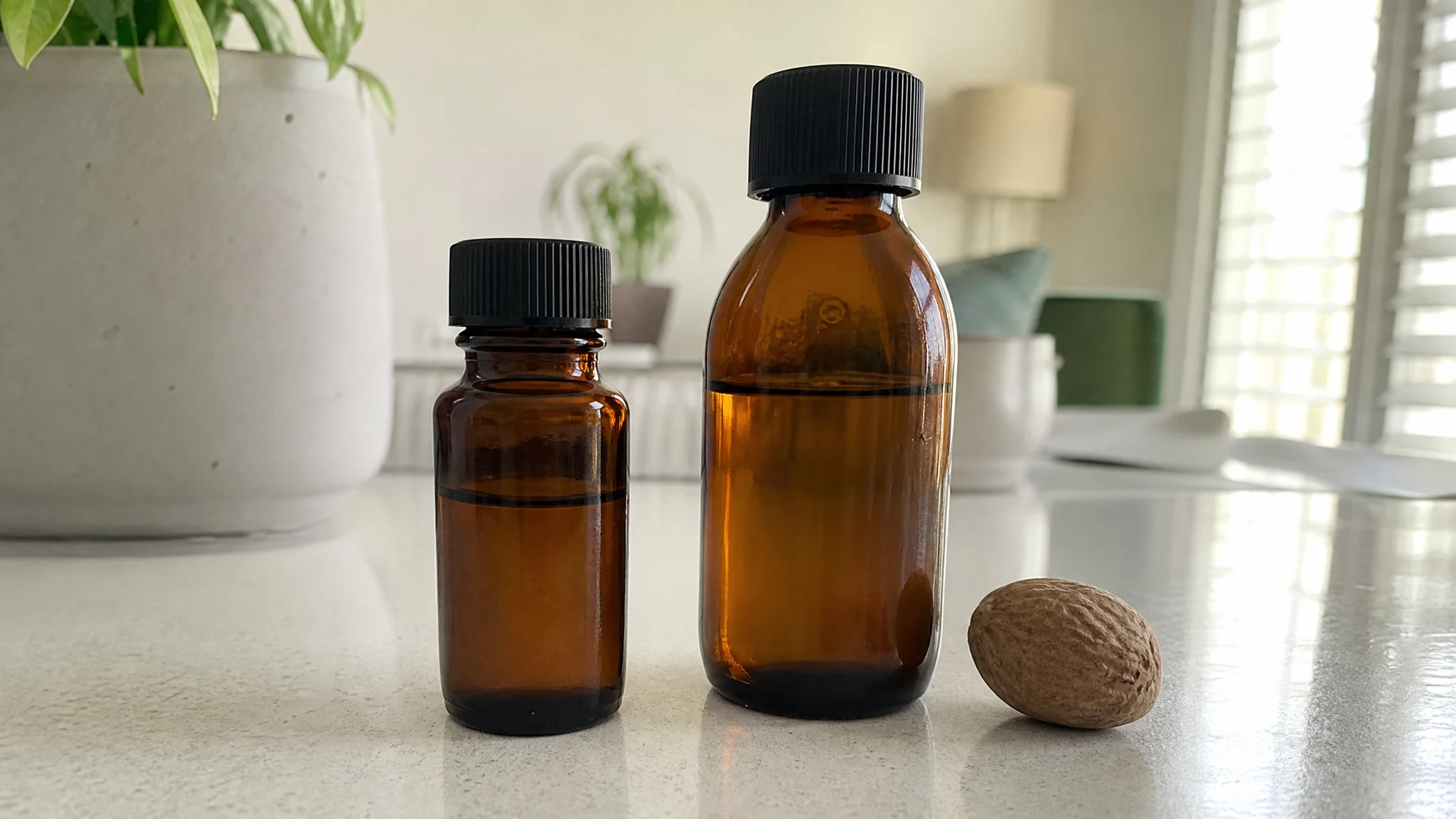
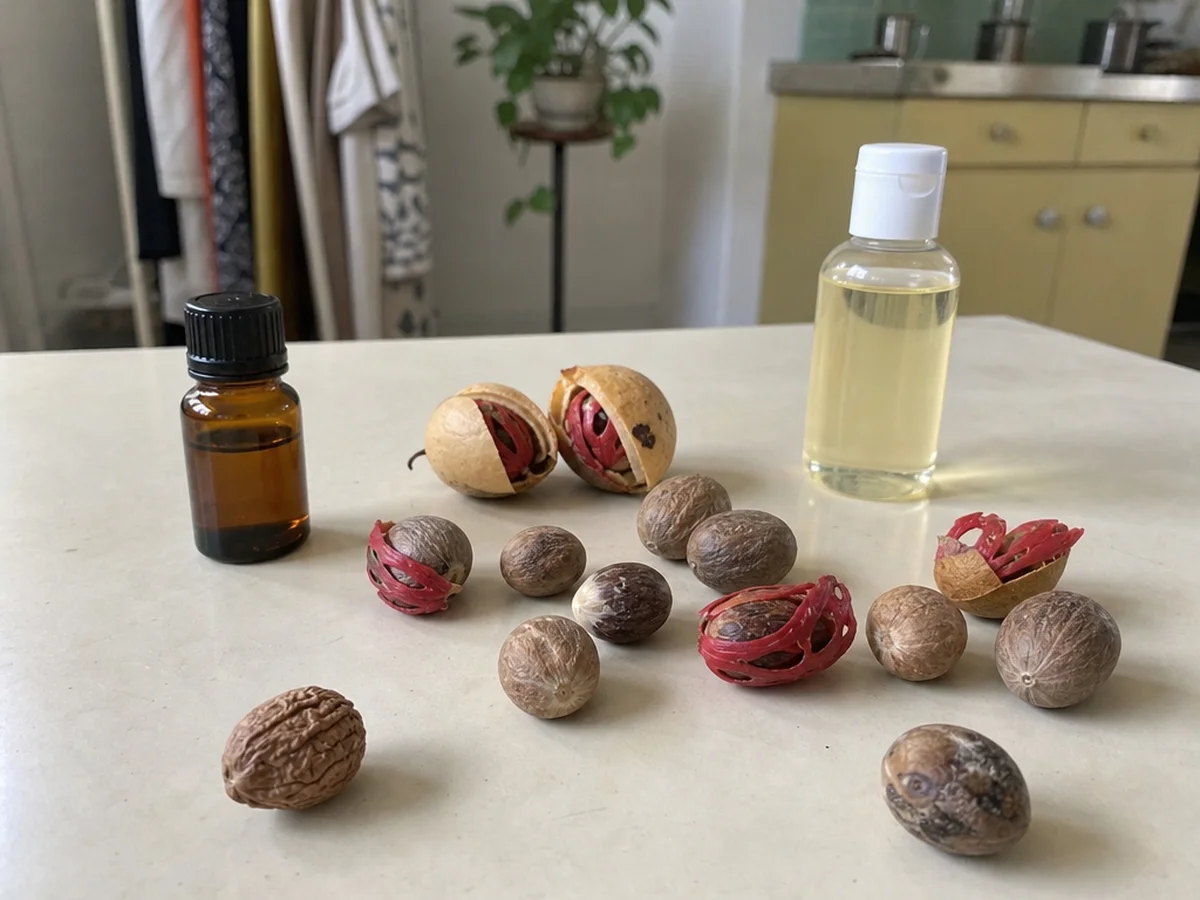
When a bottle arrives, give it a calm minute before the paperwork. Open it, put a drop on a paper blotter, and notice the scent as it opens and as it fades. Look at the oil in good light and note its color and how it pours. Write what you notice on a card, and keep it with the bottle. None of this proves anything about the contents, but it gives you a reference to compare against the next bottle.
What the kitchen tests can and cannot tell you
A greasy ring on blotting paper points to a heavy ingredient, but it cannot say whether that ingredient is nutmeg. Stretching an oil with a cheaper one is a known issue across the trade. A 2026 paper in Molecules built a gas chromatography method for catching vegetable and mineral oil in essential oils and ran it on 20 commercial oils. Several held vegetable oil, and other added material showed up at levels as high as 52% in some samples. The study was not about nutmeg specifically, but the lesson carries: it takes an instrument to find this, not a blotter.
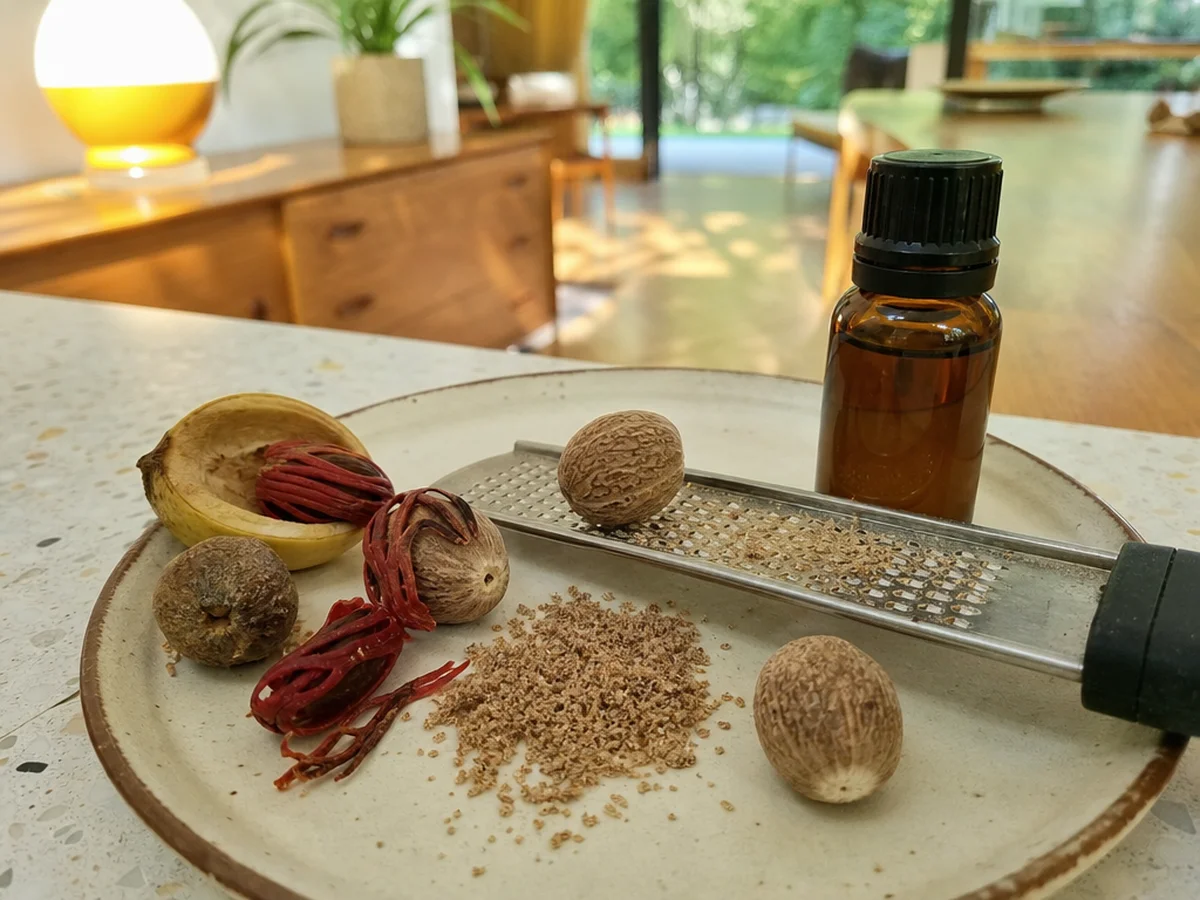
Your nose is still useful for a different job. If an oil smells off, flat or sour, trust that. A good smell alone, though, does not tell you the origin, age or grade.
Check one: the botanical name and the plant part
Nutmeg oil should be labelled Myristica fragrans. It should also name the part of the tree, because the same tree gives different oils. A 2022 review of nutmeg oil reported typical yields of 6.2% to 7.6% from the kernel and 8.1% to 10.3% from mace, and the oils differ in composition too. Our comparison of nutmeg and mace oil explains why "nutmeg" with no part named is only half an answer.
Check two: a batch number and a document that matches it
A batch number is what ties a bottle to a report. Without it, a certificate is just a nice page. The Certificate of Analysis we have for one batch lists batch NUTLUBMFINC006A, a best-by date of 07/31/2027, and three physical measurements set against stated ranges: relative density 0.887 (range 0.860 to 0.910), refractive index 1.478 (range 1.470 to 1.488) and optical rotation +11.80 degrees (range +5 to +30).
Those numbers are good screening values. A badly diluted or mislabelled oil can drift outside them. They are averages across the whole mixture, though, so on their own they do not describe the individual compounds in it. For that, you want the next check.
Check three: a GC-MS report
Gas chromatography with mass spectrometry splits an oil into its compounds and reports each one. For nutmeg, it is the report that shows the main terpenes (sabinene and the pinenes) and the three constituents that drive safety limits: safrole, methyleugenol and myristicin. As a reference point, a 2023 European Food Safety Authority opinion described seven Indonesian batches with sabinene near 21%, alpha-pinene near 20% and safrole around 2%. It also showed that method matters: EFSA found its GC-MS myristicin results sat above the GC-FID specification and relied on the specification instead.
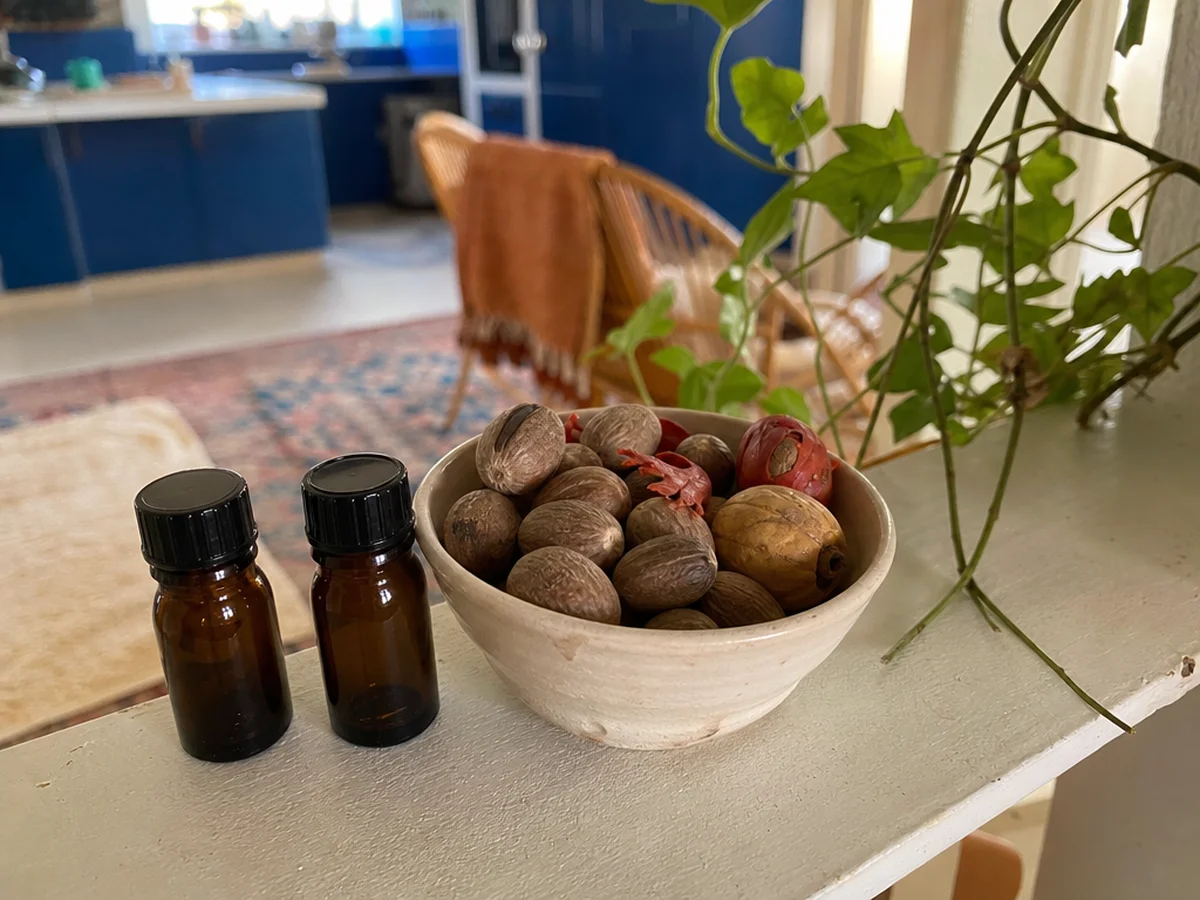
When a GC-MS sheet reaches you, a few questions make it useful. Does it carry the batch number on your bottle? Does it name the laboratory and the date? Does it list safrole, methyleugenol and myristicin and say which method produced the numbers? If you want one from us, ask in writing through our contact page before you order, and keep the reply with your batch number. We walk through one in how to read a GC-MS report for nutmeg oil.
Check four: the safety wording
A seller who knows nutmeg will say it is for external use only, diluted, and kept away from children and pets. That matches what the authorities say. The Tisserand Institute notes that East Indian and West Indian nutmeg oils contain quite different amounts of safrole and methyleugenol, and its dilution chart reflects it, with adults at 0.8% for East Indian and 5% for West Indian type. We suggest 0.5% to 2% in a carrier oil with a patch test first, and we start at the low end. Our post on swallowing nutmeg oil covers why it is not an oil to eat.
A simple order of operations
If we were buying nutmeg oil for the first time, we would work in this order: read the label for a botanical name and plant part, ask for the batch number and any documents in writing, buy a small bottle, and keep notes. Only after that would we think about a larger size. It is a slower start, and it costs very little.
A word on "pure" and dates
On a cosmetic bottle, "pure" has no standard behind it, so it is not a check. A best-by date is more useful, as long as you ask what it is based on. The date tells you what the seller assigned to that batch, not how the bottle has been stored since.
Our nutmeg oils are sold neat, with nothing added. If you need more documentation than we have shown here, ask us before you buy and we will tell you what we can provide. A small first bottle is a good way to check the scent and the paperwork together. For the buying side of the story, see our guides to where to buy nutmeg oil and to reading a label.
Whatever you decide, the bottle you trust is the one with answers behind it, so keep your notes and enjoy the spice.
Nutmeg Essential Oil
Nutmeg Essential Oil from our own shop, in sizes from 0.5 oz to bulk.
From $10.99
Shop Now →Sources & Further Reading
- Fulin et al.: Detection of Essential Oil Adulteration Using High-Temperature Gas Chromatography with a Flame Ionization Detector
- Ashokkumar et al.: Nutmeg (Myristica fragrans Houtt.) essential oil: A review on its composition, biological, and pharmacological activities
- EFSA Panel: Safety and efficacy of a feed additive consisting of an essential oil from the seeds of Myristica fragrans Houtt. (nutmeg oil) for all animal species (FEFANA asbl)
- Tisserand Institute: Assessing the Safety of Essential Oils - the Nutmeg Case