How to Choose Nutmeg Oil Based on What You Make
The best question to ask before buying nutmeg oil is not "which one is best" but "what am I going to do with it". A weekend candle maker, a soap maker and a business making a skin product are all asking different things of the same bottle, and the right documents grow with how closely the oil touches skin or a product that someone else will use.
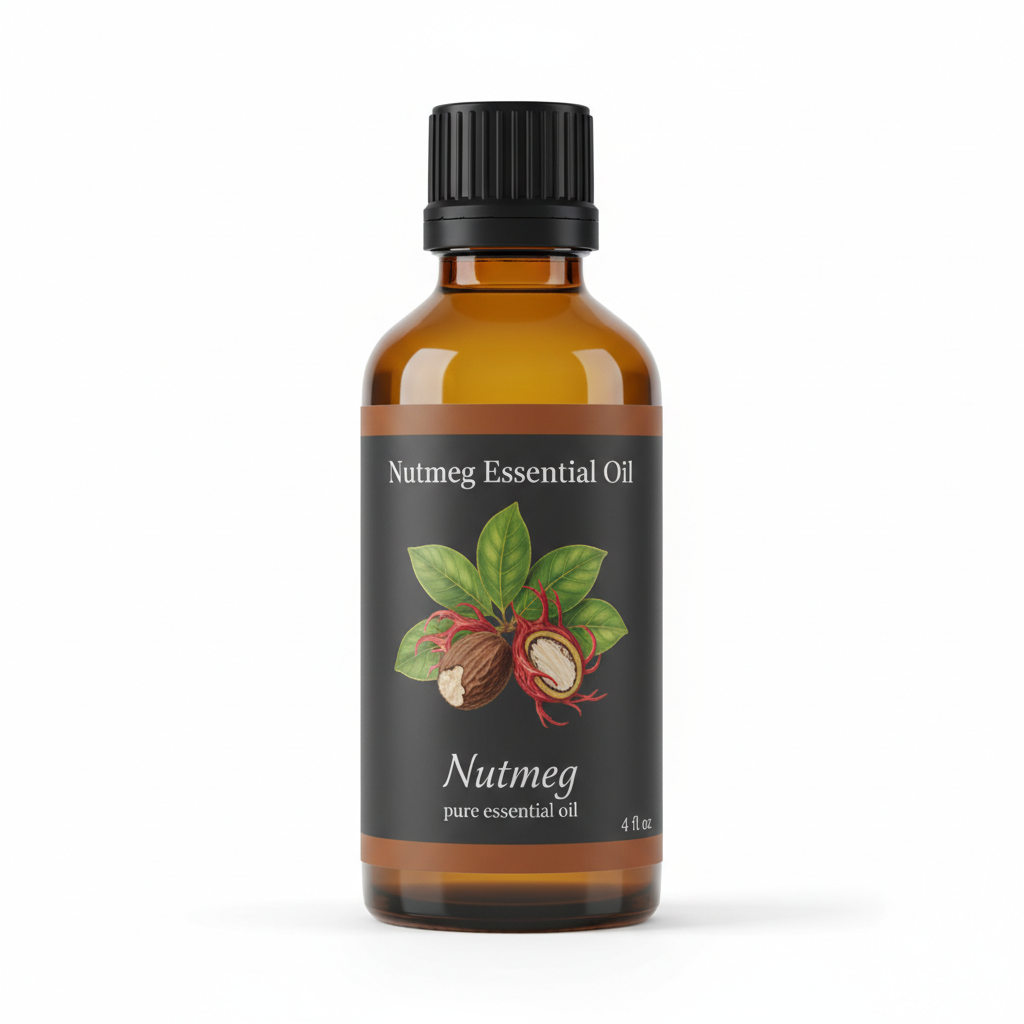
Nutmeg Essential Oil
Our own Nutmeg Essential Oil, in sizes from 0.5 oz to bulk.
From $10.99
Shop Now →Start with the job
Nutmeg oil earns that extra care for a reason. The European Food Safety Authority's assessment of seven Indonesian batches found safrole averaging about 2.0% and classified the oil as a category 1B carcinogen for labelling, as well as an irritant and a skin and respiratory sensitiser. That is the profile you are working with, and it is why the paperwork should scale with the use. This is our reasoning from that wording, not a rule from a regulator.
- Diffuser or room scenting at home. You mainly need to know it is nutmeg: the botanical name (Myristica fragrans), the plant part and a batch number.
- Diluted skin use. Add the seller's skin guidance in writing, and constituent data if you can get it. Ours is 0.5% to 2% in a carrier, with a start at the low end and a patch test first.
- Soap, candles or perfume you will give away. Add a constituent report for the batch, because usage rates are capped by safrole and similar compounds rather than by how strong you want the scent.
- Anything you sell. Get everything in writing, matched to the batch number on the bottle you receive. You carry the labeling and safety duty for the finished product, and the FDA looks at a product's intended use when deciding whether it is a cosmetic or a drug.
What three simple numbers can tell you
Many sellers list three physical measurements: relative density, refractive index and optical rotation. The Certificate of Analysis we publish for one batch (NUTLUBMFINC006A, best by 07/31/2027) lists a relative density of 0.887, a refractive index of 1.478 and an optical rotation of +11.80 degrees at 20 C, each against a stated range. All three sit inside their ranges.
These are screening values. They are quick to measure and they average over the whole mixture, which means they can confirm that an oil behaves like nutmeg oil but cannot say what is in it. For context, EFSA's specification windows were 862 to 922 kg/m3 for density, 1.475 to 1.488 for refractive index and 8 to 18 degrees for rotation. The seven batches it measured sat in narrower bands within those windows. One batch inside a wide window is a good sign and nothing more, and it says nothing about other batches.
Let your nose have a say
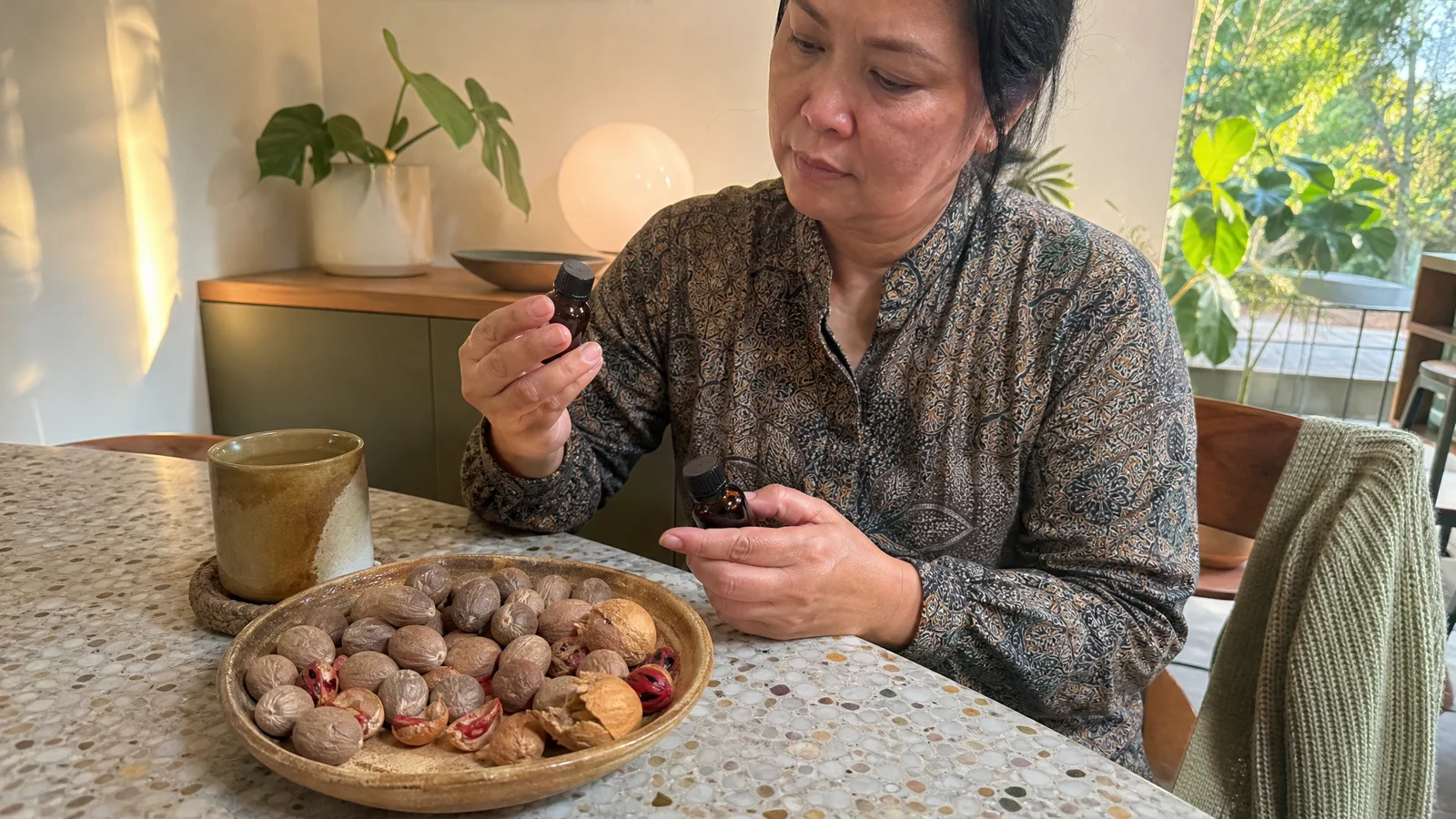
Paperwork matters, but so does the plain pleasure of the thing. When the bottle arrives, open it and take a slow, careful sniff from a blotter. You are looking for a warm, sweet, spicy scent that you would be glad to live with in a room or in a finished product. If something smells off to you, or not like the nutmeg you expected, write to the seller before you use it. Your nose is a perfectly reasonable first quality check, and it costs nothing.
The report that fills in the picture
Safety and blending both turn on constituents: safrole, myristicin, sabinene and the pinenes. A GC-MS report gives you those. Our COA does not carry them, so if you need constituent figures for a purchase, ask us in writing through the contact page before you order and keep the reply with the batch number. Ask every other seller the same question. A seller who can name a method and attach a report is giving you something you can check. Our GC-MS guide shows what to look for once you have one.
There is a general reason to value an instrument report. A 2026 study in Molecules applied a high-temperature gas chromatography method to 20 commercial essential oils (not nutmeg specifically) and found vegetable oil residues of up to 3.79% in some, with other adulterants reaching 52%. The takeaway is not that nutmeg is likely to be adulterated, only that a chromatogram can reveal what a label cannot.
Be honest about quantity
It is easy to over-order when you get excited about a new oil, so here is a recommendation from a small business that loves selling it: begin with the smallest bottle that covers your first project. Nutmeg is used by the drop, and a little goes a long way, so a first bottle often outlasts the first season of the hobby it was bought for. If you love it, you can always order again, and by then you will know how you work and how much you really use.
Reading the label itself
Before any paperwork, the label should name the botanical species, the part of the plant and, ideally, whether it is East Indian or West Indian type, because Tisserand's safety chart gives different skin ceilings for each (adults 0.8% for East Indian, 5% for West Indian). We walk through the full set of fields in our label guide. If you are buying for a larger project, our wholesale page has a consultation form and sample bottles so you can evaluate the oil in your own product.
Buy a small bottle first, check it against what you were told, and scale up once the paperwork and the oil agree.
Whatever you are making, let the job decide the size, the paperwork and the care, and take your time.
Nutmeg Essential Oil
Nutmeg Essential Oil from our own shop, in sizes from 0.5 oz to bulk.
From $10.99
Shop Now →Sources & Further Reading
- Safety and efficacy of a feed additive consisting of an essential oil from the seeds of Myristica fragrans Houtt. (nutmeg oil) for all animal species (FEFANA asbl).
- Assessing the Safety of Essential Oils - the Nutmeg Case - Tisserand Institute
- Detection of Essential Oil Adulteration Using High-Temperature Gas Chromatography with a Flame Ionization Detector.
- Is It a Cosmetic, a Drug, or Both? (Or Is It Soap?)