Nutmeg Oil FAQ: Answers Before You Order
Nutmeg oil prompts a particular set of questions, mostly because the same tree gives us a beloved kitchen spice and a very concentrated oil. These are the eight we would want answered before buying a bottle, with the sources that back them up.
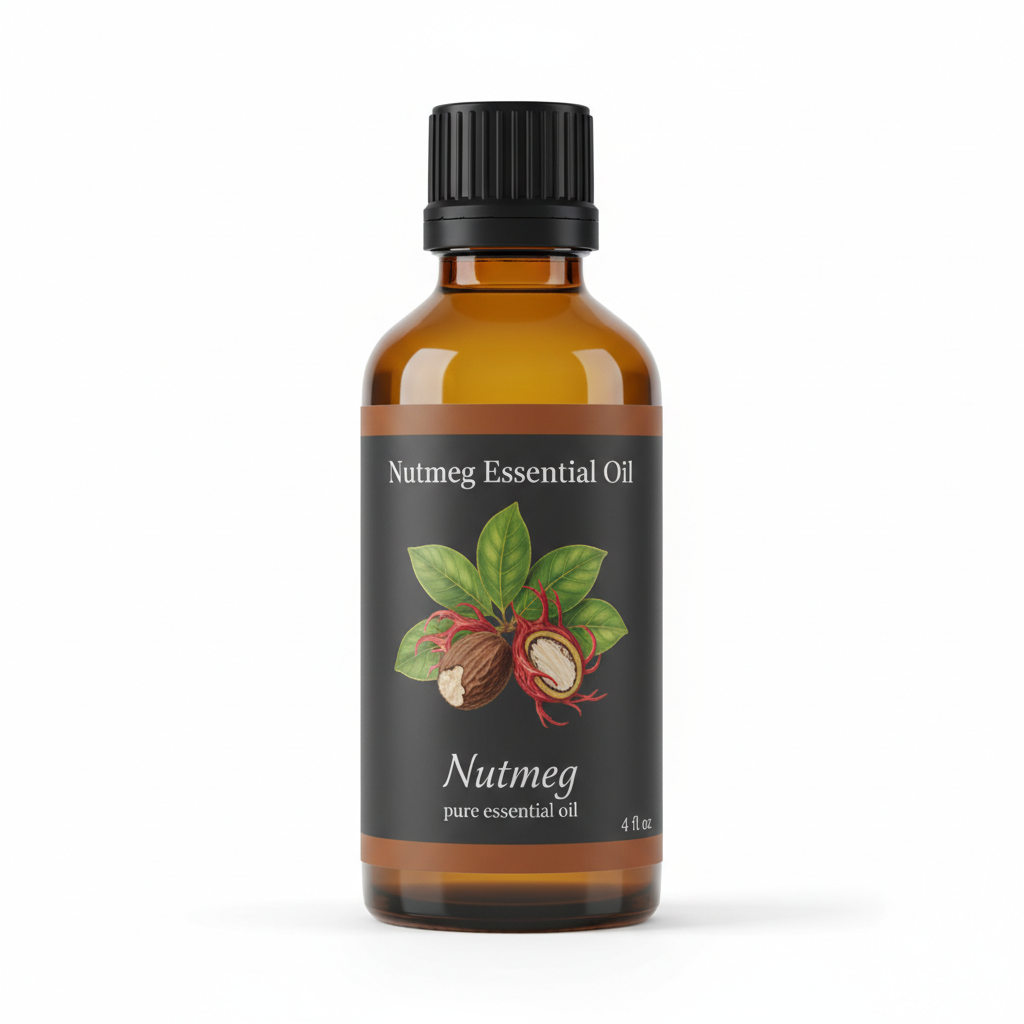
Nutmeg Essential Oil
Our own Nutmeg Essential Oil, in sizes from 0.5 oz to bulk.
From $10.99
Shop Now →How to use this page
You do not have to read the questions in order. Skip to the one that is nagging you, and follow the link at the end of it if you want the longer version. If your question is not here, our contact page is the place to ask it.
Is nutmeg oil just liquid nutmeg?
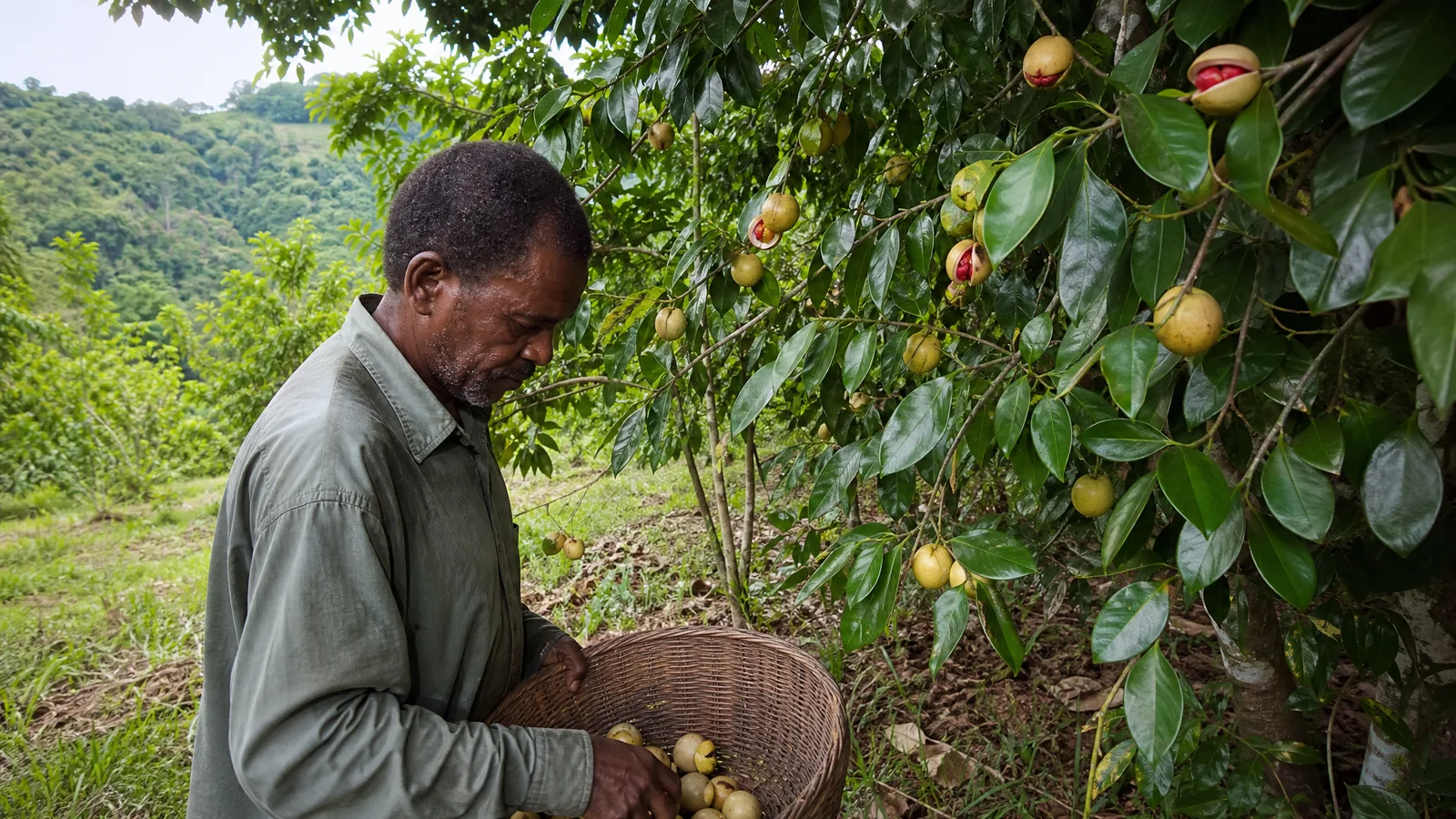
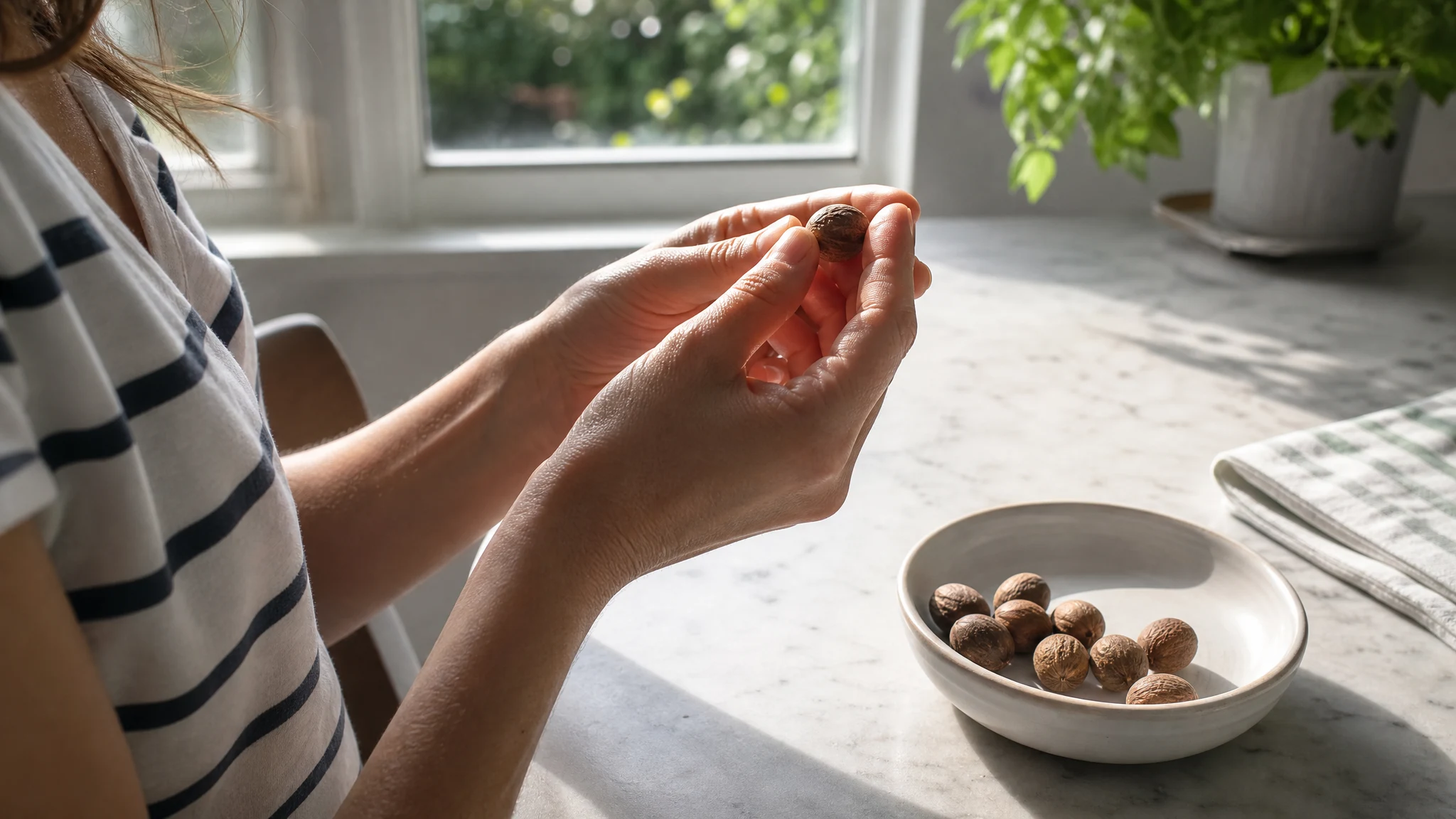
Not quite. The oil is the volatile part of the seed, collected by distillation. The European Food Safety Authority describes it as obtained from the dried and crushed seeds by steam distillation and then separated from the water. Ground nutmeg is the whole seed, so the spice carries fats and fibre that never reach the oil. Our shop lists two nutmeg oils from Myristica fragrans, both sold neat with nothing added. If you are curious about the tree's other product, our nutmeg and mace comparison covers it.
What does it smell like?
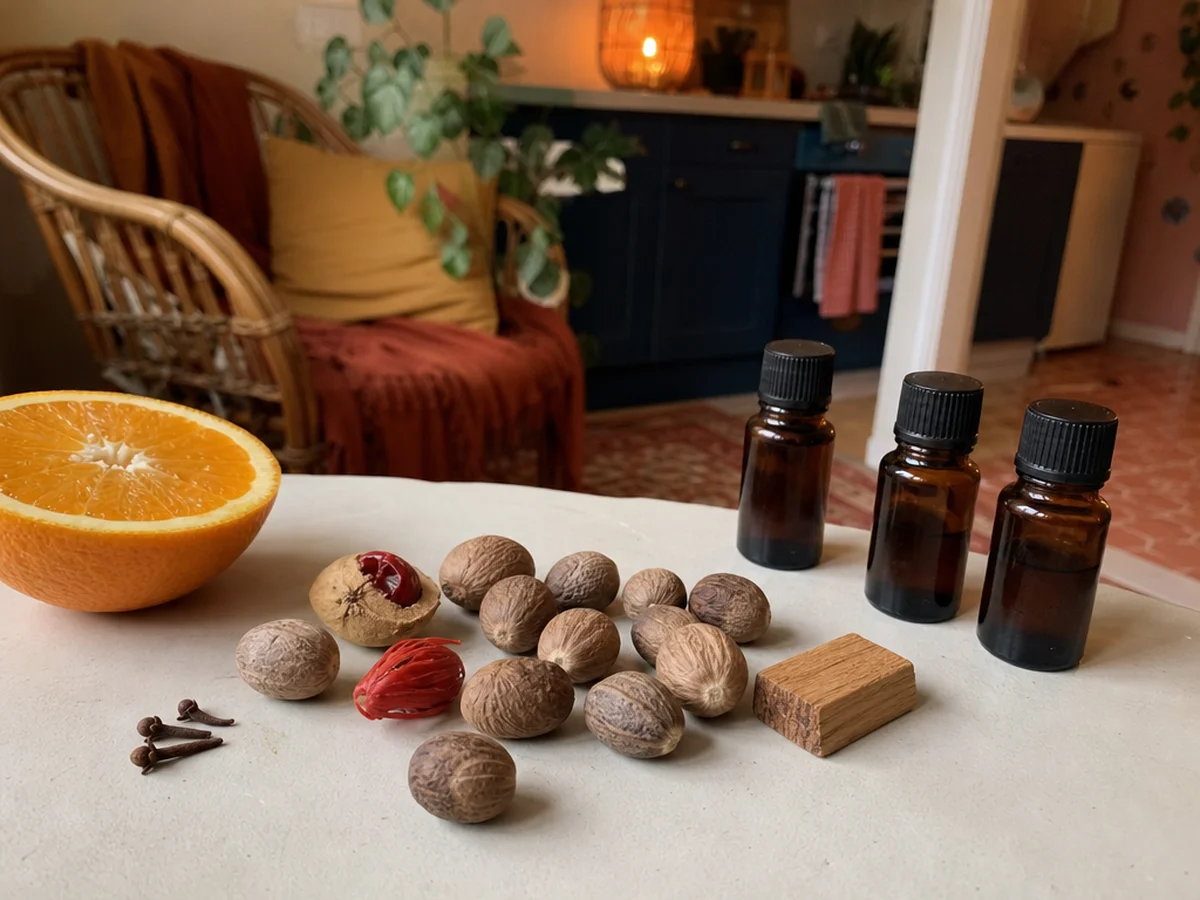
Warm, sweet and spicy, with a woody, slightly musky depth. We find it fresher and less dusty than the ground spice. It layers well with orange, clove, cinnamon, ginger and vanilla, and the scent profile goes into more detail.
How much can go on skin?
We recommend diluting to 0.5% to 2% in a carrier oil such as jojoba or sweet almond, which is roughly 3 to 12 drops per ounce, patch testing first and starting at the low end. In practice we start at 0.5%. The Tisserand Institute's chart for nutmeg oil allows adults 0.8% for East Indian type oil and 5% for West Indian type. The International Fragrance Association caps safrole in a finished product at 0.01%, and with oil at the 2% safrole found in the EFSA batches that works out to about 0.5% oil. We never treat 2% as a target, and if you are making something for sale, check the IFRA standards for your product category.
Can I swallow it or cook with it?
No. Our oils are labelled not for internal use. For food flavor, the grocery-store spice is the right choice. The ingestion post explains why a bottle is a different thing from a pinch of spice.
What about children, pregnancy and pets?
We do not recommend our nutmeg oil for anyone who is pregnant or nursing, or for children, and we ask that bottles are kept away from children and pets. The ASPCA says a short diffuser session in a secured area is unlikely to be a problem for pets, that animals with breathing problems may be better off avoiding it, and that birds are best kept away from diffusers. Applying oils to pets directly is not advised. Our pregnancy post and children's post give more.
How long does a bottle last?
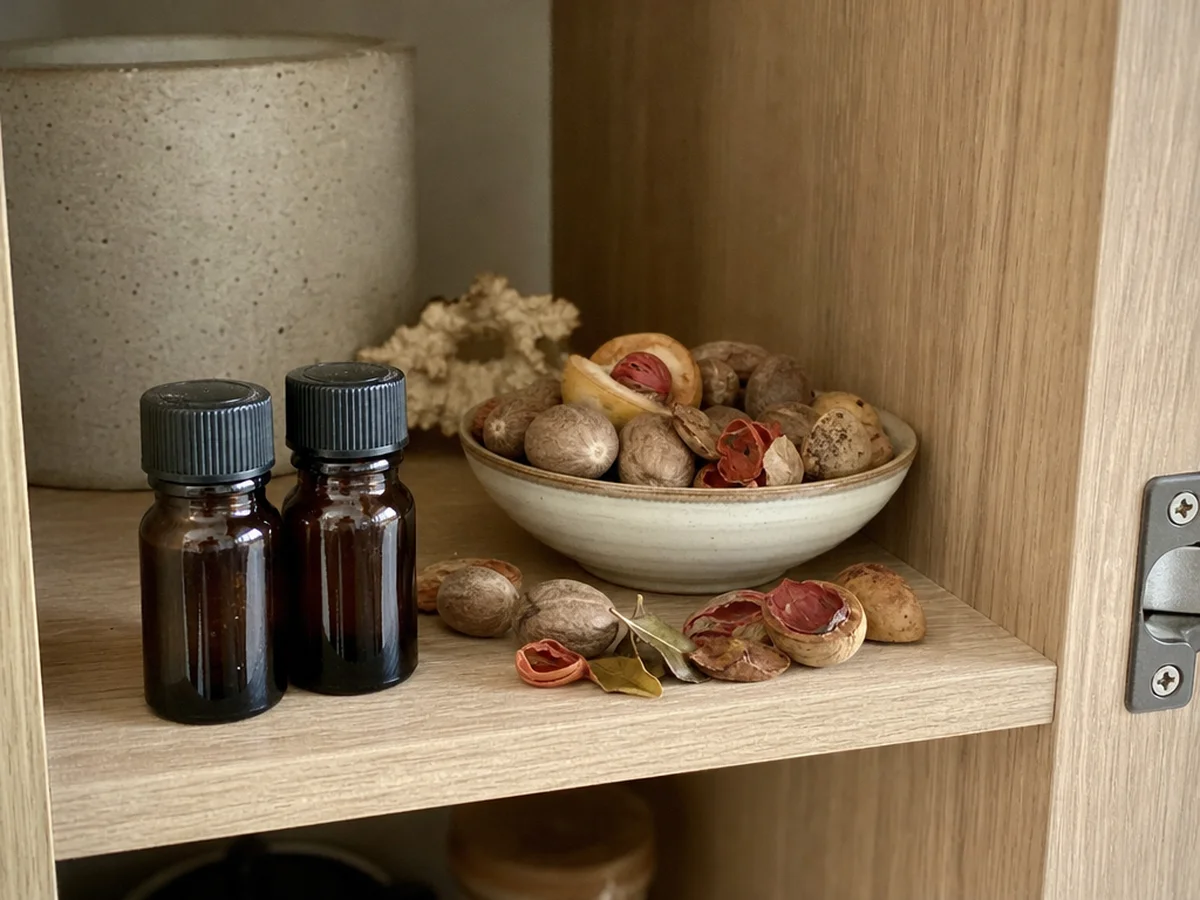
Our product pages say typically two to three years when kept tightly capped in a cool, dark place away from heat and sunlight. EFSA's panel records a stated shelf life of at least 12 months for nutmeg oil in general. Smell is the practical test: if the aroma has turned flat or sharp, keep the bottle away from skin. The storage post has the details.
What does your Certificate of Analysis show?
The Certificate of Analysis we publish is for one batch. It lists a relative density of 0.887 at 20 C (standard range 0.860 to 0.910), a refractive index of 1.478 (standard 1.470 to 1.488) and an optical rotation of +11.80 degrees (standard +5 to +30). Those are physical measurements, not a constituent breakdown. If you need a GC-MS report with myristicin and safrole figures, ask us in writing through the contact page before ordering and keep our reply.
Meeting a bottle for the first time
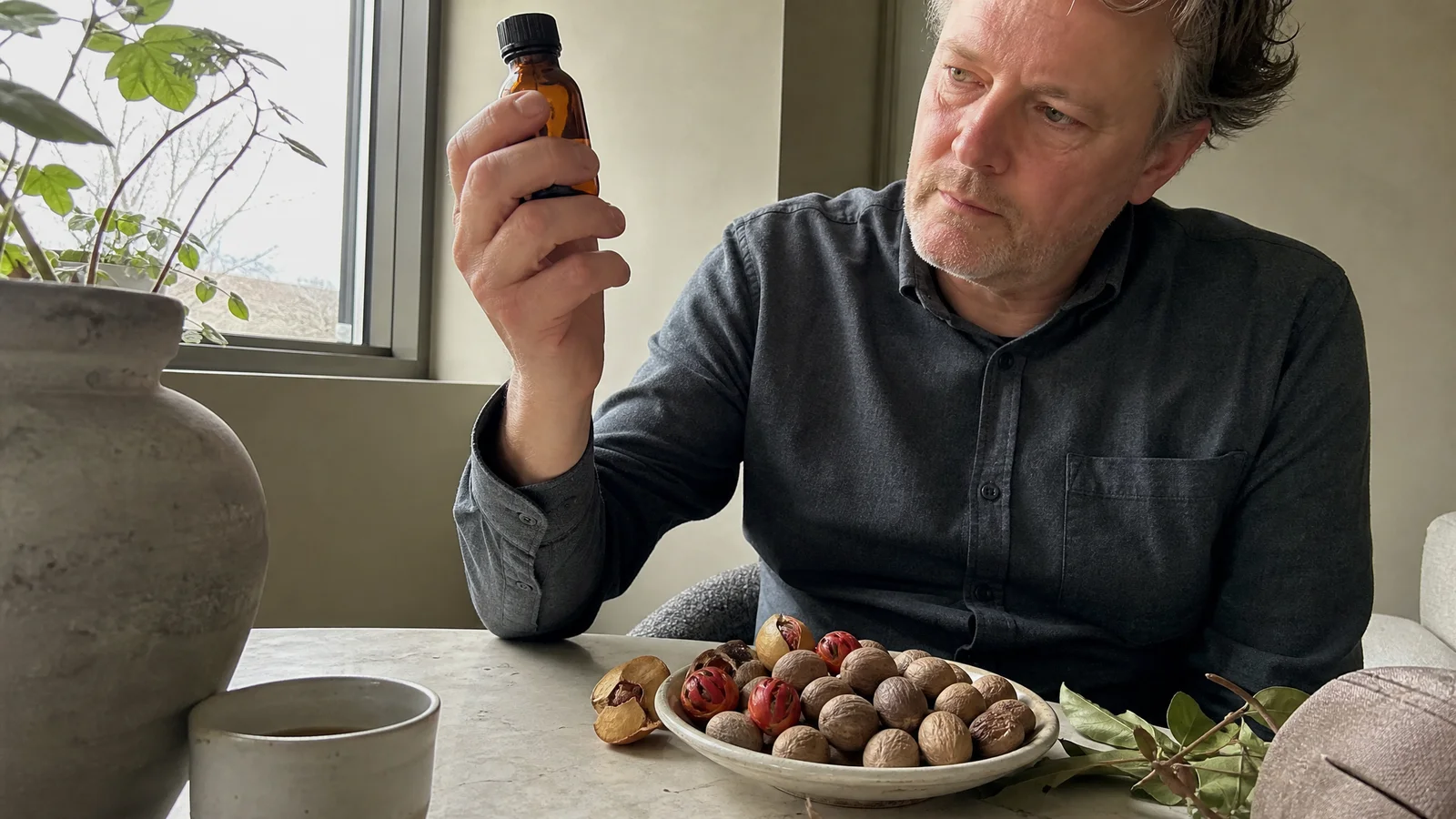
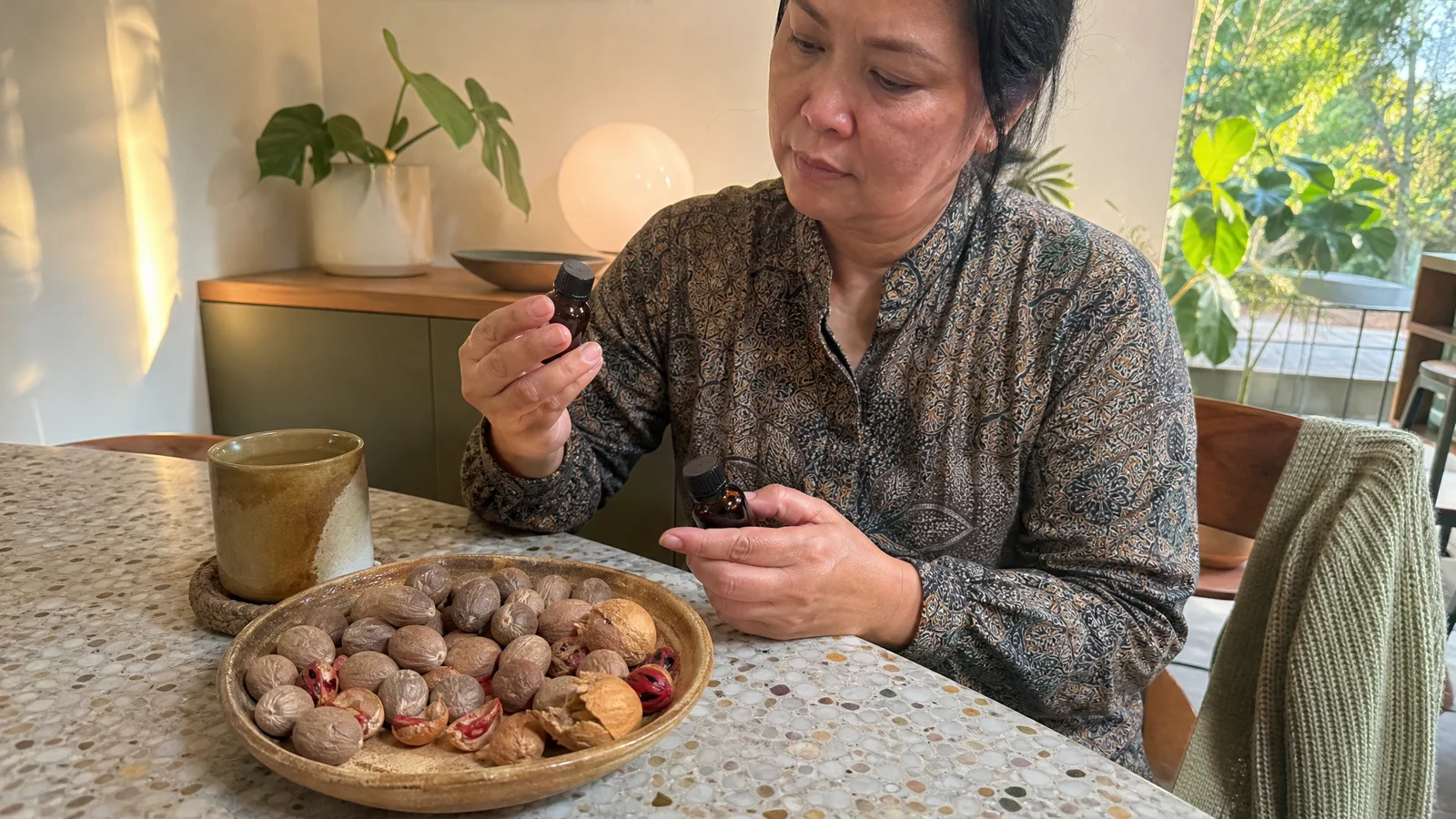
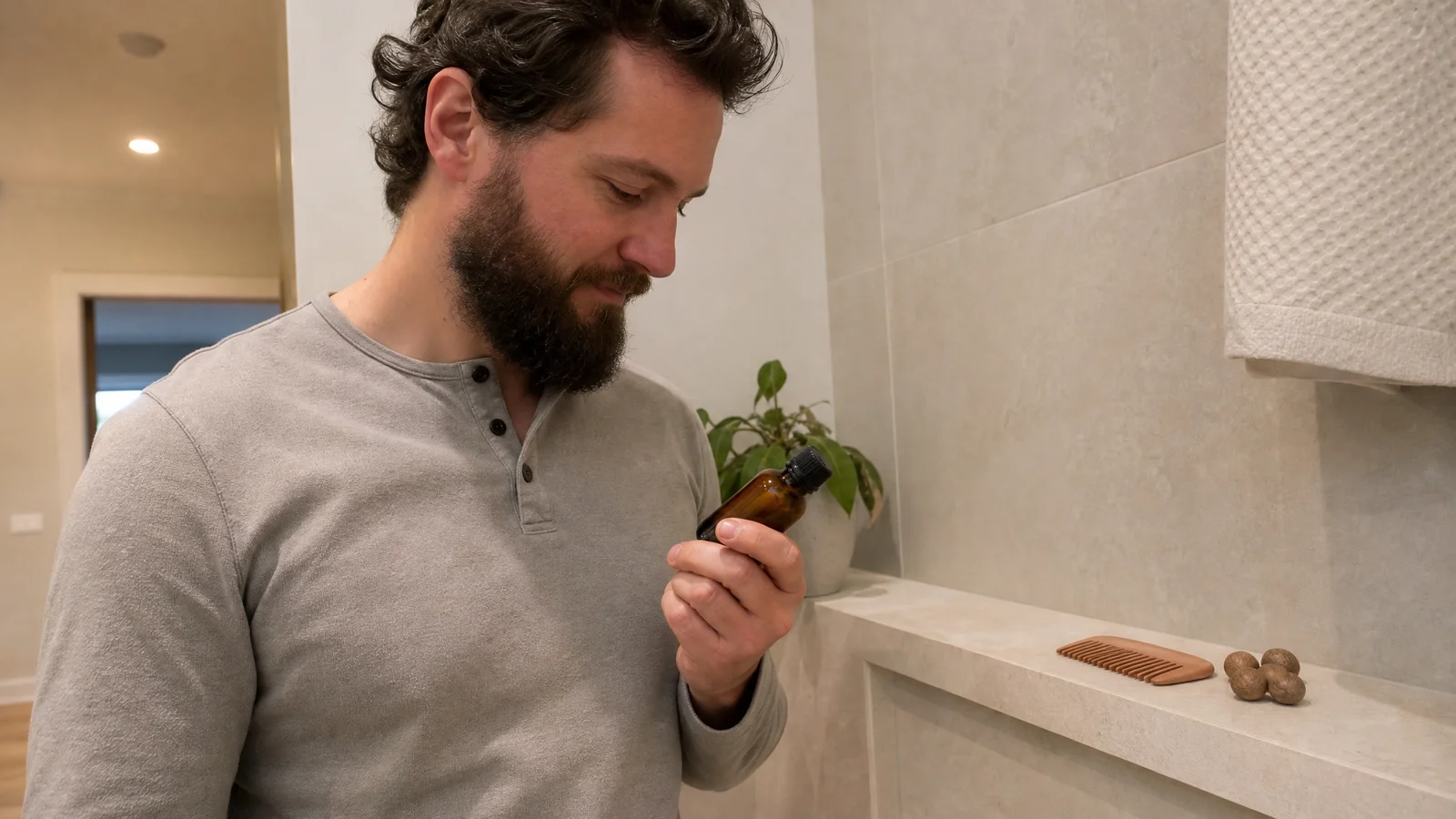
When a new bottle arrives, give it a proper hello. Put one drop on a paper blotter, hold it at arm's length and bring it slowly closer. Notice the bright lift first and the warm spice after, then smell it again a few minutes later to see what is left. Nutmeg oil is concentrated, so there is no need to hold the bottle under your nose.
Where the other ingredients come from
Most projects need more than the oil. We sell nutmeg oil only, so carrier oils, wax, wicks, soap bases and containers come from a craft or soap-supply shop, a pharmacy or the grocery store. It helps to plan the shopping list before you place the order.
Our advice on a first order
If you have never used the oil, start with a small bottle. It lets you check the scent and the paperwork together, and nothing is lost if you find it is not the spice for you.
What should I ask any nutmeg oil seller?
The botanical name and the plant part, how it was extracted, where it came from, the batch number, and a GC-MS report for that batch with the laboratory's name and date. EFSA notes that nutmeg oil can be produced from plants of different geographical origins and by various processes, so a bare label on its own says little. The GC-MS guide shows how to read the report once you have it.
Nutmeg Essential Oil
Nutmeg Essential Oil from our own shop, in sizes from 0.5 oz to bulk.
From $10.99
Shop Now →Sources & Further Reading
- EFSA Panel on Additives and Products or Substances used in Animal Feed. Safety and efficacy of a feed additive consisting of an essential oil from the seeds of Myristica fragrans Houtt. (nutmeg oil) for all animal species (FEFANA asbl). EFSA Journal, 2023
- Tisserand Institute. Assessing the Safety of Essential Oils - the Nutmeg Case
- IFRA. The complete IFRA Standards, up to and including the 51th Amendment, January 2024
- ASPCA. Is the Latest Home Trend Harmful to Your Pets? What You Need to Know!