Nutmeg vs Clove vs Cinnamon Oil: How They Differ
Put clove, cinnamon and nutmeg oils on one shelf and they all get filed under "warm spice". Look at what each one is made of and they turn out to be built quite differently. Clove bud oil is roughly three-quarters a single compound, cinnamon bark oil is about two-thirds another, and nutmeg oil is a spread of several terpenes with nothing above a quarter. That difference explains most of what you will notice when you blend them.
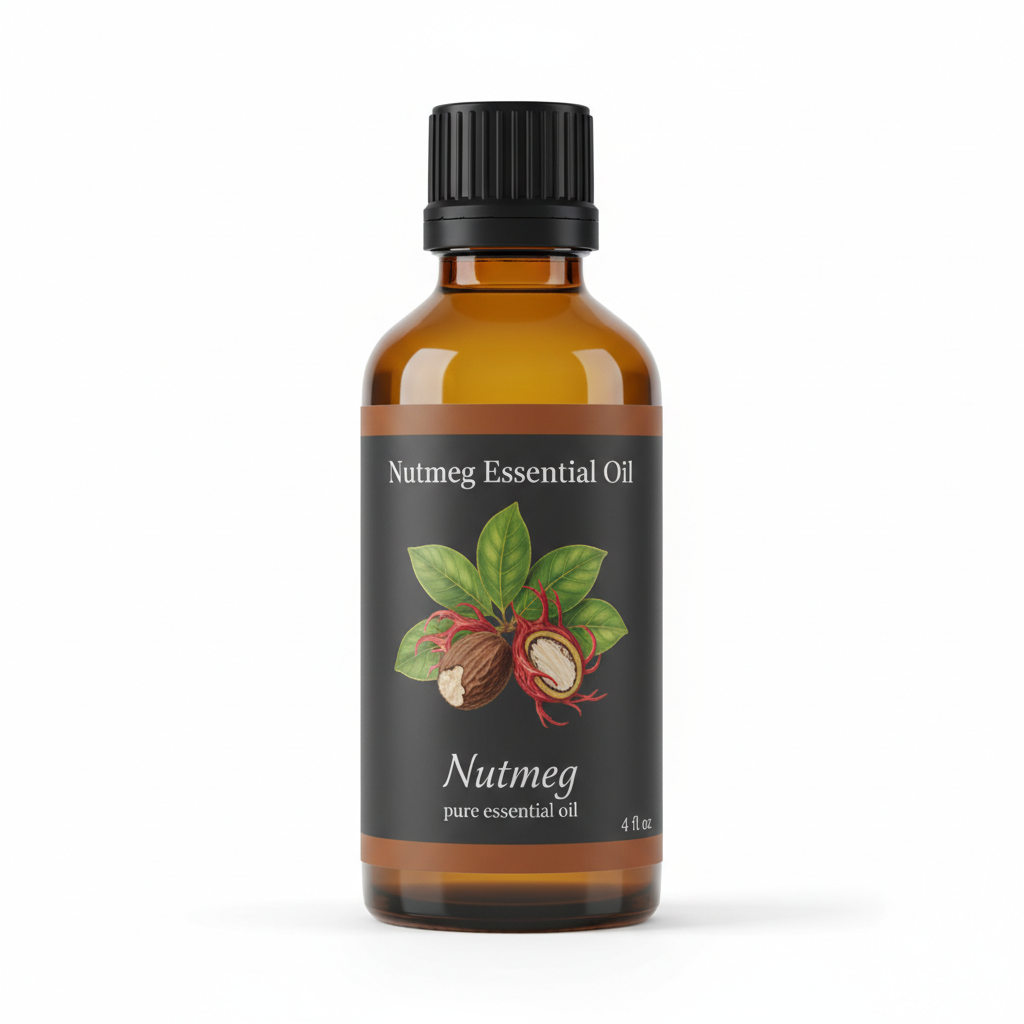
Nutmeg Essential Oil
Our own Nutmeg Essential Oil, in sizes from 0.5 oz to bulk.
From $10.99
Shop Now →One headline molecule, or a crowd
The European Food Safety Authority analysed all three oils as feed additives, and each opinion lists batch results by gas chromatography. In seven clove bud batches, eugenol came in at about 73% to 76%. In five cinnamon bark batches from Sri Lanka, cinnamaldehyde averaged 69%. In seven Indonesian nutmeg batches, sabinene ran about 20% to 24% and alpha-pinene about 21% to 23%, with beta-pinene and myristicin trailing behind. These are descriptions of those specific batches, not of any bottle you can buy, ours included, but they show the shape of each oil.
Our reading of that shape is simple. When one compound makes up most of an oil, a little of it goes a long way and it tends to lead any blend it joins. Nutmeg, with its crowd of terpenes, behaves more like a supporting voice that rounds a blend out. We describe our nutmeg oils as warm, sweet and spicy, and clove and cinnamon are two of the oils we name as natural partners for it. That is also why we would build a blend around nutmeg and add clove or cinnamon by the drop, rather than the other way round.
Why they do not swap one for one
Because the chemistry is so different, replacing one oil with another drop for drop gives you a different blend, not a slightly altered one. The names on labels can hide further differences. Cinnamon leaf oil, for example, is an eugenol oil (about 79% in the EFSA batches) and has little in common with the cinnamaldehyde-rich bark oil. Clove has bud oil and leaf oil as separate materials too. If a bottle says only "cinnamon" or "clove", it has not told you which one you are getting, and our label-reading guide shows the same habit of checking plant part and type applies to nutmeg.
How they smell side by side
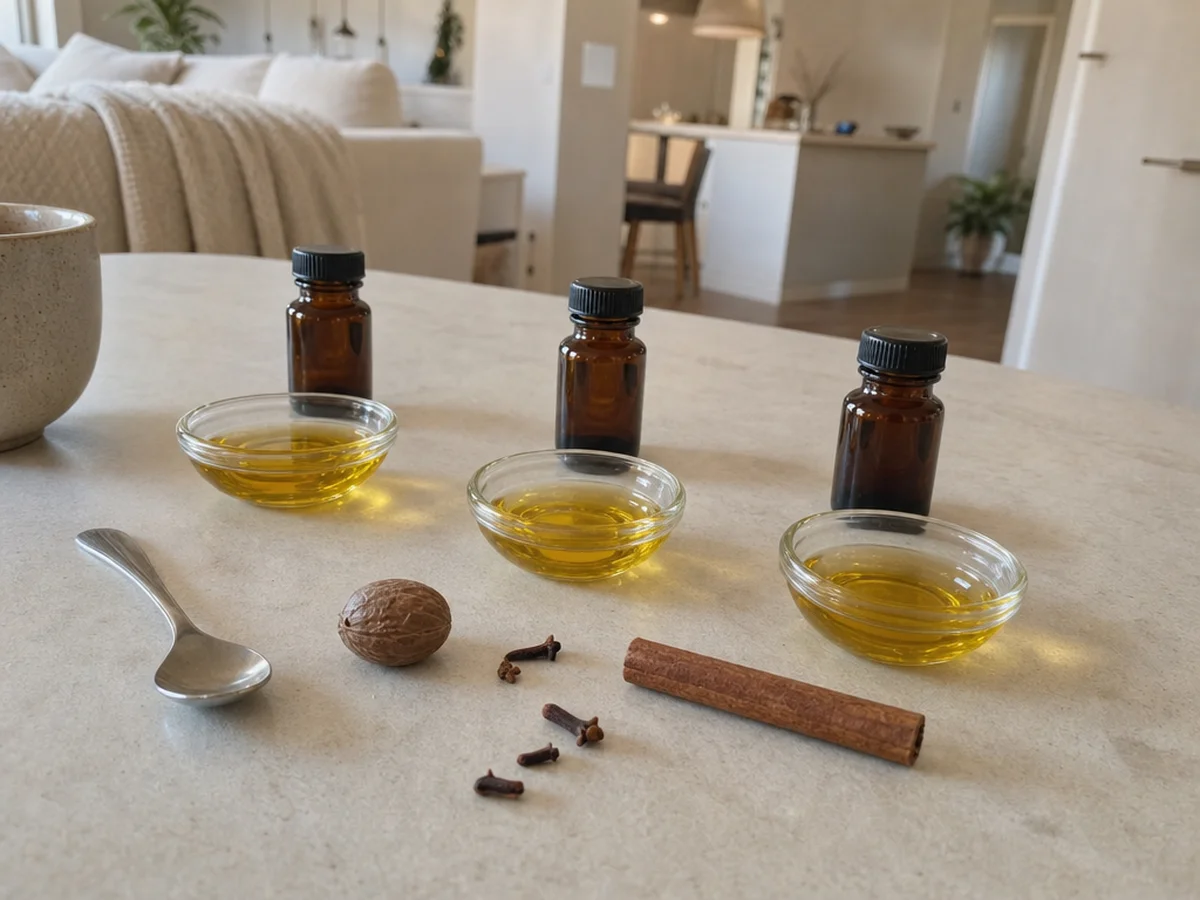
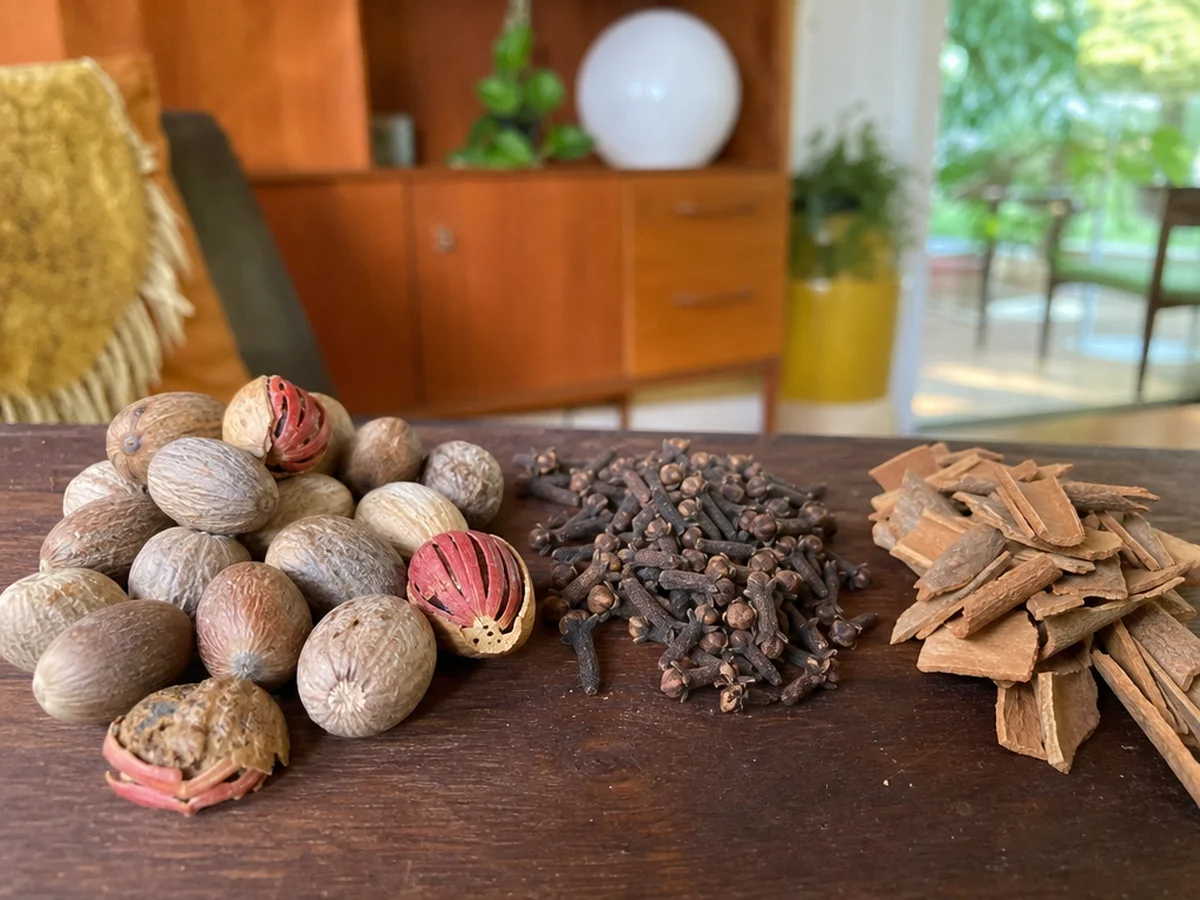
If you can, put a drop of each on its own paper strip and compare them. Clove tends to arrive first, sharp and almost peppery, with a warmth that sits high in the nose. Cinnamon is sweeter and more rounded, the smell of a bakery doorway. Nutmeg is softer and woodier than either, a spice that feels like it has already been grated into something warm. Smelling them one after another is the quickest way to learn what each one does in a blend, and no chart will teach you as much.
What the three have in common on skin
EFSA's wording is strikingly alike for all three: irritants to skin and eyes, and skin sensitisers. Sensitisation is an allergic response that can build with repeated contact, which is a different thing from simple irritation. For that reason we treat any dilution figure as a ceiling to stay under, not a target to reach.
For nutmeg, our guidance is 0.5% to 2% in a carrier oil, and we start at the low end. The Tisserand Institute's nutmeg chart gives adults 0.8% for East Indian nutmeg oil and 5% for West Indian, and the type matters, so 0.5% is the figure we would begin with unless you know otherwise. Nutmeg also carries the heaviest safrole load of the three: about 2.0% on average in the nutmeg batches against 0.27% in the cinnamon bark batches. IFRA's safrole standard lets natural extracts through only while the safrole total in the finished product stays at or under 0.01%. As arithmetic, nutmeg at 2.0% safrole would be capped near 0.5% of a finished leave-on product, which is exactly why we walk through the numbers in our perfume and soap guides.
For clove bud and cinnamon leaf, the Tisserand Institute cites topical maximums of 0.5% and 0.6% from Essential Oil Safety, 2nd edition. Those are low figures, which is a useful reminder that eugenol-rich oils need a light hand. Ask any clove or cinnamon supplier for its safety data sheet and IFRA documentation before settling on a rate, and do not borrow nutmeg's numbers for them.
A tip for first blends
When you are starting out, let one oil lead and use the other two as seasoning. Choose your lead, add a drop of the second, smell, and only then decide whether the third is needed. It is much easier to add than to take away, and a three-spice blend with a clear leader almost always smells better than three equal voices competing. Write each experiment down in a line, because it is hard to remember what you did when you come back a week later.
Choosing by what you are making
- A rounded warm base for a diffuser blend: lead with nutmeg and add small amounts of clove or cinnamon leaf as accents.
- A sharp, clove-forward scent: clove bud leads, with nutmeg softening the edges.
- A fall blend in the pumpkin pie direction: use cinnamon leaf rather than bark, as our pumpkin spice blend guide explains.
Our shop carries nutmeg oil, so clove and cinnamon come from your usual supplier. If you are curious how nutmeg itself is put together, the composition guide goes through the compounds one at a time.
All three are strong oils that reward small amounts. Pick the one whose character you actually want, and let it lead.
Nutmeg Essential Oil
Nutmeg Essential Oil from our own shop, in sizes from 0.5 oz to bulk.
From $10.99
Shop Now →Sources & Further Reading
- Safety and efficacy of a feed additive consisting of an essential oil from the seeds of Myristica fragrans Houtt. (nutmeg oil) for all animal species (FEFANA asbl).
- Safety and efficacy of feed additives consisting of essential oils derived from the flower buds or the leaves of Syzygium aromaticum (L.) Merr. & L.M. Perry (clove bud oil and clove leaf oils) for all animal species (FEFANA asbl).
- Safety and efficacy of feed additives consisting of essential oils from the bark and the leaves of Cinnamomum verum J. Presl (cinnamon bark oil and cinnamon leaf oil) for use in all animal species (FEFANA asbl).
- Assessing the Safety of Essential Oils - the Nutmeg Case - Tisserand Institute
- Eugenol: Essential Oil Constituents in Food Part 4 - Tisserand Institute
- The complete IFRA Standards: Up to and including the 51th Amendment, January 2024