Nutmeg Essential Oil vs Fragrance Oil: Which to Use
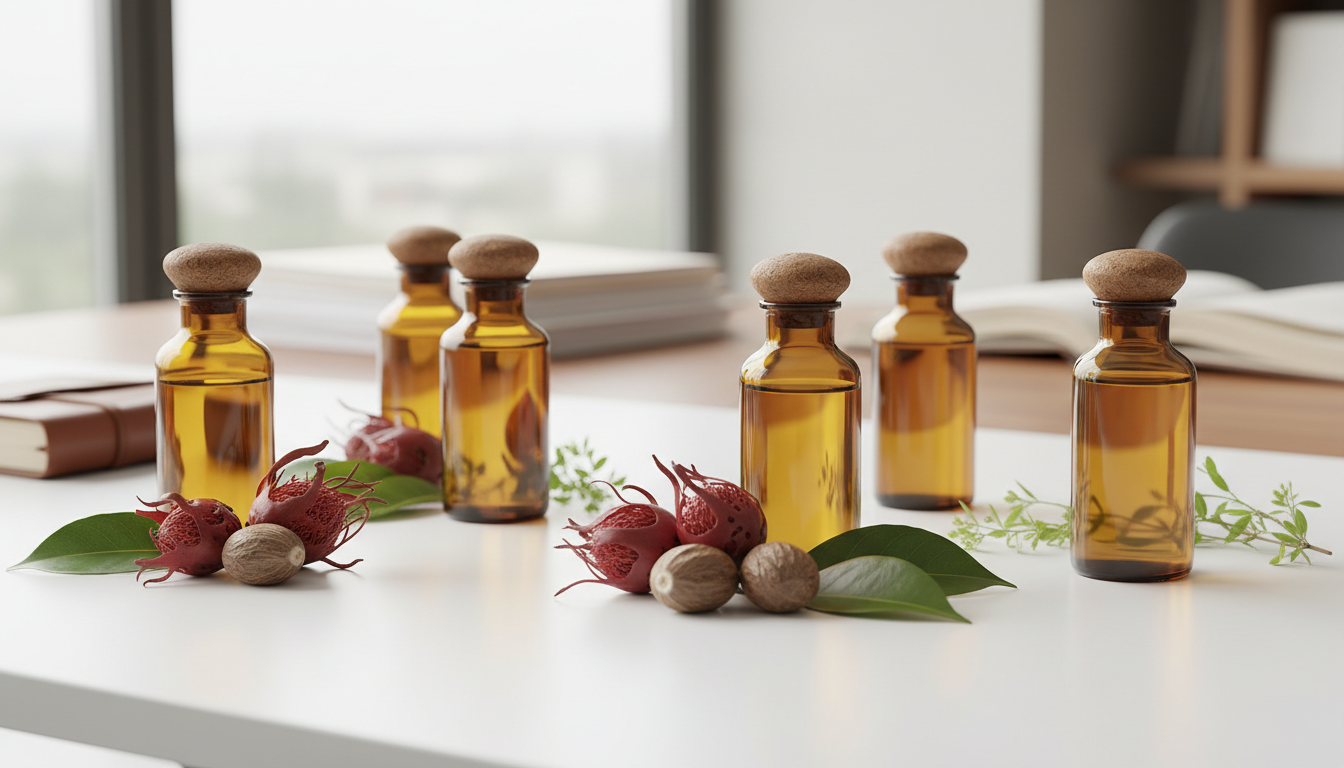
Hold a nutmeg essential oil and a nutmeg fragrance oil under your nose and the difference you notice may be small. The difference that matters is what you can find out about each one. An essential oil is a distillate of a known plant with a published safety record. A fragrance oil is a formula, and the formula is usually the one thing the label does not give you.
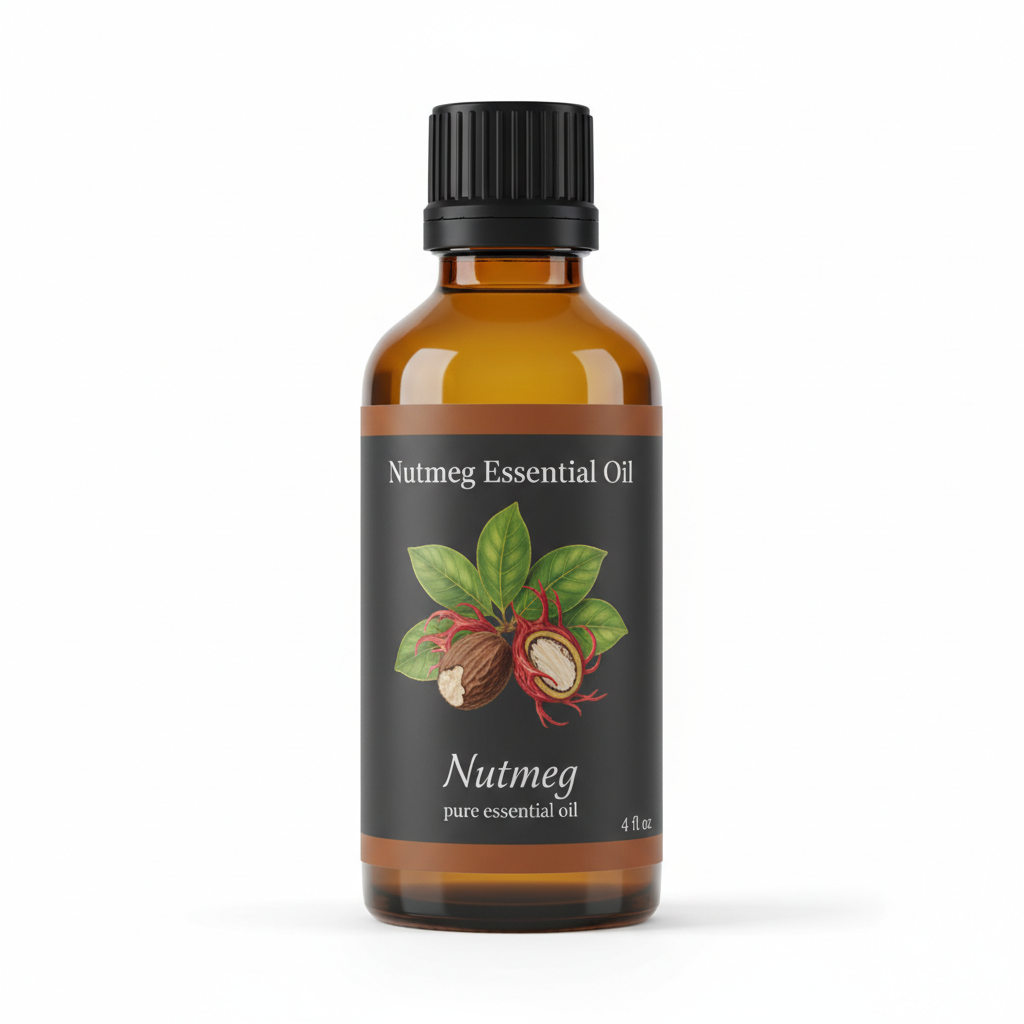
Nutmeg Essential Oil
Our own Nutmeg Essential Oil, in sizes from 0.5 oz to bulk.
From $10.99
Shop Now →Two different kinds of bottle
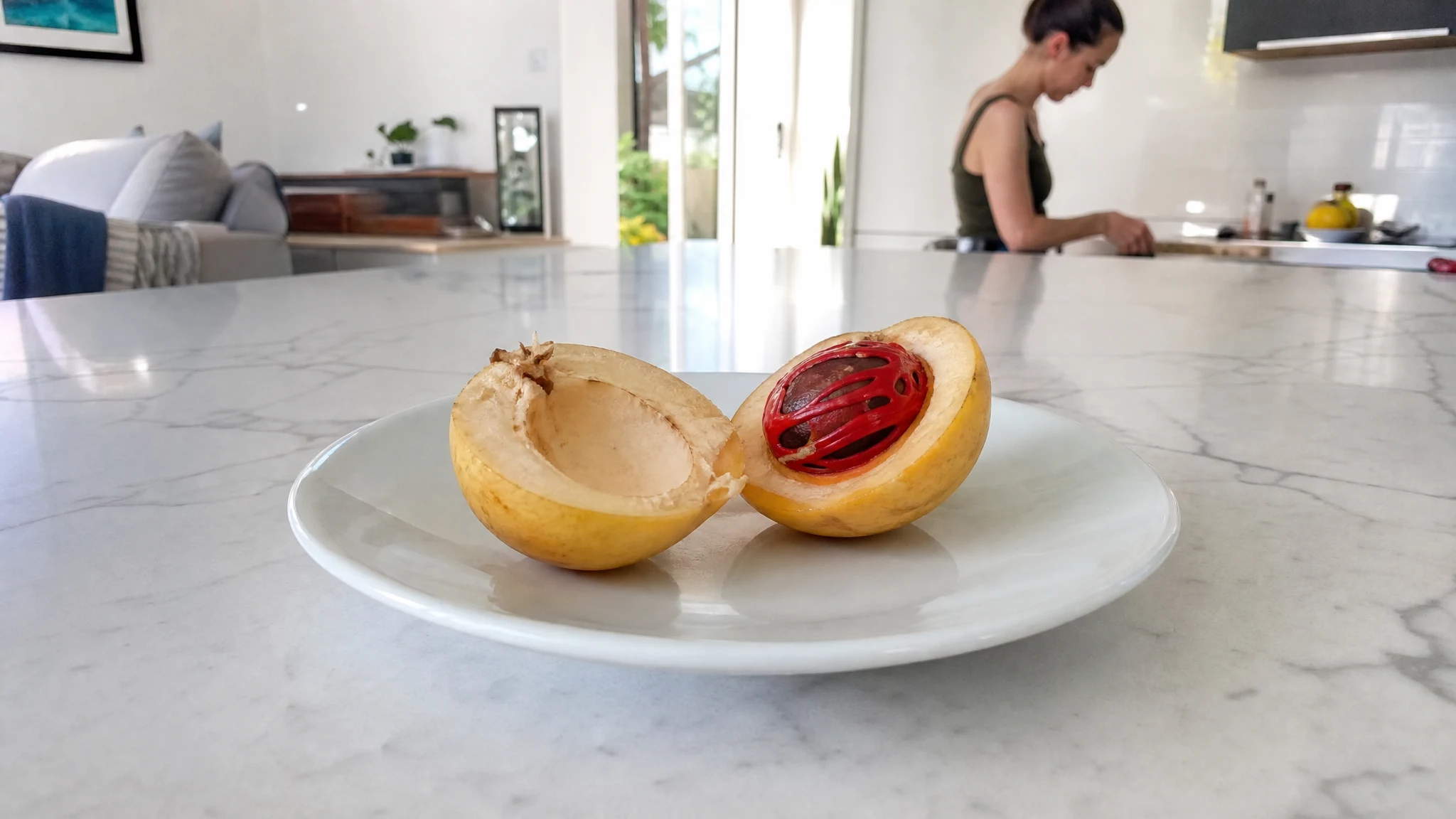
Nutmeg essential oil is distilled from Myristica fragrans. The 2023 European Food Safety Authority opinion on nutmeg oil describes steam distillation of dried, crushed seeds, and lists the main components: sabinene, alpha-pinene, beta-pinene and myristicin, with safrole averaging 2.02% across seven Indonesian batches. The panel also describes the oil as a skin and eye irritant and a skin and respiratory sensitiser.
A nutmeg fragrance oil is, in general, a blend whose makeup the supplier chooses. The name does not tell you whether it holds any natural nutmeg, or what else is in it. We sell essential oil only, so we will not describe any particular fragrance product. What we can describe is what the labelling rules allow. The FDA says a cosmetic's fragrance and flavor ingredients can be listed simply as "Fragrance" or "Flavor", that fragrance formulas are among the components most likely to be trade secrets, and that some components may cause allergic reactions.
Natural does not settle it
It is common to hear that a natural oil is automatically the safer choice. The sources do not support that as a rule. The Tisserand Institute notes that safrole and methyleugenol, both found in nutmeg oil, cause liver tumors in rats as single chemicals, that the two oil types hold quite different amounts, and that neither whole oil has been tested in a standard carcinogenicity test. Its conclusion is that nutmeg oil is safe topically when diluted according to its guidelines, which give adults 0.8% for East Indian and 5% for West Indian type.
So an essential oil comes with named, measurable hazards you can work around. A fragrance oil comes with whatever its supplier chooses to disclose. Neither is "safer" by category, and "synthetic" does not mean worse: it means the formula is not shown to you. Our advice is to choose the one you can get documents for.
The scale is worth seeing. Using EFSA's mean safrole of 2.02% for those seven batches, a 2% blend of such an oil would contain about 0.04% safrole, and a 0.5% blend about 0.01%. That is reasoning from other batches, not a figure for our oil, which is why we start at 0.5% and why a constituent report for your own batch is the number to get.
Choosing by what you are making
A skin product. Choose the essential oil if you will keep to a documented dilution. We suggest 0.5% to 2% in a carrier oil with a patch test first, starting low. Our skin post has the dilution arithmetic. A fragrance oil on skin has limits only its supplier's documents can tell you.
Soap or perfume you sell. Here the paperwork matters most. The safrole in nutmeg oil sets a usage cap well below the general scenting rate, as our soap post and perfume post work out. A fragrance oil sold for the same job should come with a supplier statement of the rate it supports in that product type. If the seller cannot give one, there is no documented rate.
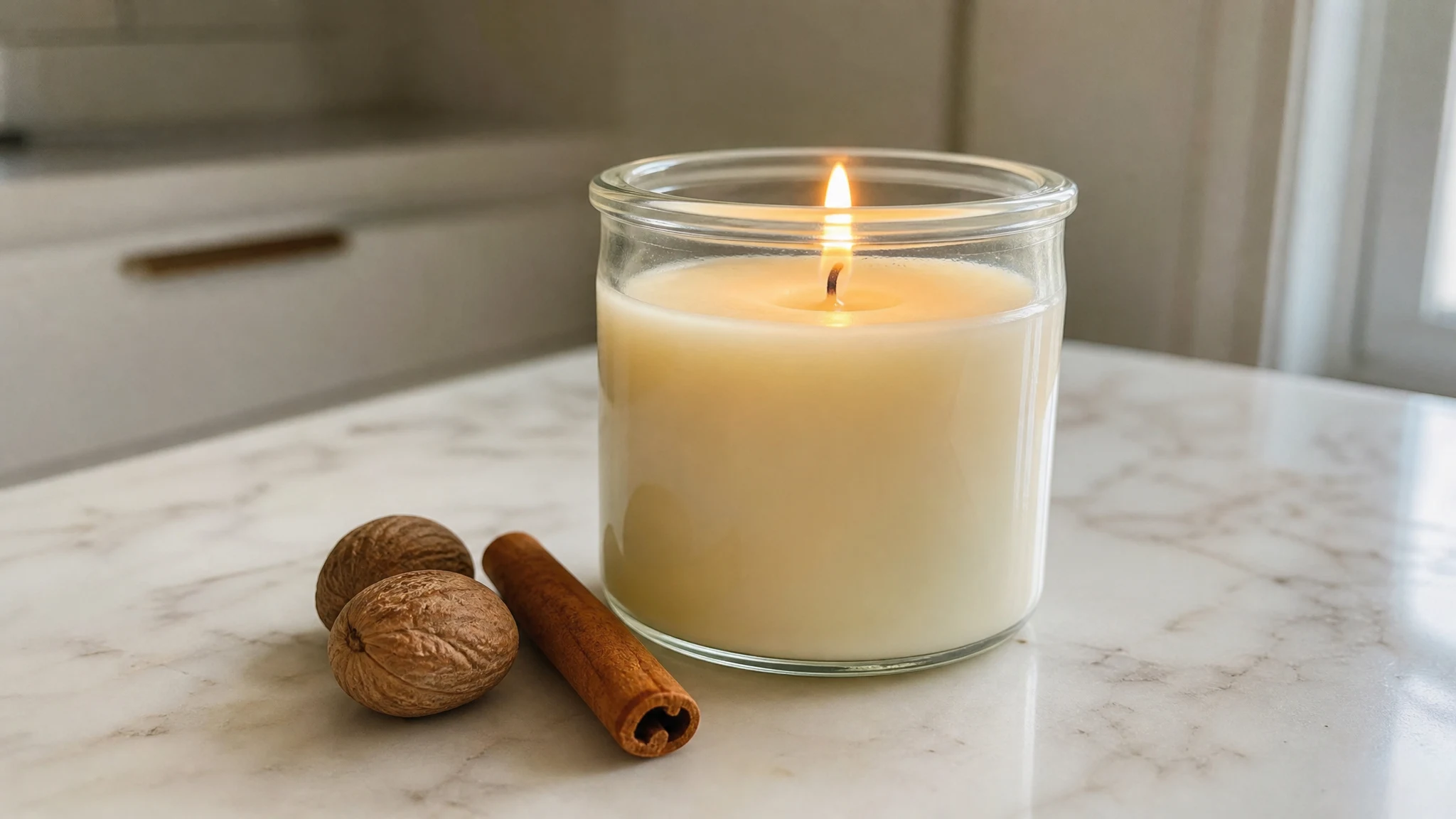
Candles and wax melts. Candle making is one of the uses listed on our nutmeg oil pages, and your wax and wick suppliers' fragrance-load guidance sets the practical limit. Ask them, ask your oil supplier for constituent data, and start with a small batch.
A diffuser or room scent. Essential oil is the product we sell for this, used sparingly. If you want the nutmeg scent without its constituent profile, look for a fragrance supplier who will tell you in writing what is in it and what it was assessed for. Our chai blend and pumpkin spice blend posts give diffuser ratios by weight.
Anything swallowed, worn by children or used around pets. Neither one. Nutmeg essential oil is not for swallowing, as our ingestion post explains. Ask a veterinarian about pets and a pediatrician about children.
How they feel to the nose
Smell tends to be where people choose. A nutmeg essential oil has a lifelike, slightly changeable quality: warm and spicy at first, then sweeter and woodier as it sits on a blotter. Some fragrance oils smell more like a finished bakery candle, bolder and more constant from first sniff to last. Neither is wrong; they simply do different jobs. If you want the scent of a real spice, with its slight unevenness, the essential oil is hard to beat.
Questions for any fragrance supplier
- Does it contain any natural nutmeg oil, and in what share?
- Can you send a current ingredient or allergen disclosure and a safety data sheet?
- What is the maximum use level in my product type, and what is it based on?
- Is it meant for skin contact, or for candles and room scent only?
If the answers arrive in writing, you can compare the fragrance with the essential oil on equal terms. We welcome the same questions about our oil: the Certificate of Analysis we have covers one batch, with density, refractive index and optical rotation, and if you need constituent data, ask us in writing through the contact page before you order.
The choice comes down to which bottle you can learn the most about, and then using it with care.
Nutmeg Essential Oil
Nutmeg Essential Oil from our own shop, in sizes from 0.5 oz to bulk.
From $10.99
Shop Now →