Nutmeg Oil in Candles and Wax Melts: How Much to Use
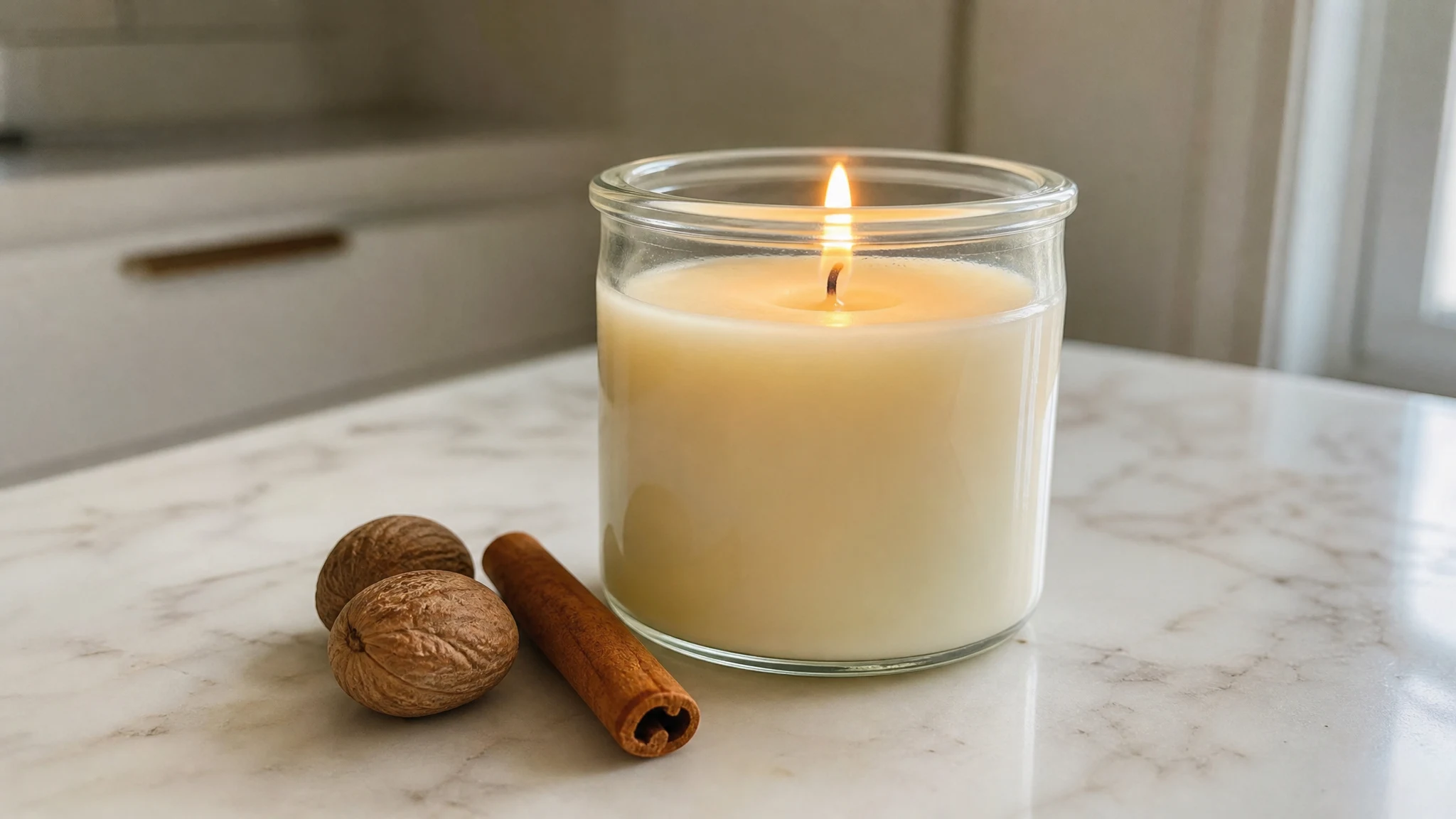
Open a jar candle that smells of nutmeg and you get a whole season in one breath: baking, cider, a cold evening. It is easy to see why makers want the real oil in their wax. The one thing to know before you pour is that nutmeg oil likes a lighter hand than the wax label might suggest, and the reason comes down to simple arithmetic.
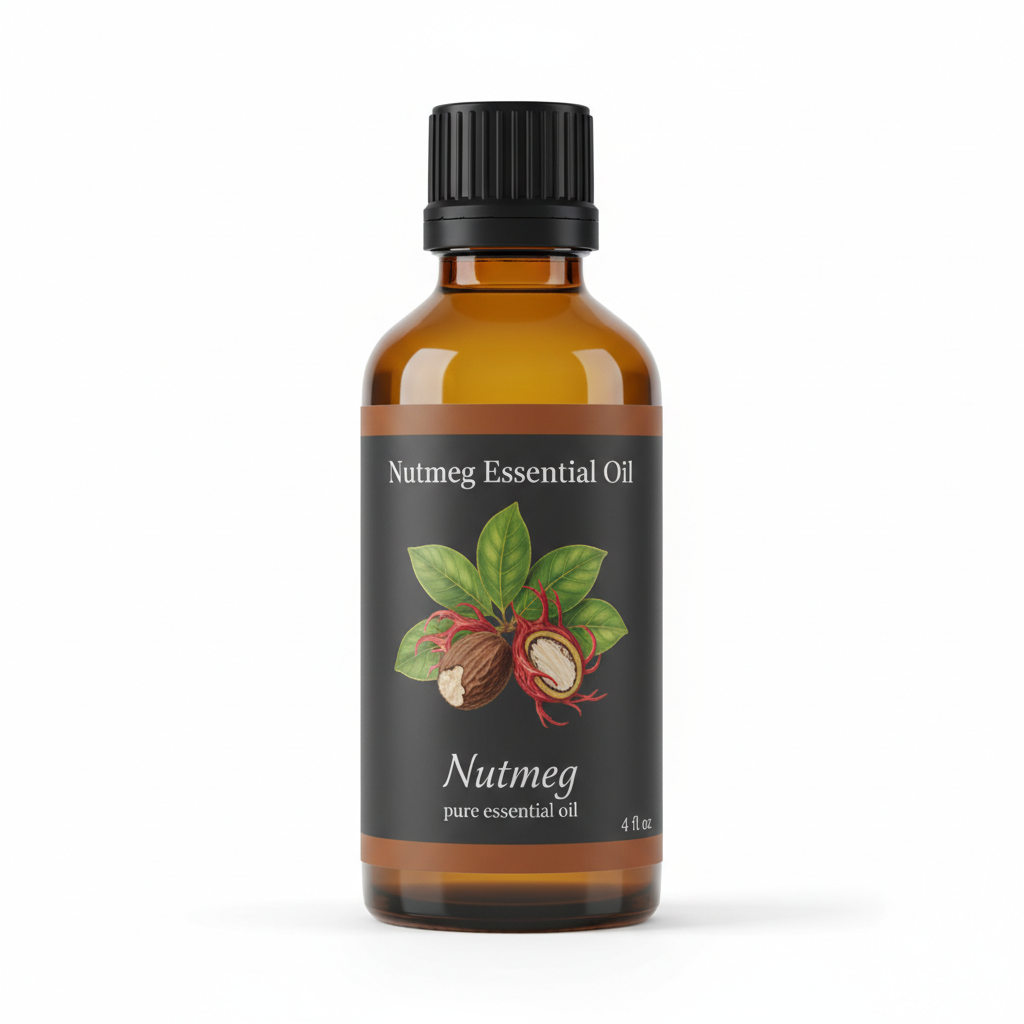
Nutmeg Essential Oil
Our own Nutmeg Essential Oil, in sizes from 0.5 oz to bulk.
From $10.99
Shop Now →What the wax maker says
Handling instructions for Golden Wax 464, a widely sold soy container wax, describe it as compatible with many fragrances and essential oils and recommend a fragrance oil load of 7 to 9 percent. They suggest heating the wax to 185 degrees F, adding the fragrance, then cooling to 125 to 145 degrees F before pouring (Golden Wax 464 handling sheet). That number describes how much scent the wax can hold and still burn nicely. It does not say how much of a particular oil is a good idea.
What the fragrance industry says
IFRA puts candles of all types in Category 12, products without direct skin contact (IFRA Guidance, 2023). Even so, its safrole standard has a note covering every category: natural extracts are accepted when the safrole in the finished product does not exceed 0.01% (IFRA Standards, 51st Amendment). Nutmeg oil in seven Indonesian batches carried 1.69% to 2.30% safrole, mean 2.02% (EFSA FEEDAP Panel, 2023).
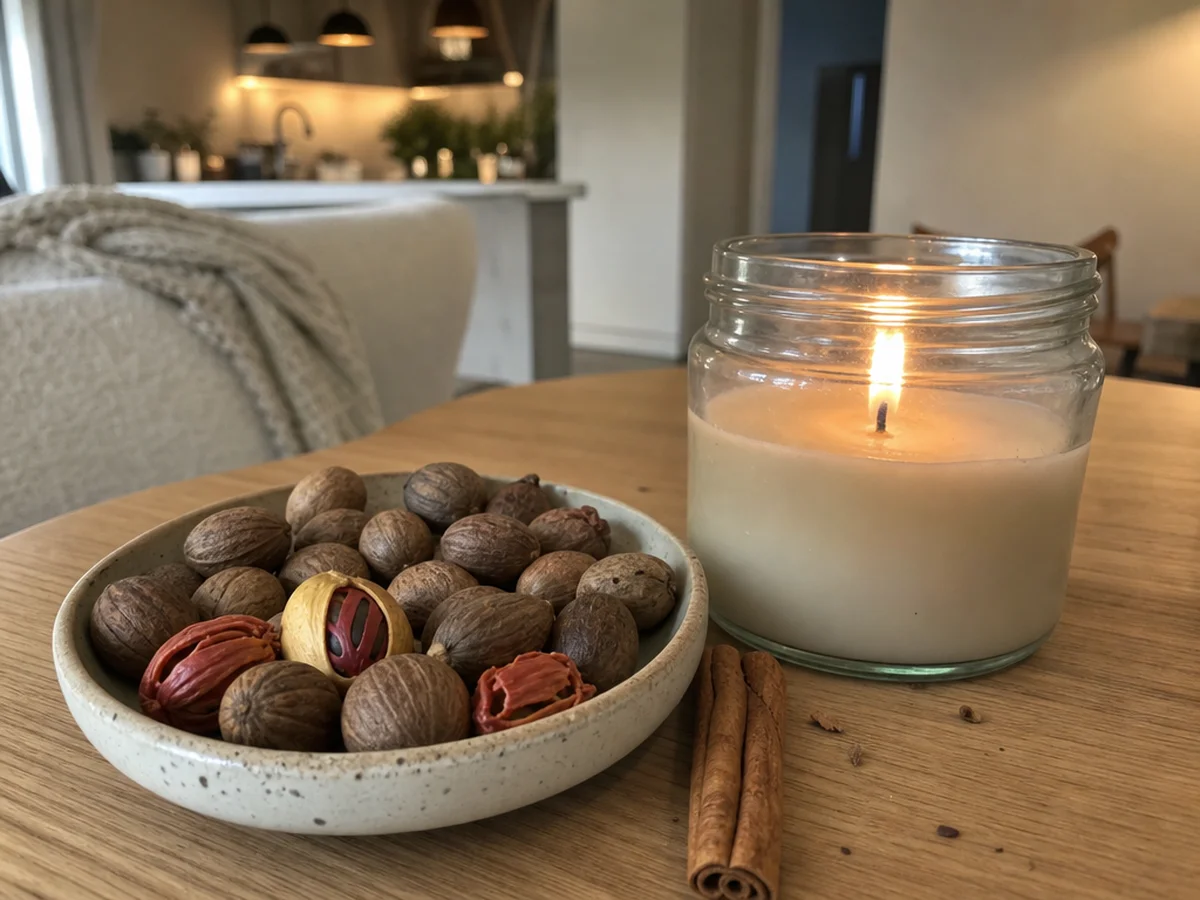
Divide 0.01 by 2.02 and you get about 0.5% nutmeg oil in the finished candle. At the high end of the batch range (2.30%) it is 0.435%; at the low end (1.69%) it is 0.59%. This is our arithmetic, so treat it as a guide for a careful maker.
| Basis | Share of a 200 g candle | Oil | Drops |
|---|---|---|---|
| Wax label, low end | 7% | 14 g | about 316 |
| Safrole ceiling, mean batch | 0.495% | 0.99 g | about 22 |
| Safrole ceiling, highest batch | 0.435% | 0.87 g | about 20 |
Those drop counts use the density of 0.887 on the Certificate of Analysis we publish for one batch and about 20 drops to the millilitre. Weighing is always more accurate than counting.
Meet the oil before you pour
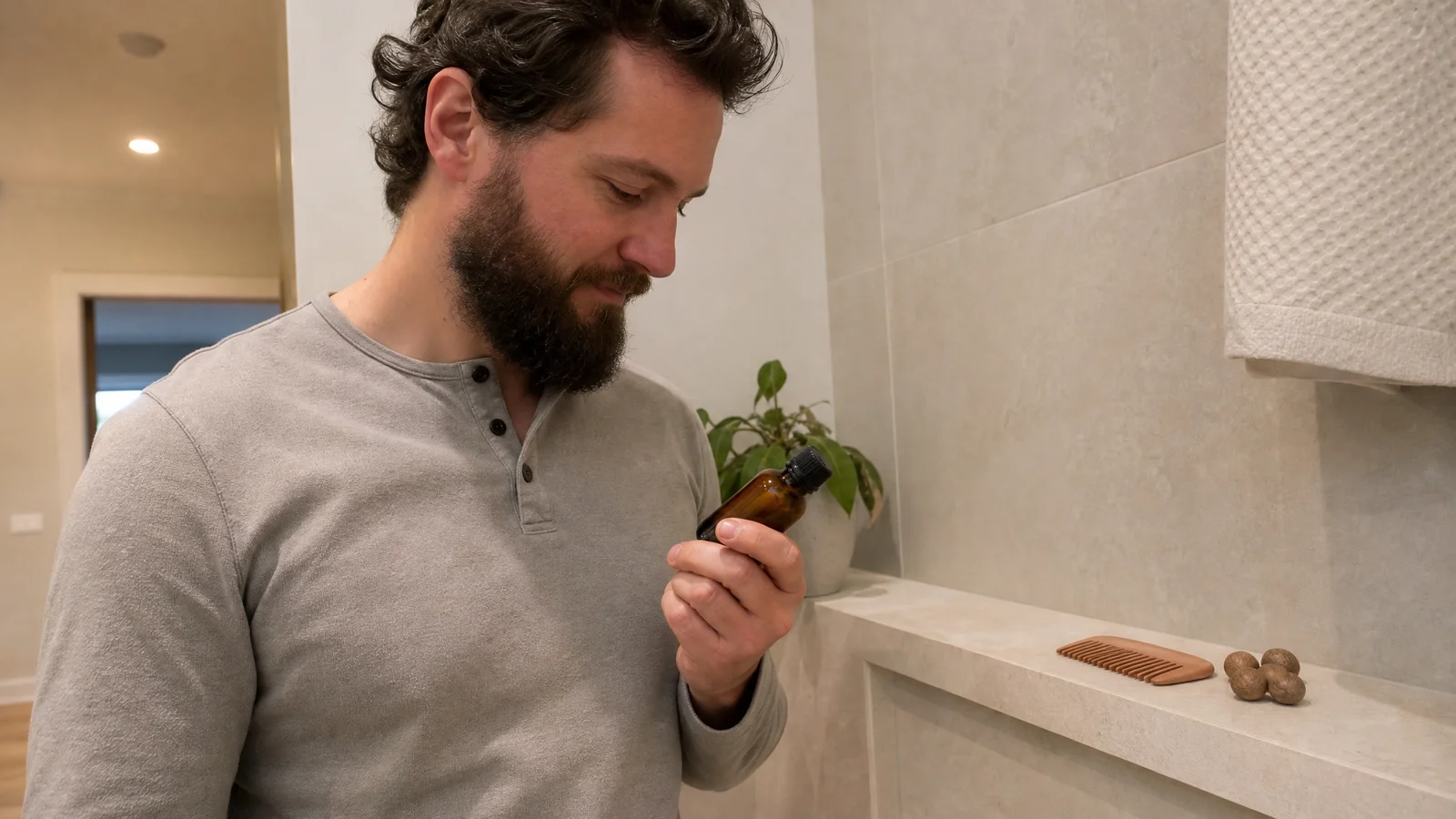
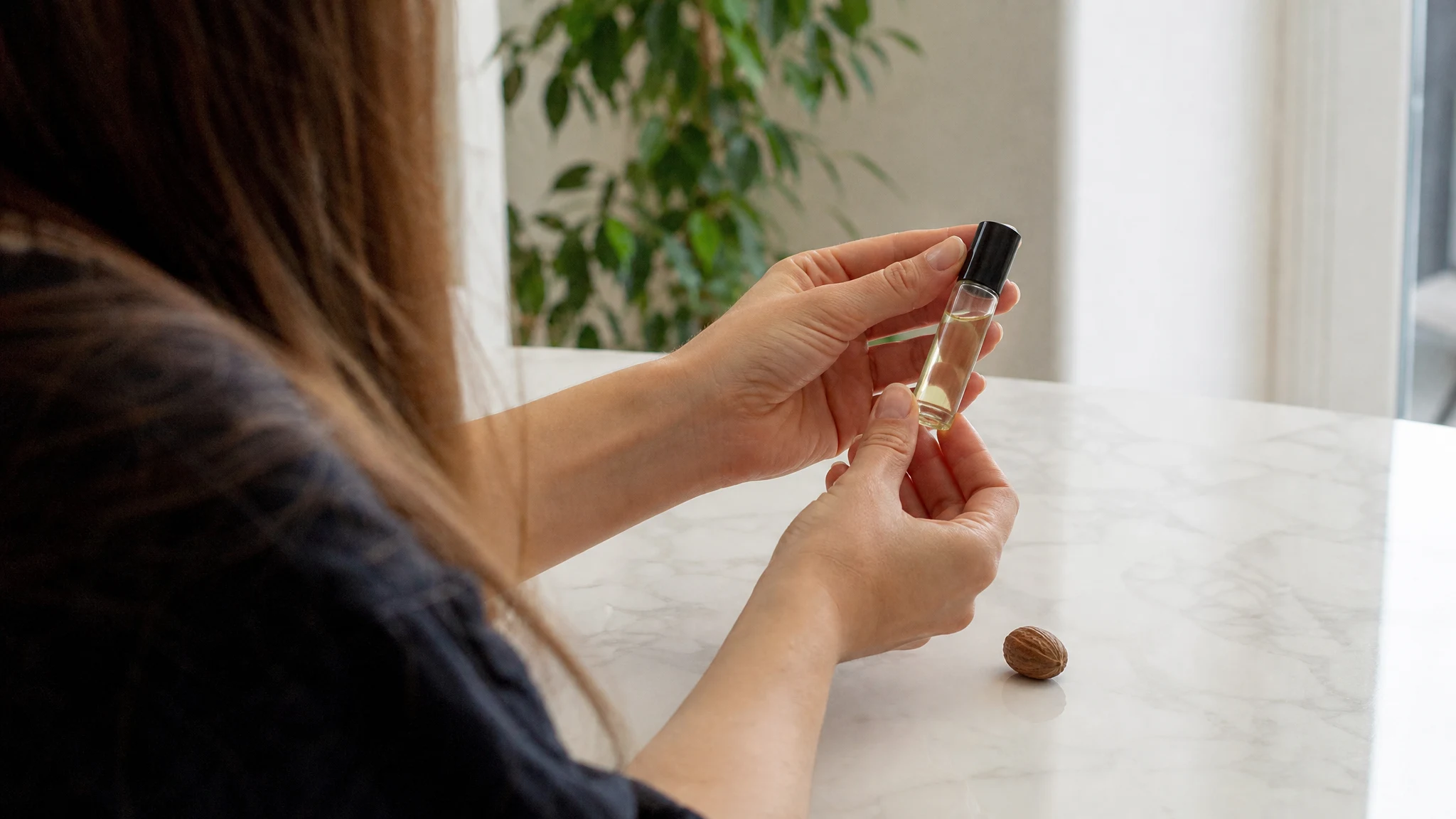
Before you commit a whole batch of wax, open the bottle and smell the oil on its own. Put a drop on a paper blotter, wave it gently, and notice how the bright, almost piney lift arrives first and the warm spice settles in behind it. Knowing that shape helps you picture what the candle should smell like, and it tells you which partners to reach for.
We would also suggest pouring one small test jar before you pour twelve. A single jar costs you very little wax and a little patience, and it lets you adjust the oil up or down before anything is wasted. Write the weight of the oil on a label as you go, because a candle you love is only repeatable if you know what went into it.
Nutmeg as the accent
So the way we would use nutmeg oil is as the warm top note over a base. A candle in which nutmeg is the only scent will be subtle at that load; a candle where nutmeg adds the spiced edge to vanilla, orange or a cozy cedar base can be wonderful. If you want nutmeg to carry the whole room, a fragrance oil is a different product with its own paperwork, which the essential oil versus fragrance oil post compares. Each partner scent has its own limits, and they add up, so ask every supplier for its safety data and IFRA information.
It is also worth asking your wax supplier whether essential oils should go in at the full 185 degrees F the sheet describes. Flash points vary by supplier and test method, so a safety data sheet for each oil you use is the right reference. For constituent figures on our nutmeg oil, ask us in writing through the contact page before ordering, and see the GC-MS post for how to read one.
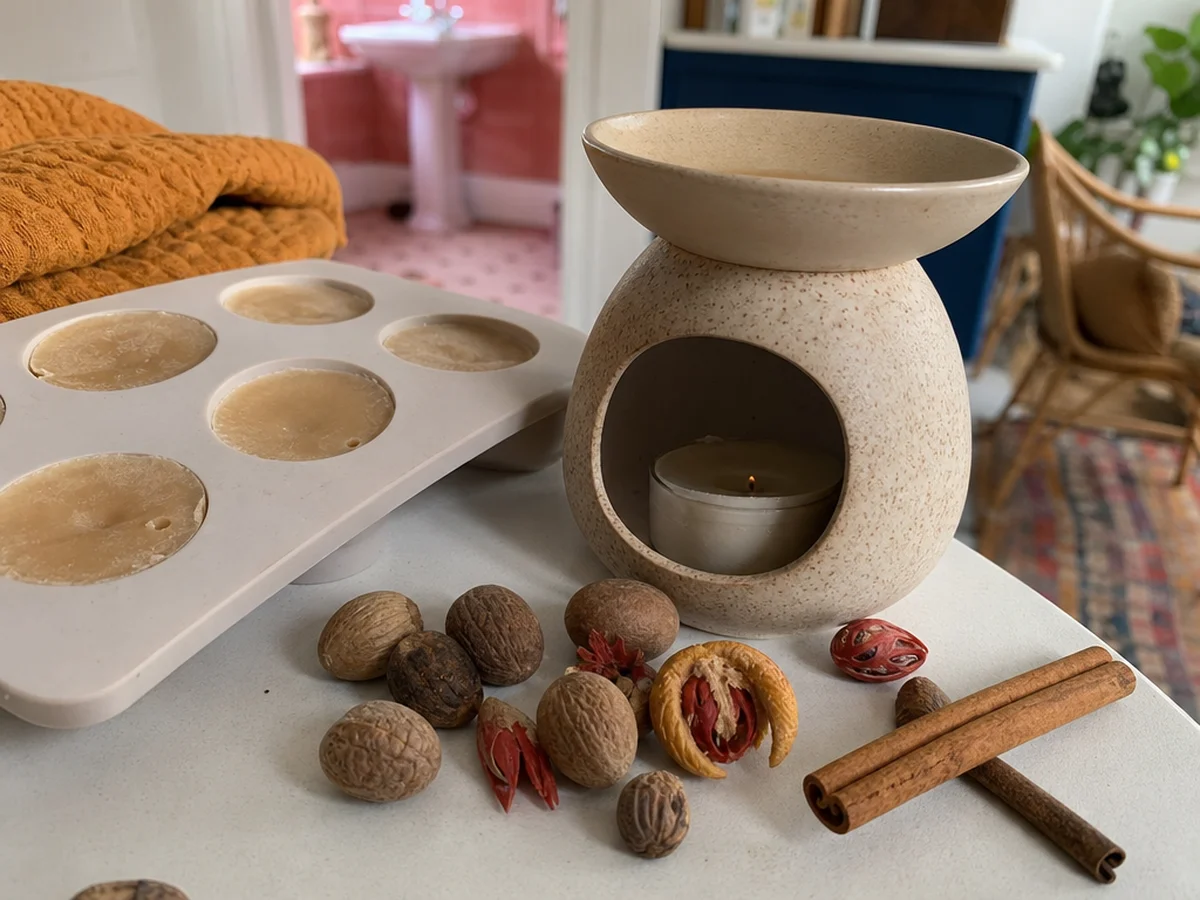
Wax melts and the people at home
Wax melts are not named in IFRA's category tables, so we treat them like candles and use the same ceiling. A melt warms for hours, so we suggest a lighter hand in small rooms. The ASPCA's advice on scenting the air is that a short session in a secured area is low risk, that pets with breathing problems may do better without it, and that homes with birds are better without diffusers (ASPCA); the same common sense applies to a melt warmer. We recommend nutmeg oil stay away from children and anyone pregnant or nursing, and not be used by anyone taking medication that acts on the central nervous system.
Wax, wicks, containers and dye come from a candle-supply shop, which should also supply the wax's data sheet. We sell nutmeg oil only.
Pairing for a cozy jar
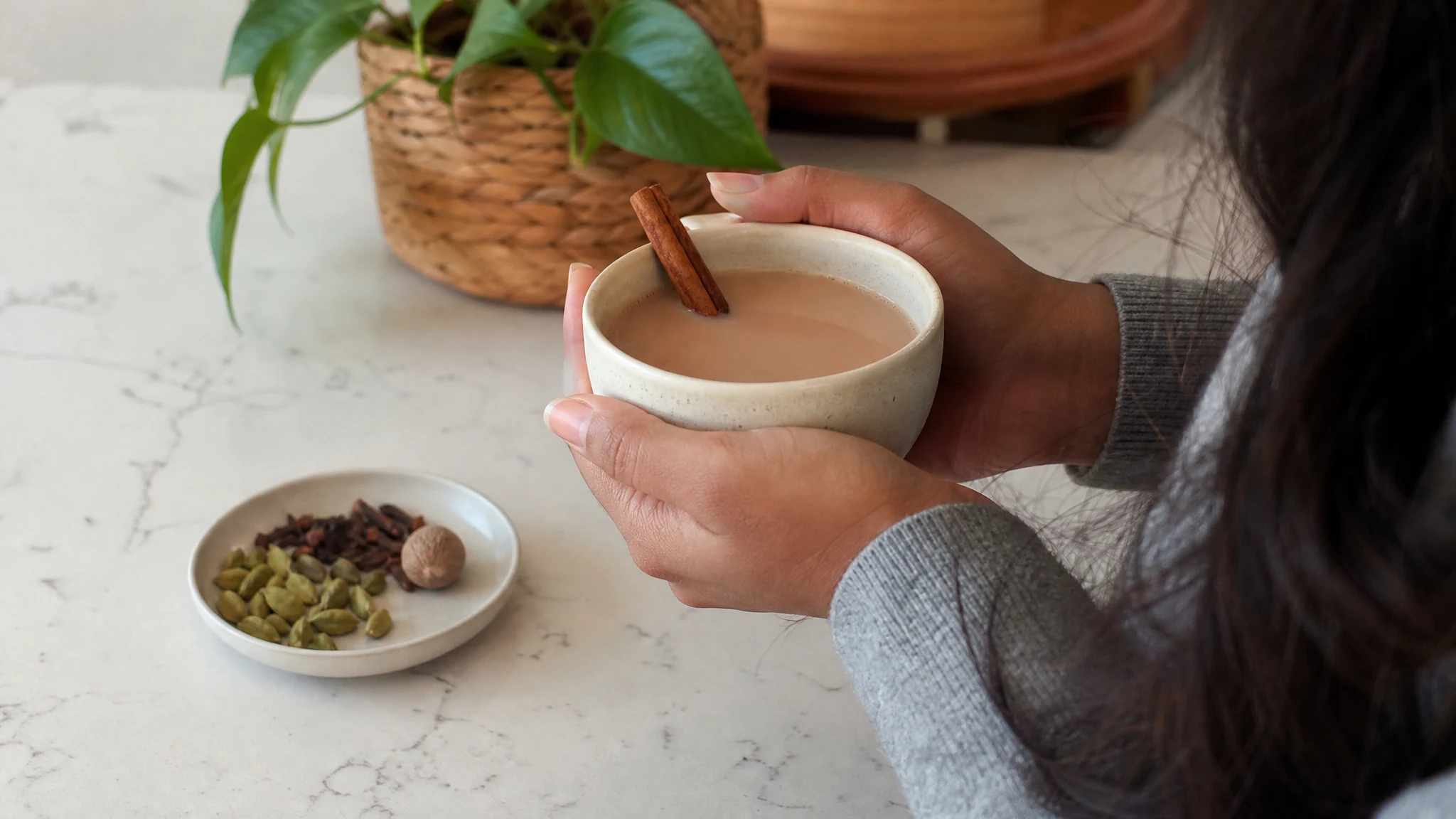
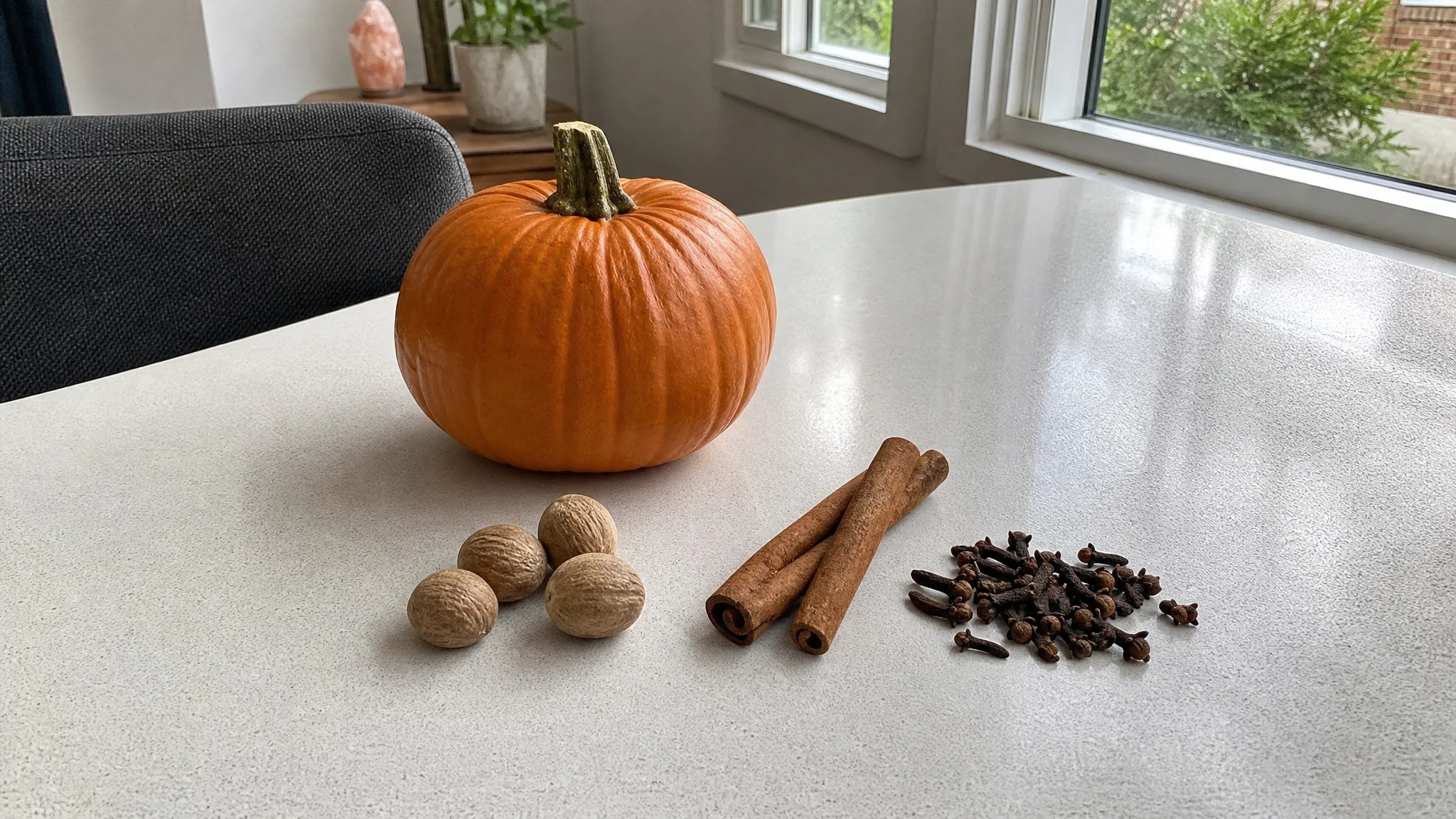
Nutmeg is a team player. Orange, vanilla, clove, cinnamon, sandalwood and cedarwood are the partners we would try first, and they come from a candle-supply or aromatherapy shop since we sell the nutmeg oil only. Think of nutmeg as the pinch of spice in a recipe: the base carries the scent, and nutmeg gives it the edge you notice when the candle is lit and again when you walk back into the room.
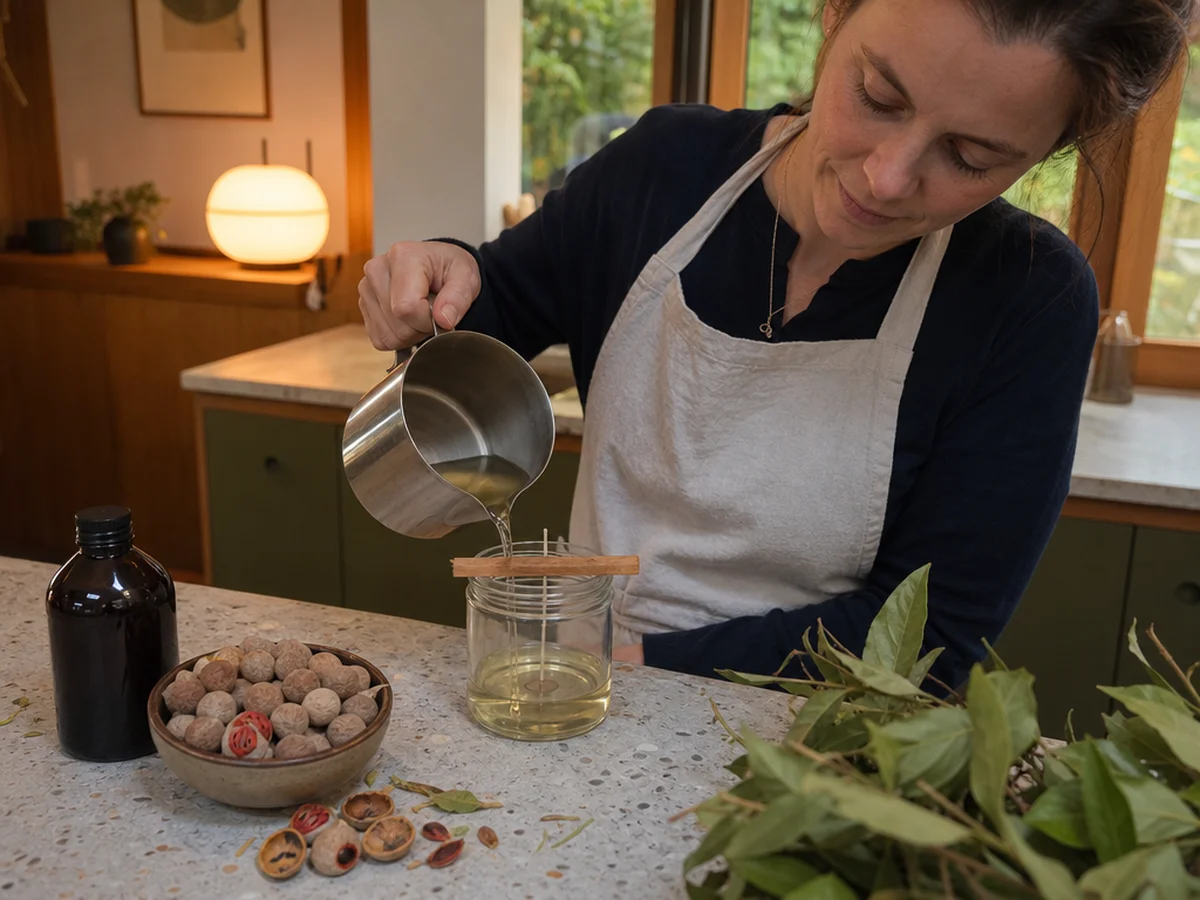
A nutmeg candle done well is a quiet one: a warm edge on a familiar base that makes a room feel like the start of the holidays.
Nutmeg Essential Oil
Nutmeg Essential Oil from our own shop, in sizes from 0.5 oz to bulk.
From $10.99
Shop Now →Sources & Further Reading
- Golden Wax 464. Handling and Use Recommendations. cdn.shopify.com
- IFRA. Guidance for the Use of IFRA Standards, June 30, 2023. ifrafragrance.org
- IFRA. The Complete IFRA Standards, January 2024 (51st Amendment). ifrafragrance.org
- EFSA FEEDAP Panel, 2023. Safety and efficacy of a feed additive consisting of an essential oil from the seeds of Myristica fragrans Houtt. (nutmeg oil) for all animal species (FEFANA asbl). EFSA Journal 21(6):e08066. pmc.ncbi.nlm.nih.gov
- ASPCA. Is the Latest Home Trend Harmful to Your Pets? What You Need to Know!. www.aspca.org