Organic Nutmeg Oil: What the Label Really Means
"Organic" is one of the most persuasive words on a label, and with nutmeg oil it is worth knowing exactly what it promises. The word describes how a crop was grown and handled under a rulebook. It does not describe what is in the finished bottle, and it does not alter the compounds that set nutmeg oil's usage limits. We do not sell our nutmeg oils as organic, so this is a guide to reading the claim fairly, whichever way you decide to buy.
Nutmeg Essential Oil
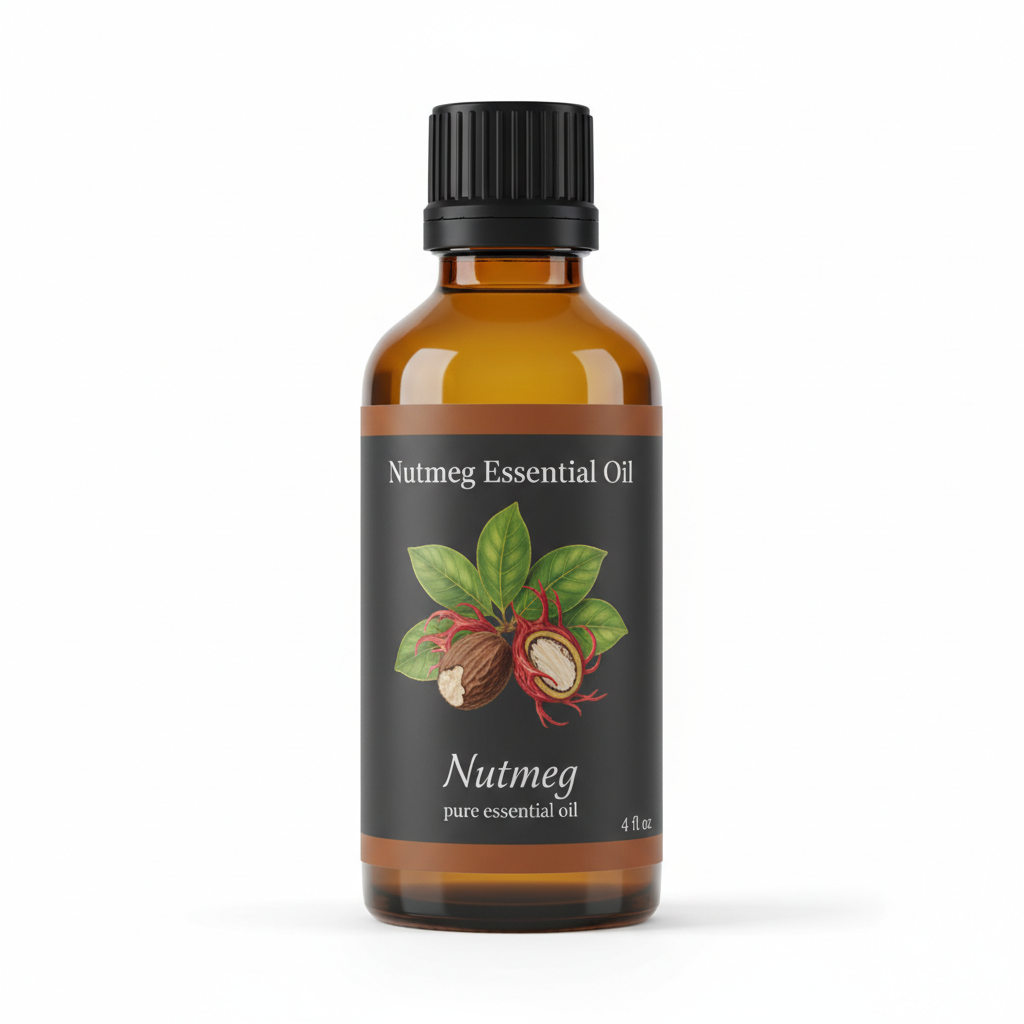
Our own Nutmeg Essential Oil, in sizes from 0.5 oz to bulk.
From $10.99
Shop Now →What the word means in US law
The federal rules define "organic" as a labeling term for an agricultural product produced in accordance with the Organic Foods Production Act and the regulations under it (7 CFR 205.2). That is a statement about a production system and a paper trail, with nothing in it about chemistry or strength.
Two features of enforcement are good to know. Certifying agents must run periodic residue testing on products sold as organic, covering at minimum five percent of the operations they certify each year (7 CFR 205.670). And a product with a prohibited substance above 5 percent of the EPA's tolerance for it cannot be sold as organic (7 CFR 205.671). So organic does not mean zero residue. It is a sampling system with a threshold, and a particular lot may never be the one sampled.
There is also a small-operation route. A business with five thousand dollars or less in gross organic sales is exempt from certification but must still follow the production, handling and labeling rules, and keep records for three years (7 CFR 205.101). So "organic" on a bottle can mean certified, or it can mean a very small operation that is bound by the rules without holding a certificate.
What organic leaves untouched
Nutmeg oil's safety profile comes from the plant's own chemistry. In the European Food Safety Authority's analysis of seven Indonesian nutmeg oil batches, safrole averaged 2.02%, and EFSA classified the oil as a category 1B carcinogen for labelling because of it, as well as an irritant to skin and eyes and a skin and respiratory sensitiser. Those are compounds the nutmeg seed makes itself.
Reasoning from that, an organic crop and a conventionally grown crop of the same variety are the same plant making the same compounds. Organic certification therefore gives no reason to expect less safrole or a higher dilution limit. If you pay more for an organic nutmeg oil, the sensible response is to keep using it exactly as carefully as any other: our dilution guidance is 0.5% to 2% in a carrier, we start at the low end, and a patch test comes first.
Reading the label like a shopper
Next time you pick up a bottle with "organic" on it, give it a slow read. Look for the botanical name, the plant part, a batch or lot code and the name of whoever stands behind the claim. A label that has all four gives you something to work with. A label with one bold word and little else invites a polite question.
None of this is cynical. Most sellers who use the word honestly are proud of it, and they are glad to tell you more. It is just a good habit to let the paperwork do the talking.
What organic can reasonably offer
The things people hope organic buys are fewer residues from farm inputs and a more traceable supply chain. The rules support the second hope more firmly than the first, since residue testing is by sample. How a residue on the crop carries into a steam-distilled oil is a separate question, and one a supplier can answer in writing.
Why we like plain questions
As a small business ourselves, we have a lot of sympathy for both sides of this conversation. Buyers want to know what they are getting, and sellers want to be able to show it. A short, friendly email with two or three specific questions usually gets a clearer answer than a long one with ten.
If a seller says organic, ask for the paper
The claim becomes useful when it comes with documents. Ask for the name of the certifier and a certificate that covers the product you are buying, then check that the certificate matches the seller's name. For a small exempt operation, ask which rule the label rests on. A seller who answers in a sentence or two is giving you something to work with.
- Ask which certifier issued the certificate and whether it names this product.
- Ask for the botanical name and plant part, which matter more to nutmeg's safety than any growing label.
- Ask for a constituent report for the lot if you will use the oil on skin or in something you sell.
The same questions apply to any nutmeg oil, and our buying guide lays out the documents by use. If you are weighing the oil for soap or perfume, the soap guide and perfume guide show how the safrole numbers set usage rates whatever the label says. For GC-MS data on ours, ask us in writing through our contact page before you order.
Choose what suits you
If organic matters to you for reasons of farming and values, that is a perfectly good reason to choose it. Just pair it with the same careful handling you would give any nutmeg oil: low dilution, a patch test, a tightly capped bottle. Values and caution go together nicely.
Organic can be a reasonable thing to prefer. Just keep it in its lane: it tells you about the farm, and the bottle's chemistry tells you about the rest.
Nutmeg Essential Oil
Nutmeg Essential Oil from our own shop, in sizes from 0.5 oz to bulk.
From $10.99
Shop Now →Sources & Further Reading
- 7 CFR § 205.2 - Terms defined.
- 7 CFR § 205.670 - Inspection and testing of agricultural products to be sold or labeled as “100 percent organic,” “organic,” or “made with organic (specified ingredients or food group(s)).”
- 7 CFR § 205.671 - Exclusion from organic sale.
- 7 CFR § 205.101 - Exemptions from certification.
- Safety and efficacy of a feed additive consisting of an essential oil from the seeds of Myristica fragrans Houtt. (nutmeg oil) for all animal species (FEFANA asbl).