What Is Nutmeg Oil? Where It Comes From, How It Smells
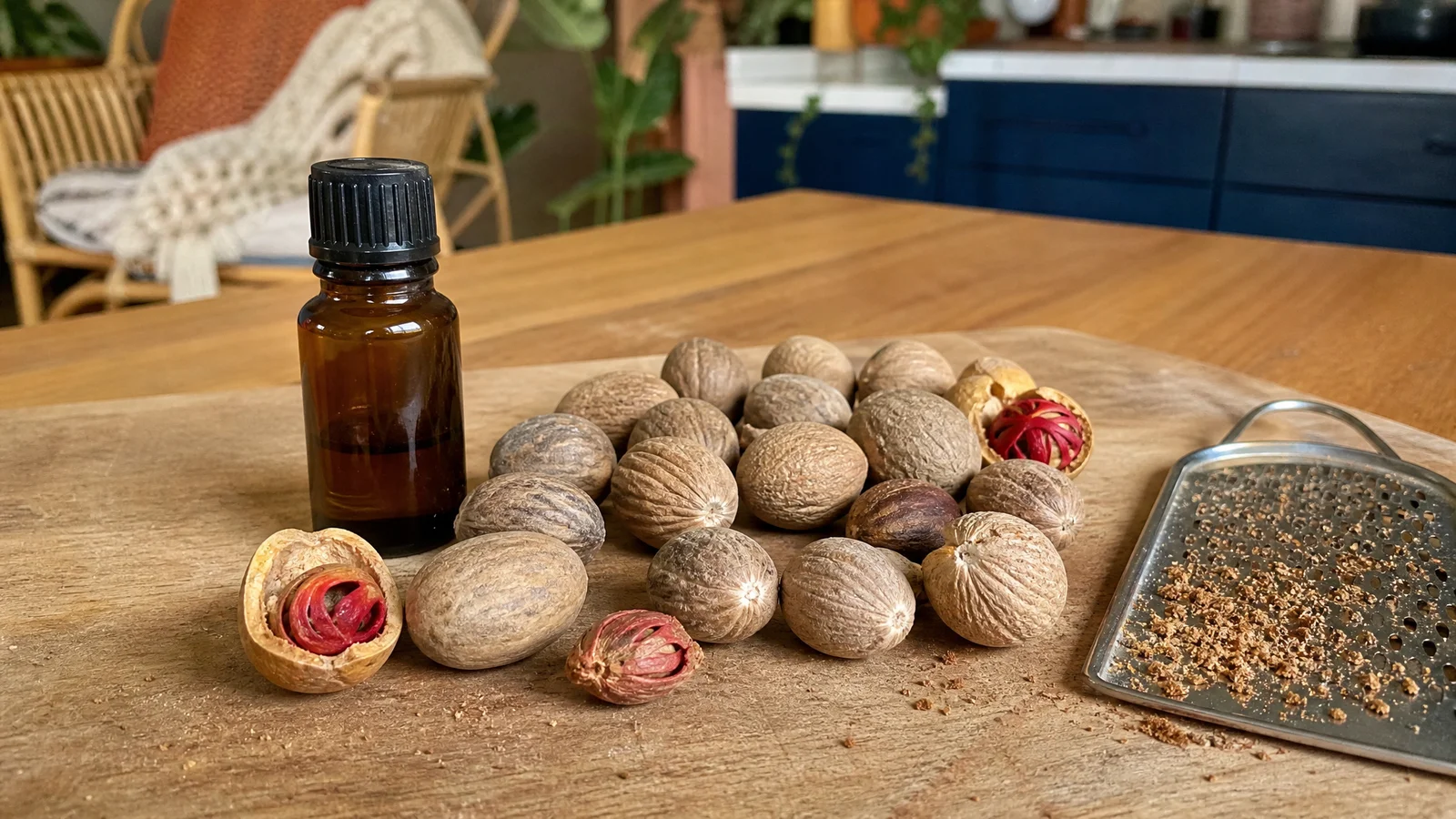
A jar of ground nutmeg and a bottle of nutmeg oil share a name and not much else. The spice is the grated seed of a tropical tree. The oil is the volatile part of that seed, captured by steam and concentrated into something far stronger than anything in your spice drawer. Knowing the difference changes how much you use and what you pair it with.
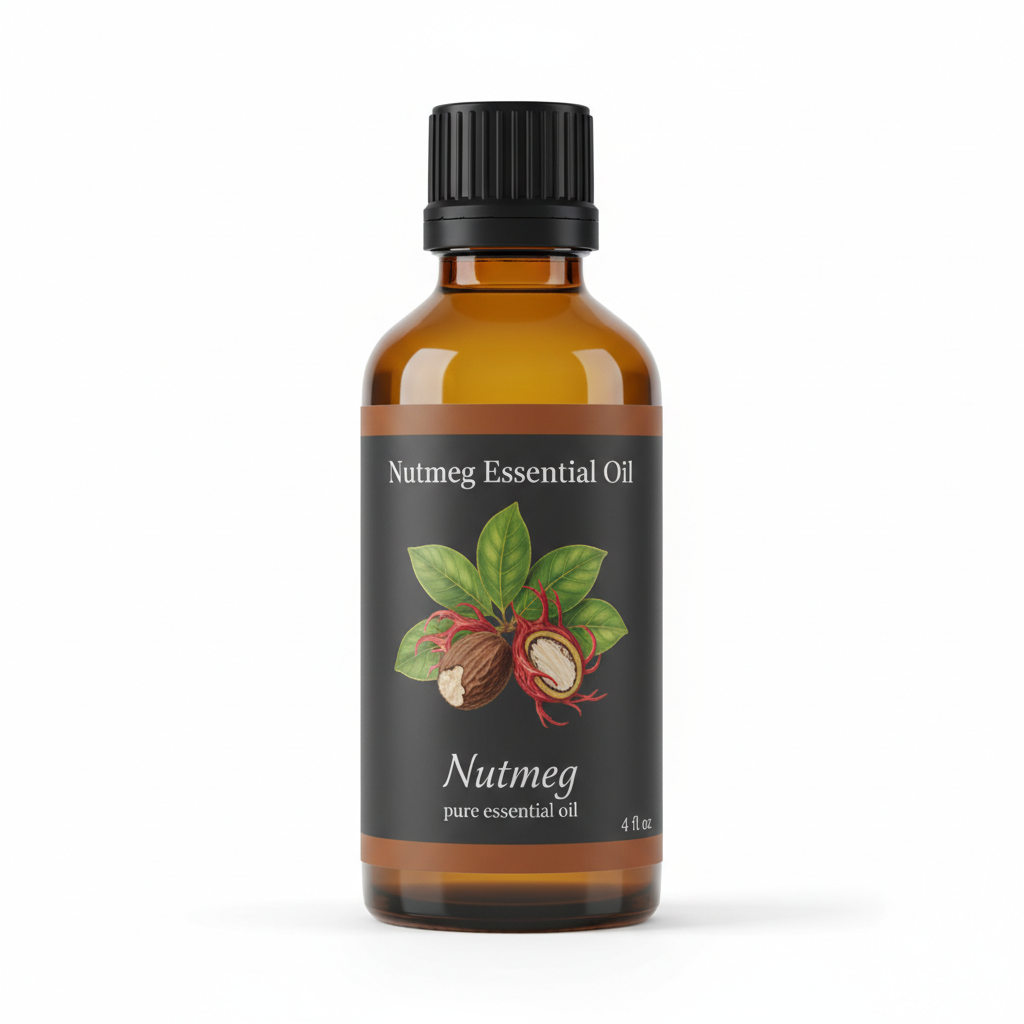
Nutmeg Essential Oil
Our own Nutmeg Essential Oil, in sizes from 0.5 oz to bulk.
From $10.99
Shop Now →One tree, several products
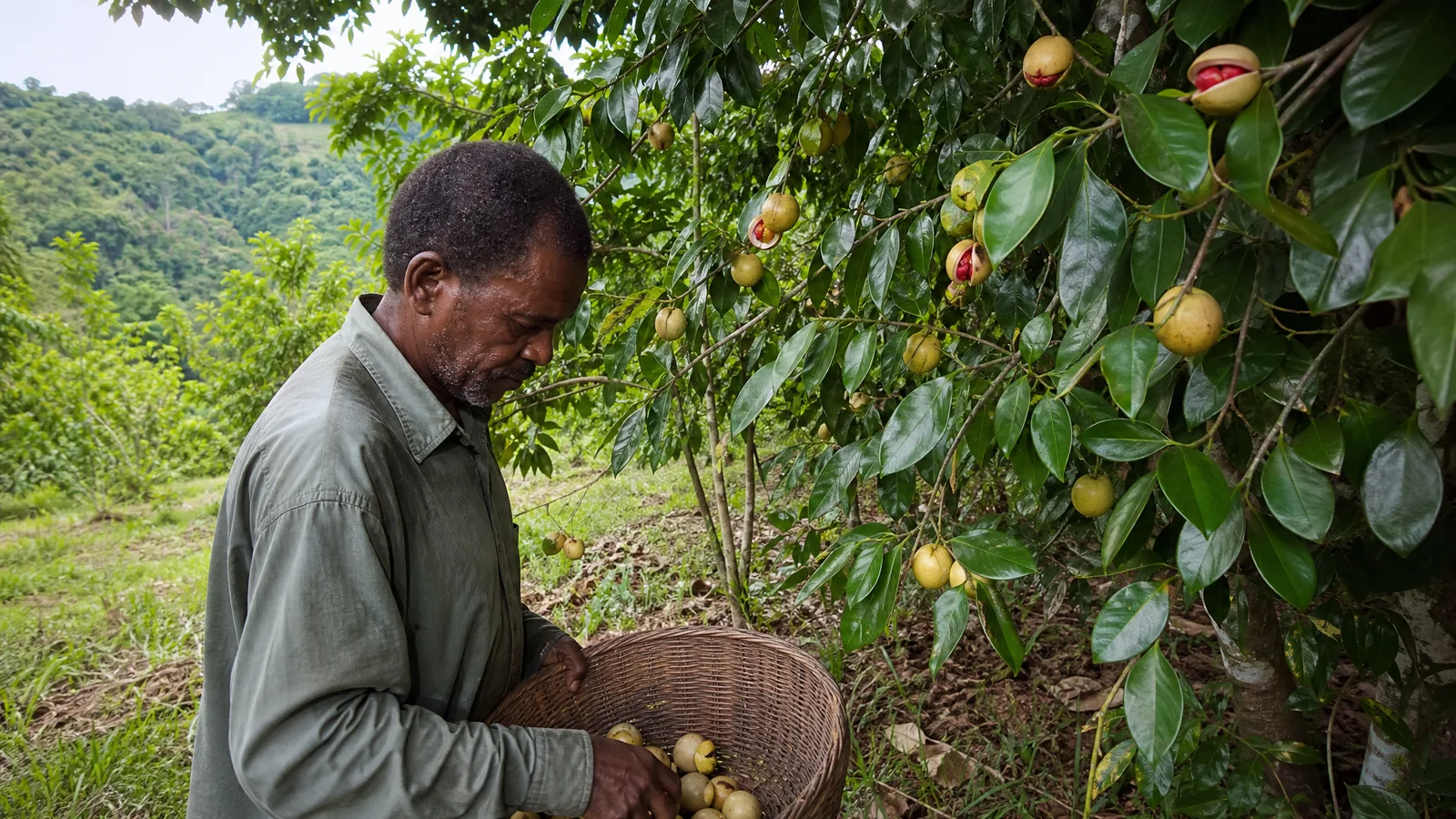
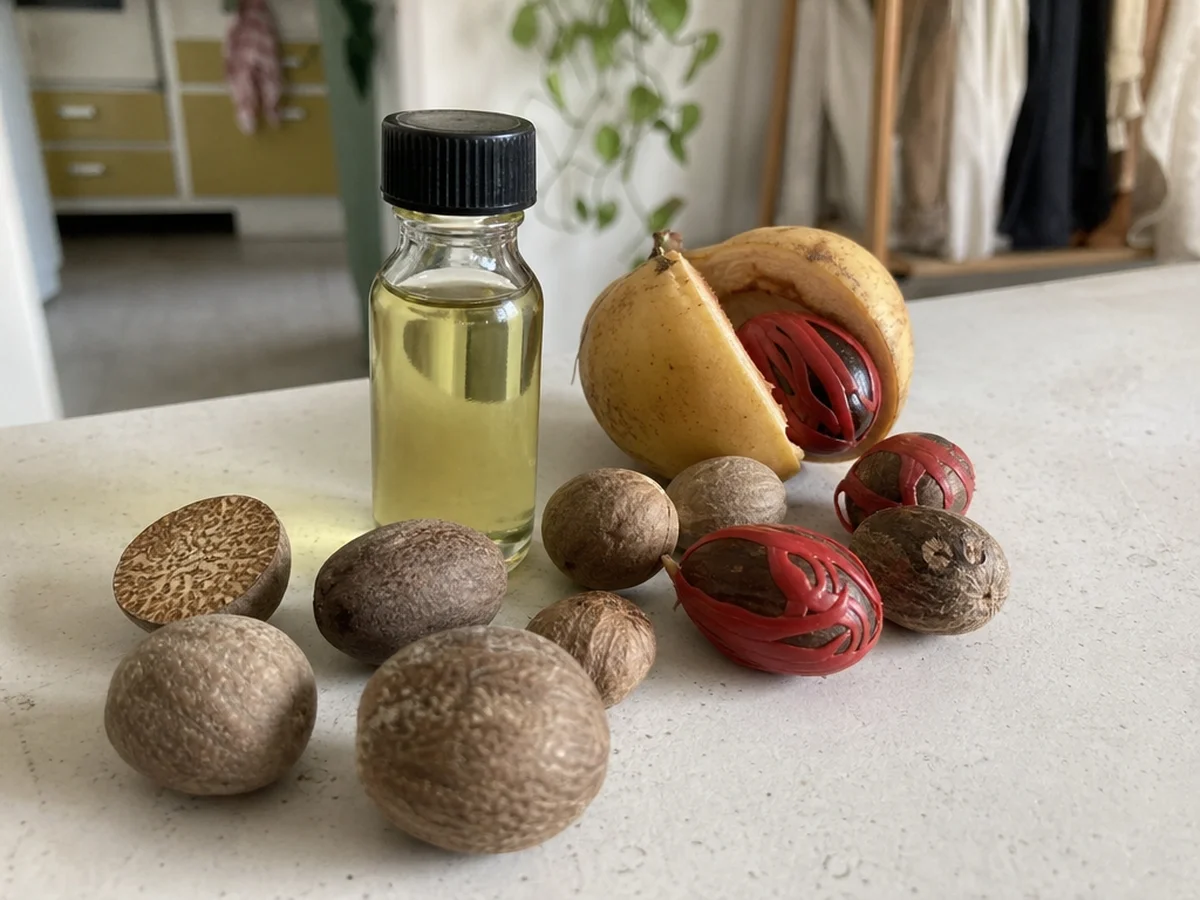
Nutmeg comes from Myristica fragrans Houtt., an evergreen tree native to Indonesia and now grown in other tropical regions. The tree gives two spices: nutmeg, the seed, and mace, the red lacy covering around it. Oils can be made from the seed, from the mace and even from the leaf, and a 2022 review reported yields of 6.2% to 7.6% for kernel oil, 8.1% to 10.3% for mace oil and 0.7% to 3.2% for leaf oil. So "nutmeg oil" needs a plant part to be fully described. Ours are the seed side of the tree, and our mace comparison shows what changes when the part changes.
We list two nutmeg oils, both Myristica fragrans and both sold neat. Our Purity listing is steam-distilled from dried, crushed kernels, and we describe the aroma as warm, sweet and spicy-woody with a musky depth, brighter and less dusty than ground kitchen nutmeg. We do not sell mace oil, nutmeg butter, CO2 extract or the spice itself, and our CO2 extract guide explains how that product differs.
What is inside
The European Food Safety Authority analysed seven Indonesian nutmeg oil batches steam-distilled from dried, crushed seeds. On average the oil was about 21% sabinene, 20% alpha-pinene and 13% beta-pinene, so these three terpenes together make up more than half of it. Myristicin and a little safrole are much smaller shares by weight, and they are the compounds that safety limits turn on. Our composition guide takes them one by one.
Where the tree is grown changes the picture. The same review lists single samples: a Sri Lankan kernel oil with sabinene at 43.4% and myristicin at 3.0%, a Grenada seed oil with sabinene at 52.8%, and an Andaman and Nicobar oil with myristicin at 20.3%. Each is one sample, so none defines its country, but together they show why a safety figure written for one oil should not be assumed for another. Grenada's story has its own place on our site, in the Grenada nutmeg article.
What it smells like
Open a bottle and hold it a short distance away. The first impression is warm and sweet, with a spicy brightness that is hard to mistake. After a moment you will notice a woody, slightly musky background that gives the scent its depth. It is the smell of fall baking, but cleaner and more lifted than the jar in your spice rack.
Give it a few minutes on a paper strip and the top fades, leaving a softer, rounder warmth. That unfolding is a big part of the appeal.
A drop is not a pinch
People often assume the oil must be a milder version of the spice, since a pinch goes into a pie. The arithmetic points the other way. If the kernel yield of 6.2% to 7.6% is by weight, a kilogram of oil takes roughly 13 to 16 kilograms of kernel. The Certificate of Analysis we publish for one batch lists a relative density of 0.887, and at a rough convention of 20 drops per millilitre, one drop is about 0.044 g of oil. That drop stands for roughly 0.6 to 0.7 g of kernel, delivered at once.
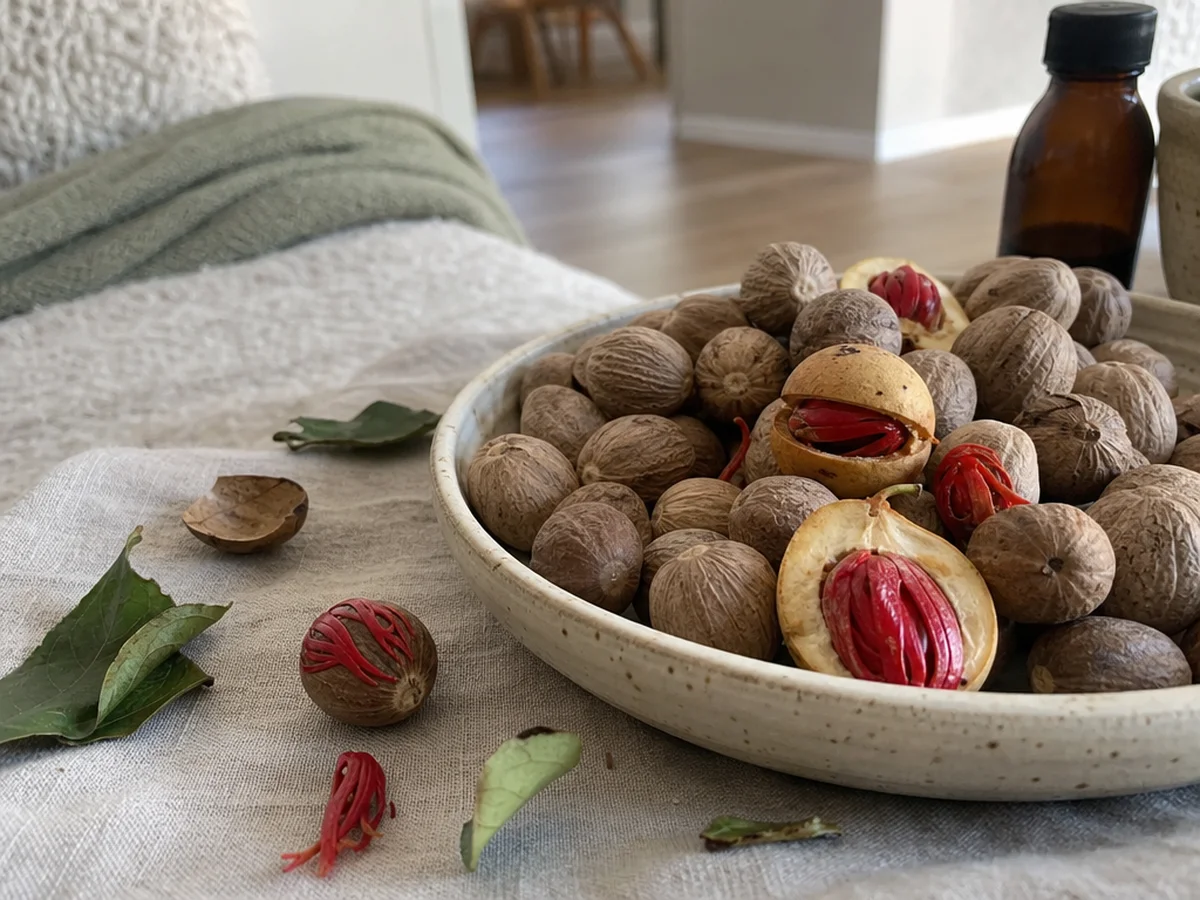
This is arithmetic from a yield range and one density, not a measurement of any bottle, but it shows why we treat the oil as a concentrate. It is also why we say never to swallow it, and why a few drops of nutmeg oil is already a generous amount for scenting a room. If you want nutmeg in food, the spice from the grocery is the right ingredient.
Starting small
If you are curious, begin with a small bottle. You will use so little at a time that a small amount lasts a long while, and it lets you learn the scent before you commit to a bigger project. Keep the cap on, keep the bottle upright and keep a label with the date. These small habits make the oil more enjoyable to live with.
Who it suits
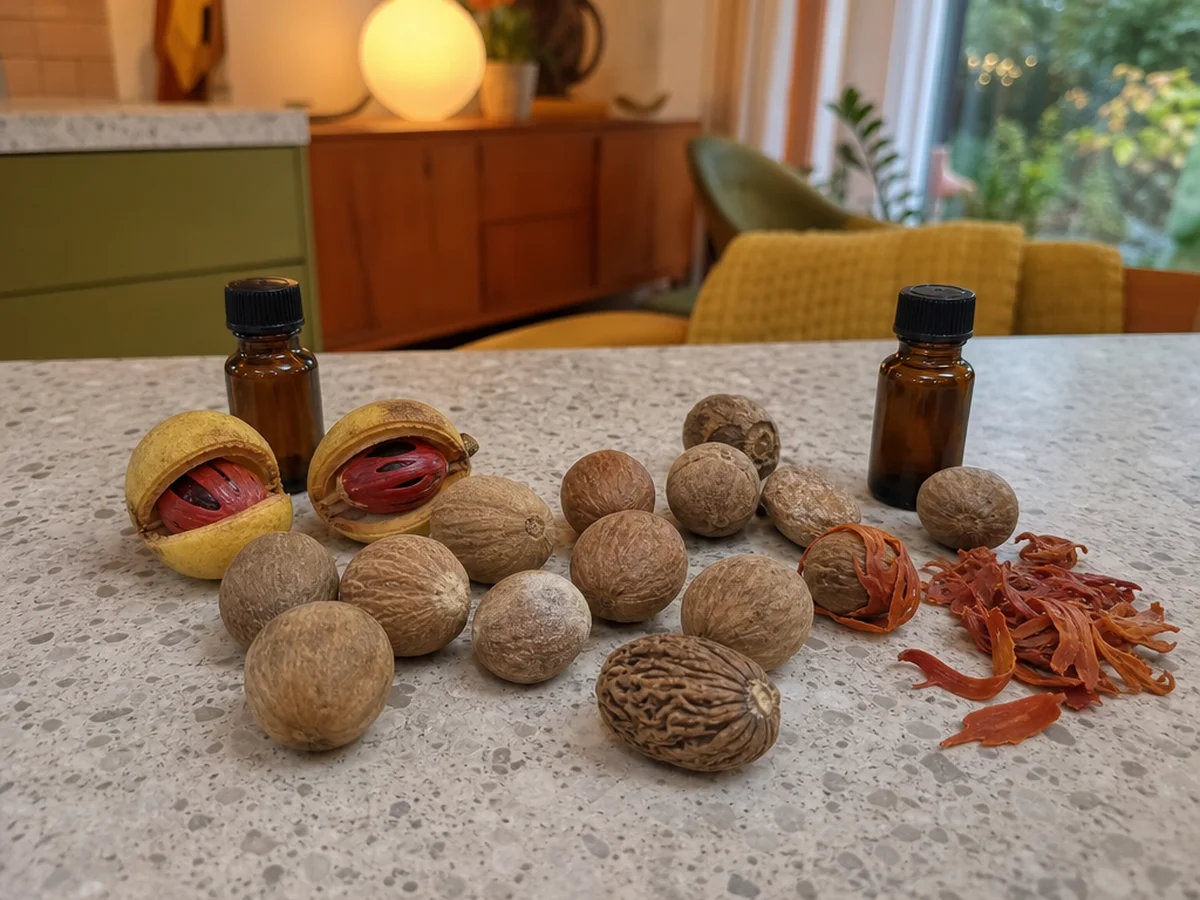
Nutmeg oil is a fine choice for anyone who loves a warm spice note in fall diffuser blends, candles, soap scent and natural perfumery. We suggest skin use only well diluted (our line is 0.5% to 2% in a carrier, starting at the low end, with a patch test first), and we keep it away from children and pets. Orange, clove, cinnamon, ginger, vanilla and sandalwood are its classic partners, and our pairing guide goes through how to combine them.
A word on first impressions
Your first sniff may surprise you, especially if you expect the soft smell of baking. The oil is sharper, brighter and more focused than the spice, and many people need a second sniff to settle in. That is perfectly normal, and a good reason to take your time.
Think of the oil as the spice with the volume turned way up, and treat it accordingly.
Nutmeg Essential Oil
Nutmeg Essential Oil from our own shop, in sizes from 0.5 oz to bulk.
From $10.99
Shop Now →