Nutmeg, Sweet Orange and Clove: A Warm Spice Blend
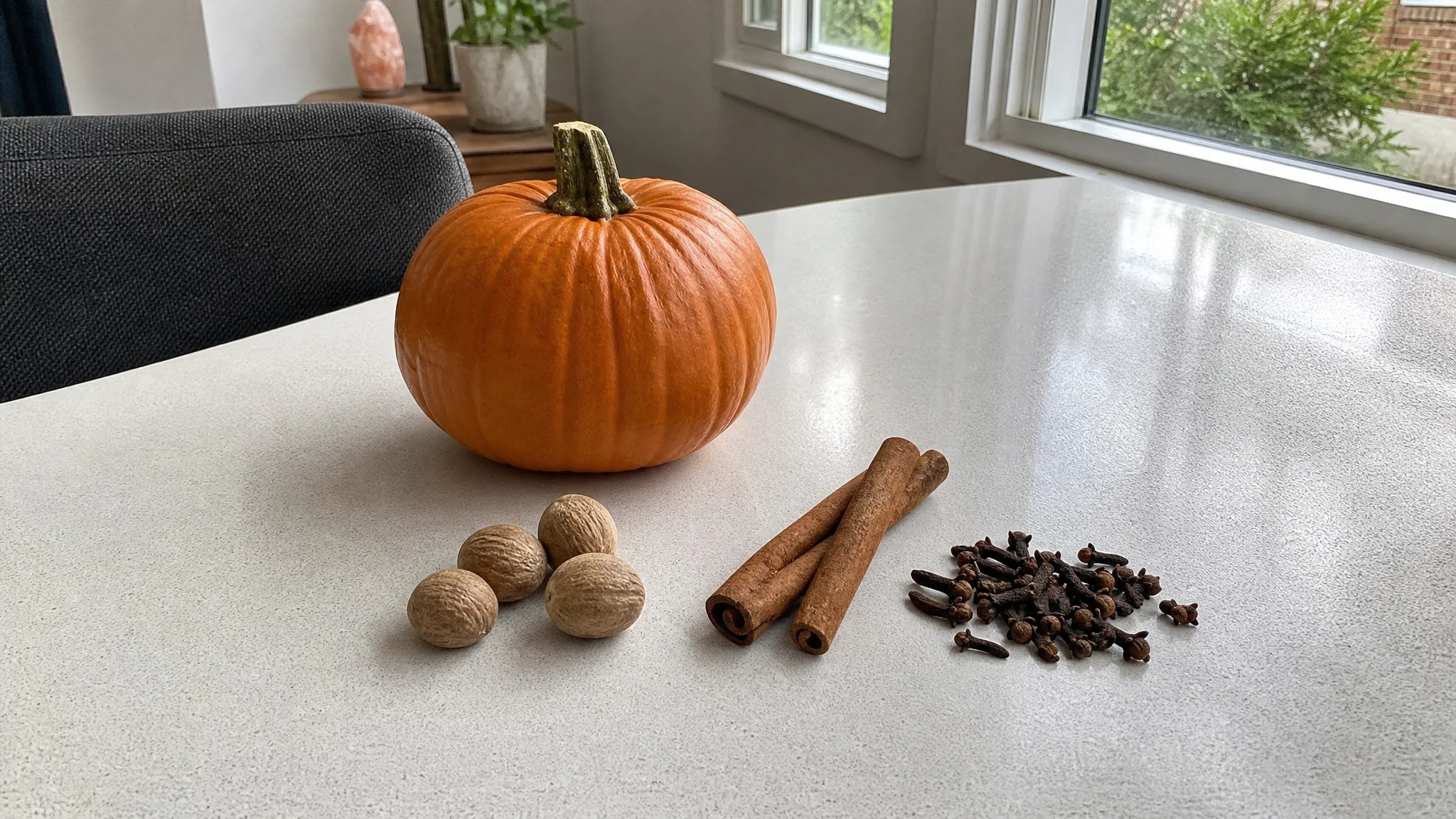
Sweet citrus peel, clove and the soft warmth of nutmeg belong together in autumn. That trio is the oldest idea in seasonal blending, and it is a good one. This post gives it numbers, so you can see how the proportions change depending on whether the blend is headed for a diffuser or for skin.
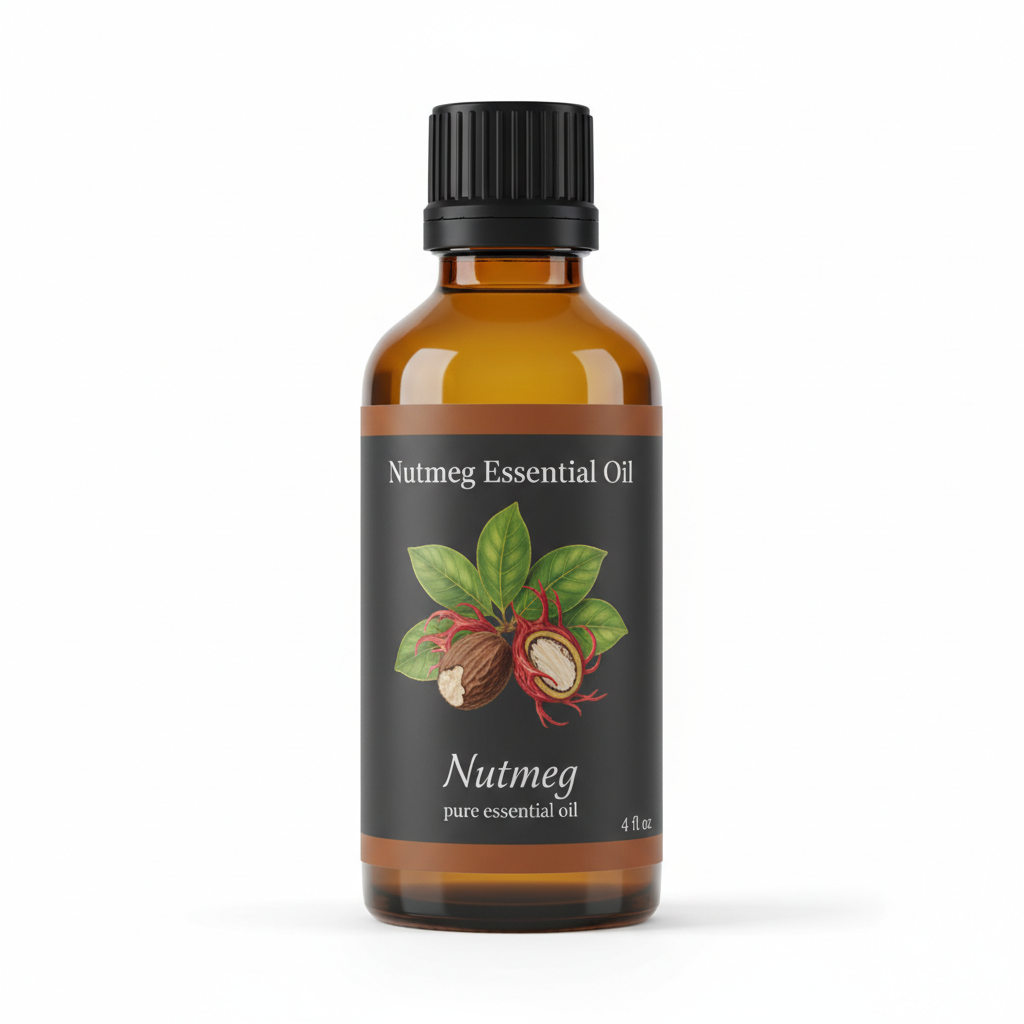
Nutmeg Essential Oil
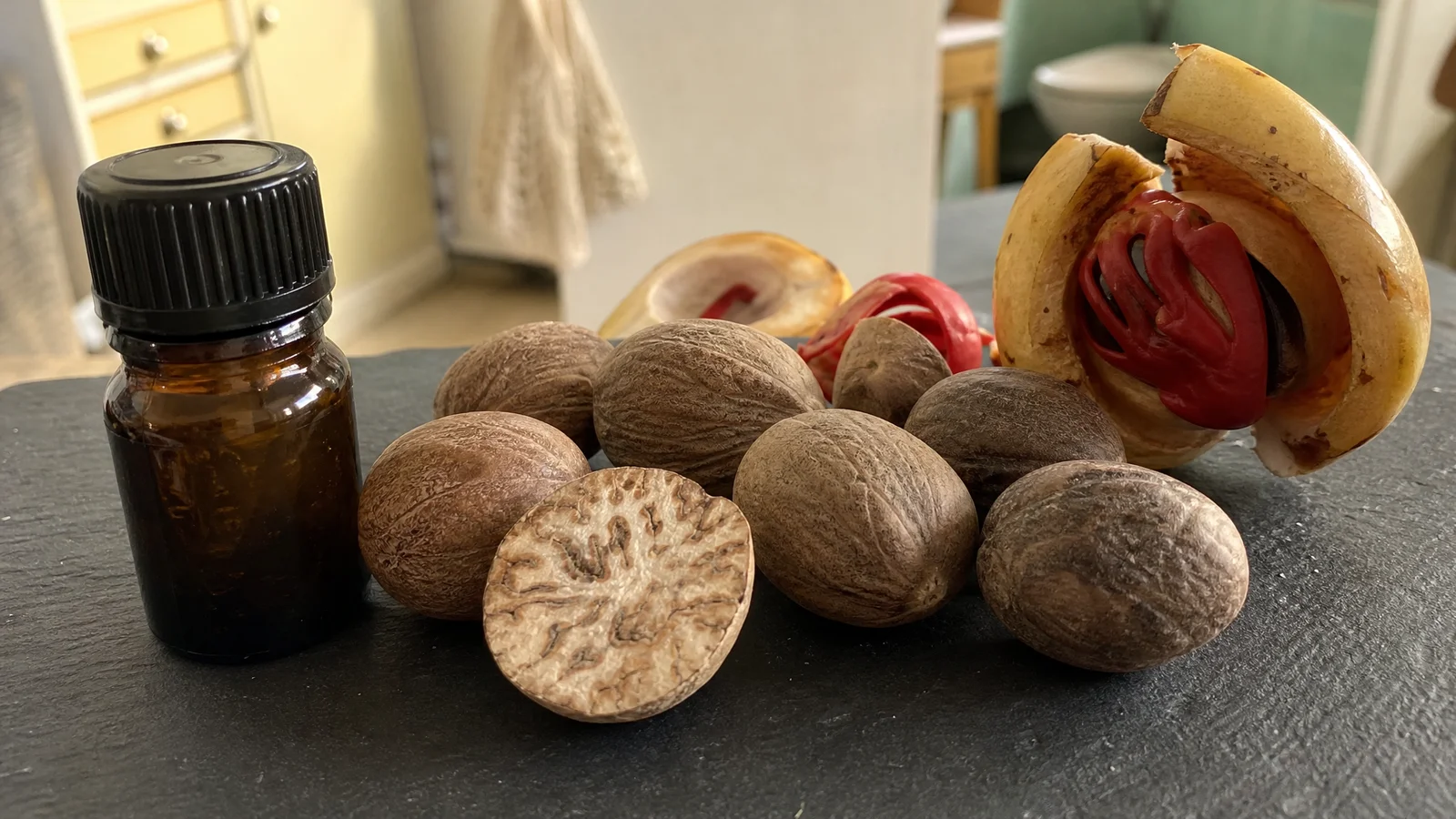
Our own Nutmeg Essential Oil, in sizes from 0.5 oz to bulk.
From $10.99
Shop Now →The ratio: 3-1-1
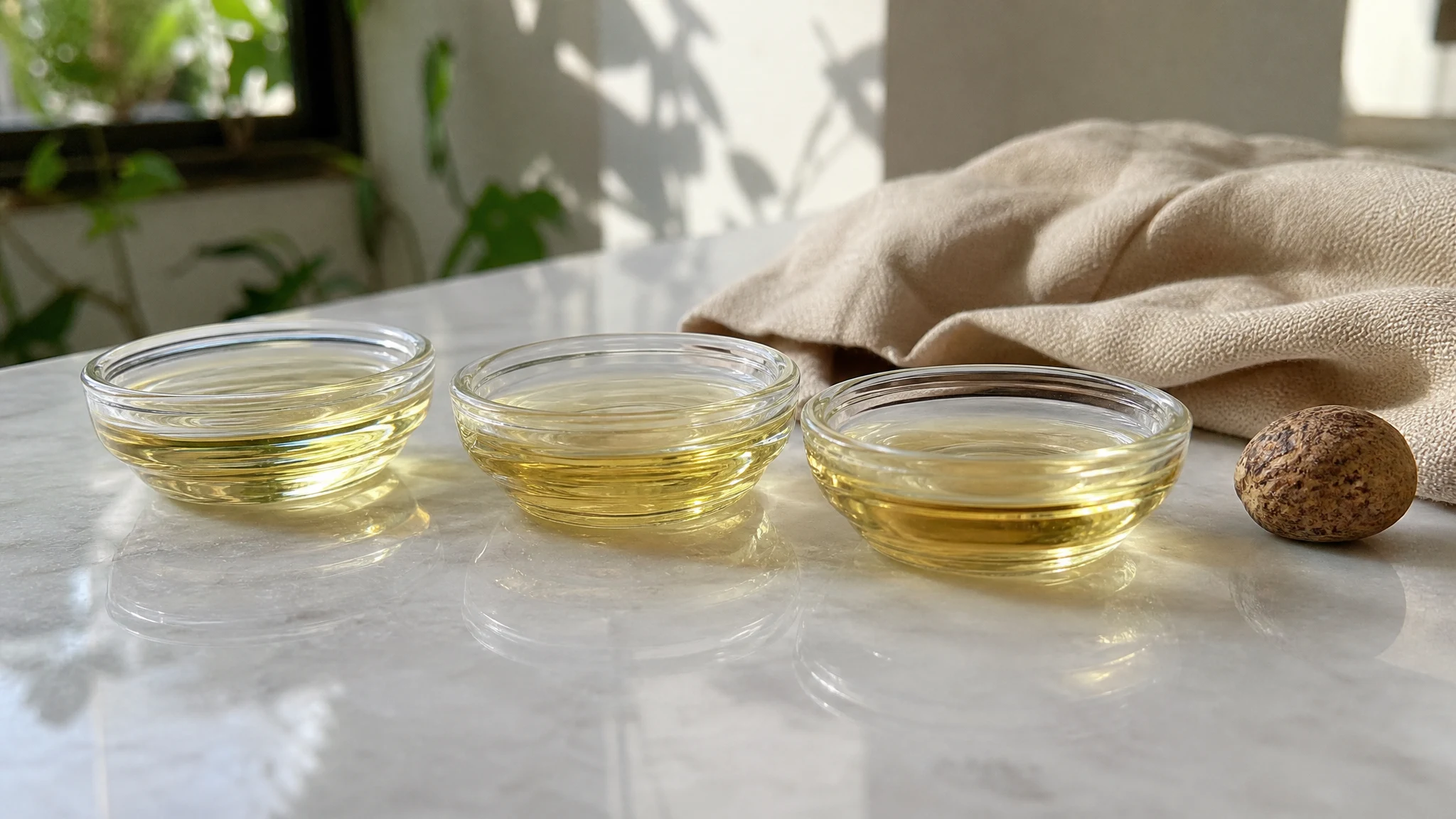
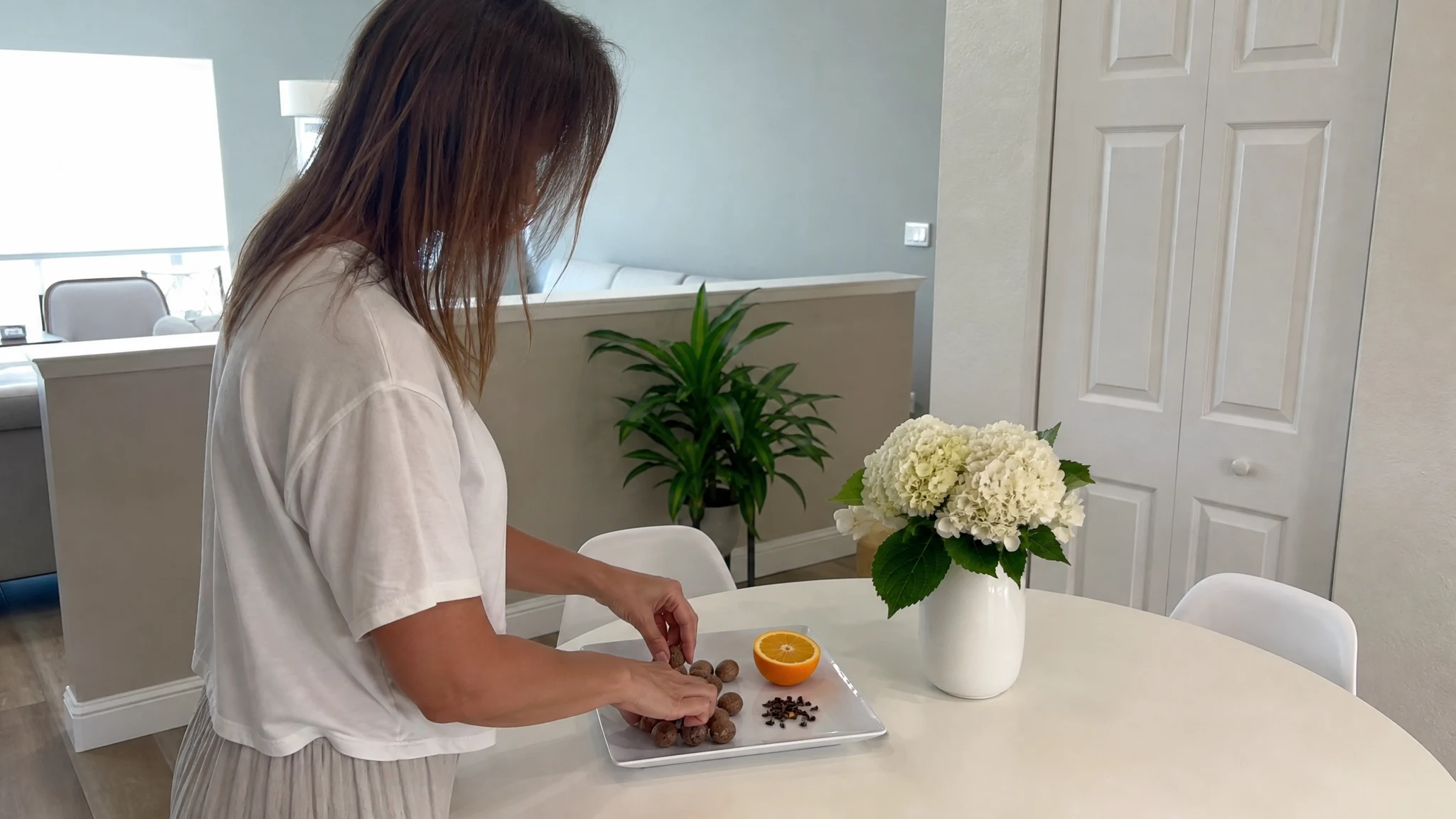
Our starting point is 60% sweet orange, 20% nutmeg and 20% clove bud, which is 6, 2 and 2 drops in a 10-drop batch (or 3, 1 and 1 in five). Orange gives the juicy top, clove provides the heat, and nutmeg sits between them and softens the edges. This is a ratio we worked out from the published composition of each oil. We sell the nutmeg only, so orange and clove come from a craft or aromatherapy supplier.
How the three smell together
Put a drop of each on its own paper strip and wave them under your nose one at a time. Sweet orange is the easy one: juicy, sunny, immediately familiar. Clove is sharper and drier, a little like the warm air in a baker's kitchen. Nutmeg is quieter than either, with a sweet, spicy softness that you notice more when it is missing than when it is there.
Now hold all three strips together and fan them. You will notice the orange opening the blend, the clove arriving a moment later, and the nutmeg gluing the two so the edges stop feeling sharp. That little progression, bright to spicy to soft, is what the ratio is trying to protect.
What goes into the choice of ratio
The European Food Safety Authority's batch data give a fair picture. Seven Indonesian nutmeg batches averaged about 2.0% safrole and 0.23% methyl eugenol. Clove bud oil is about 75% eugenol, with methyl eugenol at roughly 0.08%. Sweet orange is about 92% limonene. That is why orange takes the largest share (the volume and juice) and why nutmeg and clove are kept equal: each is potent and each is there for its character, not for bulk.
In a diffuser
For the air, follow your diffuser's instructions for total oil, and use this ratio within that limit. Our autumn diffuser post covers who shares the air and which questions to ask before diffusing. The ratio doesn't need to be exact, and an extra drop of orange never hurt a blend.
On skin: the arithmetic
Skin is where the numbers earn their keep. Three limits point in the same direction.
- Safrole. IFRA allows natural extracts as long as total safrole in a finished consumer product does not exceed 0.01%. At 2.30% safrole (the top of EFSA's range), nutmeg's share of the finished product has to stay at or under about 0.43%.
- Methyl eugenol. For body creams and oils (IFRA category 5A) the limit is 0.0015% of the finished product.
- Clove. Tisserand lists a topical maximum of 0.5% for clove bud oil.
Our skin guidance for nutmeg alone is 0.5% to 2% in a carrier oil, and we start at the low end. For this blend we suggest a total of 1% or less. At 1%, the blend contributes 0.2% nutmeg and 0.2% clove, which puts safrole at about 0.0046% (using 2.30%), methyl eugenol at about 0.0009% (using the highest published figures for each oil), and clove at 0.2%, all inside the lines above. In an ounce of carrier that is roughly 6 drops in total, so 4 orange, 1 nutmeg and 1 clove is a close fit. These are our calculations from published figures, not a rule written for this blend, and they treat area percent as weight percent. Anyone making a product to sell should check the figures with a formulator.
The extra caution makes sense when the blend is for someone else. Tisserand's chart shows nutmeg maximums as low as 0.2% for East Indian oil in pregnancy and for ages 6 to 15, so keep this one to adults.
Giving the blend a rest
A fresh mix can smell a bit scattered, with each oil standing in its own corner. If you can, cap the little bottle and leave it in a cupboard for a day before you judge it. Oils married overnight tend to read as one scent, not three, and that is the version you will want to evaluate.
When you do, try a gentle test: sniff, rest your nose for a few seconds with a breath of fresh air, then sniff again. If the clove is shouting, lower it next time. If the orange has vanished, add a drop. Blending is mostly small adjustments and patience.
Storing the blend
Blend small and use it up. Citrus oil is the quickest to age, so keep the finished blend capped, cool and dark. Our storage guide explains the logic, and if you enjoy this trio, our clove and cinnamon comparison shows how the three warm spices differ.
Make it your own
The ratio is a starting point, and the fun comes from nudging it. Some people like more orange for a sunny, kitchen-counter feel. Others lean into the clove for a cozier, darker blend. Change one drop at a time, sniff, and write down the version that makes you smile. The best ratio is the one that smells like your own autumn.
A trio this classic rewards a light hand, and a little goes a long way.
Nutmeg Essential Oil
Nutmeg Essential Oil from our own shop, in sizes from 0.5 oz to bulk.
From $10.99
Shop Now →Sources & Further Reading
- Safety and efficacy of a feed additive consisting of an essential oil from the seeds of Myristica fragrans Houtt. (nutmeg oil) for all animal species (FEFANA asbl), EFSA Journal, 2023
- Safety and efficacy of feed additives consisting of essential oils derived from the flower buds or the leaves of Syzygium aromaticum (L.) Merr. & L.M. Perry (clove bud oil and clove leaf oils) for all animal species (FEFANA asbl), EFSA Journal, 2023
- Safety and efficacy of feed additives consisting of expressed sweet orange peel oil and its fractions from Citrus sinensis (L.) Osbeck for use in all animal species (FEFANA asbl), EFSA Journal, 2021
- IFRA Standards, 51st Amendment (safrole note box; methyl eugenol)
- Eugenol: Essential Oil Constituents in Food Part 4, Tisserand Institute
- Assessing the Safety of Essential Oils - the Nutmeg Case, Tisserand Institute