Nutmeg Diffuser Blends for Autumn: Two Easy Ratios
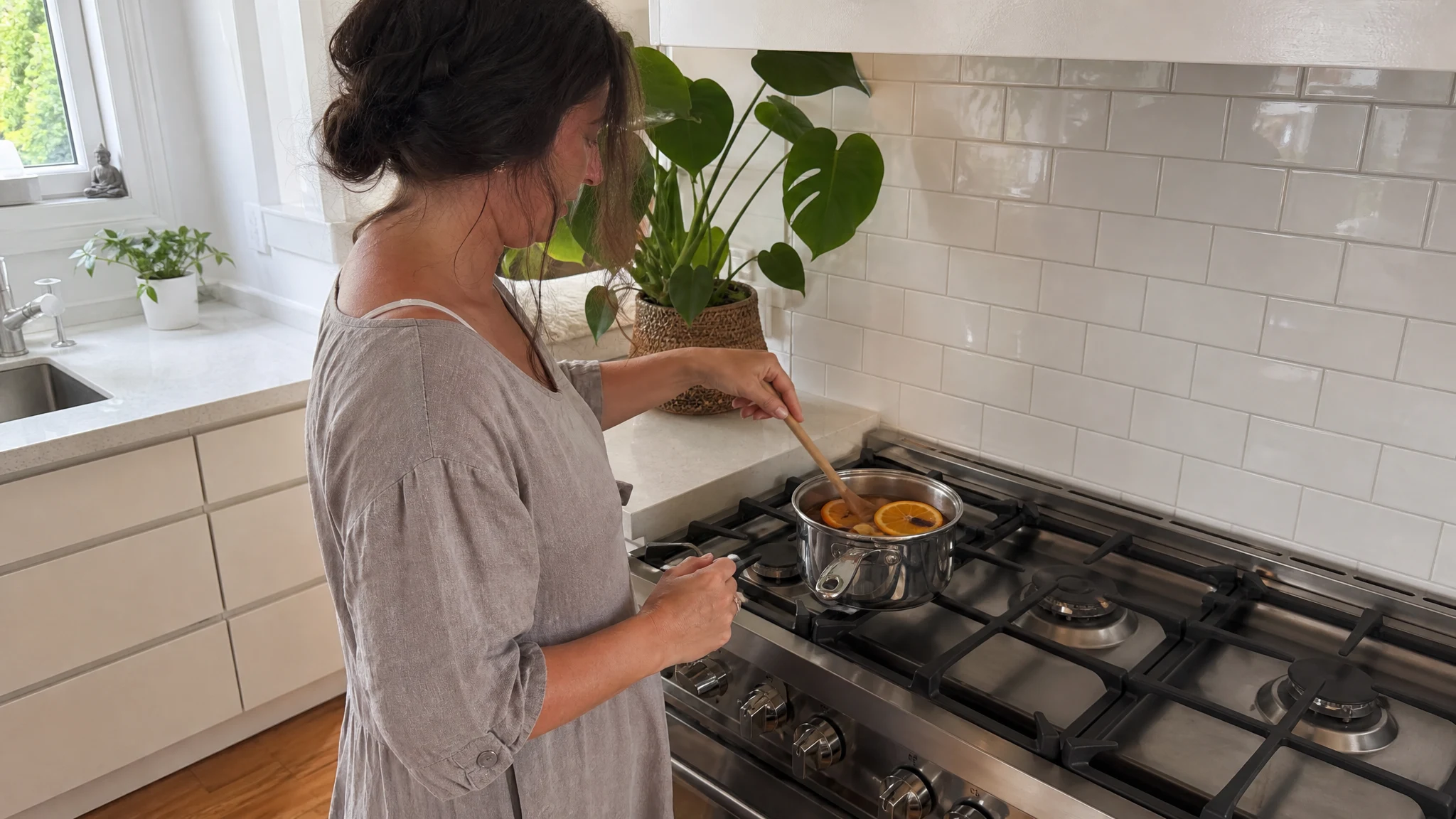
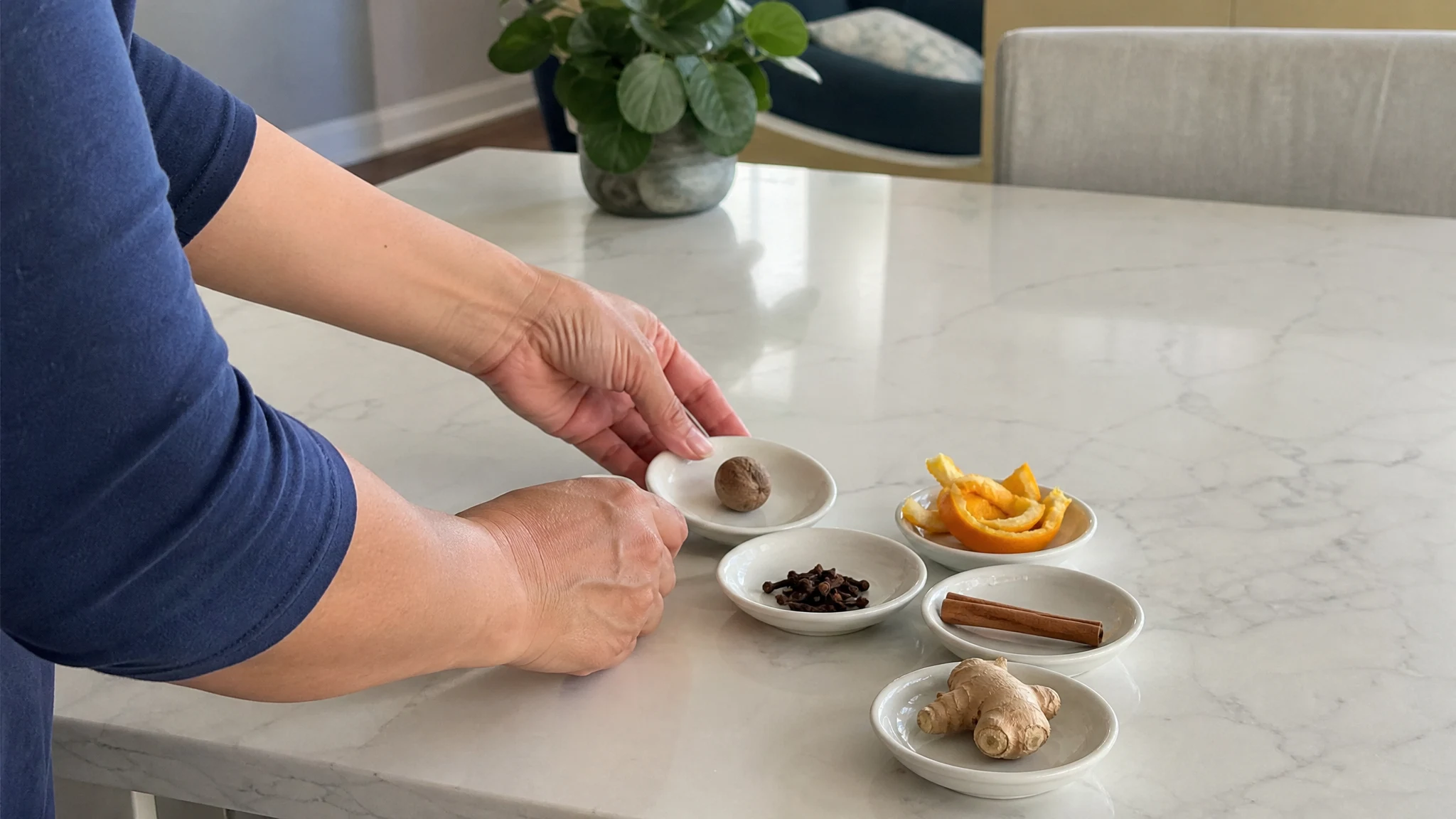
The best autumn diffuser blends have a shape: something bright up front, something warm underneath, and a little nutmeg to make the room smell like the kitchen on a cold evening. Nutmeg is the strongest voice in that trio, which is why it earns the smallest share. Here are two blends built on that idea, and the reasoning behind the ratios.
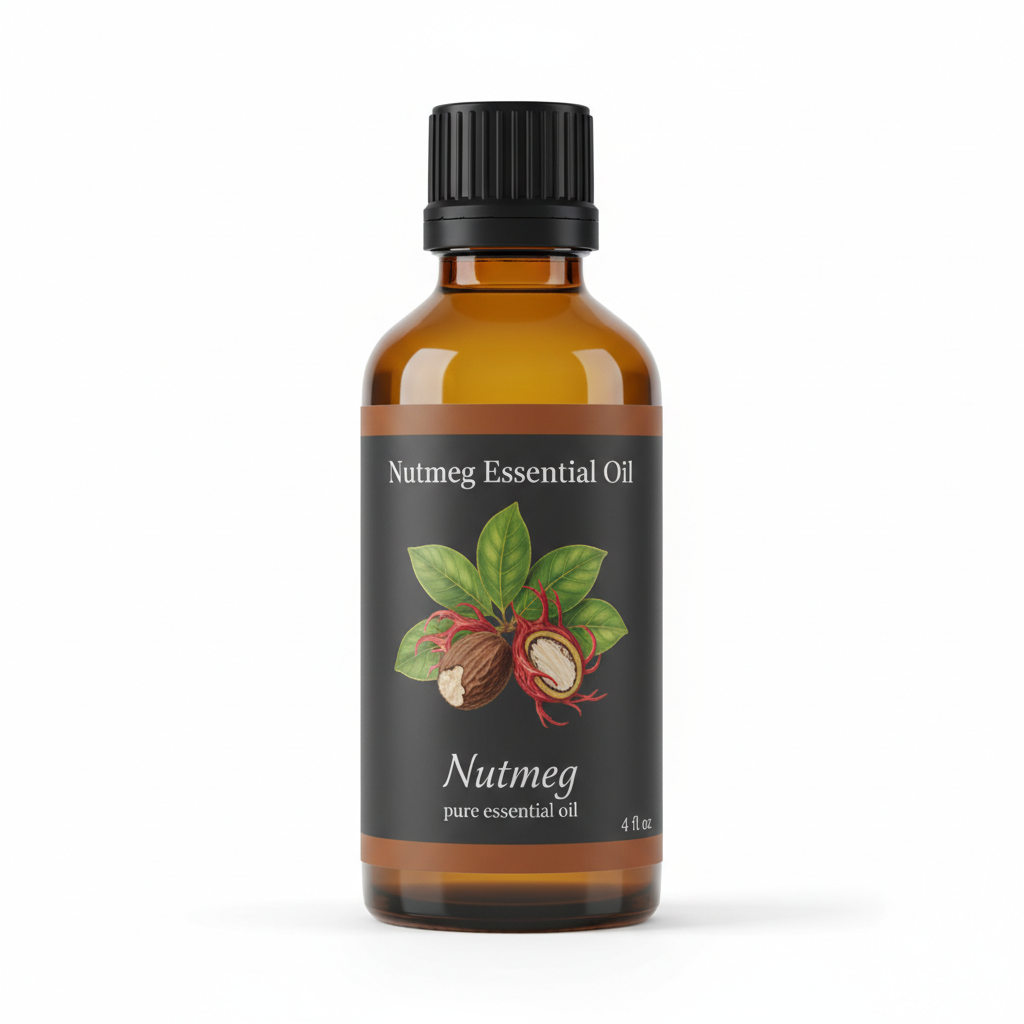
Nutmeg Essential Oil
Our own Nutmeg Essential Oil, in sizes from 0.5 oz to bulk.
From $10.99
Shop Now →Why nutmeg gets the smallest share
The European Food Safety Authority has published batch-level opinions on nutmeg, clove bud and sweet orange oils. They concern animal feed, not diffusers, so they say nothing about breathing the vapor, but they give a clear public picture of what is in each oil. Seven Indonesian nutmeg batches averaged about 21% sabinene, 20% alpha-pinene and 13% myristicin, plus about 2% safrole. Clove bud oil is about 75% eugenol, and sweet orange is about 92% d-limonene. EFSA classes all three as skin and eye irritants and skin sensitisers, and notes a respiratory sensitising potential for nutmeg and orange, and an irritant effect on the respiratory tract for clove. Nutmeg alone carries the additional classification tied to safrole.
So the three oils share their cautions rather than averaging them out. Reasoning from that, we keep the nutmeg share small and let the orange carry the volume.
Blend one: the orchard
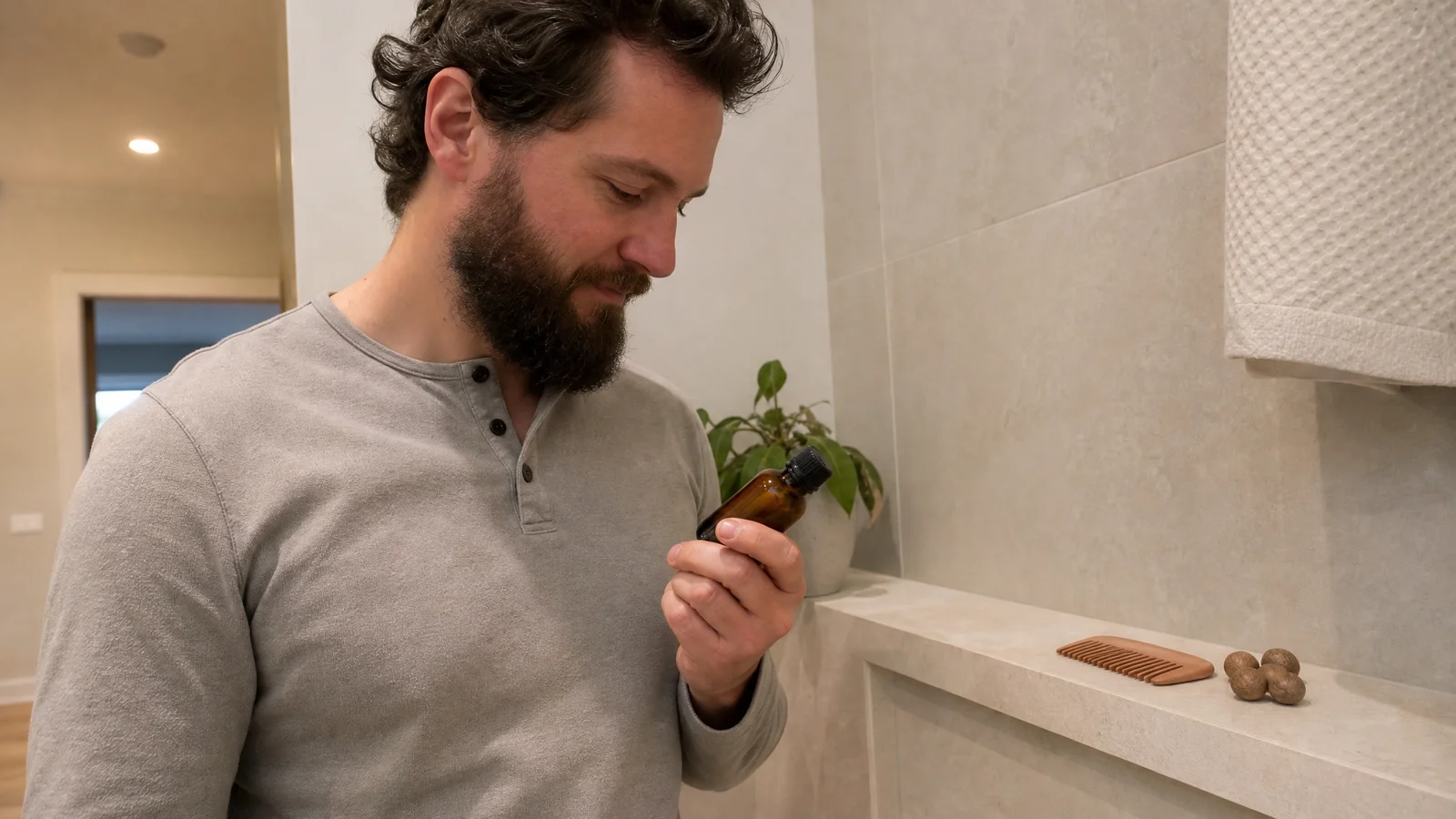
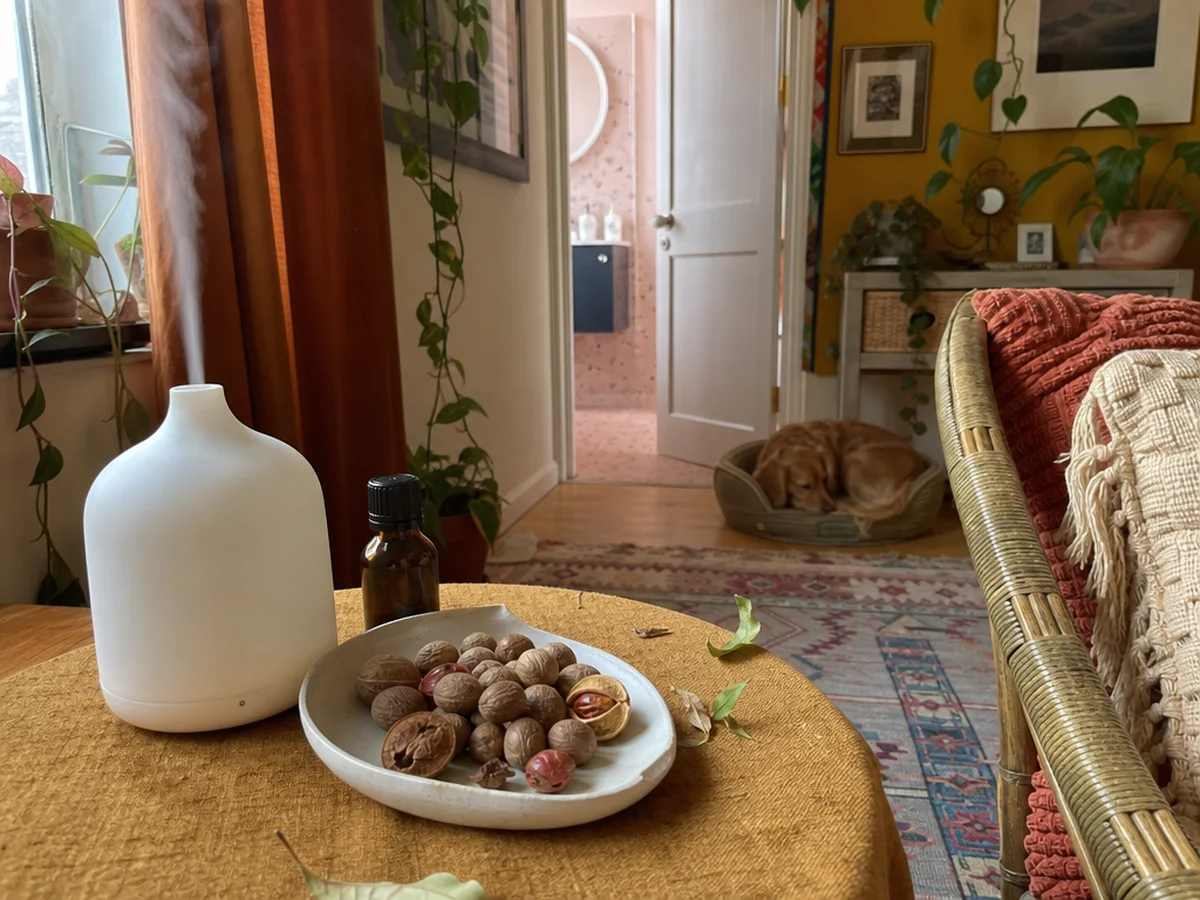
Per 10 drops of blend: 6 sweet orange, 2 nutmeg, 2 clove bud. It is the classic pairing, with orange for juice, clove for glow and nutmeg for the soft, resinous middle. This is a ratio we worked out from the composition data above, a suggestion rather than a recipe from a kitchen test.
Blend two: the cedar porch
Per 10 drops of blend: 6 cedarwood, 3 sweet orange, 1 nutmeg. Here nutmeg is a seasoning rather than a lead, and the cedarwood gives the blend a dry, woody floor. Cedarwood and sweet orange both appear on our list of pairings for nutmeg, and neither is something we sell, so look for them at a craft or aromatherapy supplier.
How many drops in the diffuser
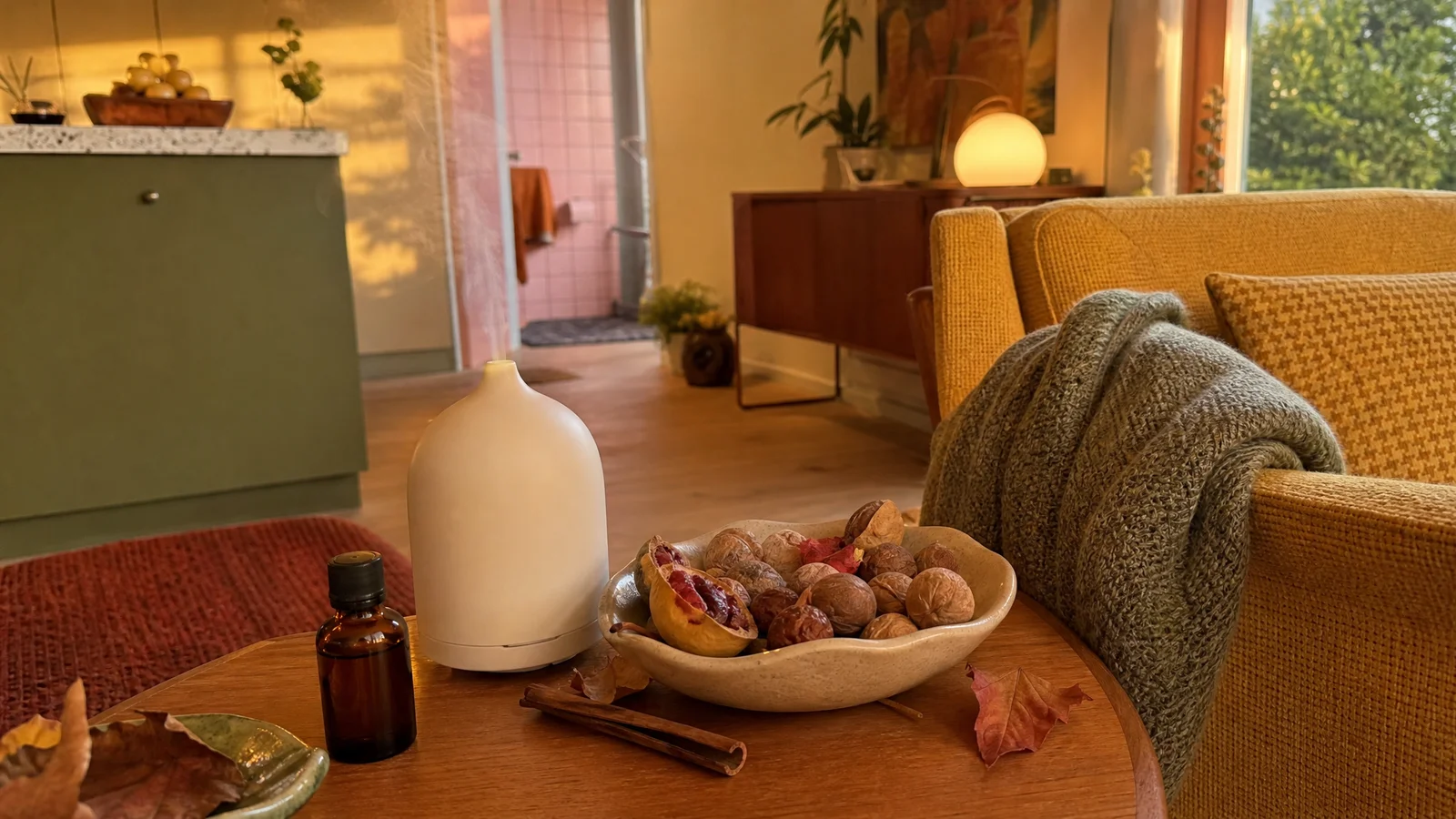
Follow the diffuser maker's instructions for the total amount of oil, and start below the maximum. A ratio only tells you the proportions. If your device suggests up to 10 drops, the orchard ratio puts 2 drops of nutmeg in the whole reservoir, which is a small share of the whole by design.
The only chamber study we found measured ultrasonic diffusers with lemon, lavender, eucalyptus and grapeseed oils, not nutmeg. Over 15 minutes the lemon oil released about 2.6 mg of limonene into the test air. The study also found that using tap water instead of deionised water in the eucalyptus run raised fine-particle output about fivefold, so the manual's guidance on water is worth reading as carefully as the one on oil.
Setting it up
The place you put the diffuser matters nearly as much as the blend. Choose a hard, level surface a little above the floor, away from curtains and from the edge of a table where it could be knocked, and give it a bit of breathing room. A diffuser in the corner of a living room fills the space more gently than one in the middle of a small hallway. Start it shortly before you settle in for the evening and switch it off when you head to bed, so the scent is something you enjoy rather than something you have stopped noticing.
Who shares the air
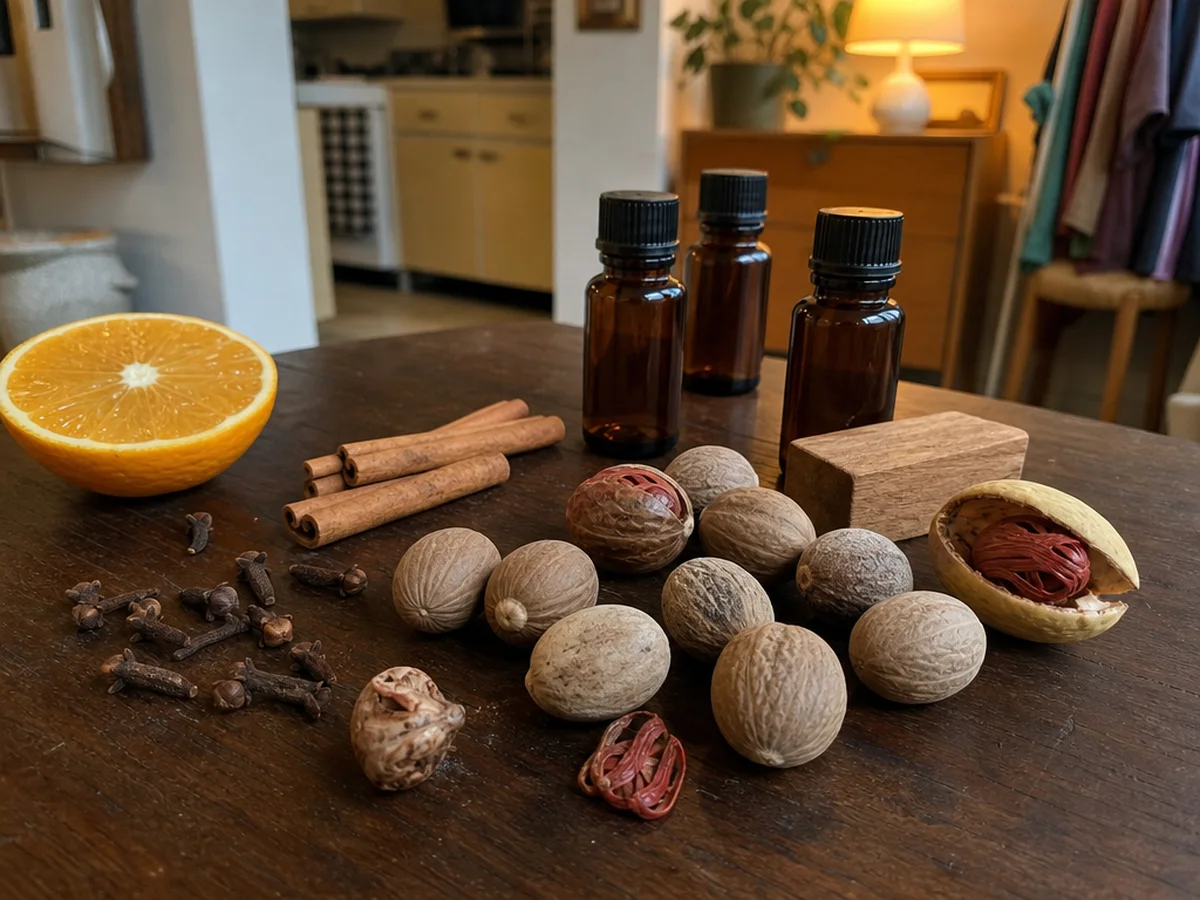
The ASPCA says that diffusing for a short time in an area pets cannot enter is not likely to be an issue, that a pet with breathing problems may do better with no diffuser at all, and that it is best to avoid one in a house with birds. Poison Control notes that vaporizer products add only a small amount of oil to a large volume of water and are usually safe when used as directed, and that bottles of essential oil should be locked up, out of sight and reach of children and pets. If anyone in the house has asthma or another breathing condition, their physician is the right person to ask, rather than a blend chart. Our posts on diffusers and shared air and on children go into more detail.
Changing the blend through the season
Autumn does not smell the same in October as in late November, and your blend does not have to either. Early in the season, lean into the orange and the cedarwood for a crisp, outdoorsy feel. As the evenings get colder, let the clove creep up a drop and add a little more nutmeg to the mix. Small changes are enough, and keeping the ratios in your notes means you can always go back to the first version you liked.
Keeping the orange fresh
Sweet orange is the bottle in this blend that ages fastest. A 2017 review in Allergologie Select explains that the oxidation products of limonene and linalool are major fragrance allergens, rating the oxidised forms a notch higher than the fresh ones. It is about skin contact rather than inhaled vapor, and it does not say how quickly an opened bottle changes, so we will not name a month. Cap the bottle tightly, store it cool and dark, and replace it when it smells flat or sharp. Our storage guide covers the same logic for nutmeg oil.
For more seasonal ideas, try our chai blend and pumpkin spice blend. Keep the diffuser for the evening hours you are actually at home, and the blends do their best work in an hour or two of company.
Nutmeg Essential Oil
Nutmeg Essential Oil from our own shop, in sizes from 0.5 oz to bulk.
From $10.99
Shop Now →Sources & Further Reading
- Safety and efficacy of a feed additive consisting of an essential oil from the seeds of Myristica fragrans Houtt. (nutmeg oil) for all animal species (FEFANA asbl), EFSA Journal, 2023
- Safety and efficacy of feed additives consisting of essential oils derived from the flower buds or the leaves of Syzygium aromaticum (L.) Merr. & L.M. Perry (clove bud oil and clove leaf oils) for all animal species (FEFANA asbl), EFSA Journal, 2023
- Safety and efficacy of feed additives consisting of expressed sweet orange peel oil and its fractions from Citrus sinensis (L.) Osbeck for use in all animal species (FEFANA asbl), EFSA Journal, 2021
- Volatile organic compound and particulate matter emissions from an ultrasonic essential oil diffuser, Indoor Air, 2021
- Is the Latest Home Trend Harmful to Your Pets? What You Need to Know!, ASPCA
- Essential oils: Poisonous when misused, Poison Control
- Contact allergy to fragrances: current clinical and regulatory trends, Allergologie Select, 2017