Does Nutmeg Oil Go Bad? Signs to Check Before Skin Use
Nobody has ever opened a bottle of nutmeg oil and found it growing mould. Essential oils do not spoil the way food does. They drift, slowly, and the drift is easy to miss unless you know what to look for. The useful question is less "has it gone bad?" than "what is this bottle still suited to?"
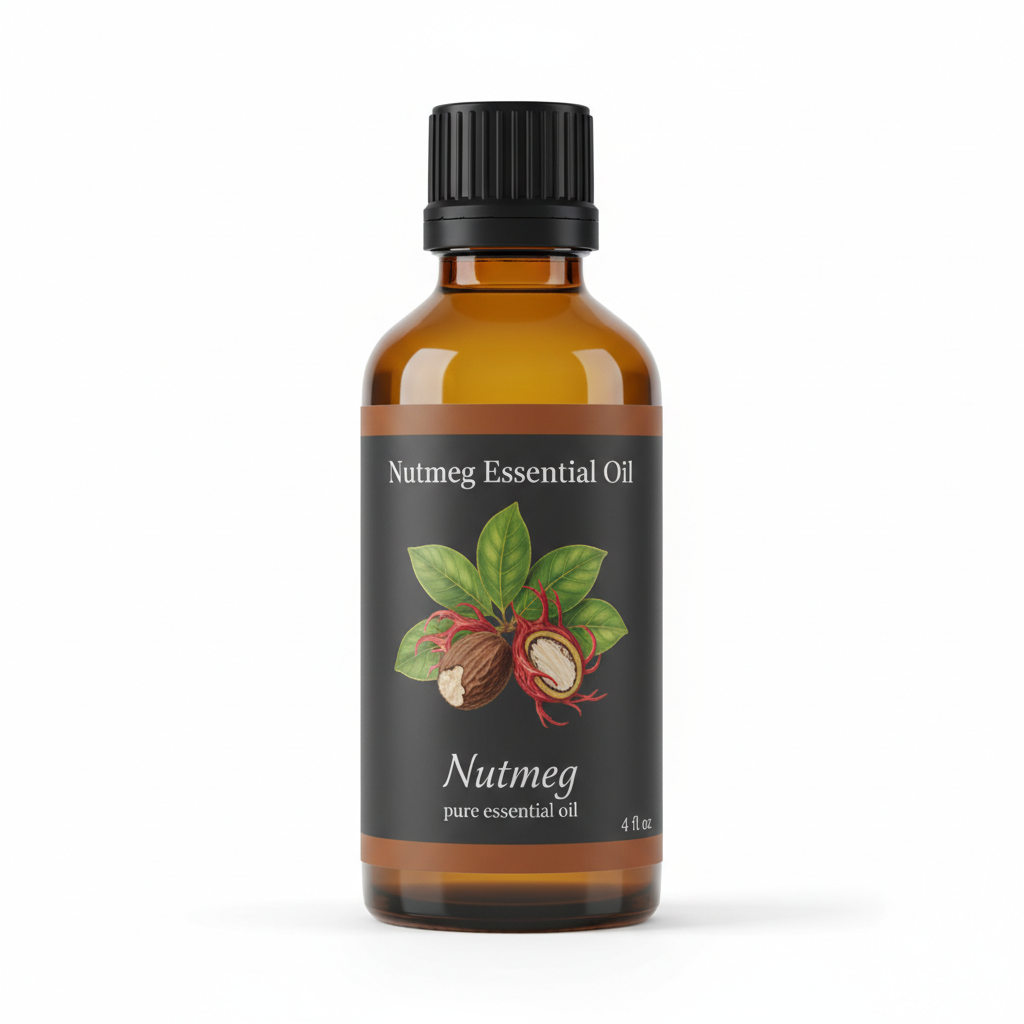
Nutmeg Essential Oil
Our own Nutmeg Essential Oil, in sizes from 0.5 oz to bulk.
From $10.99
Shop Now →What is actually happening in the bottle
Nutmeg oil is largely made of terpenes such as sabinene and the pinenes, light aromatic molecules that react slowly with oxygen. The Tisserand Institute describes the process as the oil's constituents combining with atmospheric oxygen, which it calls oxidation, and says it is encouraged by three things: heat, light and moisture (Is my bottle of essential oil oxidized or no longer good to use?). It adds that most essential oils keep well for at least one to two years before oxidation starts to take effect, and that a bottle with less air in it ages more slowly.
Published figures for nutmeg specifically are modest. Our product pages say typically two to three years when the bottle is kept tightly capped in a cool, dark place away from heat and sunlight. The EFSA panel that reviewed nutmeg oil recorded a stated shelf life of at least twelve months, while noting that the applicant supplied no data to support it (Safety and efficacy of a feed additive consisting of an essential oil from the seeds of Myristica fragrans Houtt. (nutmeg oil) for all animal species (FEFANA asbl)). So the honest summary is a range, not a deadline. How a bottle has been kept matters more than how old it is.
The check we would do: a fresh-nose test
The most reliable instrument you own is your nose, but a nose adapts, so the trick is to compare. Put one drop on a paper strip and let it sit for a minute. Nutmeg oil should smell warm, sweet and spicy. Then ask yourself:
- Is the spice flatter? The Tisserand Institute notes that an oxidising oil's smell changes a little and loses its brightness. With nutmeg that tends to read as duller, sharper or more like turpentine than baking.
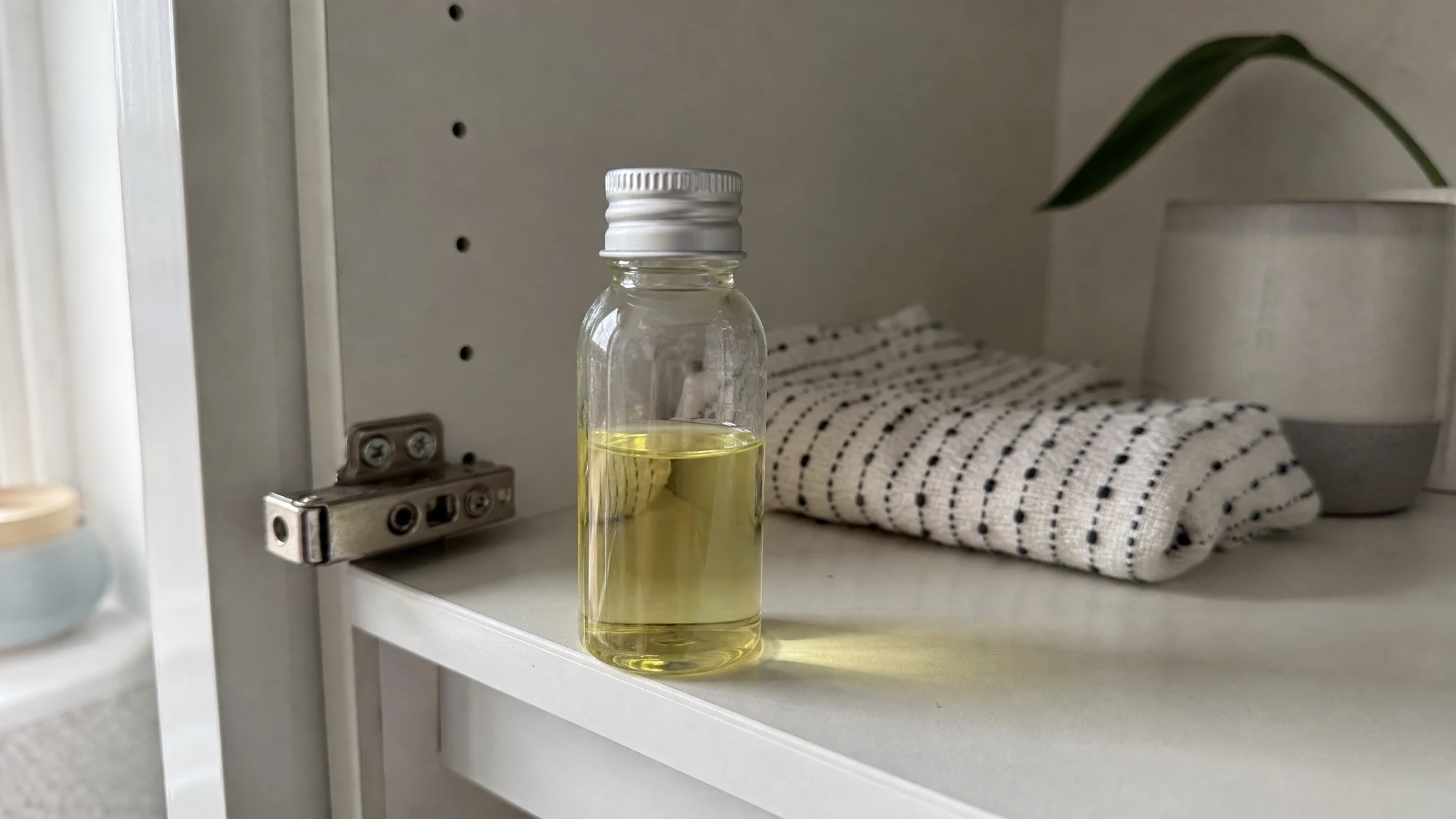
- Is it thicker? We describe the oil as pouring thin, similar in viscosity to water. If a bottle has turned syrupy or leaves a sticky ring around the neck, it has changed.
- Is it cloudy? Cloudiness can mean moisture has got in. Clear oil that turns murky is a sign to stop.
- Has the colour moved a lot? Some natural shade variation is normal, so a small difference proves little. A marked darkening next to the same bottle's early colour is worth noticing, which is a good reason to jot down the date and a note when you open it.
None of these tests is a laboratory measurement. Only a lab can tell you how far an oil has oxidised, and the Certificate of Analysis we publish for one batch gives density, refractive index and optical rotation, not an oxidation measure. Treat the nose and the eye as sensible screens. Our quality checks post covers what to ask a seller for in writing.
Why the skin is where it matters
The reason to care is not that an old bottle becomes dangerous to open. It is that oxidised material is more likely to bother skin. The Tisserand Institute says oxidation products are slightly toxic and increase the risk of adverse skin reactions. A review of fragrance allergy makes a related point about two common terpenes, limonene and linalool, whose oxidised forms are major contact allergens and rated stronger than the fresh materials (Contact allergy to fragrances: current clinical and regulatory trends.). That review did not examine nutmeg oil, but limonene is one of nutmeg's smaller constituents, so reasoning from it, a doubtful bottle should not go onto skin, whatever the dilution. The skin dilution post has the patch test.
What an older bottle is still good for
Here is where we land. A bottle that smells right, pours thin and stays clear is fine for what you bought it for. A bottle that is past the two-to-three-year mark, has been opened often or was stored somewhere warm deserves a stricter policy: stop using it in anything that stays on skin, such as massage oil, roller blends, beard oil or body scrubs. Where nothing touches skin, such as a cleaning spray base or a simmer scent, you may choose to finish it off, though if the smell has turned sharp you may not enjoy it. A bottle that has clearly thickened, clouded or turned unpleasant is better replaced than rescued. Take it to your local household hazardous waste drop-off rather than pouring it down the sink.
Slowing it down
You do not need special equipment. Cap the bottle right after dispensing, keep it away from the cooker and any sunny window, and write the opening date on the bottle or a note. The Tisserand Institute adds that keeping oils in the fridge roughly doubles their useful life, which is a choice, not a requirement, and a small bottle kept in a closed box in the fridge is easier to find than you might think. If you keep it there, remember it goes with your other safety habits: out of reach of children and pets. Our storage post covers where to put the bottle and how to move oil to a smaller one as the level drops.
Oils age gently, and a nose that has met nutmeg a few times usually notices first. A little attention at the cupboard saves you from a disappointing diffuser session or a blend nobody wants to wear.
Nutmeg Essential Oil
Nutmeg Essential Oil from our own shop, in sizes from 0.5 oz to bulk.
From $10.99
Shop Now →Sources & Further Reading
- Is my bottle of essential oil oxidized or no longer good to use? (Tisserand Institute)
- Safety and efficacy of a feed additive consisting of an essential oil from the seeds of Myristica fragrans Houtt. (nutmeg oil) for all animal species (FEFANA asbl) (EFSA FEEDAP Panel, EFSA Journal 2023)
- Contact allergy to fragrances: current clinical and regulatory trends. (Uter W, Allergologie Select 2017)