Does Nutmeg Oil Stain? Getting It Out of Fabric
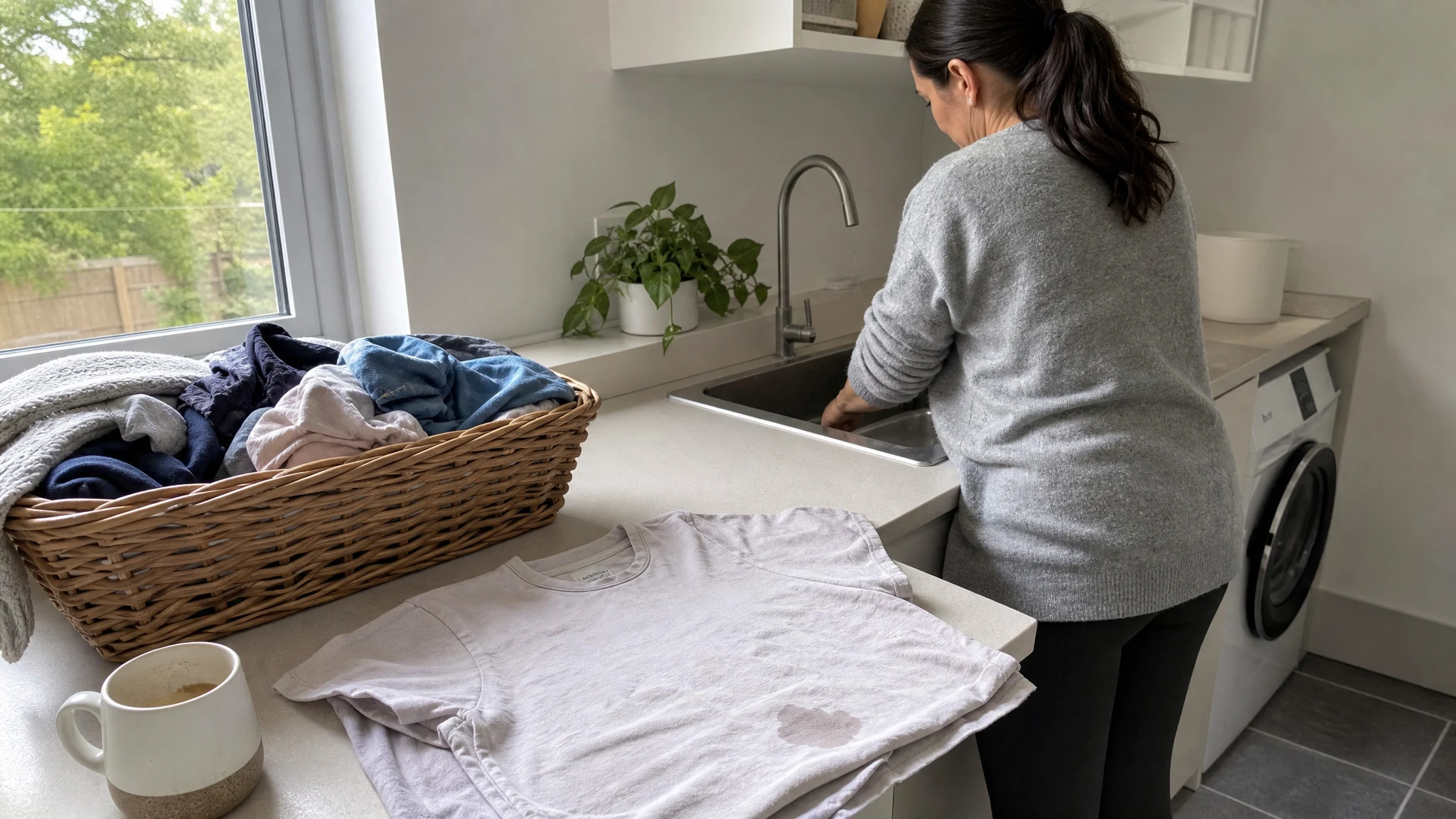
It takes one tilt of the bottle. A drop lands on the cuff of a favourite shirt, spreads into a small dark circle, and the sweet smell of baking hangs around it. Take a breath: this is a very ordinary laundry problem, and the method for it is older than essential oils.
Nutmeg Essential Oil
Our own Nutmeg Essential Oil, in sizes from 0.5 oz to bulk.
From $10.99
Shop Now →What kind of mark is it?
Nutmeg oil is an oil, so on fabric it behaves like any oily substance: it soaks into the fibres and shows as a darker, greasy-looking patch. We describe the oil as pale yellow to nearly colourless, so we would not expect much colour, but a pale fabric under daylight can show a faint tint once the mark dries. We cannot promise the oil will leave no trace on any particular fabric, so please do not rely on it drying invisibly. Treat every drop as a grease stain and act early.
The University of Georgia Cooperative Extension textiles team has a guide for oil-based food stains that is the closest authoritative match, since butter and margarine are oils on fabric as well. Its pattern is: pretreat, work detergent into the dampened stain, launder in the hottest water the fabric allows, and air-dry rather than machine-dry (Remove Stains From Oil-Based Foods). Everything below follows that idea. Essential oil is not food, but the chemistry of lifting grease is the same.
A calm routine for washable cotton and polyester
- Blot, do not rub. Press a clean paper towel or an old cloth on the spot to take up what is sitting on top. Rubbing pushes oil deeper and widens the mark.
- Read the care label. It tells you the hottest water the fabric tolerates, and whether bleach is out of the question.
- Pretreat. Use a pre-wash stain remover from the supermarket, or a small amount of liquid dish detergent, which is made to cut grease. Work it gently into the dampened patch and leave it for several minutes.
- Wash. Launder with plenty of detergent in the warmest water the label allows.
- Check before you dry. Hold the garment up to the light. If any shadow remains, repeat the pretreatment and wash again. The Georgia guide suggests air-drying between attempts, since the heat of a dryer can set a stain that is still there.
If the mark persists after a second try, the same Georgia page suggests sponging with a fabric-safe dry-cleaning solvent, then rinsing. That is a product you buy at a hardware or laundry supply shop, and you should test it somewhere hidden first.
Test before you trust
Always try any stain remover on a seam allowance or hem you cannot see. Dish detergent and solvents can lift dye from some fabrics, and the Georgia page tells readers to read the care label before trying any stain removal method, and to avoid anything the label prohibits.
When to hand it to a professional
Some fabrics are not worth the gamble:
- Silk, wool, leather, suede and velvet do not tolerate hot water or scrubbing.
- Anything marked dry clean only.
- A favourite or expensive piece you cannot replace.
In those cases, blot gently, leave the rest alone and take the item to a dry cleaner as soon as you can, telling them it is an oil stain and what the oil was. The sooner it arrives, the better the chance. Resist the urge to sprinkle on powder, scrub or spray something strong first.
Hard surfaces, briefly
For a spill on a countertop or floor, wipe it up straight away with a paper towel and then wash the spot with warm water and a little dish detergent, which does the same job as it does on cloth. Our caution is about finishes. Reasoning from the fact that it is an oil and a solvent-like liquid, clean up quickly and try a hidden corner before wiping a finish you care about. The same applies to a spill on a rug. Blot first, and get a professional cleaner involved for a wool or silk one.
Keeping it from happening
Most stains come from the moment of dispensing. Work over a tray or a scrap of old cloth, cap the bottle before you pick up anything else, and tuck the oil away somewhere stable. If you blend a lot, keep a dedicated apron. Dilution helps, because a drop in a carrier oil is less concentrated, but a carrier oil is itself an oil and will leave its own grease mark. Our storage post and dilution post cover the upright, closed-cap habits that help.
A spot on a shirt is annoying, not a catastrophe. Blot quickly, treat it like any grease mark, and the shirt almost always goes back in the drawer.
Nutmeg Essential Oil
Nutmeg Essential Oil from our own shop, in sizes from 0.5 oz to bulk.
From $10.99
Shop Now →Sources & Further Reading
- Remove Stains From Oil-Based Foods (University of Georgia Cooperative Extension, Textiles)