
How to Buy Nutmeg Oil: The Ultimate Quality and Value Guide
Key Takeaways
- True nutmeg essential oil is steam-distilled from Myristica fragrans seeds. Any product that does not state this origin clearly deserves a closer look before you purchase.
- GC/MS (gas chromatography/mass spectrometry) testing is the single most useful quality document a supplier can provide. Ask for it by name.
- Organic certification matters, but it is not the only marker of purity. Wildcrafted and conventional oils can both be excellent when sourced with care.
- East Indian and West Indian nutmeg oils are chemically distinct. Knowing which you need prevents buyer disappointment.
- Fair retail pricing for a quality 5 ml bottle typically falls between $8 and $18. Prices well outside this range on either end warrant investigation.
- Fragrance oils and essential oils are not interchangeable. Verify before you buy.
- Always dilute properly and patch-test any new essential oil before broad cosmetic use.
1. Why Buying Nutmeg Oil Is Harder Than It Looks
Nutmeg has a history that cost lives and reshaped global trade routes. For centuries, the tiny Myristica fragrans tree growing on a handful of Indonesian islands was the source of one of the world's most coveted spices. Today, the essential oil distilled from its seeds sits quietly in amber bottles on marketplace shelves, competing with dozens of look-alike products that range from genuinely excellent to deeply misleading.
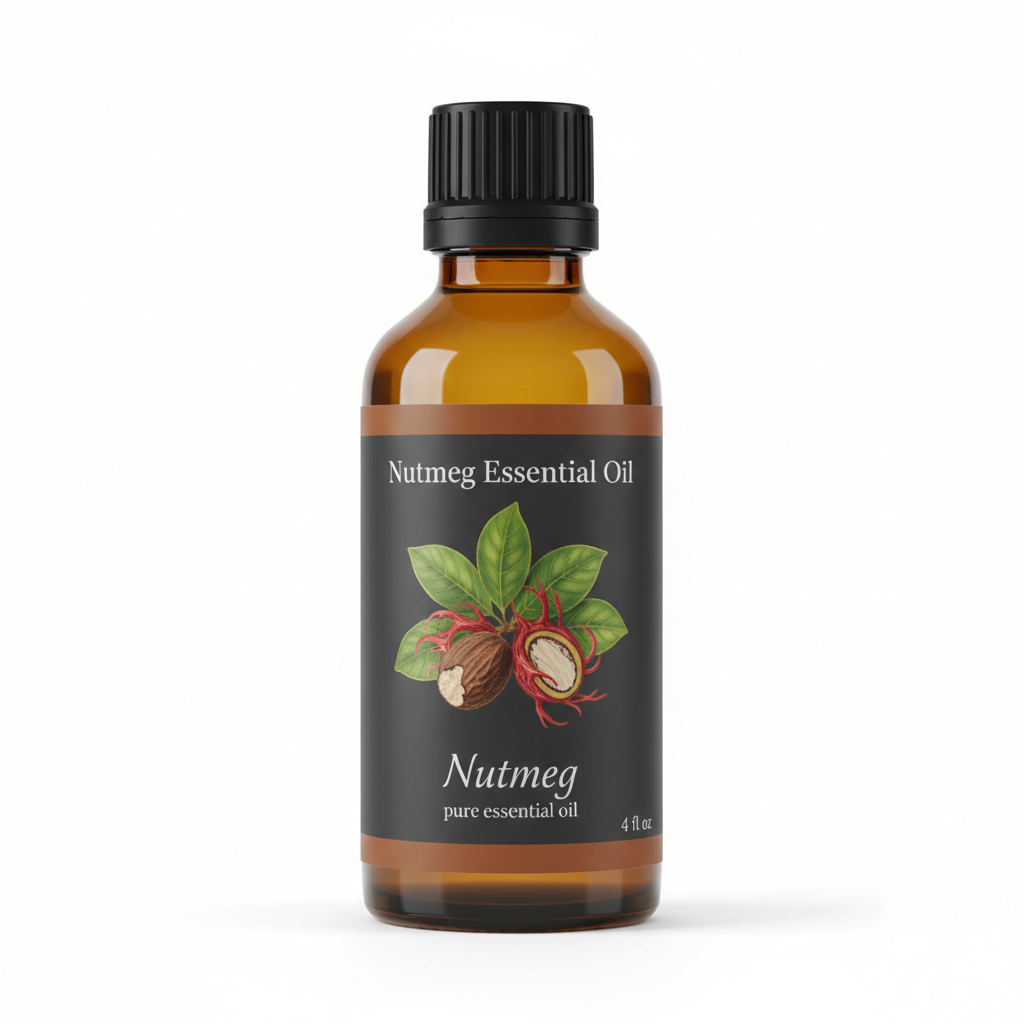
Nutmeg Essential Oil
Our own Nutmeg Essential Oil, in sizes from 0.5 oz to bulk.
From $10.99
Shop Now →The modern essential oil market is largely unregulated at the labeling level. A bottle can legally call itself "nutmeg oil" while containing a synthetic aromatic compound, a diluted blend, or an oil distilled from a botanically unrelated plant. For a casual home fragrance user, this may be a minor inconvenience. For a cosmetic formulator, a soap maker, or a scent enthusiast who values botanical authenticity, it represents wasted money and a compromised result.
This guide exists to close that knowledge gap. By the time you finish reading, you will know exactly what questions to ask, which documents to request, and which red flags to walk away from. If you would rather start with a known bottle, our own nutmeg oil is sold in sizes from 0.5 oz to bulk.
2. Understanding What You Are Actually Buying
The Plant Behind the Oil
Genuine nutmeg essential oil comes from the dried seed of Myristica fragrans, an evergreen tree native to the Banda Islands of Indonesia. Steam distillation is the extraction method used for true essential oil. The seeds are cracked, dried, and passed through a distillation unit where steam carries the volatile aromatic compounds through a condenser and into a collection vessel.
The result is a pale yellow to colorless liquid with a warm, woody, faintly sweet, and intensely spiced aroma. It is one of the more complex-smelling oils in the warm spice family, sitting alongside clove and cinnamon but with its own distinctive earthy depth. If you want to understand how nutmeg oil compares to those close relatives before purchasing, our guide on nutmeg oil vs. clove and cinnamon oils covers the aromatic and compositional differences in detail.
East Indian vs. West Indian Nutmeg Oil
This distinction trips up buyers constantly. "East Indian" nutmeg oil refers to oil distilled from Myristica fragrans grown in Indonesia and surrounding regions. "West Indian" nutmeg oil comes from Myristica fragrans trees cultivated in Grenada and the Caribbean. Both originate from the same species, but the soil, climate, and growing conditions produce measurably different chemical profiles.
East Indian oil tends to be higher in sabinene and alpha-pinene, giving it a sharper, more resinous opening note. West Indian oil often carries a slightly warmer, rounder character. For cosmetic formulation where a specific aroma profile matters, the distinction is worth understanding before you commit to a supplier. Our dedicated article on reading a nutmeg oil label and the East Indian vs. West Indian difference goes into the chemistry in more depth.
Mace Oil: The Close Relative Worth Knowing About
Mace is the lacy red aril that wraps around the nutmeg seed inside the fruit. It can also be steam-distilled into an essential oil. Mace oil and nutmeg oil share many aromatic compounds but are not identical. A reputable supplier will clearly distinguish between them. If a product listing conflates the two or is vague about which part of the plant was distilled, that vagueness should prompt further investigation.
3. Quality Markers: How to Evaluate Any Nutmeg Oil
GC/MS Testing: The Gold Standard
Gas chromatography/mass spectrometry testing separates an essential oil into its individual chemical components and identifies each one by molecular weight. The resulting report is called a GC/MS certificate of analysis, and it is the single most honest document a supplier can share with you.
A GC/MS report for genuine Myristica fragrans seed oil should show a predictable cluster of compounds. Sabinene typically registers between 15% and 50%, alpha-pinene between 10% and 25%, and myristicin between 5% and 15%, though exact ranges shift with origin, harvest year, and distillation conditions. Eugenol is usually present in small amounts. If a report shows unusual concentrations of synthetic-smelling compounds like benzyl benzoate or diethyl phthalate, or if the supplier cannot produce a report at all, step back.
Reputable suppliers publish GC/MS batch reports on their websites or provide them on request at no charge. This is now considered a baseline expectation in the quality segment of the market, not a special service. Our companion guide on how to spot pure nutmeg oil before you pay walks through how to read a GC/MS report even if you are not a chemist.
Botanical Name and Part Used
A quality label will always state the full Latin name (Myristica fragrans), the plant part distilled (seed), the extraction method (steam distillation), and the country of origin. These four pieces of information are non-negotiable on a serious product. Labels that list only "nutmeg oil" or "nutmeg essential oil" without further specification leave too many questions unanswered.
Aroma Assessment
Once you have a bottle in hand, smell it carefully. Genuine nutmeg oil has a warm, spiced, slightly woody opening that softens as it dries down. It should not smell flat, primarily alcoholic, or aggressively harsh. A noticeably synthetic character, which is difficult to describe but easy to recognize once you have smelled authentic oil, is a reliable sign that something has been adulterated or substituted.
This is one strong argument for buying a small volume from a new supplier before committing to a larger purchase. A 5 ml or 10 ml sample order is a low-cost way to verify aroma quality before you invest in a larger quantity for formulation work.
Color and Consistency
Authentic nutmeg essential oil is a thin, free-flowing liquid. It should not be viscous or oily in texture. Color ranges from nearly colorless to pale yellow. A darker brownish or greenish tint may indicate age, oxidation, or adulteration, though some natural variation in color is normal across batches and origins. An oil that has separated into visible layers or shows clouding (outside of very cold storage conditions) deserves a closer look.
Shelf Life and Batch Dating
Nutmeg essential oil, like all high-terpene oils, is susceptible to oxidation. A fresh batch with a clearly stated distillation or fill date is preferable to an undated bottle that may have been sitting in a warehouse for years. Most quality suppliers batch-code their products, and that code can often be traced to a specific GC/MS report. If a supplier cannot tell you when the oil was distilled or when the bottle was filled, that is worth noting.
| Quality Marker | What to Look For | Red Flag |
|---|---|---|
| Botanical name | Myristica fragrans stated clearly | Only "nutmeg oil" with no Latin name |
| Plant part | Seed (or kernel) | Unspecified part |
| Extraction method | Steam distillation | Cold-pressed or solvent-extracted (unusual for this oil) |
| Origin | Indonesia or Grenada (clearly stated) | "Origin: Various" or no origin |
| GC/MS report | Available on request or published online | Supplier refuses or cannot provide |
| Batch / lot code | Traceable to a specific report | No batch code on label |
| Aroma | Warm, spiced, woody, clean | Flat, harsh, synthetic, or primarily alcoholic |
| Appearance | Thin, colorless to pale yellow | Dark, separated, cloudy (at room temp) |
4. Organic, Conventional, and Wildcrafted: Which to Choose
What Organic Certification Actually Means
Organic certification for essential oils means the source plant was grown without synthetic pesticides, herbicides, or chemical fertilizers, and that the processing facility met the organic handling standards of the certifying body (USDA, ECOCERT, Soil Association, and so on). It does not by itself guarantee purity or aroma quality. An organic-certified oil can still be poorly distilled, improperly stored, or old.
That said, organic certification does provide a meaningful assurance about agricultural inputs. For buyers formulating skincare products or working with natural cosmetic brands that market to an organic-conscious audience, the certification carries commercial value as well as philosophical value.
Our full breakdown of the tradeoffs is available in the article on organic nutmeg oil vs. conventional: is the certification worth it?
Conventional Nutmeg Oil
Most nutmeg oil on the market is conventional, meaning it comes from trees grown using standard agricultural practices. In smallholder farming regions of Indonesia, which produce a large share of the world's nutmeg, the use of synthetic inputs is often minimal simply due to economic and geographic constraints. This does not mean every conventional oil is clean, but it does mean that origin, farm practices, and supplier transparency matter more than the presence or absence of a certification stamp.
A conventional oil from a transparent supplier who shares GC/MS data, clearly states origin, and has a traceable supply chain may be a more trustworthy purchase than an organic-certified oil with no testing documentation and a vague label.
Wildcrafted Options
Some suppliers offer wildcrafted nutmeg oil, distilled from fruit harvested from trees growing without cultivation. Wildcrafted products are not certified organic (certification requires a documented farming operation), but they may carry their own appeal for buyers who value minimal human intervention in the growing environment. When evaluating wildcrafted claims, ask the supplier for geographic specificity. "Wildcrafted in Indonesia" should mean a named region, not a general country designation.
5. Price Decoded: What Fair Value Looks Like
Why Nutmeg Oil Pricing Varies So Widely
A quick search for nutmeg essential oil reveals prices ranging from under $5 for a 10 ml bottle to over $30 for a 5 ml bottle from a specialty supplier. That spread is not arbitrary. It reflects real differences in raw material cost, testing investment, supply chain transparency, and packaging quality. It also reflects a certain amount of pure marketing markup that has little to do with what is inside the bottle.
Understanding what drives price helps you spend wisely rather than simply shopping cheap or assuming expensive always means better.
Raw Material and Distillation Costs
Nutmeg seeds are not the rarest botanical material on earth, but quality distillation is not free. The yield from nutmeg seed distillation (the weight of oil obtained per weight of dried seed) is typically in the range of 5% to 15%. This means producing one kilogram of oil requires somewhere between 7 and 20 kilograms of dried seed, depending on seed quality and distillation conditions. Transportation from Indonesia or Grenada to North American or European markets adds further cost, as do import duties, quality testing, and storage.
What Drives the Price Down (Sometimes Rightly)
A supplier who sources in very large volume, owns their own distillation operations, and sells primarily direct-to-consumer can legitimately offer lower prices than a small specialty importer. Large volume purchasing power is a real cost advantage. However, aggressive low pricing can also signal adulteration (diluting the oil or substituting cheaper aromatic compounds), outdated stock being cleared, or simply a product that was never authentic to begin with.
Rough Price Benchmarks
These figures are general guidelines based on the retail market for quality essential oils. Prices shift with harvest conditions, currency fluctuations, and supply chain disruptions.
| Volume | Budget Range | Mid-Range (Quality Segment) | Premium / Specialty |
|---|---|---|---|
| 5 ml | $4 to $8 | $9 to $18 | $18 to $30+ |
| 10 ml | $7 to $12 | $13 to $25 | $25 to $45+ |
| 30 ml | $15 to $22 | $25 to $55 | $55 to $90+ |
| 100 ml (bulk) | $35 to $60 | $65 to $110 | $110 to $180+ |
For a deeper analysis of what drives price variation and how to assess whether a specific listing represents genuine value, see our nutmeg oil price guide.
Buying in Bulk: When It Makes Sense
Formulation professionals and frequent users often find that buying a 30 ml or 100 ml quantity from a quality supplier offers significantly better value per milliliter than repeated small purchases. Before going this route, confirm a few things. First, verify you have tested and approved the supplier's specific batch at small volume. Second, consider your usage rate. Nutmeg oil, once opened, is best used within 12 to 18 months for optimal aromatic quality. Buying more than you can use before oxidation sets in is not a savings.
6. Where to Buy Nutmeg Essential Oil: Channels Compared
Specialty Essential Oil Retailers
Dedicated essential oil companies, the ones that exist primarily to source, test, and sell single botanical extracts, tend to offer the most consistent documentation and the deepest product knowledge. They typically publish GC/MS reports, use amber glass packaging, batch-code their products, and provide clear labeling. The tradeoff is that their prices reflect their overhead and their investment in quality assurance. For quality-focused buyers, this is usually a worthwhile tradeoff.
Examples of what to look for in this category: a website that clearly explains sourcing, a visible GC/MS library or batch report lookup system, and a customer service team that can answer specific questions about origin and distillation. A supplier who cannot answer "what is the distillation date on the current batch?" is not operating at this level.
Large Online Marketplaces
Platforms like Amazon host hundreds of essential oil listings, including nutmeg oil, from dozens of different brands. The convenience is real, and some reputable brands do sell through these channels. The challenge is the signal-to-noise ratio. Listings can be manipulated (reviews purchased, labels upgraded without formula changes), and the platform itself does not verify essential oil authenticity claims.
If you choose to buy nutmeg oil through a large marketplace, prioritize sellers who link to GC/MS reports from within the listing, have a verifiable brand website with sourcing information, and offer a meaningful return policy. Be especially cautious of very low prices from sellers with few reviews or very generic branding.
Natural Food and Health Stores
Physical retail stores in the natural products space, including co-ops, natural grocers, and dedicated herb shops, often carry a curated selection of essential oils from established brands. The advantage here is the ability to smell a tester before purchasing in some stores, and the implicit vetting that comes with a physical retailer's purchasing decision. The disadvantage is limited selection and potentially higher prices per volume compared to buying direct from a supplier.
Direct from Distillers and Importers
Buying directly from the source, a distillery in Indonesia or Grenada, or an importer who works directly with those distilleries, is the most transparent option available. This route typically requires larger minimum order quantities (often 1 kg or more), but for professional formulators, the traceability and value are exceptional. Some smaller artisan distillers also sell consumer quantities through their own websites or at specialty trade events.
Wholesale and B2B Suppliers
If you are formulating products for resale, wholesale accounts with established essential oil distributors offer price advantages alongside comprehensive documentation. Reputable wholesale suppliers will provide safety data sheets (SDS), certificates of analysis, country of origin certificates, and allergen declarations as a matter of course. If a wholesale supplier is reluctant to provide any of these standard documents, look elsewhere.
7. Red Flags and How to Walk Away
The Fragrance Oil Trap
This is one of the most common and costly mistakes buyers make. "Nutmeg fragrance oil" and "nutmeg essential oil" are categorically different products. Fragrance oils are synthetic (or partially synthetic) aromatic compounds designed to mimic a scent. They are not distilled from the botanical. They lack the natural chemical complexity of the essential oil. They are often not suitable for use in natural cosmetics or on skin without specific safety assessments, and they should never be used in a diffuser as a substitute for a true essential oil.
The distinction matters so much that we have a dedicated article for it: nutmeg essential oil vs. nutmeg fragrance oil: which should you choose? Read it before purchasing if you are at all uncertain about what you are looking at.
On marketplace platforms in particular, listings for fragrance oils and essential oils can appear visually similar. Look carefully at the product name, the ingredient list, and the intended use description. A fragrance oil will typically be listed as "for candle making" or "soap fragrance" and will state "not for aromatherapy use." A genuine essential oil will state its botanical source clearly.
Unrealistic Price Claims
When a 10 ml bottle of "nutmeg essential oil" is priced at $2.99 with free shipping, something does not add up. Raw material, quality testing, proper glass packaging, and logistics all cost money. An oil at that price point is almost certainly adulterated, synthetic, or so old as to have lost meaningful aromatic character. This is not snobbery about budget products. It is simple math about what it costs to produce and deliver a genuine botanical extract to a consumer.
Vague or Misleading Label Language
Watch for these specific patterns on labels and listings:
- "100% Pure" without GC/MS documentation. This phrase has no legal definition in the essential oil market. It is a marketing claim, not a verified fact.
- "Therapeutic grade" or similar grade designations. There is no industry-standard grading system for essential oils. Any brand that uses grade terminology as a quality signifier is using marketing language with no external verification.
- No Latin name on the label. A serious botanical product always lists its Latin name. Absence of this information is a meaningful gap.
- "Blend" or "infused" language. Sometimes buried in fine print. An infused nutmeg oil (nutmeg macerated in a carrier oil) is not an essential oil and should not be priced or positioned as one.
- No country of origin. Genuine supply chains are traceable. If a seller cannot or will not state where the nutmeg was grown, that is worth questioning.
Suppliers Who Cannot Answer Basic Questions
A trustworthy supplier in the quality segment of the market expects questions. They welcome them. A supplier who becomes defensive, vague, or dismissive when asked for a GC/MS report, a distillation date, or sourcing information is sending a clear signal. Good suppliers know their products deeply because their reputation depends on it.
Packaging That Does Not Protect the Oil
Essential oils should be stored and sold in dark glass (amber or cobalt blue). Clear glass exposes the oil to light, which accelerates oxidation and degrades aromatic quality. Plastic bottles are generally unsuitable because volatile compounds in essential oils can interact with certain plastics over time. A supplier using clear plastic bottles for essential oil is cutting corners in a way that affects the product you receive.
"Good packaging is not vanity. For an oil that can oxidize in light, a proper amber bottle is part of the quality promise, not an upsell."
8. Building a Long-Term Supplier Relationship
Why Consistency Matters More Than a Single Good Purchase
Essential oils are agricultural products. Harvest quality shifts year to year with rainfall, temperature, and soil conditions. A batch of nutmeg oil from a single supplier can smell noticeably different between one harvest year and the next. This is not adulteration. It is the natural behavior of a plant-derived product. But it does mean that a single positive purchase experience is not a guarantee of every future purchase.
Building a relationship with a supplier means learning their communication style, understanding their batch reporting cadence, and developing a sensory baseline for their specific oil. Over time, you learn what their nutmeg oil smells like when it is fresh, which helps you identify when something is off.
Evaluating Sample Programs
Many quality essential oil suppliers offer sample programs, either free samples with a purchase or low-cost sample sets. For nutmeg oil specifically, this is worth taking advantage of before committing to a formulation quantity. A $5 to $8 sample order can save you from a $60 purchase of an oil that does not suit your needs.
When you receive a sample, evaluate it in multiple ways. Smell it straight from the bottle (the "top note"). Then apply a diluted version on your wrist and smell it again after 10 minutes as it warms and dries. Note whether the drydown is pleasant and true to character. Compare it, if possible, to a reference oil whose quality you trust.
Communicating as a Customer
Do not be shy about sending a short note to a supplier before purchasing. Ask which batch is currently shipping. Ask whether the GC/MS report is available for that batch. Ask about the distillation date if it is not listed. A quality supplier will respond to these questions with specific, accurate information. The quality of that response is itself a valuable data point about how seriously they take their product.
Keeping Records of What You Buy
This habit is especially useful for formulators. Keep a simple log: supplier name, batch number, distillation date (if known), purchase date, your aroma notes, and your assessment of the oil's quality. Over time, this record becomes a personal sourcing database that informs smarter purchasing decisions and helps you spot when a supplier's quality has shifted.
Staying Current with Sourcing Trends
Nutmeg production is concentrated in a relatively small number of growing regions. Supply disruptions (weather events, political instability, currency shifts) can affect both availability and price. A supplier who communicates proactively about harvest conditions and how they affect their current stock is operating with a level of transparency that benefits you as a buyer. This kind of communication is a mark of a supplier who thinks of you as a partner, not just a transaction.
A Final Word on Patience
Finding a trustworthy source for high-quality nutmeg oil takes a little time and sometimes a few disappointing purchases along the way. That process is worth it. When you find a supplier whose oil is consistently fresh, well-documented, and aromatic in the way that genuine Myristica fragrans should be, the difference in your formulations and aromatic experiences will be clear and immediate.
The guides linked throughout this article are designed to support each step of that process. Whether you are cross-checking a GC/MS report, comparing organic to conventional sourcing, or working out whether a price is reasonable, this resource library has a dedicated article ready to help you go deeper.
Spend a little time at the start getting this right. You will spend far less time and money correcting mistakes later.