
Nutmeg Essential Oil vs Nutmeg Fragrance Oil: Which Should You Buy?
Walk into any candle supply shop or browse a wholesale aromatics site, and you will find two very different products sitting side by side under the same name: nutmeg essential oil and nutmeg fragrance oil. They smell similar. They are often priced similarly. But they are not the same product, and choosing the wrong one for your project can cost you time, money, and a finished result that falls short of what you imagined.
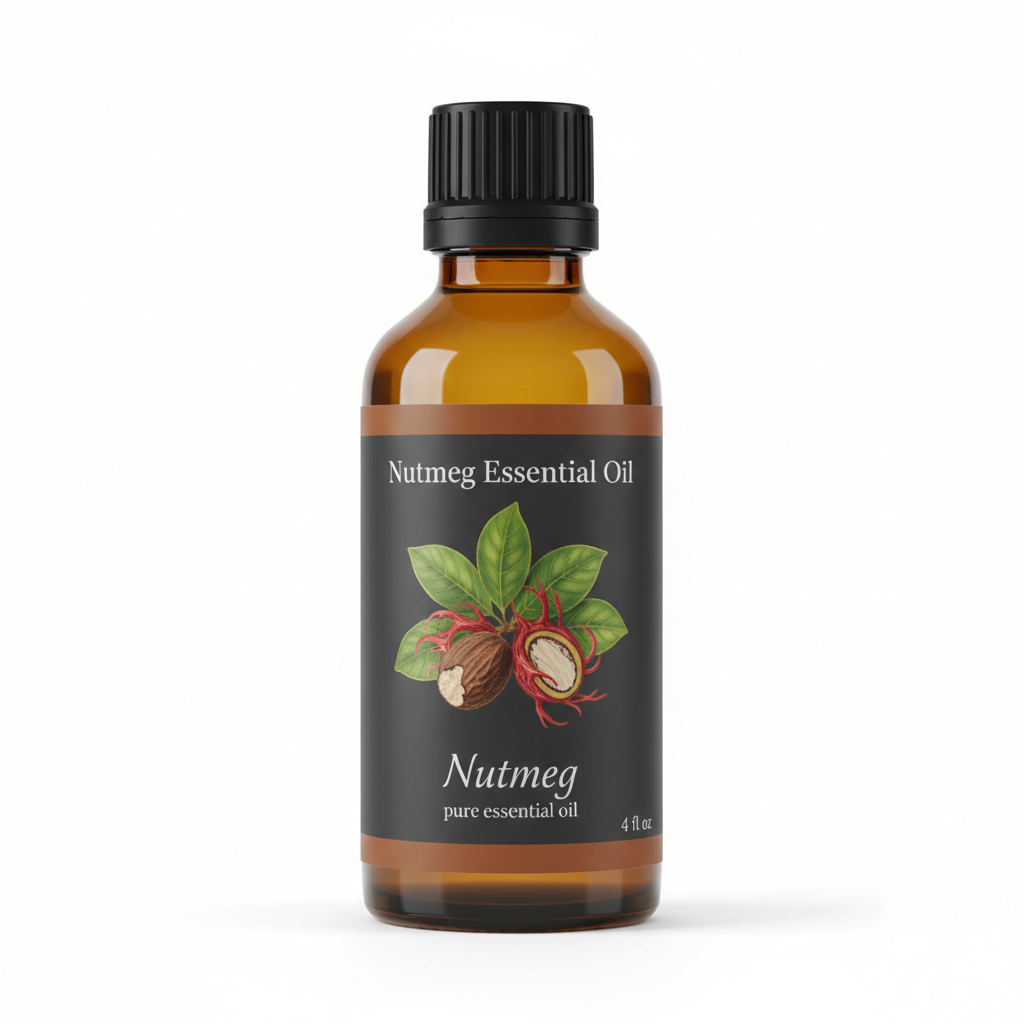
Nutmeg Essential Oil
Our own Nutmeg Essential Oil, in sizes from 0.5 oz to bulk.
From $10.99
Shop Now →This guide breaks down exactly what separates these two oils, where each one genuinely excels, and how to make a confident buying decision based on your actual needs.
What Is Nutmeg Essential Oil?
Nutmeg essential oil is steam-distilled directly from the dried seed of Myristica fragrans, the same tropical tree that gave spice traders enough motivation to fight wars over tiny island chains in the seventeenth century. The distillation process draws out the volatile aromatic compounds naturally present in the seed, producing an oil that is entirely plant-derived with no added synthetic materials.
The scent profile is complex in the way that a freshly cracked nutmeg is complex: warm, woody, faintly sweet, with subtle green and slightly earthy undertones underneath. The top notes are bright and spicy, while the base settles into something drier and more resinous. Good-quality nutmeg essential oil from East Indian sources (Myristica fragrans) tends to read differently on the nose than West Indian nutmeg, which comes from a different species entirely. If you want to understand those distinctions before you buy, the article on reading a nutmeg oil label: East Indian vs West Indian covers the differences clearly.
Because it is 100% botanical, nutmeg essential oil carries the same considerations any concentrated plant extract does: proper dilution matters, skin sensitivity is possible, and quality varies meaningfully between suppliers.
What Is Nutmeg Fragrance Oil?
Nutmeg fragrance oil is a manufactured aromatic product, typically a blend of synthetic aroma chemicals, natural isolates, or both, designed to replicate (or occasionally simply evoke) the scent of nutmeg. Fragrance oils are created by perfumers and flavor houses working to a brief, and the finished formulation can contain dozens of individual components.
This is not a criticism. Fragrance oils exist because they solve real problems: they are more stable under heat, more consistent batch to batch, often cheaper at volume, and can be engineered to perform well in specific applications like candle wax or soap bases. A skilled perfumer can create a nutmeg fragrance oil that smells richer or more dramatic than a straight essential oil, simply because they have a wider palette to work with.
The trade-off is transparency. A fragrance oil label rarely tells you what is inside it. Some contain a percentage of genuine nutmeg essential oil. Others contain none at all. Unless the supplier discloses the full ingredient list or provides a Safety Data Sheet (SDS), you are largely trusting their characterization of the product.
Side-by-Side Comparison
| Attribute | Nutmeg Essential Oil | Nutmeg Fragrance Oil |
|---|---|---|
| Source | Steam-distilled from Myristica fragrans seed | Manufactured blend of synthetic and/or natural aroma compounds |
| Scent character | Warm, spicy, dry, complex, slightly green | Variable; often bolder, sweeter, or more linear depending on formulation |
| Scent consistency | Varies by harvest, origin, and distiller | Highly consistent batch to batch |
| Label transparency | Single botanical ingredient (plus any carrier if diluted) | Often listed only as "fragrance"; full ingredient disclosure is rare |
| Heat stability (candles, wax melts) | Can flash off quickly at high temperatures | Generally engineered for better heat retention |
| Skin use (diluted) | Used in diluted cosmetic formulations; patch test always required | Skin safety depends on specific formulation; SDS review essential |
| Cost at volume | Higher; price reflects botanical extraction | Usually lower, especially at craft-supply scale |
| Certifications available | Organic, GC/MS tested, non-GMO options exist | Phthalate-free, skin-safe ratings are common markers |
| Best for | Cosmetic formulations, personal care, diffusion, botanical authenticity | Candles, wax melts, soap, home fragrance products |
Pros and Cons: Nutmeg Essential Oil
Pros
- Botanical authenticity. You know exactly what you are working with: one ingredient, one source plant.
- Cosmetic application. When properly diluted, nutmeg essential oil is used in skin-safe formulations, perfume blending, and personal care products where ingredient transparency matters.
- Diffuser performance. In cold diffusion or gentle heat diffusers, the natural complexity of the oil reads well, especially when blended with complementary oils like black pepper, clove, or sandalwood.
- Certifications. Reputable suppliers offer GC/MS reports, organic options, and documented sourcing. For buyers who care about what is in their products, this documentation is genuinely useful. The ultimate quality and value guide for buying nutmeg oil explains what those certifications actually mean and how to evaluate them.
Cons
- Price. Quality nutmeg essential oil costs more than fragrance oil at comparable volumes. This matters if you are making candles in quantity.
- Variable scent. Harvest conditions, distillation methods, and origin all affect how the oil smells. Two bottles labeled "nutmeg essential oil" can smell noticeably different.
- Heat sensitivity. Essential oils can volatilize quickly in hot wax, resulting in poor scent throw in finished candles. You typically need a higher load percentage, which compounds the cost issue.
- Safety requirements. Proper dilution is non-negotiable for skin use. The oil should not be applied neat, and anyone with known sensitivities should patch test before broader use. Pregnant individuals and young children should consult a qualified healthcare provider before use.
Pros and Cons: Nutmeg Fragrance Oil
Pros
- Engineered for performance. Fragrance oils designed for candles and wax melts are formulated specifically to survive the melt, pour, and cure cycle and still throw scent effectively. This is a significant practical advantage.
- Consistency. If you are selling candles or bath products, batch-to-batch scent consistency matters enormously for your brand. Fragrance oils deliver this reliably in a way that essential oils often cannot.
- Price point. For high-volume production, fragrance oils are substantially more economical. This is one of the main reasons the candle and soap industries rely on them.
- Scent range. A good fragrance oil house can offer nutmeg-forward blends that are more versatile than straight nutmeg oil: spiced apple-nutmeg, eggnog, winter spice blends, and so on.
Cons
- Limited ingredient transparency. "Fragrance" on a label covers a lot of ground. Without a full SDS or IFRA compliance sheet, you cannot know exactly what you are working with.
- Not appropriate for all skin formulations. Many fragrance oils are not rated for leave-on skin products. Always verify the usage rate and application type before incorporating one into a cosmetic formula.
- No botanical origin story. If your brand positioning relies on natural or botanical ingredients, a synthetic fragrance oil complicates that narrative.
- Quality varies widely. A five-dollar nutmeg fragrance oil and a premium one from a serious fragrance house are not the same product. Cheap fragrance oils can smell flat, sharp, or synthetic in a way that undermines a finished candle.
Best For: Use-Case Recommendations
Nutmeg Oil for Candles and Wax Melts
For most candle makers, nutmeg fragrance oil is the more practical choice. The heat stability, consistent scent throw, and cost efficiency make it better suited to production work. If you want a strong, true-to-spice nutmeg scent that carries across a room, a well-formulated fragrance oil will outperform an essential oil in most wax systems.
That said, some small-batch candlemakers do use essential oils successfully, particularly in lower-melt-point waxes like coconut or soy, where the pour temperature is more forgiving. If that approach interests you, expect to experiment with load percentages and accept that results will vary.
Skincare and Personal Care Formulations
Here, nutmeg essential oil is the more appropriate starting point, provided you source a quality product with documentation and use it at safe dilution levels (typically 0.5% to 1% in a finished product, following IFRA or supplier guidelines). Fragrance oils can sometimes be used in rinse-off products like soaps and shower gels, but leave-on applications require careful vetting of the fragrance oil's skin-safety rating.
Always patch test. Always consult a qualified healthcare provider or cosmetic formulator if you are uncertain about safety for a particular population or application.
Diffusion and Home Atmosphere
For personal diffuser use, nutmeg essential oil is the natural choice. Fragrance oils are generally not recommended for ultrasonic or nebulizing diffusers, as the synthetic components are not designed for that kind of direct inhalation exposure. Essential oil in a diffuser offers a gentler, more botanically grounded aromatic experience during a morning routine, a quiet evening wind-down, or a cozy seasonal atmosphere at home.
Perfume and Cosmetic Blending
Depends on your product positioning. Botanical perfumers working with natural materials will lean toward the essential oil. Commercial or indie fragrance brands that are not marketing a "natural" product can legitimately use fragrance oils in appropriate concentrations.
A Note on Price and What It Signals
Price is one of the most reliable early signals of product quality, but it requires context to interpret correctly. A very cheap nutmeg essential oil is almost always a red flag: either it is heavily adulterated, diluted without disclosure, or sourced from a poorly controlled supply chain. A very cheap fragrance oil may simply be low-quality synthetic, or it may be a genuinely good value from a supplier with efficient production.
For a clearer picture of what fair pricing looks like for the essential oil side of this comparison, the nutmeg oil price guide breaks down why costs vary and what you should reasonably expect to pay at different quality tiers.
The Verdict
These two products serve different purposes, and the better choice depends entirely on what you are making.
If you are making candles, wax melts, or scented home fragrance products in any volume, a quality nutmeg fragrance oil is likely your most practical and cost-effective option. Prioritize suppliers who provide IFRA compliance documentation, disclose phthalate content, and specify the flash point of their product.
If you are formulating personal care products, blending for a diffuser, or building a brand around botanical ingredients, nutmeg essential oil is the right foundation. Spend more attention on sourcing than on price, verify GC/MS reports where possible, and dilute appropriately for every application.
The short version: nutmeg fragrance oil wins on performance and economics for candles and home fragrance. Nutmeg essential oil wins on transparency, cosmetic suitability, and aromatic authenticity for personal care and diffusion. Neither is universally superior. Both have a legitimate place in a well-stocked formulation kit.