
How to Spot Pure Nutmeg Oil: Quality Checks Before You Pay
Nutmeg essential oil has a devoted following among perfumers, cosmetic formulators, and home aromatherapy enthusiasts. Its warm, spicy-sweet character is genuinely hard to replicate with synthetics, which makes the real thing worth seeking out. The problem is that the market is uneven. Bottles labeled "nutmeg oil" can range from beautifully sourced, properly steam-distilled oil to diluted products of questionable origin, and the packaging rarely tells you the whole story.
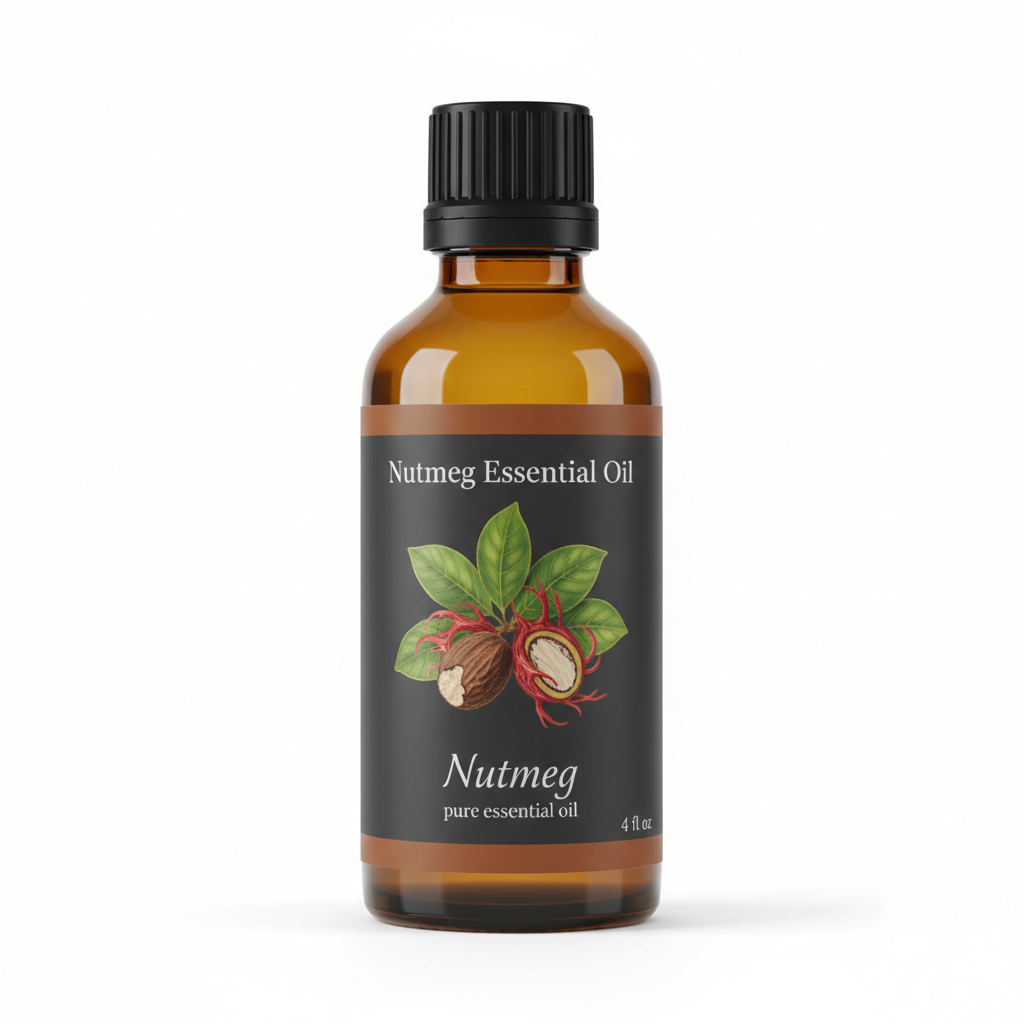
Nutmeg Essential Oil
Our own Nutmeg Essential Oil, in sizes from 0.5 oz to bulk.
From $10.99
Shop Now →This guide walks you through every practical check you can perform before and after purchase to make sure you are paying for pure nutmeg oil, not a pale imitation of it.
Why Nutmeg Oil Quality Varies So Much
Nutmeg (Myristica fragrans) is grown primarily in Indonesia, Grenada, and Sri Lanka. Each origin produces a distinct aromatic profile: Indonesian nutmeg oil tends to be robust and slightly earthy, while Grenadian oil is often described as brighter and more citrus-forward. Neither is inherently superior; they are simply different. The complication arises further down the supply chain.
Between the distillery and your doorstep, oil can be adulterated with cheaper carrier oils, diluted with synthetic extenders, or blended with distillates from lower-grade plant material such as mace (the outer aril of the same fruit). Some sellers also mislabel fragrance oils, which are synthetic aromatic compounds, as essential oils. If you want to understand that distinction in depth before you shop, the article on nutmeg essential oil vs. nutmeg fragrance oil is worth reading first.
The good news: there are reliable ways to assess nutmeg oil quality without a laboratory. You just need to know what to look for.
Label Checks: What Good Packaging Tells You
A label is not a quality guarantee, but gaps in label information are a meaningful warning sign. Before you buy, look for the following on the product page or bottle.
Latin Binomial
The label should read Myristica fragrans. If it simply says "nutmeg oil" with no botanical name, the seller is not meeting the basic transparency standard expected in the essential oil trade. Some products will also specify the plant part: "steam distilled from dried seeds" is correct for most commercial nutmeg oil. Oil distilled from the leaves or stems exists but has a different chemical profile and a noticeably thinner scent.
Country of Origin
Indonesia (particularly the Banda Islands and Sulawesi) and Grenada are the two most reputable sources for export-grade nutmeg oil. Sri Lanka and India also produce good quality oil. A stated origin is not proof of purity, but the absence of any origin information is a red flag worth noting.
Extraction Method
Look for "steam distilled." CO2 extraction is also legitimate and produces a richer, denser aromatic profile with more of the heavier molecular constituents preserved. Both are genuine essential oils. Cold-pressed nutmeg oil is technically possible but rare commercially; if you see it claimed, verify with the supplier directly.
Batch or Lot Number
Reputable suppliers assign lot numbers so individual batches can be traced and tested. A supplier willing to share a certificate of analysis (COA) for a specific lot number is one worth trusting.
Expiry or Best Before Date
Nutmeg oil is relatively stable but does oxidize over time. Most well-stored oil has a usable aromatic life of two to three years. An undated bottle, or one with a suspiciously distant expiry date, may indicate old stock being moved.
The Certificate of Analysis: Your Most Powerful Tool
A COA is a document issued by an independent laboratory that shows the chemical composition of a specific batch of oil. For nutmeg oil, key markers include the percentages of sabinene, alpha-pinene, beta-pinene, myristicin, and safrole. You do not need to memorize reference ranges, but you do need to know how to use a COA as a buyer.
- Ask for it. Any serious supplier should provide a COA for the batch you are purchasing, either on their website or on request. If they cannot or will not, move on.
- Check the testing lab. The COA should come from a third-party laboratory, not an in-house document produced by the seller. Look for ISO-accredited labs or well-known industry testing services.
- Match the lot number. The lot number on your bottle should match the lot number on the COA. Generic COAs that cover an entire product line without batch specificity are much less useful.
- Note safrole levels. Safrole is a naturally occurring constituent of nutmeg oil that is subject to regulatory limits in cosmetic applications in many markets. A transparent supplier will list it. Unusually low or unlisted safrole in a supposedly full-spectrum oil may indicate blending or adulteration.
Sensory Evaluation: What Pure Nutmeg Oil Actually Smells Like
Once your bottle arrives, the first quality check is your nose. This sounds simple, and it mostly is. Pure nutmeg oil has a warm, spicy, woody aroma with faint sweet undertones and a slight camphoraceous edge. It is recognizably "nutmeg" but more complex and more volatile than the spice on your kitchen shelf.
Adulterated or low-quality oil tends to fall short in specific ways:
- Thin or flat scent: If the oil smells like a faint, one-dimensional version of nutmeg with no depth or evolving notes, dilution with a carrier oil is likely.
- Oily or greasy undertone: A persistent fatty smell suggests a carrier has been added. Nutmeg essential oil itself is not greasy; it is a volatile compound that evaporates cleanly from skin or paper.
- Chemical or perfume edge: A synthetic sharpness or a slightly artificial sweetness points to fragrance oil being sold as essential oil. This is exactly the kind of product the comparison article on essential oil vs. fragrance oil can help you identify.
- Mustiness: A musty or rancid note means the oil is old or was stored poorly. Oxidized oil is not just aromatic disappointment; it is more likely to cause skin sensitivity reactions.
The Blotter Test
Apply one drop of oil to a fragrance-testing strip or a plain piece of white paper. Pure nutmeg oil will evaporate within a few hours, leaving little to no oily residue or staining. If a visible greasy circle remains after a few hours, the oil has been cut with a fixed (non-volatile) carrier oil such as fractionated coconut or sweet almond.
The Cold Test
Place the bottle in the refrigerator for 30 minutes. Pure nutmeg oil may turn slightly cloudy or hazy when cold but should return to full clarity at room temperature. Separation into distinct layers suggests adulteration with a carrier or blending with incompatible compounds.
Key Features to Compare Across Products
When you are actively comparing products side by side, these are the features that separate a strong option from a weak one.
| Feature | What to Look For | Red Flag |
|---|---|---|
| Botanical name on label | Myristica fragrans | No Latin name listed |
| Origin | Indonesia, Grenada, or Sri Lanka | No origin stated |
| Extraction method | Steam distilled or CO2 | "Expressed" or no method given |
| Certificate of analysis | Third-party, batch-specific | Generic or supplier-issued only |
| Packaging | Dark amber or cobalt glass | Clear plastic or clear glass |
| Price per ml | Consistent with market range | Dramatically underpriced |
| Lot number | Visible on bottle and COA | No lot or batch reference |
Top Picks at Different Price Points
For a fuller breakdown of specific brands and value comparisons, the complete guide on how to buy nutmeg oil covers the market in more depth. Here is a practical orientation by budget level.
Entry-Level (Under $10 for 10 ml)
This price range is worth approaching with caution. Genuine, properly sourced nutmeg essential oil costs money to produce and ship. Oils priced at the very bottom of the market are often diluted, old stock, or sourced from low-grade plant material. That said, a few small-batch suppliers and direct-to-consumer operations do offer fair pricing if they are selling in volume or without heavy retail markup. The entry-level purchase worth making: look for brands that still provide a downloadable COA even at this price point. That transparency is the minimum acceptable standard.
Mid-Range ($10 to $25 for 10 ml)
This is where most reputable essential oil suppliers operate. Brands in this range typically offer batch-specific testing, clear sourcing information, and proper glass packaging. Many certified organic options also fall here. If you are weighing whether organic certification is worth the modest price premium, the article on organic nutmeg oil vs. conventional lays out the practical considerations without the marketing gloss.
Professional-Grade (Above $25 for 10 ml, or bulk pricing)
Perfumers, cosmetic formulators, and dedicated hobbyists often buy at this level. Here you are typically paying for specific origin designation (Banda Islands single-origin, for instance), CO2 extraction rather than steam distillation, or certified organic production with full traceability. Bulk purchasing (100 ml or more) from reputable raw ingredient suppliers can also bring the per-ml cost down significantly while maintaining quality. Always request a COA and sample before committing to a large bulk order.
Red Flags to Avoid
These are the patterns most reliably associated with poor-quality or mislabeled product. Each one individually might not disqualify a supplier, but the more of these you spot in one listing, the more cautious you should be.
- No botanical name. A basic transparency failure.
- "Therapeutic grade" or "certified pure" claims with no certifying body named. These phrases have no regulated meaning in essential oil commerce. They are marketing language, not quality standards.
- Price significantly below market average. Nutmeg oil has real production costs. A dramatically cheap price means something was cut somewhere.
- No COA available, or supplier ignores your request for one.
- Plastic packaging. Essential oils can degrade certain plastics over time, and reputable suppliers know this. Clear or plastic bottles also allow light exposure that accelerates oxidation.
- "Nutmeg oil blend" described as pure essential oil. A blend is not a pure oil. Labels must clearly indicate if a product has been diluted into a carrier.
- Identical COA across multiple products from the same seller. If a supplier sells 40 different essential oils and all have the same third-party lab header on their COAs with suspiciously similar formatting, those documents may not be batch-specific or may be fabricated.
- No return or quality guarantee. Established suppliers stand behind their product. A no-returns policy on a consumable aromatic product is a signal the seller knows you may be disappointed.
Where to Buy Pure Nutmeg Oil
Your sourcing channel matters almost as much as the brand. Here is a realistic look at the main options.
Specialist Essential Oil Retailers (Online)
Companies whose entire business is essential oils tend to have the most rigorous quality controls. They rely on repeat customers who know what good oil smells like. Names frequently cited with respect in the aromatics community include suppliers that publish full GC/MS (gas chromatography/mass spectrometry) reports for every batch. This is the gold standard of COA documentation. Buying directly from these retailers also gives you access to customer service staff who understand product specifications.
Natural and Health Food Stores
Physical retail stores offer the advantage of being able to open the tester bottle and smell the oil before you commit. The disadvantage is that staff may not be able to provide batch-specific COA documentation in-store. Large national chains carry well-known brands that are generally reliable at the mid-range price point, but the selection of origin-specific or CO2-extracted options is usually limited.
General Marketplace Platforms (Amazon, eBay, Etsy)
These platforms host both excellent suppliers and problematic ones, often side by side. The review system provides some signal, but reviews can be manipulated. If you buy through a general marketplace, handle it exactly like any other purchase: check for the botanical name, request a COA link before buying, and look at the brand's own website to verify they are a legitimate essential oil operation rather than a reseller with no direct sourcing relationship.
Direct from Distillers
Buying directly from distilleries in Indonesia or Grenada, usually in larger quantities, is the most transparent sourcing path available. It is practical mainly for formulators and businesses. If you are buying 100 ml or more on a regular basis, it is worth investigating direct import options or working with a reputable raw ingredient broker who can verify origin on your behalf.
Storage After Purchase: Protecting What You Paid For
Even genuinely pure nutmeg oil can degrade quickly with poor storage. Once you have selected a quality product, protect your investment with these straightforward habits.
- Store in a cool, dark location away from direct sunlight and heat sources.
- Keep the cap tightly closed when not in use. Oxidation accelerates with repeated air exposure.
- Do not transfer to a different container unless it is also dark glass or stainless steel.
- If you buy in bulk, consider decanting working quantities into smaller bottles and storing the remainder sealed.
- Note your purchase date. Most nutmeg oil remains at its aromatic best within 18 to 24 months of distillation, so buy from suppliers who can tell you the distillation date, not just the bottling date.
A Quick Note on Safety Before You Use
This guide focuses on selecting and purchasing quality oil, not on use protocols. But any responsible buying guide should note that nutmeg essential oil is potent. It should always be diluted appropriately before skin application, typically at 0.5 to 1 percent in a carrier for most leave-on cosmetic applications. Perform a patch test before broader use. Consult a qualified healthcare provider before using essential oils if you are pregnant, nursing, or managing any health situation. This is standard responsible practice, not a suggestion that essential oils replace professional guidance.
Knowing how to buy nutmeg oil well is the first step. Using it well is the next conversation entirely, and it starts with a bottle you can genuinely trust.