Organic Nutmeg Oil vs Conventional: Is the Certification Worth It?
The price gap between certified organic nutmeg oil and its conventional counterpart can stop you mid-scroll on any supplier's website. Sometimes it's a 20% difference. Sometimes it's double. And the question that follows is completely reasonable: what exactly are you paying for?
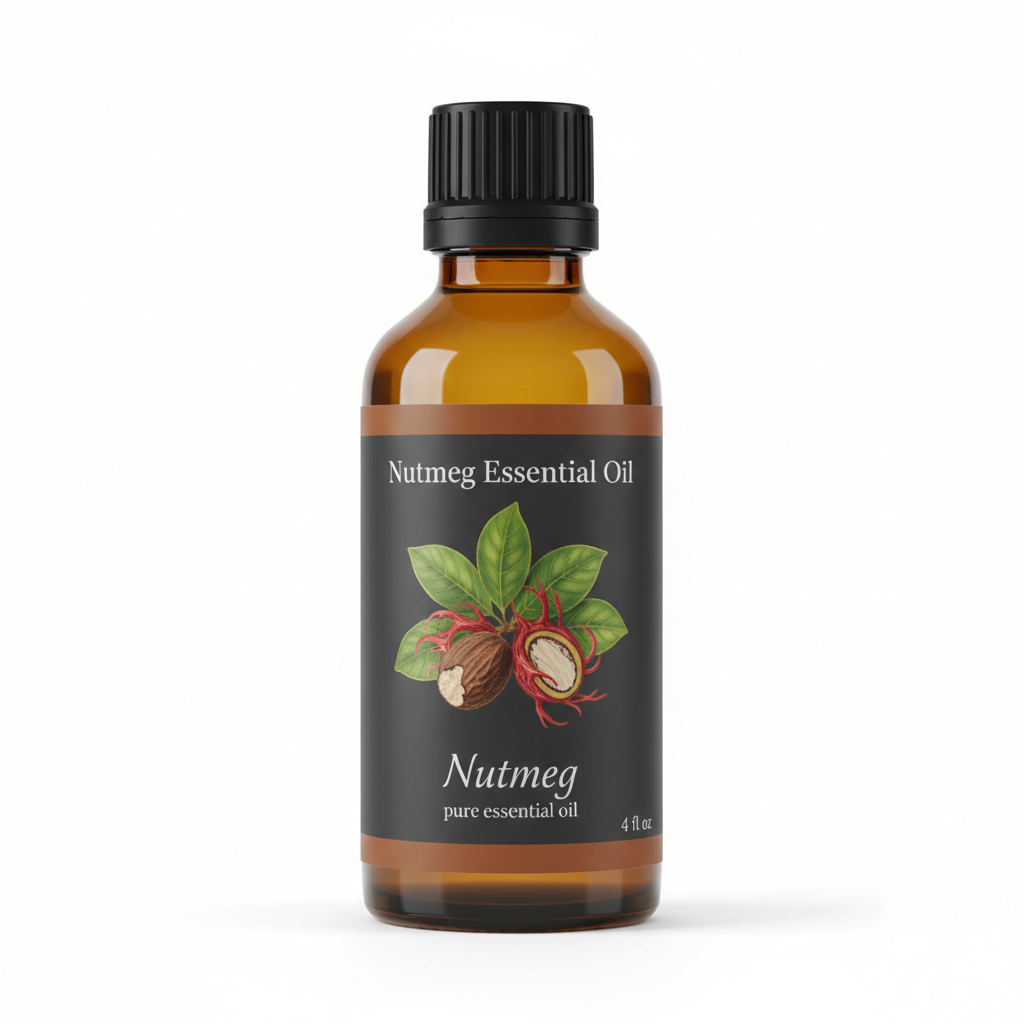
Nutmeg Essential Oil
Our own Nutmeg Essential Oil, in sizes from 0.5 oz to bulk.
From $10.99
Shop Now →The honest answer is: it depends on what you're making, how you're using it, and how much the certification itself matters to your customers or your own values. This comparison breaks down the real differences so you can make a confident purchasing decision, not just a reflexive one.
What Does "Certified Organic" Actually Mean for Essential Oils?
Organic certification for essential oils is granted by accredited bodies (USDA National Organic Program in the United States, ECOCERT or Soil Association in Europe, among others). At its core, the certification means the nutmeg trees were grown without synthetic pesticides, synthetic fertilizers, or genetically modified organisms, and that the processing chain maintained documented integrity from farm to bottle.
That last part matters more than many buyers realize. An oil can come from organically farmed nutmeg and still lose its certified status if it's processed, stored, or bottled in a facility that doesn't meet certification standards. The paperwork trail is as important as the farming itself.
Conventional nutmeg oil, by contrast, comes from standard agricultural practices. That doesn't automatically mean low quality or heavy chemical use. Many reputable conventional producers in Indonesia, Grenada, and Sri Lanka operate with practices that would satisfy most buyers who aren't specifically seeking a certification stamp. The absence of a certificate isn't evidence of poor quality. It's simply the absence of a certificate.
For a deeper look at what quality markers actually signal value, the ultimate quality and value guide to buying nutmeg oil covers GC/MS testing, batch documentation, and supplier red flags in detail.
The Key Differences: A Structured Comparison
| Attribute | Certified Organic | Conventional |
|---|---|---|
| Pesticide residue risk | Lower (regulated by certification standards) | Variable; depends on producer practices |
| Price point | Higher (typically 20% to 100% premium) | Lower to moderate |
| Supply consistency | Less consistent; smaller farm networks | Generally more consistent; broader sourcing |
| Label marketing value | High; resonates with natural product consumers | Neutral; no certification claim on label |
| Third-party verification | Yes, annual audits required | Only if supplier provides independent GC/MS testing |
| Scent profile | Equivalent when origin and distillation are matched | Equivalent when origin and distillation are matched |
| Availability in small batches | Limited; fewer certified suppliers | Widely available in various sizes |
| Suitable for certified organic finished products | Yes | No |
Scent and Chemical Profile: Does Certification Change What's Inside the Bottle?
This is probably the most common misconception in the organic essential oil conversation. Certification governs farming and handling practices. It doesn't guarantee a superior aromatic or chemical profile on its own.
Nutmeg essential oil's character, that warm, slightly sweet, gently spicy depth with woody undertones, comes from its naturally occurring compounds: myristicin, sabinene, alpha-pinene, and others. Those compounds are shaped by the origin of the nutmeg (Banda Islands nutmeg from Indonesia reads differently from Grenadian nutmeg), the harvest maturity, and the distillation method.
A certified organic nutmeg oil from a poorly managed distillation will smell flat. A conventional nutmeg oil from a skilled Grenadian distiller with a well-calibrated steam still may be extraordinary. The certification tells you about inputs. It doesn't tell you about craft.
That said, GC/MS analysis on both categories tends to show comparable compound profiles when origin is held constant. Some research suggests that organically grown plants may produce slightly different secondary metabolite concentrations under certain growing conditions, but this is not a consistent or guaranteed outcome across all essential oils or all farming contexts.
Pesticide Residue: The Real Conversation
Here's where organic certification earns its strongest argument. Steam distillation does remove many contaminants, including water-soluble residues. But some synthetic agricultural chemicals are lipophilic, meaning they bind to oils rather than water, and may carry through the distillation process into the finished essential oil.
Independent testing has occasionally found trace synthetic residues in conventional essential oils from high-pesticide growing regions. The quantities are generally very small, and the risk profile for topical or aromatic use is considered low by most safety researchers. Still, for formulators who are making products for sensitive skin applications or who are building a brand around clean-ingredient values, the lower residue risk of certified organic nutmeg oil is a meaningful practical benefit, not just a marketing point.
If you're using conventional nutmeg oil, request a supplier's third-party pesticide screening report. Reputable conventional suppliers provide this. Those who won't are a concern regardless of price. For a reference point when comparing suppliers, see our own pure nutmeg essential oil.
Pros and Cons: Organic Nutmeg Oil
Pros
- Lower risk of synthetic pesticide carryover into the finished oil
- Annual third-party audits create a documented quality chain
- Allows finished products to carry certified organic labeling
- Aligns with environmentally minded brand positioning
- Increasingly preferred by natural cosmetic buyers
Cons
- Significantly higher cost, which can affect product margin or retail pricing
- Smaller supplier pool means fewer options to compare
- Supply can be interrupted by harvest variability on smaller certified farms
- Certification cost is passed to the buyer even when farming practices differ minimally from conventional
- Scent quality is not automatically superior to a well-sourced conventional oil
Pros and Cons: Conventional Nutmeg Oil
Pros
- More accessible price point, especially for high-volume use
- Wider supplier network means easier sourcing and more competitive options
- Many conventional producers use responsible farming practices without formal certification
- Consistent supply through established trade channels
- Can still be excellent quality when paired with rigorous third-party GC/MS testing
Cons
- No independent verification of farming inputs unless supplier provides additional documentation
- Cannot be used in certified organic finished products
- Pesticide residue risk, while generally low after distillation, is not formally regulated
- Less compelling story for natural and organic consumer markets
- Quality is more variable across suppliers without the certification baseline
Best For: Recommendations by Use Case
Certified Organic Nutmeg Oil Is the Right Choice When:
- You're formulating certified organic cosmetics. If your finished product carries an organic certification, every ingredient in it must meet that standard. There's no workaround here.
- Your brand is built on verified clean ingredients. Consumers in the natural beauty and wellness space are increasingly label-literate. The certification gives them something concrete to trust.
- You're making leave-on skin products. For formulations that stay on the skin rather than rinsing off, the lower residue profile of certified organic sourcing is a reasonable precaution.
- You're selling to retailers with ingredient standards. Many natural grocery chains and specialty retailers have their own approved ingredient criteria. Organic certification often satisfies those requirements directly.
Conventional Nutmeg Oil Is the Right Choice When:
- You're diffusing or using aromatically. For home fragrance, candle work, or diffuser blending, the certification premium provides no practical aromatic benefit. A well-sourced conventional oil from a reputable supplier with GC/MS documentation is perfectly suited to this use.
- You're testing a new formulation. It makes sense to prototype with a high-quality conventional oil before committing to the organic price point. Nail the formula first.
- Volume is a priority. Soap makers, candlemakers, and larger-batch producers working with significant quantities of nutmeg oil may find the organic premium unsustainable without a corresponding retail price increase.
- Your finished product is rinse-off. For soap, shampoo, or wash-off formulations, the argument for organic sourcing is considerably weaker from a residue standpoint.
One thing worth clarifying before making any purchase: make sure you're comparing essential oils against essential oils, not against fragrance oils. The distinctions in sourcing, purity, and appropriate application are substantial. The comparison between nutmeg essential oil and nutmeg fragrance oil lays out those differences clearly, and it affects both the organic and conventional conversation.
The Price Reality
Certified organic nutmeg oil typically carries a 20% to 100% premium over comparable conventional grades, depending on supplier, origin, and batch size. That range is wide for a reason: the market is fragmented and pricing is inconsistent.
Some suppliers charge significantly for the certification while sourcing from regions where organic farming is the norm rather than the exception, meaning the actual production difference between their "organic" and "conventional" lines may be minimal. Others source from genuinely differentiated certified supply chains where the premium reflects real cost differences in farming, certification fees, and smaller-batch handling.
Doing price research across multiple suppliers is worth the effort. Our nutmeg oil price guide walks through what drives cost variation and how to recognize fair value versus inflated pricing in both organic and conventional categories.
The Verdict
Certified organic nutmeg oil is worth the premium in specific, well-defined circumstances: certified finished products, leave-on formulations, and brand positioning that depends on verified ingredient credentials. In those contexts, the certification is doing real work, not just occupying label space.
For aromatic blending, diffuser use, candle and soap making, or exploratory formulation, a rigorously tested conventional nutmeg oil from a transparent, documentation-forward supplier is a completely sound choice. The oil in the bottle can be just as good. What matters is knowing your supplier's testing standards, asking for GC/MS reports, and understanding the origin of the nutmeg.
The certification is a tool, not a guarantee of quality. Use it when the tool fits the job. When it doesn't, spend the saved budget on sourcing the best conventional oil you can verify.
A quick note on safety: nutmeg essential oil is potent and should always be diluted appropriately before any skin application. Standard dilution guidelines suggest 1% to 2% in a carrier oil for most topical uses. Patch testing before broader application is always a sensible step. Nutmeg oil is not suitable for use during pregnancy and should be kept out of reach of children. When in doubt about any application, consult a qualified healthcare provider or certified aromatherapy professional.