
Reading a Nutmeg Oil Label: East Indian vs West Indian Origins and Extraction
You pick up a small amber bottle. The label says "nutmeg essential oil" and not much else. Is that enough information? Probably not. Nutmeg oil is one of those deceptively varied botanical products where origin, species, and extraction method change the scent profile, chemical composition, and suitability for cosmetic and aromatic use in ways that genuinely matter to the end buyer.
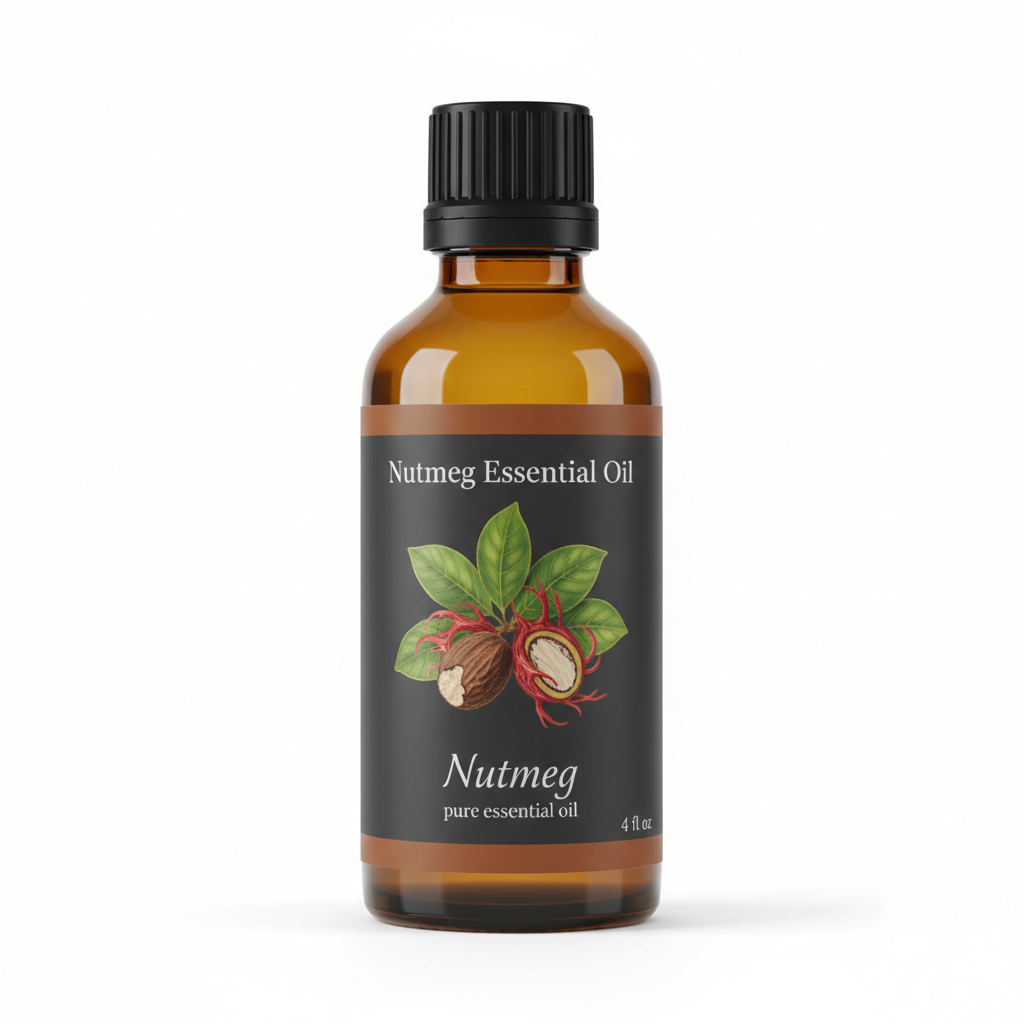
Nutmeg Essential Oil
Our own Nutmeg Essential Oil, in sizes from 0.5 oz to bulk.
From $10.99
Shop Now →This guide walks you through exactly what a quality nutmeg oil label should tell you, how to compare east Indian nutmeg oil against its West Indian counterpart, and what red flags suggest a product worth skipping. By the end, you'll be able to assess any bottle with confidence.
Why Origin Matters More Than You Might Expect
Nutmeg essential oil does not come from one universal plant. Two distinct species dominate the commercial market, and they behave quite differently in the bottle and on the skin.
- East Indian nutmeg (Myristica fragrans): Native to the Banda Islands of Indonesia, this is the species that drove centuries of colonial spice trade. Today it is cultivated across Indonesia, Sri Lanka, India, and Grenada. It produces the warm, woody, spicy profile most people recognize as "nutmeg."
- West Indian nutmeg (Myristica fragrans grown in the Caribbean, or sometimes Myristica fragrans vs. other Myristica spp.): Grenada is the most prominent West Indian source. The island's volcanic soil and humid microclimate produce oil with a slightly sweeter, less sharp aromatic character compared to Indonesian-grown material.
Both commercial types typically share the same species name, Myristica fragrans. The difference is terroir, a concept borrowed from wine. Soil composition, elevation, rainfall patterns, and local agricultural practices all influence the final volatile profile of the distilled oil. A reputable supplier will specify growing region, not just species. If the label skips that detail, you are buying blind.
For a broader look at how nutmeg oil compares to other warm spice oils in the same product category, see our guide on nutmeg oil vs clove and cinnamon oils.
Decoding the Label: Field by Field
A well-constructed essential oil label carries specific information in a predictable order. Here is what each field means and why it matters.
1. Latin Binomial (Botanical Name)
The label should print the full Latin name: Myristica fragrans Houtt. The species authority (Houtt., for botanist Martinus Houttuyn) is a nice-to-have detail that signals the supplier respects botanical accuracy. If only a common name appears, that is a minor gap. If no botanical name appears at all, treat that as a yellow flag worth investigating before purchase.
2. Plant Part
Nutmeg oil can be steam-distilled from two different parts of the same fruit.
- Seed (kernel) oil: The most common commercial product. Warm, spicy, round. Good for diffusing and cosmetic blending.
- Mace oil: Distilled from the lacy red aril surrounding the seed. More delicate and floral. Often sold separately, though occasionally mislabeled. If the label does not specify plant part, email the supplier and ask.
3. Country of Origin
This is the single most important field for understanding what you are buying. "East Indian nutmeg oil" typically signals Indonesian or Sri Lankan origin. "West Indian nutmeg oil" points to Grenada or other Caribbean islands. Some suppliers list a specific region or cooperative, which is even better. Country-of-origin data also helps with traceability if you ever need to verify sustainable sourcing claims.
4. Extraction Method
Two extraction methods appear on the market.
- Steam distillation: The industry standard. Hot steam passes through the plant material, carries volatile compounds into a condenser, and separates oil from water. Steam-distilled nutmeg oil is clear to very pale yellow, with a clean, dry-spicy scent.
- CO2 extraction (supercritical CO2): A newer method using pressurized carbon dioxide as a solvent. CO2 extracts tend to carry a broader range of aromatic compounds and sit closer to the scent of fresh-grated nutmeg. They cost more. Some perfumers prefer them for their fuller profile. They are not inherently "better" for every use, but they are different, and knowing which you have matters for blending.
Solvent extraction does exist in the industry but is uncommon for nutmeg. If a label lists "absolute" rather than "essential oil" or "CO2 extract," solvent processing may be involved. Absolutes are not ideal for skin-contact applications and should be reserved for professional perfumery use only.
5. Batch or Lot Number
Quality suppliers assign a batch or lot number to every production run. This number ties the product to a specific gas chromatography/mass spectrometry (GC/MS) report, which is the chemical fingerprint of that exact batch. If a company publishes GC/MS reports and links them to lot numbers, that is a strong quality signal. It means they are testing what is in the bottle, not relying on historical averages.
6. GC/MS Testing Statement
Look for language like "GC/MS tested," "third-party tested," or "batch-specific testing available." Some labels print a QR code linking directly to the report. Others require you to request it via email or download from the supplier's website. Either approach works. What matters is that the data exists and is accessible.
East Indian vs West Indian: A Practical Comparison
| Feature | East Indian Nutmeg Oil | West Indian Nutmeg Oil |
|---|---|---|
| Primary origin | Indonesia, Sri Lanka, India | Grenada, Trinidad |
| Scent character | Warm, dry, sharply spicy | Slightly sweeter, softer spice |
| Typical safrole content | Low to moderate (varies by batch) | Generally low |
| Common use cases | Masculine fragrance blends, bold diffusing | Cosmetic blending, lighter fragrance work |
| Price point | Moderate | Moderate to slightly higher |
| Availability | Wide | More limited; specialty suppliers |
For most everyday aromatic and cosmetic uses, east Indian nutmeg oil is the easier starting point. It is widely stocked, well-documented by suppliers, and consistent in character across reputable brands. West Indian oil is worth seeking out if you want a softer, sweeter profile for skin-focused formulations or lighter diffuser blends.
Price Points and What to Expect
Nutmeg oil sits in the mid-range of the essential oil market. It is not as expensive as rose or sandalwood, but quality product costs more than commodity lavender. Here is a rough breakdown by segment.
Budget Segment (roughly $5 to $12 for 10 ml)
Products in this range are not always bad, but they require extra scrutiny. Check for GC/MS documentation. Look for the country of origin on the label. A low price paired with vague sourcing information is worth questioning. Some budget products are perfectly acceptable for casual diffusing where precision is less critical. For skin-contact use, invest in a tested batch.
Mid-Range Segment (roughly $12 to $25 for 10 ml)
This is where most reputable specialty suppliers operate. You should expect a full label (botanical name, origin, extraction method, lot number), accessible GC/MS data, and clear dilution guidance. Brands in this tier often source from a consistent farm or cooperative, which improves batch-to-batch reliability.
Premium Segment (roughly $25 and above for 10 ml)
Premium pricing usually reflects CO2 extraction, certified organic sourcing, or single-estate supply chains. Grenadian West Indian nutmeg from small cooperatives occasionally falls here. If you are formulating a commercial skincare product or a high-end fragrance blend, the investment in verified, traceable oil is worthwhile. For personal use, mid-range is usually sufficient.
For more detail on sizing your purchase intelligently, our article on best nutmeg oil bottle sizes covers exactly when to buy a 5 ml sample versus a larger bulk option.
Red Flags to Avoid
Some labels (and some suppliers) signal problems before you even open the bottle.
- "Fragrance oil" or "perfume oil" language: These are not essential oils. They may be synthetic blends or heavily diluted products. Read carefully.
- No botanical name: A supplier serious about quality always names the species. The absence of a Latin name suggests the product has not been properly vetted.
- No country of origin: "Nutmeg oil" with no geographic information is an incomplete product description. Legitimate suppliers know where their material comes from.
- Suspiciously low price with large volume claims: Pure nutmeg essential oil requires a meaningful quantity of dried seed to produce even a small yield. Prices far below market norms suggest adulteration or dilution with a carrier oil (which should be disclosed on the label).
- "Pure, natural, organic" with no certifications: These words have marketing value but no legal weight unless backed by a recognized certification body (USDA Organic, Ecocert, etc.). Look for the actual certification mark, not just the claim.
- Colored glass not used: Essential oils degrade in light. Quality suppliers package in dark amber or cobalt blue glass. Clear plastic bottles are a red flag for shelf-life and quality commitment.
- Health-benefit claims on the label: Reputable essential oil suppliers do not make disease or condition claims on product labels. If a bottle promises specific health outcomes, the supplier may not be following good regulatory practices, which raises questions about their quality standards overall.
Where to Buy Nutmeg Oil
The sourcing channel matters almost as much as the label itself.
Specialty Aromatherapy Suppliers
Companies that focus exclusively on essential oils (rather than selling oils as a sideline) tend to invest more in sourcing and testing. Look for suppliers that publish their GC/MS reports publicly, name their growers or cooperatives, and specify harvest years for their stock. These details indicate genuine supply-chain engagement rather than commodity purchasing.
Direct-from-Farm or Co-op Brands
A small number of Grenadian and Indonesian producers sell directly to consumers or through distributors with full traceability. These products often carry premium prices, but the chain of custody is as transparent as it gets. For west Indian nutmeg oil specifically, direct-trade Grenadian sources are worth seeking out.
Large Online Marketplaces
Marketplaces like Amazon carry both reputable brands and lower-quality options side by side. Use the brand's own website to verify claims made on marketplace listings, since product descriptions on third-party platforms are sometimes inaccurate or outdated. Read the actual label image carefully, not just the listing text.
Health Food and Natural Product Retailers
Physical retail stores let you check label details before purchasing. Staff at dedicated natural product stores can sometimes provide additional sourcing information. Avoid grocery store essential oils that list no botanical name and no origin country; these are typically commodity-grade products with minimal documentation.
For a complete framework covering every dimension of a smart nutmeg oil purchase, including dilution ratios for cosmetic use, our comprehensive resource how to buy nutmeg oil: the ultimate quality and value guide covers the full picture.
A Note on Dilution and Patch Testing
Nutmeg essential oil is a potent product and should always be diluted in a suitable carrier oil before any skin contact. A standard cosmetic dilution for most adult applications is 1 to 2 percent, meaning 1 to 2 drops of essential oil per teaspoon of carrier oil. Even at proper dilution, patch testing on a small area of skin before broader use is strongly recommended. Individual skin sensitivity varies. People with known sensitivities to spice botanicals should take particular care. Nutmeg oil is not recommended for use on children without guidance from a qualified professional. Consult a qualified healthcare provider before incorporating any essential oil into your routine, particularly during pregnancy or if you are managing any health concern.
Bringing It All Together
A great nutmeg oil label is not complicated. It tells you the species, the plant part, the growing region, how the oil was extracted, and which batch you are holding. It links to testing documentation. It comes in dark glass from a supplier who can answer sourcing questions directly.
East Indian nutmeg oil remains the workhorse of the category: widely available, well-documented, and reliably expressive of that classic warm spice character. West Indian nutmeg oil, particularly from Grenada, offers a softer aromatic variation worth exploring once you have a reference point for comparison. Knowing the difference, and knowing how to read the label that tells you which one you have, puts you well ahead of the average buyer.
Take the time to request a GC/MS report before committing to a new supplier. The best companies will send it without hesitation. That willingness, more than any marketing language on the bottle, is the most reliable quality signal in this category.