
Nutmeg Oil vs Clove and Cinnamon Oils: Choosing Your Warm Spice Note
Warm spice essential oils share a family resemblance in the bottle, but they behave very differently once you start working with them. Nutmeg, clove, and cinnamon each bring something distinct to a blend, a diffuser, or a cosmetic formula. If you have been searching for the right spice note and are not sure which direction to go, this comparison will walk you through what actually separates them, where each one earns its place, and where the others fall short.
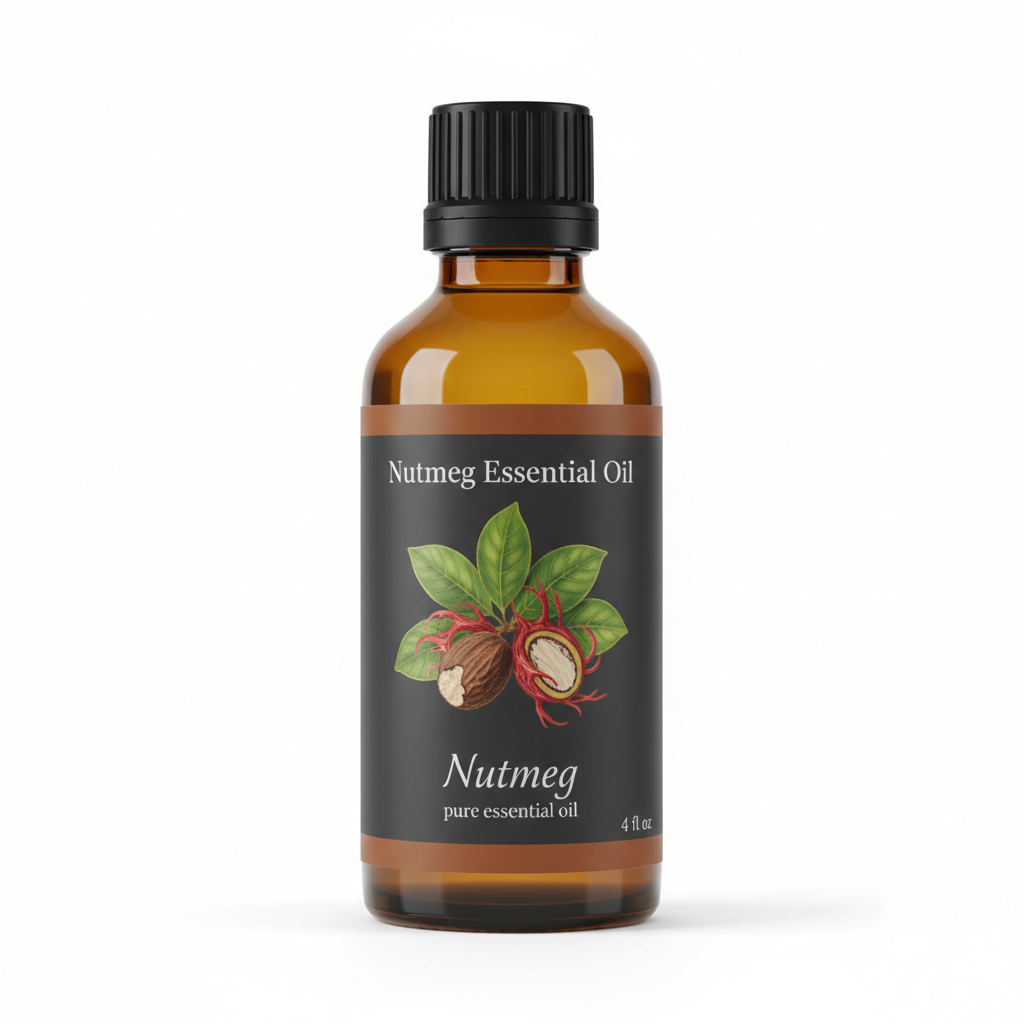
Nutmeg Essential Oil
Our own Nutmeg Essential Oil, in sizes from 0.5 oz to bulk.
From $10.99
Shop Now →A Quick Introduction to Each Oil
Nutmeg Essential Oil
Steam-distilled from the dried seed of Myristica fragrans, nutmeg oil carries a warm, softly spiced aroma with notable woody and slightly sweet undertones. It blends easily without overpowering other notes, which is one of the reasons perfumers and cosmetic formulators reach for it so often. Its scent profile is rounded rather than sharp. That roundedness is arguably its greatest asset.
Clove Bud Essential Oil
Clove bud oil, distilled from the flower buds of Syzygium aromaticum, is intense. The dominant compound eugenol gives it a deep, almost medicinal spice character that is immediately recognizable. It is potent in the diffuser and assertive in a blend. A little genuinely goes a long way, and formulators who underestimate that tend to find their entire blend tasting (and smelling) of clove.
Cinnamon Essential Oil
Two distinct oils go by the cinnamon name: cinnamon bark and cinnamon leaf. Bark oil is rich, sweet, and intensely warming. Leaf oil is sharper, higher in eugenol, and considerably more affordable. Both are known for being skin-sensitizing at very low concentrations, which makes them among the more demanding oils to work with safely. The IFRA (International Fragrance Association) sets strict usage limits for both, and those limits are low.
Side-by-Side Comparison
| Attribute | Nutmeg Oil | Clove Bud Oil | Cinnamon Bark Oil |
|---|---|---|---|
| Botanical source | Myristica fragrans (seed) | Syzygium aromaticum (bud) | Cinnamomum verum (bark) |
| Scent character | Warm, woody, softly spiced | Deep, sharp, intensely spiced | Sweet, hot, richly spiced |
| Dominant compounds | Sabinene, myristicin, elemicin | Eugenol (70-90%) | Cinnamaldehyde (55-90%) |
| Skin safety profile | Moderate; dilute to 1-2% for leave-on products | High sensitization risk; max 0.5% leave-on (IFRA) | Very high sensitization risk; max 0.05% leave-on (IFRA) |
| Blending behavior | Blends smoothly; supports other notes | Dominant; can overpower a blend quickly | Very dominant; requires precision |
| Diffuser use | Excellent; warm and inviting without fatigue | Good in small amounts; can feel heavy | Good in small amounts; very strong |
| Typical price range | Mid-range | Budget to mid-range | Mid to premium (bark); budget (leaf) |
| Beginner-friendly | Yes | With caution | Requires experience |
Scent Profile in Depth
Scent is subjective, but the structural differences between these three oils are worth understanding before you buy.
Nutmeg sits in the middle of the warm-spice spectrum. It opens with a clean, slightly green freshness, then settles into a woody spice that reads as cozy rather than aggressive. In a fragrance blend, it acts as a bridge between citrus top notes and heavy base notes like vetiver or sandalwood. That bridging quality is why it appears so often in classic men's colognes and autumn-themed home fragrance.
Clove is all about depth and density. Its eugenol content creates a spice note that most people associate immediately with a dentist's office or a holiday ham. That association is powerful and not always welcome in a delicate blend. Used sparingly, it adds incredible warmth and complexity. Used carelessly, it erases everything else in the formula.
Cinnamon bark is sweeter and hotter than clove. It reads as dessert-like at low concentrations and almost abrasive at higher ones. It pairs well with orange, vanilla, and frankincense for diffuser blends, but its extreme skin-sensitizing potential means many cosmetic formulators skip it entirely and reach for something safer. Nutmeg is a practical cinnamon oil alternative precisely for this reason.
Skin Safety: The Critical Difference
This is where the comparison becomes genuinely practical for anyone making leave-on cosmetics, massage products, or body oils.
Cinnamon bark and clove bud both contain compounds that are well-documented skin sensitizers. The IFRA guidelines for cinnamon bark in leave-on products cap usage at around 0.05%, which is an extraordinarily small amount. Clove bud sits at roughly 0.5% for leave-on applications. Both require careful patch testing, and some people with sensitive skin may react even at those low levels.
Nutmeg oil, by comparison, is considerably more forgiving. A typical safe dilution for leave-on skin products falls between 1% and 2%, giving formulators ten to forty times more working room than cinnamon bark allows. That latitude matters when you are trying to create a product with a detectable spice note on the skin.
For rinse-off products, the rules shift somewhat, but the fundamental hierarchy remains the same. Nutmeg is the safer starting point for skin-contact applications.
Safety note: Always conduct a patch test before applying any diluted essential oil to a larger area of skin. If you are working with clove or cinnamon oils, review current IFRA guidelines and consult a qualified cosmetic formulator or aromatherapy professional for usage guidance. These are not recommendations for any specific individual or condition.
Diffuser and Home Fragrance Use
All three oils perform well in a diffuser, but with different strengths and limitations.
Nutmeg diffuses beautifully on its own or in a blend. It layers well with cedarwood, cardamom, orange, frankincense, and black pepper. A 4-6 drop blend in a standard ultrasonic diffuser will fill a medium-sized room with a warm, welcoming scent that does not overwhelm. It suits long diffusion sessions in living areas, studies, and bedrooms during cooler months.
Clove is excellent for creating an atmospheric, holiday-spice effect, but most people find 1-2 drops sufficient. More than that in a small space can feel oppressive rather than inviting. It pairs well with orange, clementine, and cinnamon in seasonal blends.
Cinnamon bark in a diffuser is similarly potent. Small amounts in a well-ventilated space work well for a short, focused diffusion session. It is less suited to background, all-day diffusion.
For versatility and ease of use in daily diffuser routines, nutmeg has a clear practical edge.
Blending Versatility
Nutmeg plays well with almost every fragrance family. Woody, citrus, floral, oriental, green: it contributes without competing. That makes it genuinely useful as a supporting note across a wide range of blend types.
Clove and cinnamon are both what perfumers call dominant or characterizing notes. Once you smell them in a blend, you know they are there. That quality is useful when you want to make a statement, but it limits creative flexibility. You cannot slip a drop of clove into a delicate floral blend and expect it to behave quietly.
For formulators who want spice complexity without locking their blend into one olfactive territory, nutmeg is the more flexible tool.
Pros and Cons at a Glance
Nutmeg Essential Oil
- Pros: Versatile scent profile; better skin safety margins; beginner-friendly; blends smoothly; works well for extended diffusion
- Cons: Less assertive than clove or cinnamon if you want a bold spice statement; may be harder to source in high-quality, properly identified form (see the guide to buying nutmeg oil)
Clove Bud Essential Oil
- Pros: Intensely aromatic; deeply warming; affordable and widely available; strong presence in seasonal blends
- Cons: High skin sensitization risk; very easy to overuse; can dominate or unbalance a formula; limited leave-on usage rates
Cinnamon Bark Essential Oil
- Pros: Iconic sweet-spice aroma; pairs beautifully with citrus and vanilla; powerful atmospheric presence in a diffuser
- Cons: Extremely low IFRA skin limits; very high sensitization potential; not practical for most leave-on cosmetics; less forgiving for new formulators
Best For: Use Case Recommendations
Body Oils and Leave-On Skin Products
Choose nutmeg. Its more generous safe usage rate gives you room to create a perceptible spice note on the skin without pushing against sensitization limits. Clove and cinnamon are difficult to use effectively in this category.
Seasonal Diffuser Blends
Consider all three, but blend thoughtfully. A combination of nutmeg as the base spice note, a drop of clove for depth, and perhaps half a drop of cinnamon for sweetness creates a complex, layered result that outperforms any single oil used alone.
Candles and Wax Melts
Cinnamon and clove perform strongly here because the sensitization concerns do not apply to home fragrance products the way they do to skin-contact items. Nutmeg adds refinement and rounds out the blend.
Men's Grooming and Fragrance Products
Nutmeg is the natural choice. It is a classic note in masculine fragrance for good reason: woody, complex, and grounding without being sweet or overpowering.
Holiday and Autumn Home Fragrance
All three have a role. Clove and cinnamon deliver the immediate, punchy recognition that makes a space feel seasonally festive. Nutmeg adds warmth and longevity to the impression.
Our Verdict
If you are buying one warm spice oil to start with, nutmeg is the most practical, versatile, and forgiving of the three. Its scent profile works across more blend types, its skin safety margins give you real creative room, and it does not run the risk of overtaking everything it touches.
That said, clove and cinnamon each do specific things that nutmeg cannot replicate exactly. If you want the hot, sweet-spice intensity of cinnamon bark in a diffuser blend, nutmeg will not give you that. If you want the deep, dark density of eugenol-dominant clove, nutmeg is a different experience. These are not interchangeable oils: they are complementary ones.
The most experienced formulators and blenders tend to keep all three on hand. The question of which one to prioritize depends on what you are making, who is using it, and where on the skin (or off it) the product will be applied.
Ready to add nutmeg to your collection? Before you order, it is worth reading up on where to buy nutmeg essential oil online and taking a look at which bottle size makes the most sense for your intended use. Buying the right quality and quantity upfront saves time and money in the long run.