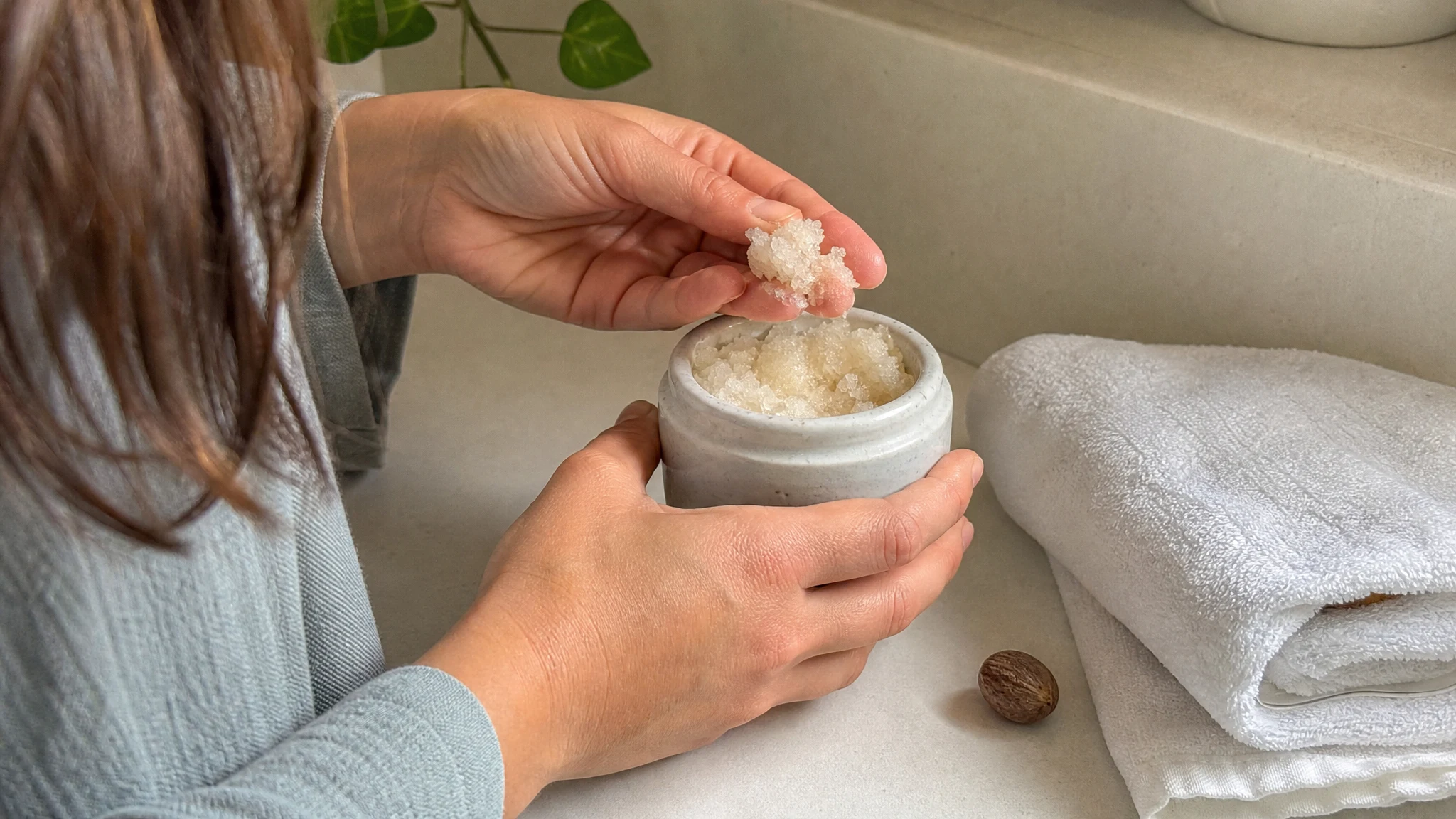
Nutmeg and Vanilla Sugar Scrub: A Recipe by Weight
A sugar scrub looks like the friendliest first project for nutmeg oil: it rinses off, it is mostly sugar, and all you need is a spoon. Nutmeg is a strong, generous spice, though, and a surprisingly small amount fills a jar with scent. Here is how we would mix a 200 g jar, and why half a gram of oil is the number to aim for.
Nutmeg Essential Oil
Our own Nutmeg Essential Oil, in sizes from 0.5 oz to bulk.
From $10.99
Shop Now →Start with the limit, then pick the scent
Nutmeg oil contains a little safrole. In seven Indonesian batches analysed for the European Food Safety Authority it ran from 1.69% to 2.30%, with a mean of 2.02% (EFSA FEEDAP Panel, 2023). The fragrance industry's standards body, IFRA, accepts natural extracts that contain safrole as long as the safrole in the finished product stays at or under 0.01% (IFRA Standards, 51st Amendment). Dividing 0.01 by 2.02 gives about 0.5% nutmeg oil in the finished scrub. That is our own arithmetic, and it is the ceiling we work from, not a target.
Tisserand Institute's nutmeg chart points the same way. For adults it gives 0.8% for East Indian nutmeg oil and 5% for West Indian (Tisserand Institute). We do not state which type our oil is, so we take the more careful row. Our usual guidance for skin is 0.5% to 2% in a carrier oil; for nutmeg we start at the low end, and for a scrub that gets rubbed over arms and legs we go lower still.
The jar, gram by gram
Drops are a rough measure, so this recipe is by weight. For 200 g of finished scrub, a working split is 120 g granulated sugar, 79.5 g carrier oil and 0.5 g nutmeg oil. That is 0.25%, half the safrole ceiling. Our oil's density on the Certificate of Analysis we publish for one batch is 0.887, so 0.5 g is about 0.56 ml, or roughly 11 drops at a typical 20 drops to the millilitre.
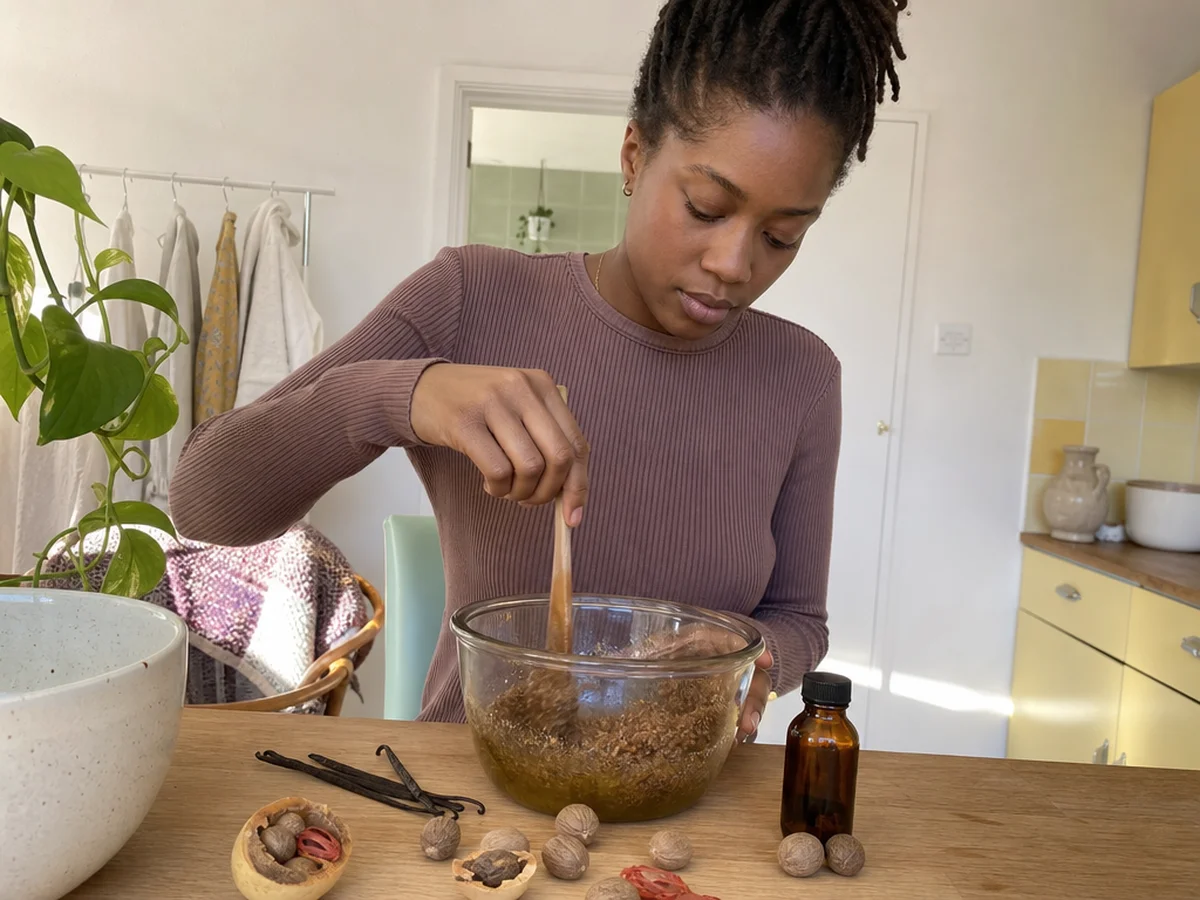
Stir the nutmeg oil into the carrier first, then fold in the sugar, so the scent spreads through the jar and does not pool in one spot. If the mix looks dry, add more carrier oil and leave the nutmeg where it is; the limit is a share of the whole jar. We suggest jojoba or sweet almond as carriers, and the carrier oil post walks through the differences (sweet almond is a tree nut, so skip it for anyone with that allergy). Sugar, carriers and jars come from a grocery, craft or soap-supply shop, since we sell only nutmeg oil.
Setting up the workspace
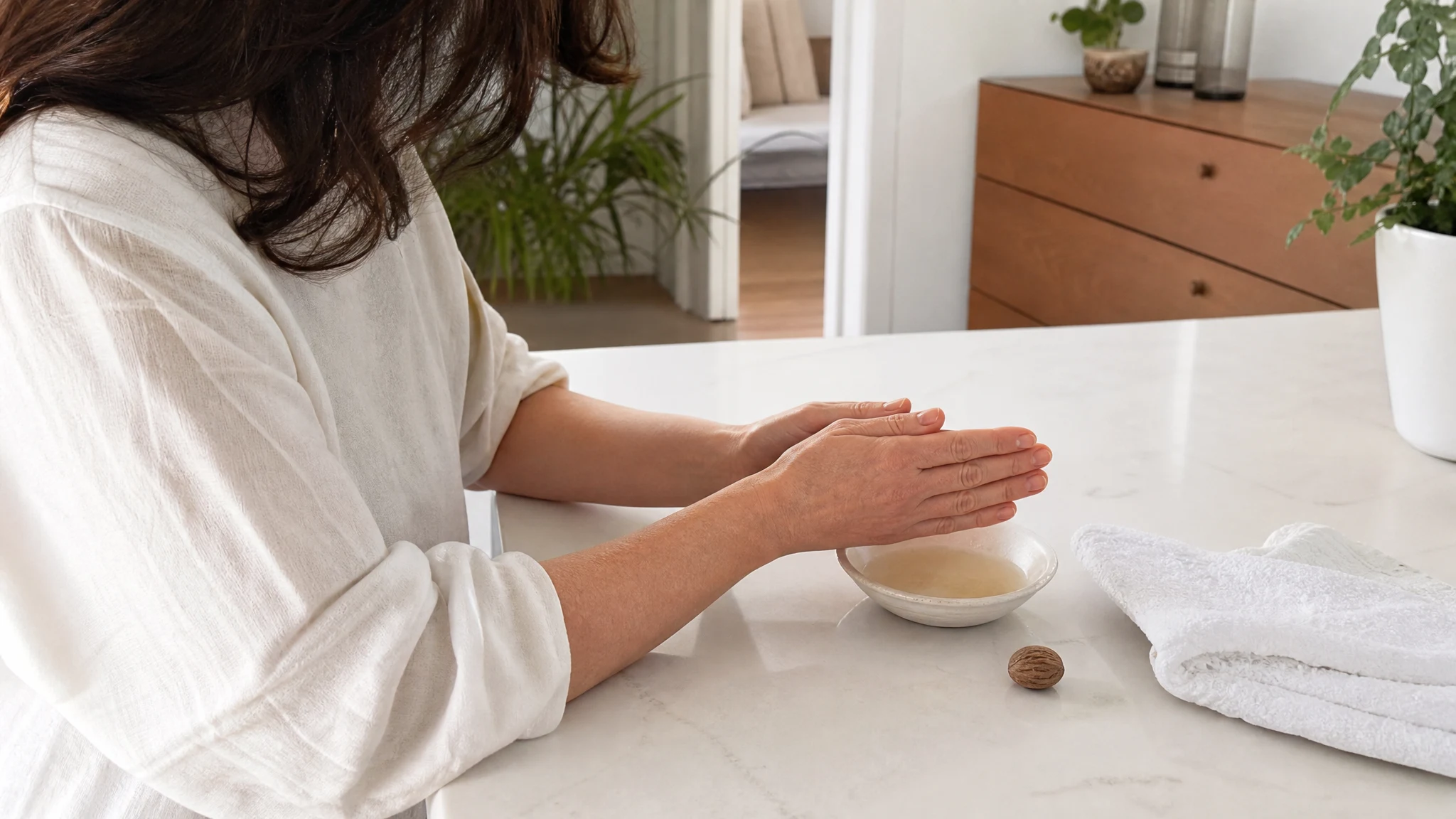
Sugar scrubs are friendly, but they get messy fast. Before you start, lay out a tray or a baking sheet, find a medium bowl, a spoon you do not mind scrubbing later, and your jar with its lid already off. Put the scale in the middle, and use the tare button between ingredients so you never have to do mental subtraction with sticky fingers.
Weigh the sugar first, then the carrier oil into the same bowl, then the nutmeg oil last, so the smallest amount goes in when you are paying closest attention.
About the vanilla
Vanilla and nutmeg are a lovely pair, but a spoonful of kitchen vanilla extract does not belong in an oil-and-sugar jar. US rules define vanilla extract as at least 35 percent ethyl alcohol by volume (21 CFR 169.175), and alcohol and oil do not mix. A better route is a vanilla ingredient made for oil-based cosmetics, such as a vanilla-infused oil from a craft supplier; ask that supplier for its recommended use rate, because every scent ingredient you add shares the same overall budget as the nutmeg.
What the finished jar should look like
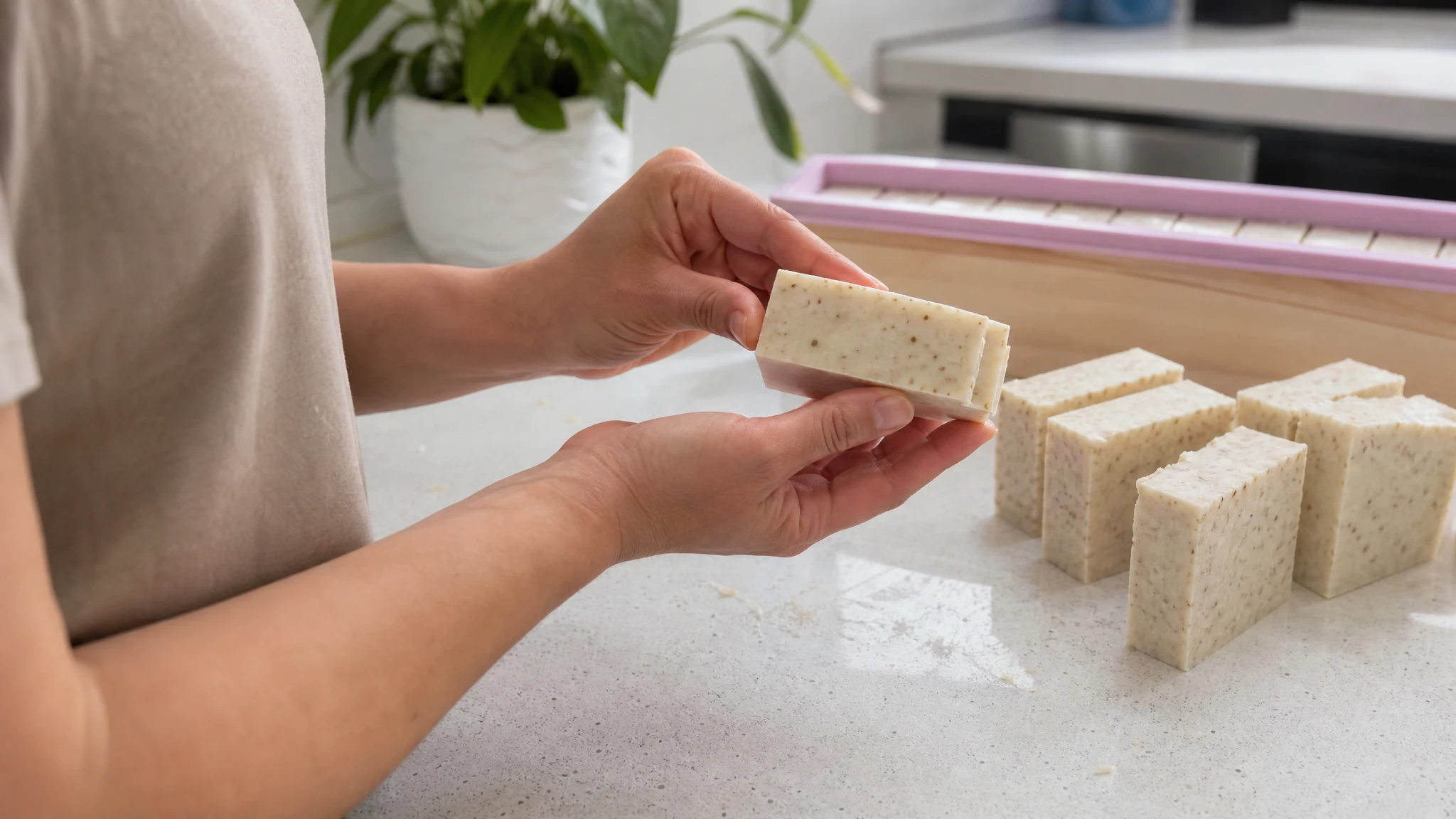
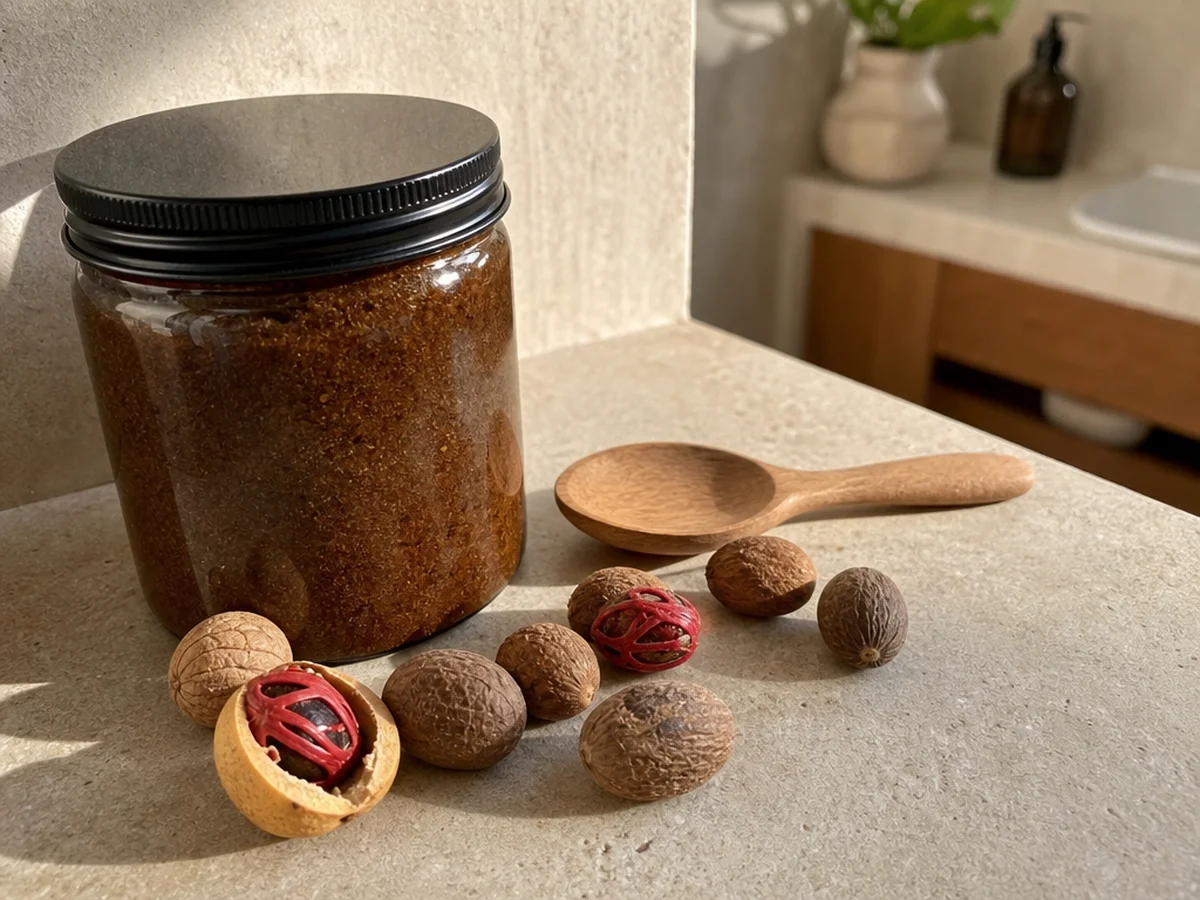
Good scrub has the texture of damp sand: it holds together when you press it with a spoon, but it is not swimming in oil. If it looks wet and slick, add a spoonful of sugar. If it looks dry and crumbly, a little more carrier oil will fix it, remembering that the nutmeg stays where it is. Open the jar and you should catch a faint, warm spice rather than a blast of perfume, with a sweetness that comes mostly from the sugar itself.
Using the scrub
- Adults, body only. Keep it off the face, away from the eyes and mouth, and off broken or freshly shaved skin. We recommend nutmeg oil stay away from children.
- Patch test first. Dab a little on the inner arm and wait a day, the way the American Academy of Dermatology describes for any new product. Our skin post has more on how nutmeg behaves on skin.
- Pregnancy, nursing, or medication. We recommend skipping nutmeg oil if you are pregnant or nursing, and not using it at all if you take medication that acts on the central nervous system. Your midwife, doctor or pharmacist is the right person to ask; the pregnancy post gathers what the sources say.
- Mind the floor. Oil-based scrubs leave the tub slick. A mat is a good idea.
Keep the jar dry and use a clean, dry spoon each time. We would make small jars and label each with the date and the oil's percentage. If you want the scent in the bath instead, the bath post explains why oil needs a dispersant to mix with water.
At 0.25% the scrub smells like a warm kitchen drifting in from the next room, not a spice rack tipped over, and that is exactly the effect you want from a spice this strong.
Nutmeg Essential Oil
Nutmeg Essential Oil from our own shop, in sizes from 0.5 oz to bulk.
From $10.99
Shop Now →Sources & Further Reading
- EFSA FEEDAP Panel, 2023. Safety and efficacy of a feed additive consisting of an essential oil from the seeds of Myristica fragrans Houtt. (nutmeg oil) for all animal species (FEFANA asbl). EFSA Journal 21(6):e08066. pmc.ncbi.nlm.nih.gov
- IFRA. The Complete IFRA Standards, January 2024 (51st Amendment). ifrafragrance.org
- Tisserand Institute. Assessing the Safety of Essential Oils - the Nutmeg Case. tisserandinstitute.org
- Legal Information Institute. 21 CFR 169.175 - Vanilla extract. www.law.cornell.edu
- American Academy of Dermatology. How to test skin care products. www.aad.org