
Where to Buy Nutmeg Essential Oil: Smart Shopping Online and Locally
Nutmeg essential oil occupies a quietly prestigious corner of the aromatic world. Warm, woody, faintly sweet, and surprisingly versatile in both fragrance blending and skincare formulation, it has earned devoted fans among perfumers, candle makers, and home enthusiasts alike. But because it sits outside the mainstream spotlight, finding a genuinely good bottle takes more intention than simply clicking "Add to Cart" on the first result you see.
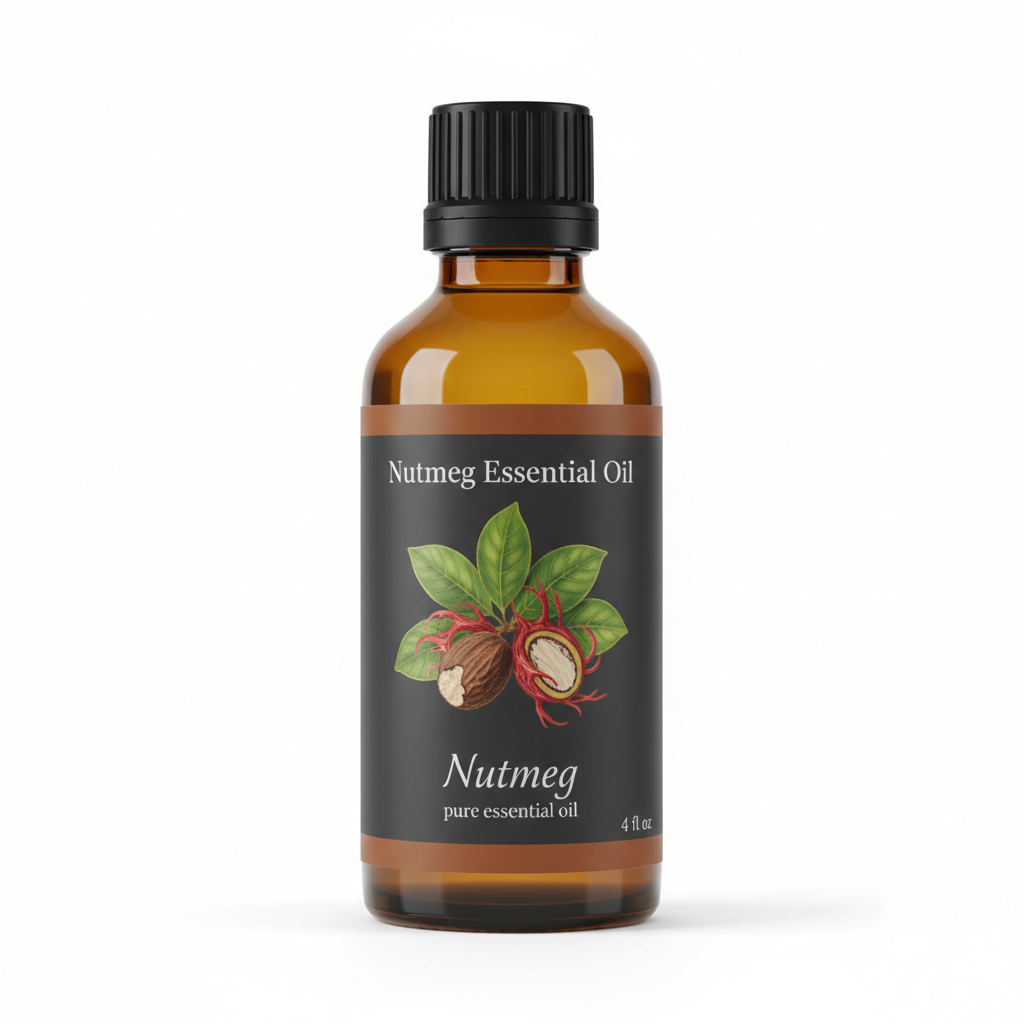
Nutmeg Essential Oil
Our own Nutmeg Essential Oil, in sizes from 0.5 oz to bulk.
From $10.99
Shop Now →This guide walks you through how to buy nutmeg essential oil with confidence, whether you are searching online or hunting for nutmeg oil near me at a local shop. We cover quality markers, price tiers, reliable retailers, and the red flags that signal a bottle worth skipping.
What to Look for: Quality Indicators That Actually Matter
Not all nutmeg oils are created equal. The difference between a beautifully distilled, single-origin oil and a blended or adulterated product is real, and it shows up in scent, performance, and ingredient safety.
Botanical Name on the Label
The label should clearly state Myristica fragrans as the botanical source. This is the species that produces the aroma profile most people associate with nutmeg: warm, spicy, faintly earthy, with soft woody undertones. Some sellers list only "nutmeg oil" without any botanical identification. Walk away from those. Transparent suppliers have nothing to hide.
Country of Origin and Part Used
Nutmeg grows primarily in Indonesia (particularly the Banda Islands), Grenada, and parts of Sri Lanka. Indonesian-sourced oils tend to be higher in myristicin and sabinene, delivering that characteristic spice-forward depth. Grenadian oils often lean slightly softer and more rounded. Neither is universally superior; it depends on your intended use. What matters is that the origin is disclosed at all.
The label should also specify whether the oil was distilled from the kernel (seed) or the mace (the lacy red aril surrounding the seed). Kernel-distilled oil is more common and more affordable. Mace oil is rarer, costs more, and carries a slightly floral character. Both are legitimate. Unlabeled origin is not.
Extraction Method
Look for steam distillation as the extraction method. This is the standard for nutmeg essential oil and produces a product suitable for aromatic and cosmetic use. Some cheaper oils are solvent-extracted or are actually fragrance oils blended to smell like nutmeg. These are not essential oils in any meaningful sense and should be avoided for any application beyond room scent.
GC/MS Testing
Gas chromatography and mass spectrometry testing is the industry benchmark for confirming that an essential oil's chemical profile matches what the label claims. Reputable suppliers publish these reports, sometimes called "batch reports" or "quality certificates," either as downloadable PDFs on the product page or available on request. If a seller cannot produce a GC/MS report, that absence speaks volumes.
Packaging
Genuine essential oils degrade with light and air exposure. Your bottle should be dark glass (amber or cobalt blue) with a tight-fitting cap or orifice reducer. Oils sold in plastic bottles or clear glass are not being stored or shipped correctly, regardless of what the label claims about purity.
Key Features to Compare Before You Buy
Once you have confirmed the basics above, comparing specific features helps you find the right fit for your budget and use case. Use the table below as a quick reference when evaluating listings.
| Feature | What to Look For | Red Flag |
|---|---|---|
| Botanical name | Myristica fragrans stated clearly | "Nutmeg oil" with no species listed |
| Origin | Indonesia, Grenada, or Sri Lanka disclosed | "Imported" or no origin at all |
| Extraction | Steam distilled from kernel or mace | "Fragrance oil" or solvent extracted |
| Testing | GC/MS report publicly available or on request | "100% pure" claim with no documentation |
| Packaging | Dark amber or cobalt glass, tight seal | Clear glass, plastic, or flip-top caps |
| Price per mL | Roughly $0.40 to $1.80 per mL for quality oil | Suspiciously cheap (under $0.20/mL) or inflated without justification |
For a deeper walkthrough of these criteria, our guide on how to buy nutmeg oil: the ultimate quality and value guide expands on each point with sourcing examples and supplier questions worth asking.
Price Tiers: What You Get at Each Level
Budget Range: Under $8 for 10 mL
At this price point, skepticism is warranted. Oils at the lowest end of the market are often either heavily adulterated or fragrance oils sold under misleading labeling. That said, a few legitimate suppliers do offer introductory or smaller-batch products in this range, particularly if they are newer to market and building a customer base. If you are shopping here, demand a GC/MS report before committing to a larger purchase later.
Mid-Range: $8 to $18 for 10 mL
This is where most reputable suppliers land for their standard retail offerings. You can reasonably expect documented sourcing, tested purity, and proper dark glass packaging. Brands like Plant Therapy, Eden Botanicals, and Rocky Mountain Oils occupy this tier and offer consistent quality for cosmetic formulators and blenders. This is the sweet spot for most buyers.
Premium Range: $18 and Above for 10 mL
Higher prices at this tier usually reflect single-origin or small-batch distillations, certified organic sourcing, or specialty mace oil rather than standard kernel oil. If you are a perfumer working with a specific olfactory profile, or a formulator who needs documentation for a commercial product, this tier is worth the investment. Enfleurage and Tisserand are examples of suppliers whose premium lines come with robust documentation and distinct aromatic character.
If your project requires larger quantities, the economics shift considerably. Our bulk and wholesale nutmeg oil buyer's guide covers pricing structures, minimum order quantities, and which suppliers cater specifically to candle makers, soap formulators, and small-batch manufacturers.
Where to Buy Nutmeg Essential Oil
Online Retailers
Online shopping gives you access to the widest selection and the most transparent sourcing information, assuming you know where to look.
- Brand websites directly: Buying from the brand's own site (Plant Therapy, Eden Botanicals, Edens Garden, Rocky Mountain Oils) gives you the freshest stock and direct access to batch reports. You also avoid third-party resellers who may have stored stock improperly.
- Amazon: Convenient, but requires extra caution. Always verify the seller is the brand itself, not a third-party reseller. Check that the listing shows botanical name, origin, and extraction method. Read reviews critically and look for comments about scent accuracy and packaging integrity.
- Specialty aromatics retailers: Sites like New Directions Aromatics, Brambleberry, and Camden-Grey serve the formulator market and tend to carry professionally vetted inventory with detailed product specifications.
Finding Nutmeg Oil Near Me: Local Options
Searching for nutmeg oil near me is a reasonable starting point, but local availability varies significantly by region.
- Natural health and wellness shops: Independent stores that focus on natural living often carry a curated selection of essential oils. Staff at these shops are usually knowledgeable and can tell you the sourcing story behind what they stock.
- Co-ops and natural grocery stores: Chains like Whole Foods and smaller regional co-ops carry essential oils from brands like Aura Cacia and Simplers Botanicals. Quality is generally reliable, though selection may be limited to common oils.
- Craft and hobby stores: Shops like Michaels or Hobby Lobby sometimes carry essential oils marketed toward candle and soap making. Verify sourcing carefully here; the emphasis is often on price rather than purity documentation.
- Farmers markets and artisan fairs: Occasionally you will find small-batch distillers or importers selling directly. These can be excellent finds. Ask questions: Where was it grown? How was it distilled? Is testing available? A knowledgeable small-batch seller will have answers.
Red Flags to Avoid
Knowing what to avoid is as important as knowing what to seek. Here are the warning signs that should give you pause before purchasing.
- "100% pure" claims without any supporting documentation. The phrase is legally meaningless without a GC/MS report to back it up. Any supplier can print it on a label.
- Uniform pricing across all oils. Vetiver, rose, and nutmeg do not cost the same to produce. If a supplier prices every oil identically, they are almost certainly selling fragrance oils or heavily extended products.
- No botanical name listed. This is a basic transparency standard. Its absence is not an oversight; it is a choice.
- Extremely large volumes at very low prices. Genuine essential oil production is resource-intensive. A 4-ounce bottle of nutmeg oil for $4.99 is not a bargain; it is a signal that the product is not what it claims to be.
- Vague or unverifiable origin claims. "Natural" and "wild-crafted" sound appealing but are not regulated terms. Ask for specifics: country, region, and distillation partner if possible.
- Scent that smells flat, synthetic, or sharp. If you can smell a sample before buying locally, genuine nutmeg oil should smell warm, rounded, and recognizably spicy, not like a candle or cleaning product.
For a practical sensory and documentation checklist you can use at the point of purchase, our article on how to spot pure nutmeg oil: quality checks before you pay gives you step-by-step guidance.
Safety Notes for Buyers
Nutmeg essential oil is potent. Before using it in any cosmetic formulation or aromatic application, observe proper dilution guidelines: typically 0.5% to 1% in leave-on skin products, following IFRA guidelines. Always perform a patch test before applying any diluted blend to a larger area of skin. Keep all essential oils away from children and pets, and store them in a cool, dark location away from direct sunlight.
If you are pregnant, nursing, or managing any health condition, consult a qualified healthcare provider before incorporating nutmeg oil into your routine.
A Practical Shopping Checklist
- Confirm Myristica fragrans is listed as the botanical name.
- Verify country of origin and plant part (kernel or mace).
- Confirm steam distillation as the extraction method.
- Request or download the GC/MS batch report.
- Check that the bottle is dark glass with a proper seal.
- Compare price per mL against the mid-range benchmark ($0.40 to $1.80/mL).
- Read reviews with attention to scent accuracy and packaging condition on arrival.
- Buy from the brand directly when possible, especially for first purchases.
Nutmeg essential oil rewards the buyer who takes a few extra minutes to ask the right questions. The market has genuine gems at every price tier; you simply need the right framework to find them. Start with the checklist above, lean on suppliers who publish their testing, and trust your nose when you get the chance to smell before you buy.