
Bulk and Wholesale Nutmeg Oil: A Buyer's Guide for Candle Makers and Blenders
Nutmeg essential oil is one of those raw materials that rewards the buyer who does their homework. Its warm, spiced-wood character carries beautifully in soy and coconut wax candles, anchors complex perfume blends, and adds depth to massage and body-care bases. But the wholesale market is uneven. Quality varies dramatically between suppliers, and the savings on a bulk order can evaporate quickly if the oil is adulterated, mislabeled, or stored poorly before it reaches you.
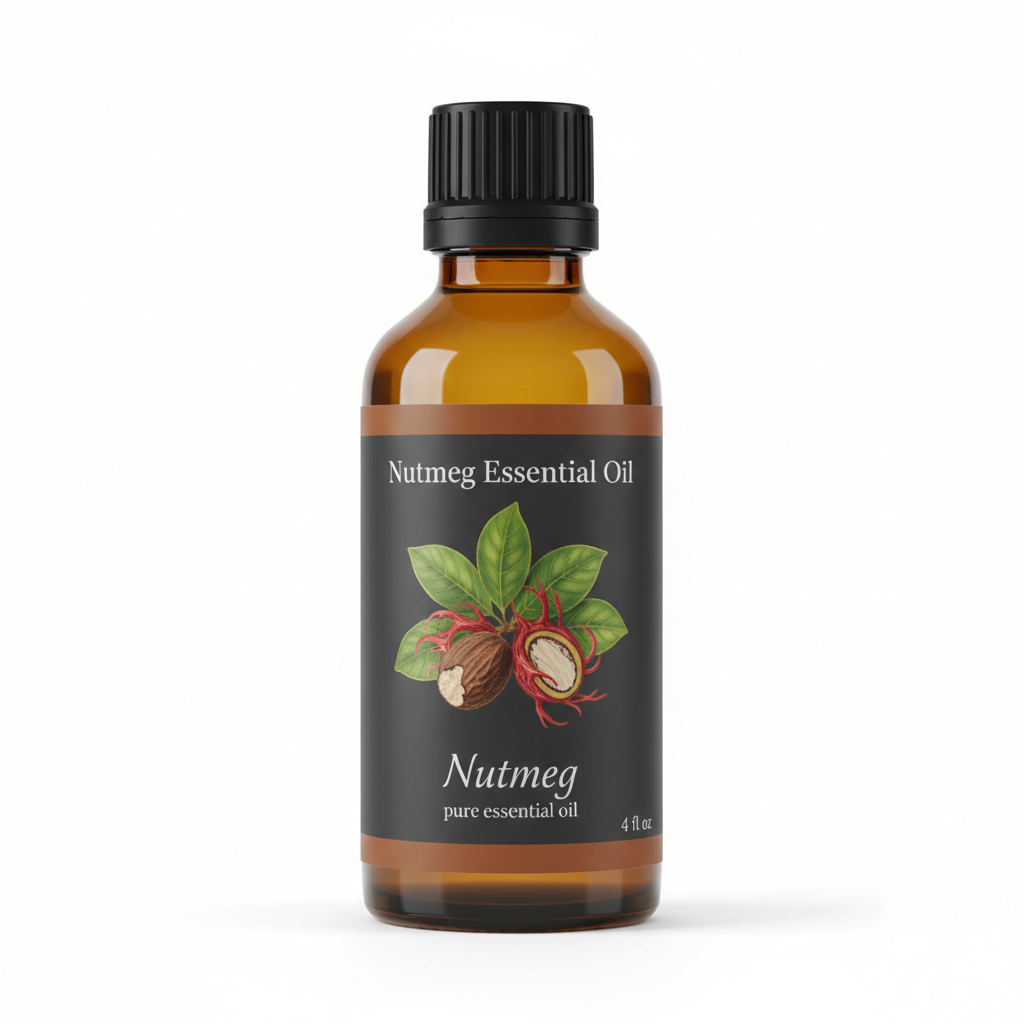
Nutmeg Essential Oil
Our own Nutmeg Essential Oil, in sizes from 0.5 oz to bulk.
From $10.99
Shop Now →This guide is written for candle makers, cosmetic formulators, and blenders who are ready to buy wholesale nutmeg oil in meaningful quantities. It covers what quality actually looks like, how to compare suppliers on criteria that matter, which red flags to walk away from, and where to source with confidence.
Why Nutmeg Oil Quality Varies So Much
Nutmeg essential oil is steam-distilled from the dried seed of Myristica fragrans, native to the Banda Islands in Indonesia. The chemistry of the finished oil is influenced by three variables that are entirely outside your control as a buyer: origin geography, the part of the plant distilled, and the quality of distillation practice used by the producer.
East Indian nutmeg oil (from Indonesia) and West Indian nutmeg oil (from Grenada) have genuinely different aromatic profiles. Indonesian material tends to be richer and more resinous; Grenadian oil is often described as brighter and slightly more citrus-forward. Neither is superior in an absolute sense, but they behave differently in wax and fragrance blends. Knowing which you are buying matters.
Distillation quality is where many budget suppliers cut corners. Extended distillation extracts a fuller spectrum of aromatic compounds, but it takes longer and costs more. Shortened distillation cycles produce oil that smells thin, sharp, and one-dimensional. That kind of oil will disappoint in a finished candle or blend no matter how cheap the per-kilo price looks on the invoice.
For a deeper look at evaluating oil quality before committing to a purchase, the ultimate quality and value guide to buying nutmeg oil covers the full picture from botanical sourcing to price benchmarking.
Quality Indicators: What to Check Before You Order
GC/MS Testing Documentation
Gas chromatography/mass spectrometry (GC/MS) analysis is the standard method for verifying essential oil composition. A reputable wholesale nutmeg oil supplier will provide a batch-specific GC/MS report on request. Read it. The primary compounds in genuine nutmeg oil include sabinene, alpha-pinene, beta-pinene, and myristicin. If a report shows unusually high myristicin concentrations or unfamiliar synthetic compounds, that is a signal to ask more questions.
The report should match the batch number on your shipment. Suppliers who offer a single generic report for all stock are not providing meaningful assurance.
Specific Gravity and Refractive Index
These physical measurements are quick, inexpensive ways to check whether an oil falls within known parameters for the species. Nutmeg oil generally has a specific gravity in the range of 0.880 to 0.910 and a refractive index around 1.474 to 1.488. A legitimate supplier will include these figures on the Certificate of Analysis (COA). Significant deviations from established norms suggest adulteration with carrier oils or synthetic extenders.
Smell It (Really Smell It)
Before placing any wholesale order, request a sample. A genuinely good nutmeg oil smells complex: warm and spicy at the top, with a woody, slightly earthy drydown. It should have dimension. Thin, harsh, or purely medicinal-smelling samples often indicate a poorly distilled or adulterated product. Your nose is a legitimate quality tool, especially once you have smelled several reference samples side by side.
Color and Clarity
Authentic steam-distilled nutmeg oil is typically pale yellow to colorless. Some natural variation in shade is normal and acceptable. Cloudy, darkened, or visibly particulate oil may have been stored improperly, oxidized, or contaminated. Oxidized oil will also smell flat or slightly rancid. It will underperform in candle throw and fragrance blending, and it may cause skin sensitization in leave-on cosmetic applications.
The article on spotting pure nutmeg oil with pre-purchase quality checks walks through these sensory and document-based tests in more detail, including what to do when a supplier pushes back on sample requests.
Key Features to Compare When Evaluating Suppliers
| Feature | What to Look For | Red Flag |
|---|---|---|
| Botanical origin | Origin country clearly stated (Indonesia, Grenada) | Listed only as "Myristica fragrans" with no country |
| Testing documentation | Batch-specific GC/MS and COA available on request | Generic or undated reports; refusal to share |
| Certifications | USDA Organic, ISO 9001, or equivalent where claimed | Certification claimed in marketing but not verifiable |
| Packaging options | Aluminum drums, dark glass, or UN-rated containers | Clear plastic bottles; no UV protection |
| Minimum order quantity | Tiered pricing with realistic minimums for small producers | Massive MOQ with no sample program |
| Lead time transparency | Clear production and shipping timelines | Vague "ships soon" language; no stock visibility |
| Return and quality policy | Written policy covering batch rejections | All-sales-final with no quality recourse |
Organic vs. Conventional: Does Certification Matter for Your Use Case?
If you are formulating certified organic cosmetics or candles positioned in the natural-and-clean segment, then USDA Organic or EU Organic certified bulk nutmeg oil is not optional. It is a supply-chain requirement. Organic-certified oil costs more, typically 20 to 40 percent above conventional grades, and the premium reflects real costs in farming practice, documentation, and third-party auditing.
For candle makers whose finished products are not certified organic, conventional nutmeg oil from a transparent, well-documented supplier often delivers comparable aromatic quality at a lower cost per kilo. The distinction matters commercially, not cosmetically.
The full breakdown of when certification justifies its premium is covered in the comparison piece on organic nutmeg oil versus conventional sourcing.
Pricing Tiers: What Bulk Nutmeg Oil Actually Costs
Pricing on wholesale nutmeg oil fluctuates with harvest cycles, currency shifts in the Indonesian rupiah and Grenadian dollar, and global freight costs. The figures below represent general market ranges at the time of writing and should be treated as orientation points, not fixed quotes.
Entry-Level Bulk (1 kg to 5 kg)
At this quantity, you are typically buying from domestic wholesale distributors rather than direct-from-distillery. Prices generally range from $35 to $65 per kilogram for conventional East Indian oil. This tier suits small candle studios and independent formulators who are testing nutmeg in their blend palette before committing to larger stock. Quality is variable at this level. Prioritize suppliers who still provide GC/MS documentation even at small quantities.
Mid-Volume Wholesale (5 kg to 25 kg)
This is where pricing starts to reward volume meaningfully. Conventional nutmeg oil at this range typically falls between $25 and $45 per kilogram, depending on origin and supplier relationship. Organic-certified material sits higher, often $40 to $70 per kilogram. At this volume, you should expect batch-specific documentation, packaging options beyond standard retail bottles, and a supplier willing to discuss your formulation needs.
Drum Quantities (25 kg and above)
At drum quantities, buyers are usually purchasing either from large domestic distributors or directly from overseas producers through an import broker. Pricing can drop to $18 to $30 per kilogram for conventional material in volume. The savings are real. So are the storage requirements: bulk nutmeg oil needs cool, dark, nitrogen-flushed storage to prevent oxidation over time. Factor storage infrastructure into the actual cost of this tier.
Red Flags That Signal a Problematic Supplier
The wholesale essential oil market has its share of resellers who add little value and obscure a lot of information. These are the patterns that should make you pause.
- No sample program. Any supplier unwilling to provide a paid or credited sample before a wholesale commitment is asking for a leap of faith you should not take with an aromatic raw material.
- Price dramatically below market. If a price looks too good to be genuine, it usually is. Heavily discounted nutmeg oil is almost always adulterated with synthetic myristicin, fractionated carrier oils, or cheaper spice oils. Verify with GC/MS before you use it in any product.
- Vague sourcing language. Descriptions like "sourced from the finest spice regions" without naming a country of origin are marketing filler. Push for specifics.
- No physical address or traceable business registration. Especially relevant when ordering internationally. Verify that the business exists as a legal entity before transferring funds.
- Pressure to order large quantities immediately. Legitimate wholesale suppliers understand that a new buyer needs time to evaluate. High-pressure urgency tactics are a signal, not a sales strategy.
- Documentation shared only after payment. COA and GC/MS reports should be available before you commit, not after your funds have cleared.
Where to Buy Wholesale Nutmeg Oil
Domestic Essential Oil Distributors
Companies like Bulk Apothecary, Jedwards International, and New Directions Aromatics (for North American buyers) stock nutmeg oil at wholesale quantities with reasonable documentation standards. These distributors are not distillers; they buy from producing regions and resell. Margins are built in, so pricing is not as sharp as direct-from-origin sourcing. The tradeoff is convenience, domestic shipping speed, and customer service in your time zone.
Direct-from-Origin Suppliers and Import Brokers
For buyers at drum quantities, working with an Indonesian or Grenadian distillery directly, or through a specialist import broker, offers the best per-kilo pricing and the most direct chain of custody documentation. It also requires more operational capacity: managing import paperwork, freight forwarding, customs, and larger minimum quantities. This route makes sense for established producers with consistent volume needs.
Certified B2B Platforms
Platforms like Alibaba, Made-in-China, and Global Sources list many nutmeg oil suppliers, predominantly Indonesian exporters. These can be legitimate sources for bulk nutmeg oil, but due diligence is non-negotiable. Request samples, verify business licenses, check for third-party testing, and use trade assurance or escrow payment features. Do not skip steps because a listing looks polished.
Specialty Natural Ingredient Suppliers
A growing number of suppliers focus specifically on aromatics and natural cosmetic ingredients, with stronger quality verification built into their sourcing model. Companies positioned in this space often cater to indie cosmetic brands and charge accordingly, but they typically offer superior documentation and consistent batch quality. Worth the premium if your finished products are in the premium or certified natural segment.
Practical Checklist Before You Place a Wholesale Order
- Request and evaluate a sample before committing to volume.
- Ask for the batch-specific GC/MS report and COA for the stock you will receive.
- Confirm the botanical origin country and plant part distilled.
- Verify certification claims through the issuing body if organic status matters for your product line.
- Clarify packaging: UN-rated aluminum or dark glass only for bulk storage.
- Confirm the supplier's quality rejection policy in writing.
- Calculate your true cost per kilo including freight, customs, and storage, not just the listed price.
- Start with the smallest qualifying bulk quantity from a new supplier before scaling up.
A wholesale relationship with a nutmeg oil supplier is worth building slowly. The best pricing comes from repeat business and demonstrated volume. Suppliers who know you are a serious, consistent buyer will often offer preferential access to premium batches and early notification when exceptional harvests come through.
Final Thoughts on Sourcing Bulk Nutmeg Oil with Confidence
The wholesale nutmeg oil market rewards buyers who ask good questions and refuse to skip documentation steps. Price is one variable among many. Origin transparency, testing rigor, and a supplier willing to stand behind their product with a written quality policy matter just as much when you are scaling a candle or fragrance business.
Start with samples. Verify with documentation. Build the supplier relationship before you commit to large quantities. That sequence protects your finished products, your brand reputation, and ultimately your investment in one of the great aromatic raw materials in the spice trade.