What Blends Well with Nutmeg Oil: A Complete Pairing Guide
Nutmeg essential oil is one of the most underused bottles in a home blender's collection. Its scent is warm and softly spiced, with a faintly sweet, almost woody character underneath. That complexity is exactly what makes nutmeg oil blends so rewarding to work with: it can anchor a bright citrus blend, deepen a woodsy accord, or add an unexpected warmth to florals that might otherwise feel flat.
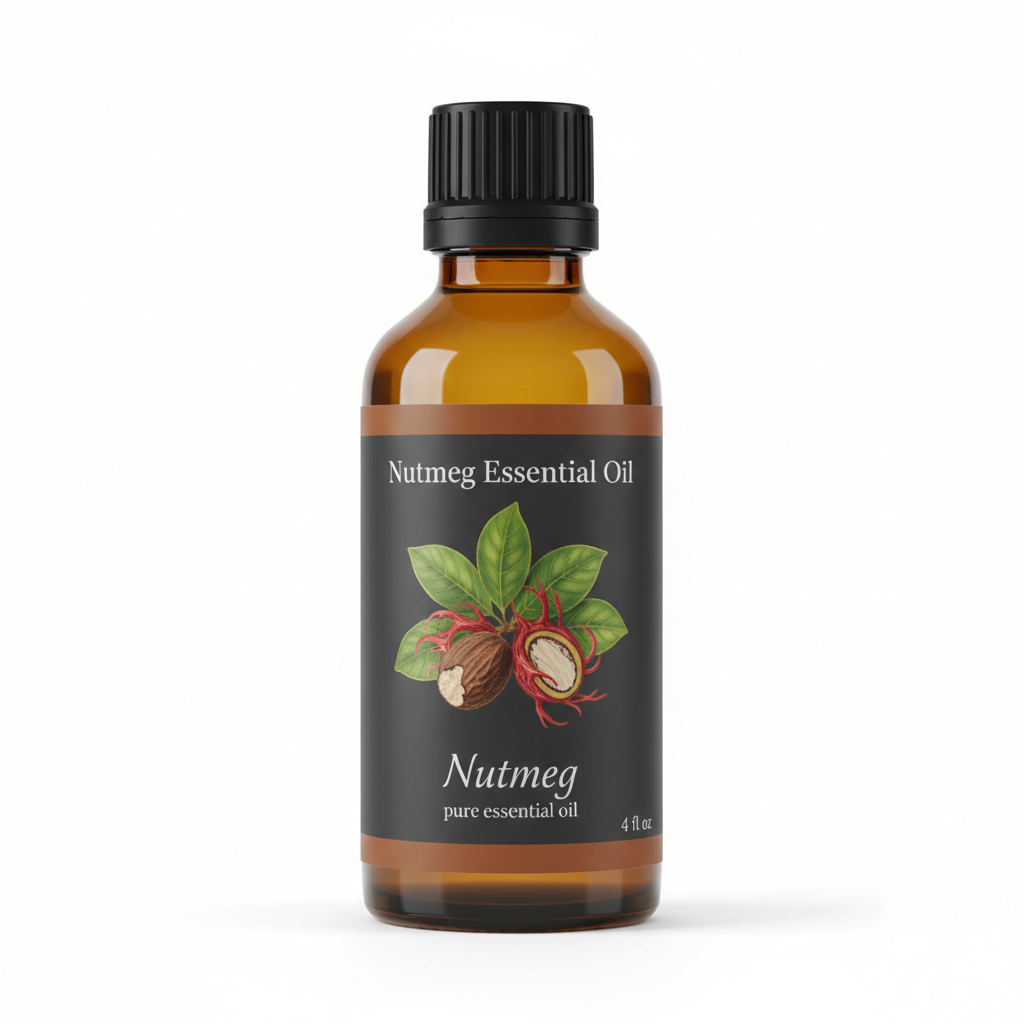
Nutmeg Essential Oil
Our own Nutmeg Essential Oil, in sizes from 0.5 oz to bulk.
From $10.99
Shop Now →This guide walks you through the full picture of spice oil pairing with nutmeg, from the materials you need to step-by-step blending instructions, common mistakes to avoid, and what you can realistically expect from the finished result. Whether you are new to blending or simply new to nutmeg, the goal here is to take the guesswork out of the process.
A Quick Note Before You Start: Safety First
Nutmeg essential oil is potent. It should always be diluted before skin contact. For most adult applications, a 1% to 2% dilution in a carrier oil is appropriate (roughly 6 to 12 drops of essential oil per 30 ml of carrier). For facial or sensitive-skin use, stay at or below 1%. Always perform a patch test on a small area of skin and wait 24 hours before broader use. Keep all essential oils away from children and pets, and consult a qualified healthcare provider if you are pregnant, nursing, or have any health concerns before using spice oils.
Understanding Nutmeg Oil's Scent Profile
Good spice oil pairing starts with knowing what you are actually working with. Nutmeg essential oil, steam-distilled from the seed of Myristica fragrans, has a scent that sits at an interesting crossroads. The top notes are bright and slightly camphorous, giving it a fresh, almost piney opening. The heart is warm, spiced, and slightly sweet. The dry-down is woody and soft, with a faint earthy undertone.
In perfumery terms, nutmeg functions most often as a heart note or a modifier. It rarely takes the starring role in a blend. Instead, it lifts and rounds the notes around it, adding complexity and warmth without overpowering. This makes it a genuinely useful blending tool once you understand what it pairs with and why.
For a broader introduction to working with this oil at home, see our guide on how to use nutmeg essential oil at home.
Materials You Will Need
- Nutmeg essential oil (steam-distilled; see sourcing notes below)
- Complementary essential oils of your choice (listed by category below)
- A carrier oil for skin applications (jojoba, sweet almond, or fractionated coconut are good starting points)
- Small amber or dark glass bottles (5 ml or 10 ml) for test blends
- A dropper or pipette for accurate measuring
- Scent strips (perfumer's blotters) or cotton pads for sniffing without skin contact
- A notebook or blending log to record your ratios
- A diffuser if you plan to test aromatic blends before committing to a skin formula
A quick note on sourcing: nutmeg oil quality varies considerably between suppliers. Look for steam-distilled oil with a clearly stated country of origin (Indonesia and Grenada are the two primary sources, with slightly different scent profiles). Avoid oils that list only "fragrance" as a component or that have no GC/MS testing documentation available. The quality of your base oil will shape every blend you make from it.
The Best Oils That Pair with Nutmeg: By Scent Family
Spice Oils
Nutmeg essential oil blends naturally with other members of its own scent family. These combinations feel cohesive and familiar, like the warm, layered character of a spiced winter blend.
- Clove bud: Adds a sharp, slightly medicinal edge that contrasts well with nutmeg's softness. Use clove sparingly (it tends to dominate) at a ratio of roughly 1 drop clove to 3 or 4 drops nutmeg.
- Cinnamon bark or leaf: Bark is richer and more resinous; leaf is lighter and slightly phenolic. Both pair beautifully, though both are also potential skin sensitizers and should be kept at very low concentrations in any leave-on product. For diffusing, the combination is simply excellent.
- Cardamom: One of the more sophisticated spice pairings. Cardamom's cool, slightly floral quality balances nutmeg's warmth and creates blends that feel complex rather than simply "cozy."
- Black pepper: Adds a dry, slightly sharp top note that gives spice blends lift and energy. A small amount (1 to 2 drops in a 10 ml blend) makes a noticeable difference.
Citrus Oils
Citrus is arguably the most accessible pairing for nutmeg. The brightness of citrus offsets nutmeg's depth, and the result is lively, clean, and warm at the same time.
- Sweet orange: The classic pairing. Warm, round, and instantly appealing. A 3:1 ratio of sweet orange to nutmeg works well as a starting point for diffuser blends.
- Bergamot: More sophisticated than sweet orange, with a floral-citrus character that creates beautiful, nuanced blends. Bergamot FCF (furanocoumarin-free) is the version to use for any skin application.
- Lemon: Bright and clean. Nutmeg softens lemon's sharper edges and adds longevity to a blend that would otherwise fade quickly.
- Grapefruit: A less common but very effective pairing. The slight bitterness of grapefruit plays interestingly against nutmeg's sweetness.
Wood and Resin Oils
Nutmeg has a natural affinity for woody and resinous base notes. These pairings are grounding, long-lasting, and often have a distinctly atmospheric quality that works well in home fragrance.
- Cedarwood (Atlas or Virginian): Warm, soft, and slightly creamy. One of the most reliable pairings for nutmeg in a diffuser blend or room spray.
- Sandalwood: Rich and smooth, sandalwood rounds nutmeg's edges beautifully. The combination is often used in personal fragrance blends for its depth and warmth.
- Frankincense: Resinous and slightly sweet, with a meditative quality. Pairs with nutmeg to create complex, slow-burning aromatic blends.
- Vetiver: Earthy, smoky, and very grounding. Use in tiny amounts (a drop or less in a 10 ml blend) to add depth without muddying the overall character.
Floral Oils
Floral pairings are less intuitive for a spice oil, but they reward experimentation. The key is balance.
- Lavender: The soft, herbaceous quality of lavender bridges the gap between nutmeg's spiced warmth and lighter top notes. A classic combination for bedtime wind-down diffuser blends.
- Geranium: Rose-like and slightly green, geranium adds a fresh, botanical lift to nutmeg blends. Works especially well when bergamot is also in the mix.
- Ylang ylang: Rich and intensely floral. Use very sparingly (a single drop can be enough) as it will dominate if overdone. When balanced correctly, it creates an almost exotic, resinous floral with nutmeg as the warming base.
Step-by-Step: How to Build a Nutmeg Oil Blend
- Choose your purpose first. Are you blending for a diffuser, a personal fragrance roller, a body oil, or a room spray? The intended use affects your ratios, your carrier choice, and how prominent nutmeg should be in the final composition.
- Select a dominant note. In most nutmeg oil blends, nutmeg plays a supporting role rather than the lead. Choose your dominant oil first (sweet orange, cedarwood, or lavender, for example) and build around it.
- Sketch your formula on paper before you measure. A basic starting ratio for a 10 ml blend might be 60% dominant note, 30% supporting note, and 10% nutmeg. Write this down before you open any bottles.
- Test on a scent strip first. Add a drop of each oil to a blotter, hold them together, and smell. This quick method lets you assess compatibility before you mix anything in a bottle. Adjust your ratios based on what you find.
- Measure and blend in a dark glass bottle. Add your oils in order from lowest to highest quantity. Cap the bottle and gently roll it between your palms to mix. Do not shake vigorously.
- Let the blend rest for 24 to 48 hours. Freshly blended oils can smell discordant. After resting, the components begin to integrate and the scent becomes more cohesive. Smell it again after resting before making adjustments.
- For skin applications, dilute in a carrier oil. Transfer your essential oil blend into your chosen carrier at the appropriate dilution rate (1% to 2% for most body applications). Shake or roll gently to combine. Always patch test before full use.
- Record your formula. Write down exactly what you used, in what quantities, and what the result was like. Blending is iterative. Good records make it much easier to replicate a result you love.
Three Starter Recipes to Try
Warm Spice Diffuser Blend
| Oil | Drops |
|---|---|
| Sweet orange | 4 |
| Cedarwood (Atlas) | 2 |
| Nutmeg | 2 |
| Cardamom | 1 |
Add directly to your diffuser's water reservoir. This blend may help create a rich, welcoming aromatic atmosphere. Many people find it a natural fit for autumn and winter evenings at home. For more diffuser ideas, explore our article on nutmeg oil in home fragrance diffusers and simmer pots.
Citrus-Spice Roller Blend (2% dilution)
| Oil | Amount |
|---|---|
| Jojoba carrier oil | 10 ml |
| Bergamot FCF | 4 drops |
| Nutmeg | 2 drops |
| Black pepper | 1 drop |
Add oils to a 10 ml roller bottle, then fill the remainder with jojoba. Apply to pulse points. Patch test before regular use. This blend has a warm, lively character that many people find appealing for daytime wear.
Calm Evenings Diffuser Blend
| Oil | Drops |
|---|---|
| Lavender | 3 |
| Frankincense | 2 |
| Nutmeg | 2 |
| Vetiver | 1 |
This blend adds a layer of warmth and depth to a classic lavender diffuser routine. The nutmeg is subtle here, acting as a bridge between the light floral top and the earthy base.
Common Mistakes to Avoid
Using too much nutmeg. In a blend, nutmeg should typically represent no more than 10% to 20% of your total essential oil volume. More than that and it tends to overshadow your other notes rather than support them.
Pairing with too many competing spices. Clove, cinnamon, black pepper, and nutmeg all together is usually too dense. Pick one or two spice companions at most.
Judging a blend immediately after mixing. Fresh blends can smell sharp or unbalanced. Always give yours at least 24 hours before making a judgment about the final result.
Skipping the patch test for skin blends. Nutmeg oil can cause sensitization in some individuals. A patch test is not optional.
Using low-quality oil and blaming the pairing. If your nutmeg oil smells flat, chemical, or vaguely unpleasant on its own, no pairing will fully rescue it. Quality of the base oil matters.
What to Expect from Your Blends
Well-constructed nutmeg oil blends tend to feel cohesive and warm without being heavy. In a diffuser, they typically create an aromatic presence that lingers at a medium intensity, neither fading immediately nor becoming overwhelming. In skin applications, nutmeg contributes a quiet warmth to the scent that some people find particularly appealing in cool-weather personal fragrance rituals.
Results vary depending on the quality of your oils, your diffuser type, room size, and personal scent sensitivity. Anecdotal reports from home blenders consistently note that spice oil pairing with nutmeg creates blends that feel more grounded and complex than single-note options. The learning curve is short. A few batches in and the relationships between these oils start to feel intuitive.
If you find that nutmeg is not quite the right fit for a particular blend you have in mind, it helps to know your closest alternatives. Our guide to nutmeg essential oil substitutes covers the options most worth reaching for.
A Final Word on Experimentation
The best way to learn spice oil pairing is simply to blend. Start small, keep good notes, and allow yourself to follow what smells interesting rather than what seems logical on paper. Nutmeg essential oil blends well with a wide enough range of scent families that there is genuine room for creativity here. The guide above gives you a reliable foundation. What you build on top of it is entirely your own.