How to Use Nutmeg Essential Oil at Home: The Ultimate Warm-Spice DIY Guide
Key Takeaways
- Nutmeg essential oil is steam-distilled from the dried seed of Myristica fragrans and carries a rich, spicy-woody aroma that anchors blends beautifully.
- Safe home use depends on proper dilution: 1% or less for skin applications (roughly 6 drops per 30 ml of carrier oil), 2-3% maximum for rinse-off products.
- The oil shines in diffuser blends, candle-making, beard care, body scrubs, and linen sprays.
- Always patch-test before applying any diluted blend to skin, and keep all essential oils away from children and pets.
- Sourcing matters: look for steam-distilled nutmeg oil from Indonesia or Granada, with a clear GC/MS report confirming its chemical profile.
Few scents carry the weight of history the way nutmeg does. For centuries, the dried seed of Myristica fragrans reshaped trade routes, sparked conflicts, and perfumed royal courts across Europe and Asia. Today, that same spice yields one of the most underrated essential oils in any home aromatherapy collection. Nutmeg essential oil uses range from diffuser blends that conjure a crackling fireplace to DIY beard balms with serious character. This guide covers all of it: aroma science, safety, recipes, blending ratios, and sourcing advice, so you can start using this warm, complex oil with confidence.
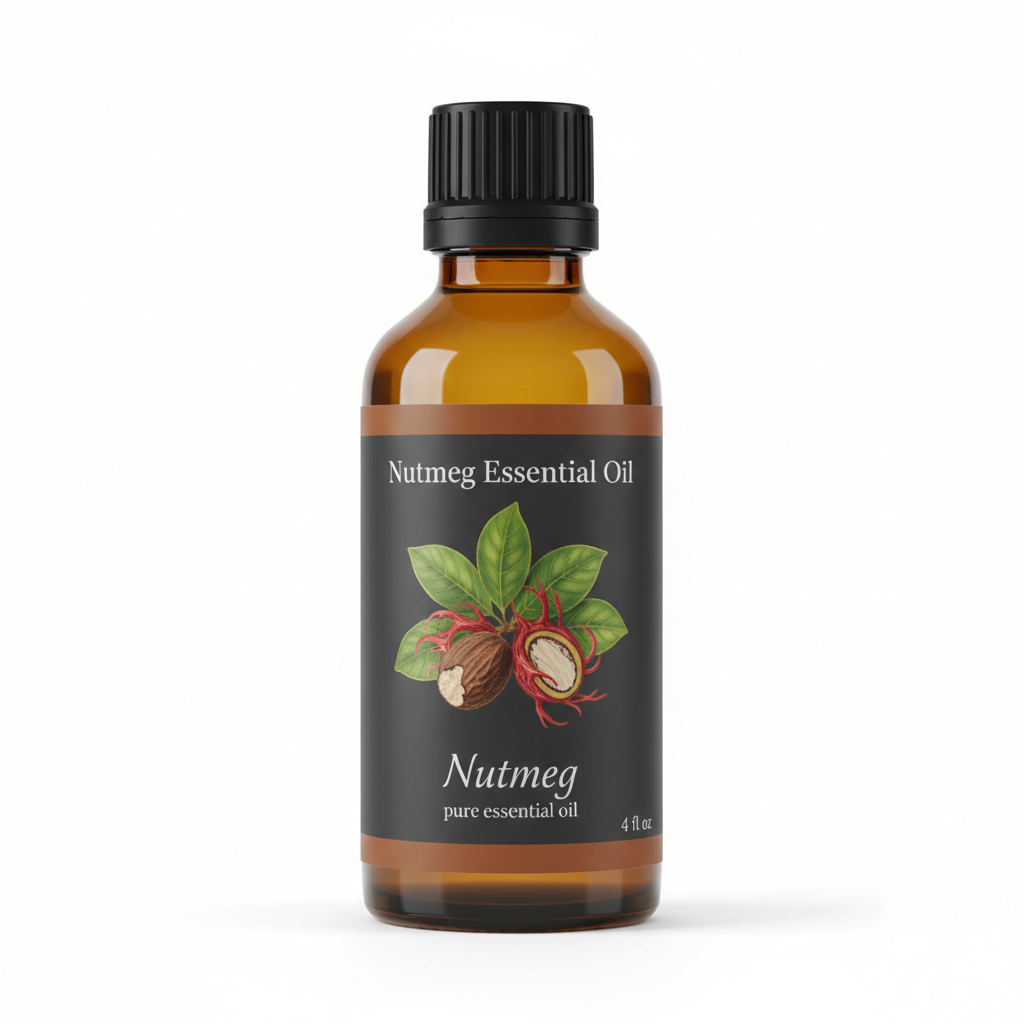
Nutmeg Essential Oil
Our own Nutmeg Essential Oil, in sizes from 0.5 oz to bulk.
From $10.99
Shop Now →1. What Is Nutmeg Essential Oil?
Nutmeg essential oil is produced by steam-distilling the dried kernel of the nutmeg fruit. The same tree, Myristica fragrans, also produces mace (from the red aril that wraps the seed), but the essential oils from mace and nutmeg have distinct aromatic profiles. Nutmeg oil is spicier and earthier; mace oil runs slightly softer and more floral.
Where It Comes From
The Banda Islands of Indonesia remain the historic heartland of nutmeg cultivation. Grenada, nicknamed the Isle of Spice, is the other major producer. Indonesian-origin nutmeg oil tends toward a bolder, more resinous character. Grenadian oil can carry a slightly greener, fresher top note. Neither is objectively superior: the choice depends on the application.
The Two Varieties: East Indian vs. West Indian
| Feature | East Indian (Indonesian) | West Indian (Grenadian) |
|---|---|---|
| Main origin | Banda Islands, Java, Sumatra | Grenada, Caribbean |
| Aroma character | Bold, resinous, woody-spicy | Slightly lighter, faintly green |
| Key chemical constituents | Sabinene, alpha-pinene, myristicin, elemicin | Similar profile, often higher sabinene |
| Typical use preference | Candles, men's grooming, deep blends | Diffuser blends, lighter body care |
| Price point | Moderate | Slightly higher due to lower volume |
Steam-Distilled vs. Expressed
Almost all nutmeg essential oil on the market is steam-distilled. You may occasionally see "CO2-extracted" nutmeg, which yields a fuller-bodied oil with more of the seed's heavier aromatic compounds. CO2 extracts are excellent for perfumery and candle work but are priced accordingly. For everyday home use, a quality steam-distilled oil is exactly what you need.
2. Understanding the Aroma Profile
Before you blend or diffuse any essential oil, it pays to understand how it smells and why. Nutmeg oil's aroma is built from a layered set of volatile compounds, and understanding those layers helps you use it more creatively.
The Scent Description
Imagine freshly grated nutmeg warmed in a dry pan, then softened with a whisper of cedarwood and a faint camphor-like brightness. That is roughly what you get from nutmeg essential oil in a diffuser. The top notes are slightly sharp and peppery. The heart is classically spicy-warm. The dry-down settles into something woody, faintly earthy, and grounding.
On the fragrance pyramid, nutmeg behaves as a heart-to-base note oil. It blends down rather than evaporating quickly, which makes it a reliable anchor in complex blends.
Key Aromatic Compounds
- Sabinene: Contributes the warm, slightly woody-spicy backbone. Usually the dominant compound.
- Alpha-pinene and beta-pinene: Bring the fresh, clean top note that keeps the oil from feeling heavy.
- Myristicin: Adds depth and a faintly earthy, herbal quality. Present in smaller quantities.
- Elemicin: A minor compound that contributes to the oil's fuller, rounded character.
- Terpinen-4-ol: Often found in nutmeg oil at low levels, adding a very faint green note.
How the Aroma Ages
Nutmeg oil can oxidize over time. As it ages, the pinene fraction degrades first, and the oil can develop a harsher, less appealing sharpness. Store your oil in a dark amber or cobalt glass bottle, away from heat and direct sunlight. Properly stored, a good nutmeg oil will hold its best character for 2 to 3 years.
3. Safety, Dilution, and Who Should Avoid It
This section is not optional reading. Nutmeg essential oil is potent and must be used with care. The guidance here reflects general industry best practices from organizations such as the International Fragrance Association (IFRA) and the National Association for Holistic Aromatherapy (NAHA). It does not constitute medical advice. Always consult a qualified healthcare provider with personal health questions.
Dilution Guidelines
| Application Type | Recommended Dilution | Example (per 30 ml carrier) |
|---|---|---|
| Facial skin (leave-on) | 0.5% or less | 3 drops maximum |
| Body skin (leave-on) | 1% | 6 drops |
| Rinse-off products (scrubs, wash) | Up to 2-3% | 12-18 drops |
| Diffuser blend | 2-4 drops total per 100 ml water | Use sparingly; 1-2 drops nutmeg in a blend |
| Candle / wax melt fragrance load | 6-10% fragrance load typical for wax | Follow specific wax manufacturer guidance |
Patch Testing
Before applying any nutmeg oil blend to a larger area of skin, do a patch test. Apply a small amount of your diluted blend to the inside of your elbow. Wait 24 hours. If you notice any redness, itching, or irritation, discontinue use and do not apply it to your skin.
Who Should Exercise Caution
- Pregnant and breastfeeding individuals: Many aromatherapy practitioners recommend avoiding nutmeg oil during pregnancy. Consult your midwife or doctor before use.
- Young children: Keep all essential oils out of reach of children. Do not apply directly to children's skin without guidance from a qualified practitioner.
- People with sensitive skin: Nutmeg oil can be a sensitizer for some individuals, especially at higher concentrations. Stick to 0.5-1% dilutions.
- Pet owners: Many essential oils are harmful to cats and dogs when diffused in enclosed spaces or applied to their coats. Keep pets out of rooms where you are diffusing, and consult a veterinarian before using essential oils in shared spaces.
Never Use Undiluted
Applying neat (undiluted) nutmeg essential oil to skin is not safe. The concentrated compounds can cause skin sensitization, a reaction that can worsen with repeated exposure. Always dilute. Every time.
A note on myristicin: You may have read that myristicin, a compound present in nutmeg, has psychoactive properties when consumed in large quantities as a food spice. At the trace levels found in a properly diluted essential oil used aromatically or topically for cosmetic purposes, this is not a practical concern. However, nutmeg essential oil should never be ingested. It is for external, aromatic use only.
4. Nutmeg Oil Diffuser Blends for Every Mood
The diffuser is probably the most accessible entry point for nutmeg essential oil uses. A few drops transform a room's atmosphere in minutes. The oil's spicy warmth layers beautifully with citrus, woods, and other spice oils, making it one of the most blend-friendly oils in a warm-spice collection.
Keep diffusion sessions to 30-60 minutes at a time, then take a break. Continuous diffusion is not necessary and can be overwhelming. Ventilate your space regularly.
Blend 1: Autumn Library
A blend that conjures old books, a wool blanket, and a darkening October sky.
- 2 drops nutmeg
- 3 drops cedarwood (Virginia or Atlas)
- 2 drops sweet orange
- 1 drop vetiver
For more autumn-inspired nutmeg diffuser ideas, visit our dedicated guide: Autumn in a Diffuser: Nutmeg Oil Blends for Cozy Fall.
Blend 2: Winter Market
Warm, festive, and rich without tipping into sweetness overload.
- 2 drops nutmeg
- 2 drops clove bud
- 3 drops blood orange
- 1 drop frankincense
If you love the scent of holiday baking but want it without turning on the oven, the nutmeg oil diffuser is your answer. We go deeper into those festive kitchen-scent blends in our article on holiday baking scents without the oven.
Blend 3: Morning Focus
A brighter, crisper nutmeg blend for an energizing start.
- 1 drop nutmeg
- 3 drops grapefruit
- 2 drops rosemary
- 1 drop black pepper
Blend 4: Evening Wind-Down
Grounding and warm without heaviness. A good choice for a bedtime wind-down atmosphere.
- 1 drop nutmeg
- 2 drops lavender
- 2 drops sandalwood (or amyris as a sustainable alternative)
- 1 drop cardamom
Blend 5: Spice Route (A Signature Blend)
Nutmeg and sweet orange are a classic pairing, and our Spice Route signature blend brings the two together in a carefully balanced formula you can use in the diffuser or as the aromatic base for body-care products.
- 2 drops nutmeg
- 4 drops sweet orange
- 1 drop cinnamon leaf (not bark, which is more sensitizing)
- 1 drop ginger
Tips for Better Diffusion
- Add water to your diffuser first, then drop oils on top.
- Ultrasonic diffusers are gentle on the oil's aromatic profile. Nebulizing diffusers are more intense and use more oil.
- Nutmeg oil is a middle note: it will not be the first thing you smell when you walk in the room, but it will be what the blend smells like 20 minutes later.
- Start with fewer drops than you think you need. You can always add more.
5. DIY Body Care Recipes with Nutmeg Oil
Beyond the diffuser, nutmeg essential oil earns its place in a well-stocked home cosmetic workshop. Its warming, spicy character adds depth to scrubs, balms, and grooming products that citrus or floral oils simply cannot replicate.
For every recipe below: always patch-test finished products before wider use. Store products in clean, airtight containers away from heat. Label everything with the date made and the ingredients used.
Recipe 1: Warm Spice Body Scrub
A rinse-off scrub is one of the safest ways to enjoy nutmeg oil on skin, because the brief contact time reduces sensitization risk.
You will need:
- 120 g fine cane sugar
- 60 ml sweet almond oil (or fractionated coconut oil)
- 1 tablespoon raw honey (optional, acts as a humectant)
- 8 drops nutmeg essential oil
- 6 drops vanilla CO2 or vanilla absolute (optional, for depth)
- 4 drops sweet orange essential oil
Method: Combine the sugar and carrier oil in a bowl. Stir in the honey if using. Add essential oils and stir well. Spoon into a clean glass jar. Use within 4 weeks. Stir before each use as ingredients may separate.
Safety note: This blend sits at approximately 1.5% dilution for the essential oils, which is appropriate for a rinse-off body product on adult skin. Do not use on broken skin, sunburned areas, or on children without professional guidance.
For a more elaborate version with vanilla and spa-style packaging ideas, see our full DIY nutmeg and vanilla body scrub recipe.
Recipe 2: Nutmeg Beard Oil
Nutmeg's woody-spice character makes it an ideal fit for men's grooming products. This beard oil doubles as a light conditioning treatment for the beard and underlying skin.
You will need:
- 30 ml jojoba oil (primary carrier)
- 10 ml argan oil (adds richness and a light sheen)
- 4 drops nutmeg essential oil
- 3 drops cedarwood (Atlas or Virginian)
- 2 drops black pepper
- 1 drop patchouli
Method: Combine carriers in a dark glass dropper bottle. Add essential oils. Cap and roll gently to mix. Apply 3-5 drops to palms, rub together, and work through a damp beard from roots to tips. Use daily or as needed.
Safety note: Total essential oil dilution is approximately 1%, which is appropriate for leave-on skin application on adult skin. Patch-test before first full use. Avoid contact with eyes.
We cover this recipe in more detail, including an aftershave splash variation, in our guide to DIY nutmeg beard oil and aftershave splash.
Recipe 3: Spice-Warmed Hand Balm
A simple, luxurious leave-on balm for dry hands. The scent is subtle on skin but lingers pleasantly.
You will need:
- 20 g shea butter
- 10 g beeswax pellets (or candelilla wax for a vegan version)
- 20 ml sweet almond oil
- 3 drops nutmeg essential oil
- 3 drops frankincense essential oil
- 2 drops lemon essential oil (use a steam-distilled version for leave-on products to minimize phototoxicity risk)
Method: Melt shea butter, beeswax, and almond oil together in a double boiler. Remove from heat. Allow to cool until the mixture starts to become slightly opaque around the edges (roughly 45-50°C). Add essential oils and stir quickly. Pour into small tins or glass pots. Allow to set undisturbed for at least 2 hours.
Safety note: Total dilution is below 1%, appropriate for a leave-on hand product. If using expressed lemon oil rather than steam-distilled, avoid applying to skin that will be exposed to direct sunlight within 12 hours.
Recipe 4: Warming Foot Soak Salt
A dry blend you can mix up in bulk and keep in a jar for whenever you want a warm, spiced foot soak ritual.
You will need:
- 200 g Epsom salt
- 50 g fine sea salt
- 1 tablespoon sweet almond oil
- 6 drops nutmeg essential oil
- 4 drops ginger essential oil
- 4 drops cardamom essential oil
Method: Combine the two salts. Mix essential oils into the sweet almond oil first (this helps disperse them through the salt rather than pooling). Combine oil mixture with salts and stir thoroughly. Store in an airtight jar. Use 3-4 tablespoons per foot soak, dissolved in warm water.
Safety note: Diluting essential oils in a carrier before adding to bath or soak water is important. Essential oils do not disperse in water on their own and can sit undiluted on skin without a carrier present.
6. Home Fragrance Beyond the Diffuser
Not everyone wants to run a diffuser every day, and some spaces (workshops, bathrooms, kitchens) call for a different format. Nutmeg essential oil holds up well in wax-based home fragrance products, linen sprays, and even potpourri blends.
Nutmeg Soy Candles
Candle-making with essential oils requires a few considerations that are different from synthetic fragrance oils. Essential oils have a lower flash point than most fragrance oils, which means they can evaporate faster during the hot pour and may not scent-throw as far as synthetic alternatives. The solution is a slightly higher fragrance load and a cooler pour temperature.
General guidance for soy wax candles:
- Use a fragrance load of 8-10% for container soy wax.
- Pour at 50-55°C (lower than the typical 60-65°C recommended for synthetic fragrance oils) to preserve volatile aromatics.
- Choose a nutmeg essential oil with a higher sabinene content: these tend to have a better hot-throw than oils with a more pinene-dominant profile.
- Always follow wick manufacturer guidelines. Over-wicking is a safety concern with any candle.
For a full step-by-step candle and wax melt project, visit our guide to DIY nutmeg spice candles and wax melts.
Spice-Warmed Linen Spray
A linen spray is one of the quickest home fragrance projects you can make. Nutmeg in a linen spray adds a warm, grounding quality to bedding, throw blankets, and curtains.
You will need:
- 100 ml distilled or filtered water
- 30 ml witch hazel (unscented, as an emulsifier)
- 10 drops nutmeg essential oil
- 8 drops lavender essential oil
- 5 drops cedarwood essential oil
Method: Combine witch hazel and essential oils in a small spray bottle. Add water. Cap and shake vigorously. Shake before every use, as the mixture will separate on standing. Spritz lightly on fabric from about 30 cm away. Allow to dry completely before contact with skin.
Important: Test on an inconspicuous area first, as essential oils can stain some delicate fabrics.
Simmering Spice Pot (Non-Oil Method)
For a quick, cost-effective way to fill a kitchen or living space with warm spice aroma, a simmering pot uses the whole spice rather than the essential oil. Combine half a nutmeg (cracked), two cinnamon sticks, a few cloves, an orange peel, and 1 litre of water in a small saucepan. Bring to a gentle simmer. Refresh water as needed and never leave unattended. This is not an essential oil application, but it is worth mentioning as a companion technique for days when you want ambient aroma without the diffuser.
Dried Potpourri Blend
A simple spice potpourri can be refreshed with a few drops of nutmeg oil every couple of weeks. Combine whole nutmegs, dried orange peel, cinnamon sticks, star anise, and dried bay leaves in a shallow bowl or decorative dish. Add 4-6 drops of nutmeg essential oil directly to the harder botanical materials (the whole nutmegs or cinnamon sticks, not directly onto delicate petals). Keep out of direct sunlight to slow fading of botanicals.
7. Blending Guide: Which Oils Pair with Nutmeg?
Understanding nutmeg's place in a blend makes the difference between a complex, layered scent and something that smells like it was thrown together. Nutmeg is a generous blender. It supports other notes without overwhelming them, provided you use it with a respectful hand.
Top Notes That Lift Nutmeg
Nutmeg's heart-to-base character means it benefits from bright top notes that give the blend an immediate, inviting opening:
- Sweet orange: The classic pairing. Orange provides the cheerful top note; nutmeg provides the warmth that keeps sweet orange from feeling one-dimensional.
- Grapefruit: A sharper, slightly bitter citrus that balances nutmeg's sweetness.
- Bergamot: Adds a floral-citrus quality that takes nutmeg in a more sophisticated, perfumery direction.
- Lemon: Clean and bright. Good for lighter, daytime diffuser blends where you want nutmeg's warmth without heaviness.
Heart Notes That Complement Nutmeg
- Cardamom: Another member of the warm-spice family, but with a slightly medicinal-green edge that adds freshness.
- Ginger: Warm, slightly sharp, and earthy. Ginger and nutmeg together evoke the spice drawer in the best possible way.
- Clove bud: Use sparingly (1 drop maximum in most blends). Clove is powerful and can overwhelm other notes. It deepens nutmeg's warmth considerably.
- Cinnamon leaf: Similar caution applies. Cinnamon leaf (not bark, which carries a higher sensitization risk) adds a recognizable holiday warmth at 1 drop in a blend.
- Lavender: Softens nutmeg beautifully. The combination is less overtly spicy and more quietly warm.
Base Notes That Anchor Nutmeg
- Cedarwood (Atlas or Virginian): Woody, dry, and clean. One of the best base note companions for nutmeg in men's grooming products and autumn diffuser blends.
- Sandalwood: Adds a creamy, resinous depth that takes nutmeg in a luxurious direction.
- Vetiver: Earthy and smoky. A single drop of vetiver in a nutmeg blend adds remarkable complexity.
- Frankincense: Resinous and slightly citrusy-sweet. Frankincense lifts nutmeg's base and adds an almost meditative quality to a blend.
- Patchouli: Dark, earthy, and slightly sweet. A natural fit for body care and masculine fragrance blends.
- Benzoin: Vanilla-like and resinous. Benzoin and nutmeg together create a warm, deeply comforting aroma.
A Simple Blending Formula
If you are new to blending, this ratio works reliably:
- 30% top notes (citrus)
- 50% heart notes (nutmeg plus one or two companions)
- 20% base notes (wood or resin)
For a 10-drop diffuser blend, that means roughly 3 drops citrus, 5 drops of the spice heart (nutmeg plus cardamom or ginger), and 2 drops wood or resin. Adjust from there based on your nose.
Oils That Clash with Nutmeg
Not every oil is a good partner. Eucalyptus and tea tree both have sharp, medicinal qualities that fight against nutmeg's warmth rather than complementing it. Heavy floral oils like ylang ylang can become cloying alongside nutmeg's spice. This does not mean these combinations are wrong universally, but beginners are better served by starting with the classic pairings above.
8. How to Buy Nutmeg Essential Oil: A Sourcing Checklist
Nutmeg essential oil quality varies more than most people expect. The market includes everything from beautifully distilled single-origin oil to diluted or adulterated products. Knowing what to look for protects your recipes, your wallet, and the people using your products.
What to Look for on the Label
- Botanical name: The label should say Myristica fragrans. If it only says "nutmeg oil" without the Latin name, that is a flag worth noting.
- Country of origin: Indonesia and Grenada are the two credible primary sources. "Origin unknown" is not acceptable for quality essential oils.
- Part of plant: Should say "seed" or "kernel." Occasionally you will see mace oil labeled as nutmeg oil; these are different products.
- Extraction method: Steam distilled is standard. CO2 extraction is a premium option.
- Lot number and batch date: Reputable suppliers trace every batch. A lot number means the supplier can provide documentation if you ask.
Ask for a GC/MS Report
GC/MS stands for gas chromatography/mass spectrometry. This is the laboratory analysis that identifies and quantifies the chemical compounds in an essential oil. A GC/MS report allows you to confirm that your nutmeg oil contains the expected compounds (sabinene, alpha-pinene, myristicin, etc.) at expected percentages, and that it has not been diluted with carrier oil or bulked up with synthetic compounds.
Reputable suppliers publish GC/MS reports on their websites or provide them on request. If a supplier does not offer this documentation, look elsewhere.
Pricing Reality Check
Nutmeg essential oil is not among the most expensive oils on the market (it is considerably more affordable than rose, jasmine absolute, or sandalwood), but it is not free. A 10 ml bottle of quality steam-distilled nutmeg oil from a traceable source typically retails in the range of $8 to $20 USD, depending on origin and supplier. Prices significantly below this range for a 10 ml bottle are worth scrutinizing: the economics of ethical sourcing, proper distillation, and quality testing do not support very low retail prices.
Amber or Cobalt Glass Only
Essential oils should be sold in dark glass bottles, not clear glass and certainly not plastic. Light and reactive plastics degrade essential oils. If a product arrives in clear glass or in plastic, transfer it to dark glass as soon as possible and mark the date.
Organic Certification: Worth It?
Certified organic nutmeg essential oil is available and is a reasonable choice if supporting organic agricultural practices matters to you. The practical difference in aroma between a certified organic and a non-certified but ethically sourced oil from a reputable distiller is often negligible. The certification process adds cost. Prioritize supplier transparency and GC/MS documentation over certification alone when making purchasing decisions.
Supporting Sustainable Sourcing
The nutmeg trade has a complicated history, and the contemporary version carries its own supply-chain considerations. Small-scale farmers in Indonesia and Grenada grow most of the world's nutmeg. When you buy from a supplier who is transparent about sourcing, pays fair prices to growers, and supports local agricultural communities, your purchase does a small but real amount of good. Ask your supplier about their sourcing relationships. Good ones will have an answer.
Bringing It All Together
Nutmeg essential oil is a genuinely versatile addition to any home aromatic practice. It performs in the diffuser with warmth and depth. It lifts body scrubs and balms with a distinctive spicy character. It anchors candles and linen sprays in a way that feels grounded rather than generic.
The key to enjoying all of it is starting with quality oil, respecting dilution guidelines, and taking time to understand how the scent behaves before you build complex blends. Nutmeg rewards patience and curiosity.
Whether you start with the autumn diffuser blends, the warm spice body scrub, or the spice candle project, you are working with one of the most historically significant aromatic materials in the world. That is a worthwhile place to begin.