
Nutmeg Essential Oil Substitutes: What to Reach for When the Bottle Runs Dry
You're mid-blend, the diffuser is waiting, and the nutmeg essential oil bottle is empty. It happens to every enthusiast eventually. The good news is that nutmeg's warm, woody, faintly sweet character can be approximated surprisingly well with a few other spice and resin oils you may already have on your shelf.
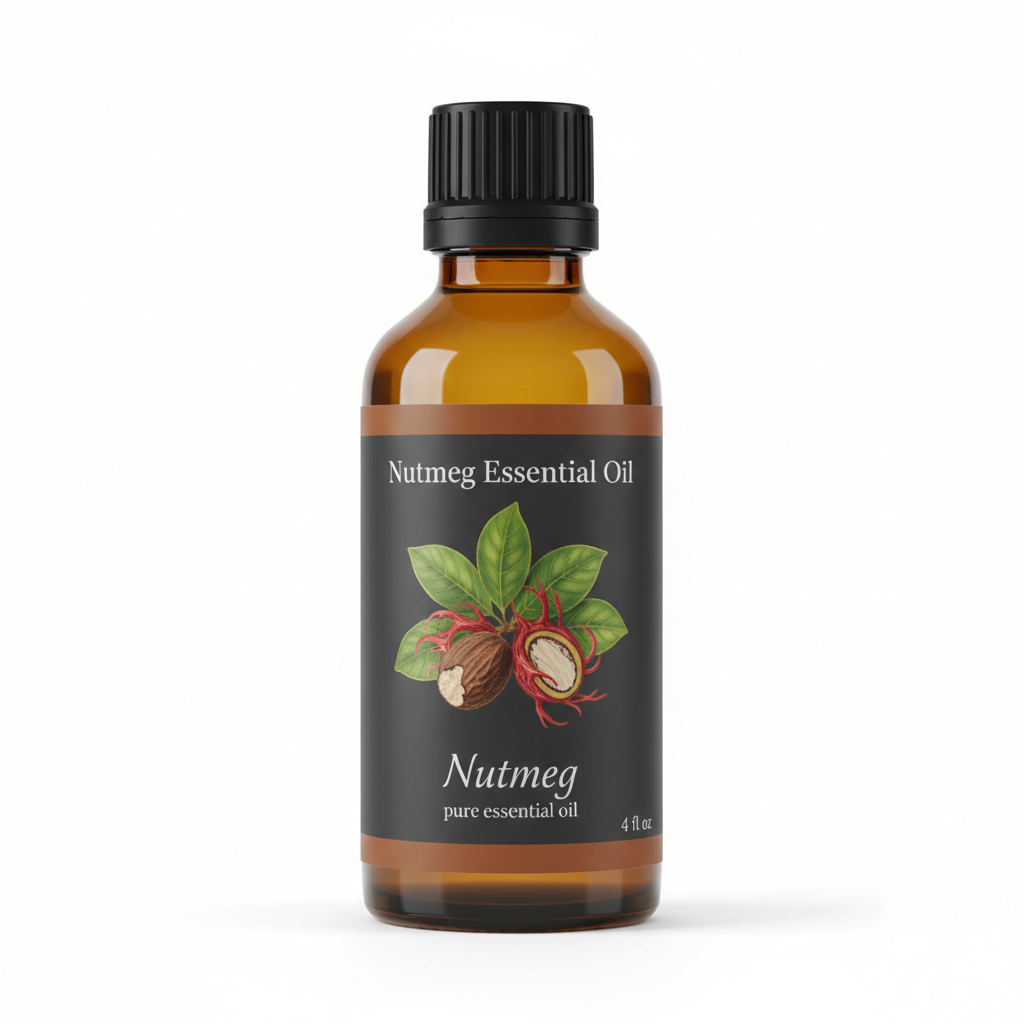
Nutmeg Essential Oil
Our own Nutmeg Essential Oil, in sizes from 0.5 oz to bulk.
From $10.99
Shop Now →This guide walks through the most reliable nutmeg oil alternatives, explains what each one brings to a blend, and gives you a clear process for swapping them in without losing the soul of your original formula. Whether you're working on a diffuser blend, a personal fragrance, or a body-care product, the right substitute depends on why you loved nutmeg in the first place.
Understanding What Makes Nutmeg Irreplaceable (And Replaceable)
Before reaching for a substitute, it helps to understand nutmeg's scent profile. Steam-distilled nutmeg essential oil is simultaneously spicy and soft. It carries camphoraceous top notes, a warm woody mid, and a faint sweetness underneath. The aroma is assertive without being sharp, which is exactly why it anchors so many autumn and holiday blends so naturally.
You can read more about how it performs across different applications in our guide to using nutmeg essential oil at home. The short version: nutmeg acts as both a middle note and a bridge, softening the harder edges of clove or black pepper while adding depth to sweeter florals and resins.
The best spice oil substitutes work because they share at least one or two of those qualities. None will replicate nutmeg exactly, but with the right ratio adjustments, you can get very close.
The Best Nutmeg Essential Oil Substitutes
1. Mace Essential Oil
Mace is the aril that wraps the nutmeg seed inside the fruit. The two essential oils share a significant portion of their aromatic chemistry. Mace oil is slightly lighter and more floral, but the spicy warmth is immediately recognizable. It is the closest substitute by a considerable margin.
2. Cinnamon Leaf Essential Oil
Cinnamon leaf (not bark) offers a warm, clove-like spiciness that complements the same seasonal contexts nutmeg does. It is more phenolic and peppery than nutmeg, so it needs to be used at a lower percentage in blends. Use cinnamon leaf oil at roughly half the quantity you would use nutmeg.
Important safety note: Cinnamon leaf essential oil is a known skin sensitizer. Always dilute to no more than 0.6% in leave-on skin products, and perform a patch test before applying any blend to a larger area. It is not recommended in leave-on products for sensitive skin.
3. Clove Bud Essential Oil
Clove bud is intensely spicy and slightly sweet, with a eugenol-dominant profile. It can stand in for nutmeg in diffuser blends and candle applications, though it dominates a blend more aggressively. Use it sparingly.
Important safety note: Clove bud essential oil requires careful dilution. It should not exceed 0.5% in leave-on skin formulas. Avoid entirely in products for children or during pregnancy. Always consult a qualified healthcare provider before using clove bud oil if you have any ongoing health concerns.
4. Black Pepper Essential Oil
Less sweet than nutmeg but sharing that warm, woody spiciness, black pepper essential oil works well when you want the depth without the sugary softness. It blends beautifully with citrus and wood oils. For aromatic purposes, it can replace nutmeg at a near 1:1 ratio, though the character will lean drier.
5. Cardamom Essential Oil
Cardamom brings a cool, slightly eucalyptus-tinged spiciness alongside its warmth. It is softer than nutmeg and more floral, making it a strong substitute when nutmeg was being used to add warmth without sharpness. It performs especially well as a nutmeg oil alternative in personal fragrance blends and diffuser applications.
6. Allspice Essential Oil
Allspice oil carries notes of clove, cinnamon, and nutmeg simultaneously, which is precisely why it works as a substitute. It reads as a gentler version of clove, with a rounder aromatic edge. Somewhat harder to find than the other oils on this list, but worth keeping in stock.
Materials You Will Need
- Your chosen substitute oil (one from the list above)
- Your original blend recipe or a target application in mind
- A digital scale accurate to 0.01 grams, or a dropper and drop-count method
- Carrier oil appropriate for your application (fractionated coconut, jojoba, or sweet almond for skin; no carrier needed for diffuser use)
- Small amber glass vials or roller bottles for testing
- Scent strips or coffee beans for palate cleansing between trials
- A notebook or spreadsheet for recording ratios
- Patch test supplies if you are creating a leave-on skin blend
Step-by-Step: How to Substitute Nutmeg Oil in Any Blend
-
Identify why nutmeg was in the formula
Before swapping anything, ask what role nutmeg was playing. Was it the dominant note or a supporting one? Was it adding sweetness, warmth, or earthy depth? Write down one or two words that describe what nutmeg was contributing. This will guide your substitution choice more than any chart can.
-
Choose your substitute based on function
Use this as a quick reference:
If nutmeg was providing... Reach for... Warm spice, closest match Mace essential oil Sweet warmth in a diffuser blend Cardamom or allspice Dry, woody spiciness Black pepper essential oil Intense holiday spice Clove bud (use at half the nutmeg quantity) Warm spice with a skin application Cardamom (safest dilution profile on this list) -
Adjust your starting ratio
Do not substitute at a 1:1 ratio unless you are using mace oil. Most other spice oils are more assertive than nutmeg. As a working starting point: replace each drop of nutmeg with half a drop of clove bud or cinnamon leaf, and with roughly three-quarters of a drop of black pepper, allspice, or cardamom. Mace can be used at a true 1:1.
-
Build a small test batch first
Scale your recipe down to a 5 ml or 10 ml test batch before committing to a full formulation. Aromatic chemistry at scale can amplify certain notes unexpectedly. Small batches save you oil, time, and frustration.
-
Evaluate on a scent strip, then in context
Drop a small amount of your test blend onto a scent strip. Let it dry for 30 seconds before evaluating. Then, for diffuser blends, add a few drops to your device and assess the room after 10 minutes rather than relying only on the cold-sniff impression. Some substitutes bloom differently when diffused than they do on paper.
-
For skin blends: dilute appropriately and patch test
All spice oils require thoughtful dilution in leave-on skin products. A general guideline for most adults is a maximum total blend of 2% to 3% essential oil in a carrier for body use, and 1% or less for facial applications. If your substitute is cinnamon leaf or clove bud, stay at the lower limits noted in their safety notes above. Apply a small amount of the diluted blend to the inner forearm and wait 24 hours before broader use.
-
Refine and record your final ratio
Once you have a version you're happy with, write down every component and its exact quantity. Aroma memory is unreliable over time, and you will want to recreate a successful substitute blend the next time your nutmeg runs out.
Blending Tips and Common Mistakes to Avoid
Do not add the substitute in a single pour
Add your substitute drop by drop during testing. It is much easier to add one more drop than to correct an overpowering spice note after the fact.
Account for the other notes in your blend
If your formula already includes clove or cinnamon, you may not need a spice-heavy substitute at all. A small amount of black pepper or cardamom might be sufficient to restore the warmth without tipping the blend toward medicinal sharpness.
Do not skip the aged evaluation
Many spice oil blends smell quite different after 24 to 48 hours of resting in a closed vial. The top notes settle, and the fuller character of the substitute becomes clearer. What seems overpowering on day one often reads as balanced by day two.
Keep diffuser blends separate from skin-safe blends
A substitute ratio that works beautifully in a diffuser may not be appropriate for a body oil. Diffuser blends do not need to follow skin dilution guidelines, but any blend that will contact skin absolutely does. Label your vials clearly.
For more diffuser inspiration built around warm spice notes, our autumn diffuser blends guide shows how nutmeg-forward formulas are structured, which makes it much easier to identify where a substitute will fit naturally.
Expected Results: What You Can Realistically Anticipate
A well-chosen substitute may support a very similar aromatic atmosphere to your original nutmeg blend. That said, no substitute is identical. The aromatic character will shift slightly, and some people may find they actually prefer the variation. Mace will come closest to a seamless swap. Black pepper will produce a drier, more masculine-leaning result. Cardamom will soften and brighten the blend. Clove and cinnamon leaf will push it toward a more intense holiday-spice register.
For cosmetic applications, the visual and textural results of your product will not change. Only the scent profile shifts.
If you are working on seasonal or holiday aromatic projects, our piece on holiday baking scents without the oven explores how nutmeg and its closest relatives create that evocative warm-kitchen atmosphere through diffusion alone.
A Note on Sourcing Your Substitute Oils
The quality difference between a well-sourced spice essential oil and a low-quality one is significant, and nowhere more so than with mace, clove, and cinnamon oils. Look for suppliers who provide gas chromatography (GC/MS) test reports for each batch, clearly state the botanical name and country of origin, and distinguish between different plant parts (cinnamon leaf versus bark, clove bud versus stem). These details matter both for aromatic quality and for safety profiling.
Running out of nutmeg oil is, honestly, a good excuse to expand your spice oil collection. Mace, black pepper, and cardamom all earn their place on a well-stocked shelf, not merely as substitutes but as oils with their own distinct and rewarding aromatic personalities.