Nutmeg Oil in Home Fragrance: Diffusers, Simmer Pot Alternatives, and Sprays
Nutmeg essential oil has a scent that is genuinely difficult to replicate. Warm, slightly woody, with a faint sweetness underneath the spice, it fills a room in a way that feels both familiar and unexpected. Most people recognize nutmeg from the kitchen, but as a home fragrance ingredient, it occupies a different category entirely. It rounds out blends, adds depth to spaces that smell flat, and layers beautifully with citrus, cedarwood, and other warm spices.
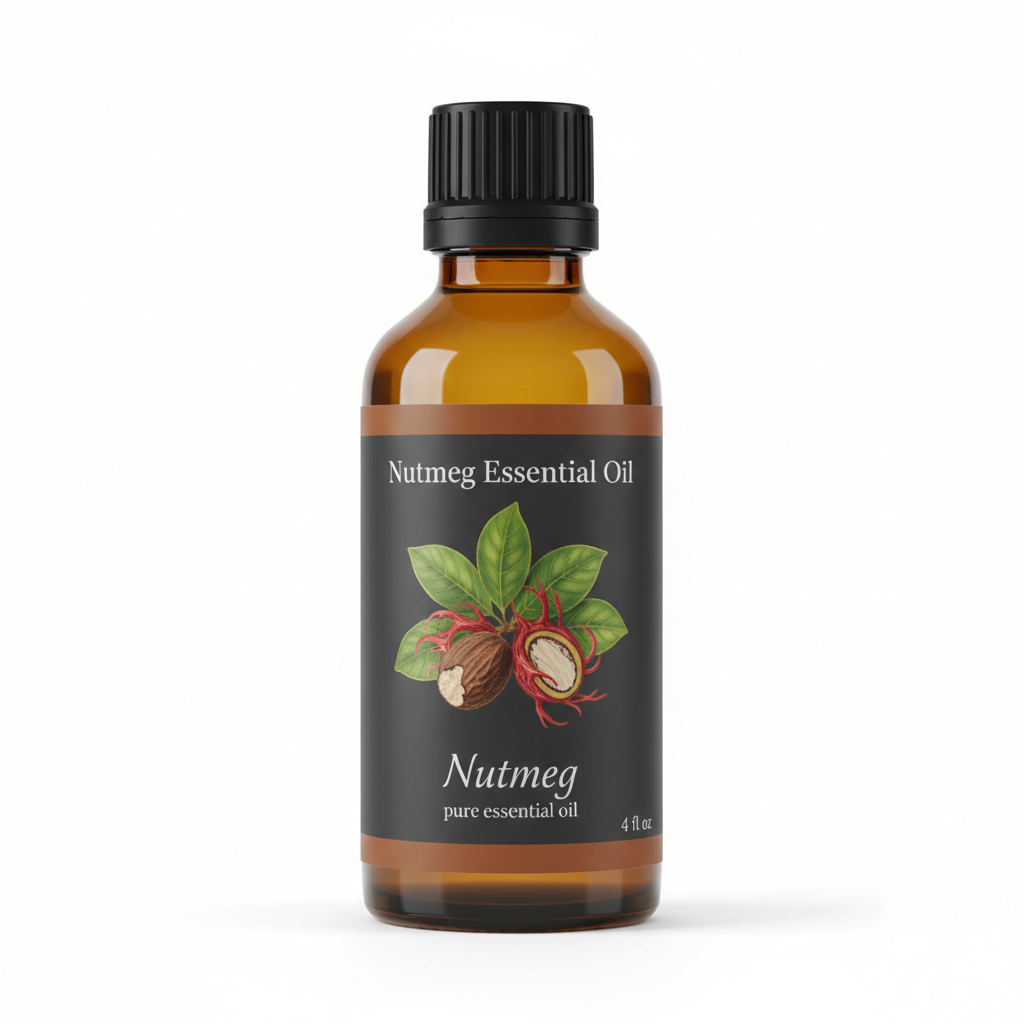
Nutmeg Essential Oil
Our own Nutmeg Essential Oil, in sizes from 0.5 oz to bulk.
From $10.99
Shop Now →This guide walks through three practical methods for using nutmeg essential oil at home: ultrasonic diffusers, stovetop simmer pot alternatives, and DIY room sprays. Each method has its own character and works best in different settings. By the end, you will know exactly which approach fits your space, your schedule, and the atmosphere you want to create.
Why Nutmeg Essential Oil Works So Well in Home Fragrance
Before diving into the how-to, it helps to understand what makes this oil behave the way it does in a diffuser or spray.
Nutmeg essential oil is steam-distilled from the dried seed of Myristica fragrans, the same tree that produces mace. The oil is rich in monoterpenes, particularly sabinene and alpha-pinene, which give it that clean, slightly piney opening note. These volatile compounds disperse quickly in the air, which is part of why nutmeg has such good diffusion performance. It does not sit heavy or cloying the way some resinous oils can. It moves through a room.
It also blends cooperatively. Nutmeg does not overpower neighboring notes. Add a few drops alongside sweet orange and clove, and each ingredient remains legible. That quality makes it a workhorse in layered home fragrance, not a solo performer but an essential supporting ingredient.
For a broader look at working with this oil across different home uses, see our guide on how to use nutmeg essential oil at home.
Method One: Nutmeg Essential Oil in an Ultrasonic Diffuser
What You Need
- An ultrasonic diffuser (100 ml to 300 ml capacity is ideal for most rooms)
- Nutmeg essential oil, steam-distilled (not expressed or fragrance oil)
- Distilled or filtered water
- Optional companion oils: sweet orange, clove bud, cedarwood, cardamom, or frankincense
Step-by-Step Instructions
- Fill the diffuser to the marked water line. Do not overfill. Most ultrasonic diffusers have a maximum fill line inside the reservoir. Exceeding it can damage the ultrasonic plate and reduce mist output.
- Add your drops. For a 100 ml diffuser, start with 4 to 6 drops total of essential oil. For a 200 ml diffuser, 8 to 10 drops is a reasonable starting point. Nutmeg is moderately strong, so begin at the lower end and adjust after your first session.
- Choose a run time that suits the room. For a bedroom wind-down routine, 30 to 60 minutes is usually sufficient. For an open living space, a longer cycle of 60 to 90 minutes works better. Most diffusers have interval settings (intermittent versus continuous mist) that help the scent last longer without overwhelming the space.
- Position the diffuser thoughtfully. Place it on a stable, elevated surface, ideally a shelf or side table, so the mist can disperse downward and outward. Keep it at least three feet from walls and soft furnishings to prevent moisture accumulation.
- Clean after every two to three uses. Spice oils, nutmeg included, can leave residue on the ultrasonic plate. A quick wipe with a cotton swab dipped in rubbing alcohol followed by a rinse with clean water keeps the diffuser performing well and prevents scent mixing between sessions.
A Reliable Starter Blend
Autumn Warmth Diffuser Blend (for a 200 ml diffuser)
4 drops nutmeg essential oil
3 drops sweet orange
2 drops cedarwood
1 drop cardamom
This combination tends to create a cozy, grounded atmosphere that many people associate with cooler evenings and baked goods without smelling like a candle store. For more seasonal blends in this style, visit our article on autumn nutmeg oil diffuser blends.
Common Mistakes to Avoid
- Using too many drops. More is not better with nutmeg. A heavy concentration can make the scent feel sharp rather than warm. Start conservatively.
- Running the diffuser in a sealed room for hours. Good ventilation matters. Crack a window or door, especially during longer sessions.
- Buying fragrance oil labeled as nutmeg. Fragrance oils are synthetic blends. They behave differently, sometimes poorly, in ultrasonic diffusers and do not have the same scent profile as true steam-distilled nutmeg essential oil.
Method Two: Stovetop Simmer Pot Alternatives
Traditional simmer pots involve simmering whole spices and citrus peels on the stove, which smells wonderful but requires active supervision. A safer and more controlled alternative uses essential oils with gentle heat sources that do not require an open flame or a hot burner.
Option A: The Candle Warmer Method
What You Need
- A candle warmer plate or wax melt warmer (electric, low heat)
- A small heat-safe ceramic or glass dish that fits on the warmer
- Water (2 to 3 tablespoons)
- Nutmeg essential oil
- Optional: cinnamon bark or clove bud essential oil (use sparingly, these are strong)
Steps
- Pour 2 to 3 tablespoons of water into the ceramic dish.
- Add 5 to 8 drops of nutmeg essential oil directly to the water. If you are adding companion spice oils, limit cinnamon or clove to 1 to 2 drops total. These oils are significantly more potent and can irritate airways in high concentrations.
- Place the dish on the warmer. Turn it on and allow the water to warm gently. Do not let it boil dry. Check every 20 to 30 minutes and add water as needed.
- When you are finished, turn off the warmer and allow the dish to cool completely before handling.
Option B: The Terracotta Diffuser Method
Unglazed terracotta diffusers require no heat and no electricity. They work by passive evaporation, which means the scent release is subtle and slow. This approach suits small spaces like bathrooms, home offices, or closets particularly well.
- Add 8 to 12 drops of nutmeg essential oil directly onto the terracotta surface.
- Place it in the room. Scent will diffuse gradually over several days.
- Reapply when the scent fades, typically every three to five days depending on room temperature and airflow.
Safety note: Never place undiluted essential oil directly on finished wood, painted surfaces, or fabric. Terracotta and untreated ceramic are the appropriate surfaces for this method.
Method Three: Warm Spice Room Spray
A well-made room spray is one of the most versatile home fragrance tools available. It takes about five minutes to prepare, costs very little, and can be adjusted to suit any season or mood. This nutmeg-forward warm spice room spray works on fabric, in the air, and as a light linen mist.
What You Need
- One 4-ounce dark glass spray bottle (amber or cobalt; light degrades essential oils)
- 3 tablespoons of high-proof grain alcohol or vodka (at least 120 proof or 60% alcohol content) as the dispersant
- Distilled water to fill
- Nutmeg essential oil: 20 drops
- Sweet orange essential oil: 15 drops
- Clove bud essential oil: 5 drops (no more; clove is a known sensitizer)
- Cedarwood or sandalwood essential oil: 10 drops
- A small funnel and a fine-tip label
Step-by-Step Instructions
- Add the alcohol first. Pour the grain alcohol into the bottle before the water. Essential oils do not mix with water on their own; the alcohol acts as an emulsifier that keeps the formula from separating into oily droplets on the nozzle.
- Add your essential oils to the alcohol. Drop each oil directly into the bottle. Shake briefly to combine with the alcohol before adding water. This step makes a meaningful difference in how evenly the spray disperses.
- Fill with distilled water to within half an inch of the bottle top. Leave a small air gap to allow the spray mechanism to function properly.
- Cap and shake well. The spray will need a quick shake before each use since some natural separation is normal over time.
- Label the bottle with the date and ingredients. A simple room spray made with high-proof alcohol and good-quality oils typically holds its scent well for three to four months. After that, the top notes (particularly the orange and nutmeg) begin to fade.
- Test on an inconspicuous area first before spraying on upholstered furniture or delicate fabrics. Spice oils, particularly clove, can occasionally mark light-colored textiles.
Tips for Getting the Scent Right
- If the blend smells too sharp on first mixing, give it 24 hours. The notes often settle and round out as the oils blend with the alcohol.
- For a lighter spray suited to warmer months, reduce the clove to 2 drops and add 8 drops of bergamot. The citrus lifts the whole composition.
- If nutmeg is unavailable or you prefer a different warm spice base, see our overview of nutmeg essential oil substitutes for workable alternatives.
Common Mistakes to Avoid
- Using water alone without alcohol. The result will be an oily, unpleasant spray that clogs the nozzle and deposits visible droplets on surfaces.
- Using isopropyl (rubbing) alcohol. Its scent interferes with the fragrance blend. Grain alcohol or a neutral-smelling vodka at high proof is the correct choice.
- Overloading on clove. Clove bud essential oil is potent and is recognized as a potential skin sensitizer. In a spray formula, keep it at or below 1% of the total volume. The recipe above is formulated with that in mind.
- Storing the bottle in sunlight or near heat. Keep your spray in a cool, dark location. A cabinet or drawer is ideal.
Choosing the Right Method for Your Space
| Method | Best For | Setup Time | Scent Duration |
|---|---|---|---|
| Ultrasonic diffuser | Living rooms, bedrooms, regular daily use | Under 2 minutes | 1 to 3 hours per session |
| Candle warmer bowl | Kitchens, small gathering spaces | Under 5 minutes | 2 to 4 hours with water top-ups |
| Terracotta diffuser | Bathrooms, closets, offices | 1 minute | 3 to 5 days passively |
| Room spray | Fabric, air, linen, on-demand use | 5 minutes to prepare | 1 to 3 hours in the air |
A Note on Oil Quality and Sourcing
The methods above work as described only when you start with genuine steam-distilled nutmeg essential oil from a reputable supplier. Adulterated oils, which are common in the mass-market category, often contain synthetic extenders or carrier oils that affect diffuser performance, mist output, and scent accuracy. Look for oils that disclose the botanical name (Myristica fragrans), country of origin (Indonesia produces the majority of high-quality nutmeg oil), and extraction method. A good supplier will provide a GC/MS report on request. That document confirms the oil's chemical composition and helps verify that what you are buying matches what the label says.
Nutmeg essential oil is one of those ingredients that rewards a small investment in quality. The difference between a well-sourced oil and a budget substitute is immediately apparent in diffuser performance and scent character. If you are building a home fragrance practice around warm spice notes, getting the nutmeg right is worth the attention.
However you choose to use it, nutmeg brings something to a space that is genuinely hard to describe until you experience it: the feeling of a room that has been thoughtfully considered, that smells intentional without smelling artificial. That quality is what makes it worth exploring across all three of the methods above.