
Nutmeg Oil Uses: 18 Warm Ideas for Home Scenting, Craft, and Self Care
Nutmeg essential oil has spent centuries quietly earning its place in spice cabinets, perfumers' studios, and artisan workshops around the world. Today, it earns a spot in modern homes for very different reasons. If you've been wondering about nutmeg oil uses beyond a vague notion that it smells like the holidays, you're in the right place.
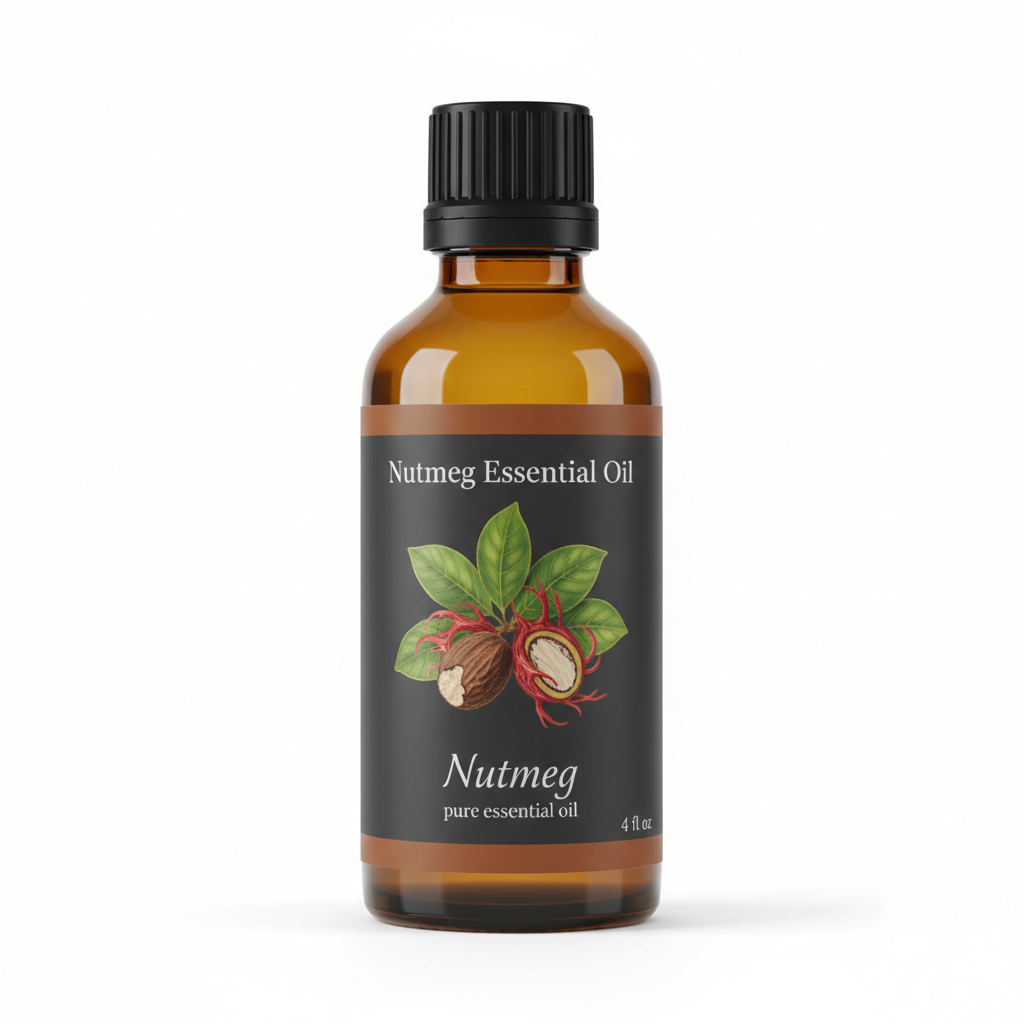
Nutmeg Essential Oil
Our own Nutmeg Essential Oil, in sizes from 0.5 oz to bulk.
From $10.99
Shop Now →This list covers 18 warm, practical ideas drawn from home scenting, creative craft projects, and everyday self-care rituals. Each idea comes with a real takeaway so you can act on it today. Before diving in, a quick note on quality: the results you get from nutmeg essential oil depend heavily on the oil itself. A well-sourced, properly steam-distilled oil from Myristica fragrans kernels will perform differently from a cheap, adulterated version. If you want the full background, the article on what nutmeg oil is and where it comes from is worth reading first.
Home Scenting Ideas
1. Diffuse a Winter Spice Blend
Nutmeg oil is one of the most atmospheric scents you can add to a diffuser. Its warm, woody, faintly sweet character layers beautifully with other spice and citrus oils. A simple starting blend: 3 drops nutmeg, 2 drops sweet orange, and 1 drop clove bud. Run it for 30 to 60 minutes at a time to avoid olfactory fatigue.
The scent profile of nutmeg oil is more nuanced than most people expect. There are earthy, slightly camphorous undertones beneath the spice, which gives a diffuser blend real depth rather than a one-dimensional sugary sweetness. If you're curious about what's actually happening in that bottle, the detailed breakdown of what nutmeg oil smells like will give you a much clearer picture.
Practical takeaway: Start with a 1 to 2 drop ratio of nutmeg to softer base oils. It's a bold note and can dominate a blend quickly.
2. Create a Simmer Pot for Instant Atmosphere
A simmer pot is one of the oldest home scenting methods, and nutmeg oil fits into it perfectly. Add a small pot of water to your stovetop, bring it to a gentle simmer, and add 4 to 6 drops of nutmeg oil along with a few whole spices if you have them. The warm vapor carries the scent throughout a room within minutes.
This works especially well in kitchens and living areas before guests arrive. The scent reads as cozy and welcoming without being perfumed in an artificial way. Keep the heat low to avoid a burnt smell, and never leave it unattended.
Practical takeaway: Top up the water every 20 to 30 minutes. Add fresh drops of oil each time you refill to maintain scent intensity.
3. Scent Your Wooden Furniture Polish
Many people are surprised to learn that nutmeg oil can be added to homemade beeswax or oil-based furniture polish. A few drops blended into a carrier like fractionated coconut oil or jojoba creates a polish that smells genuinely luxurious while you apply it. The scent doesn't linger aggressively on the wood, just pleasantly for an hour or two.
This idea works well for older wooden pieces that benefit from regular conditioning. The oil itself doesn't condition the wood (the carrier oil does that work), but the aromatic experience of polishing becomes noticeably more enjoyable.
Practical takeaway: Use 5 to 8 drops of nutmeg oil per 100ml of your carrier oil or beeswax base. Test on an inconspicuous area first.
4. Warm Up a Reed Diffuser Blend
Store-bought reed diffusers often use synthetic fragrance oils that smell flat or headache-inducing after a few days. Making your own with a 70 to 80 percent carrier (a thin, odorless oil like fractionated coconut or dipropylene glycol works well) and 20 to 30 percent essential oils gives you full control over the scent.
Nutmeg oil adds warmth to reed diffuser blends that can otherwise read as too light or too floral. Try pairing it with sandalwood or cedarwood as the base, nutmeg in the middle, and bergamot at the top. Flip the reeds every few days to refresh the throw.
Practical takeaway: Reed diffusers work slowly and subtly. Give a new blend 24 hours before judging the scent payoff in the room.
5. Scent Homemade Fire Starters
If you use a wood-burning fireplace or a fire pit, homemade fire starters scented with nutmeg oil are a lovely seasonal project. The basic version uses sawdust or wood shavings packed into a paper muffin cup, with melted wax poured over the top. Add 10 to 15 drops of nutmeg oil to the wax just before pouring.
When lit, the scent releases in a brief, warm burst as the wax melts. It's not a long-lasting fragrance, but the moment of ignition smells wonderful, especially with a nutmeg-and-cedarwood combination. Store finished starters in an airtight tin to preserve the scent until use.
Practical takeaway: Add the essential oil when the wax is warm but not boiling hot. Excessive heat burns off volatile aromatic compounds before the wax sets.
6. Refresh Fabric Without Washing
A fabric refresher spray is one of the most practical nutmeg oil uses in the home. Mix 10 drops of nutmeg oil with 5 drops of lavender, add a tablespoon of witch hazel to emulsify the oils, then top up with distilled water in a small spray bottle. Shake before each use.
This works on curtains, upholstered chairs, rugs, and throw blankets. The nutmeg note gives the spray a sophisticated warmth that most commercial fresheners don't achieve. Avoid spraying directly on light silk or delicate fabrics where any oil residue could leave a mark.
Practical takeaway: Spray from at least 30 cm away and let fabric air dry fully before sitting or folding.
Craft and Creative Projects
7. Scent Homemade Soy Candles
Candle making is one of the most popular creative outlets for essential oils, and nutmeg performs well in soy wax. The recommended fragrance load for essential oils in soy wax is typically 6 to 10 percent by weight. For a 200g candle, that means 12 to 20g of essential oil total.
Nutmeg oil works best in a blend rather than solo. Its scent can turn slightly sharp at higher temperatures, so pairing it with vanilla absolute or benzoin resinoid softens the edges beautifully. Add the essential oil blend to the wax when it has cooled to around 55 to 60 degrees Celsius before pouring.
Practical takeaway: Soy candles need a cure time of 24 to 48 hours minimum before the scent fully blooms. Don't judge throw too early.
8. Add Depth to Potpourri Blends
Dried potpourri loses its scent within a few weeks without a fixative and regular refreshing. Nutmeg oil works as an excellent reviver. Add 4 to 6 drops directly onto dried botanicals, mix gently, and let the blend sit in an open bowl for a few hours before displaying it.
The oil absorbs into dried orange peel, cinnamon sticks, and whole cloves particularly well. These natural porous materials act as a slow-release vessel for the scent. If your potpourri contains light-colored dried flowers, drop the oil onto the darker, more absorbent pieces to avoid any potential discoloration.
Practical takeaway: Refresh potpourri with 2 to 3 drops of nutmeg oil every two weeks to maintain scent intensity throughout a season.
9. Incorporate Into Handmade Soap
Cold-process soapmaking allows for the use of essential oils as fragrance, and nutmeg oil is a popular choice in spiced soap recipes. It blends naturally with frankincense, patchouli, and black pepper oil for a complex masculine-leaning bar. The typical usage rate for essential oils in cold-process soap is around 3 percent of the total oil weight.
One important note: some spice oils, including nutmeg, can accelerate trace (the point at which soap batter thickens). Have your mold ready before mixing oils into your batter, and work efficiently once the scent blend is added.
Practical takeaway: Run a small test batch before committing to a large pour. Trace acceleration varies depending on your full formula and lye concentration.
10. Blend Into Homemade Incense Cones
Making incense cones from scratch requires a combustible base (usually makko powder, a natural binder derived from tabu-no-ki tree bark), aromatic powders, and essential oils. Nutmeg oil integrates beautifully into warm, resinous cone recipes. Start with a base of sandalwood powder, add a pinch of cinnamon powder, and use nutmeg oil as the primary liquid essential oil component.
The ratio takes practice to get right. A general starting point is roughly 70 percent makko powder, 30 percent aromatic materials, plus enough water and essential oil to bring the mixture to a moldable consistency (similar to stiff cookie dough). Shape into cones and dry for 24 to 48 hours before burning.
Practical takeaway: Dry cones slowly at room temperature rather than in an oven. Rapid heat drying causes cracking and uneven burning.
11. Personalize Scented Gift Wrap and Cards
A single drop of nutmeg oil on the inside of a gift box or on a dried flower tucked into a card envelope creates a memorable sensory moment for the recipient. The scent is present but not overwhelming, and it adds a layer of thoughtfulness that packaged goods simply can't replicate.
This idea works especially well for autumn and winter gifting. It costs almost nothing extra if you already have the oil on hand. Apply the drop to a small piece of card or dried botanical inside the packaging rather than directly onto tissue paper, where it could leave an oil stain.
Practical takeaway: Less is genuinely more here. One drop is enough. Two can feel medicinal rather than pleasant in an enclosed space.
Self-Care Rituals
12. Add to a Pre-Bath Soak Blend
Bath salts are one of the most accessible ways to bring essential oils into a self-care routine. A simple base of Epsom salt and fine sea salt in a 2:1 ratio accepts essential oils well. Add 5 to 8 drops of nutmeg oil per 250g of salt, stir thoroughly, and use 3 to 4 tablespoons per bath.
Nutmeg oil should always be diluted before skin contact. Undiluted essential oils on wet, warm skin carry a much higher risk of irritation. The salt base acts as an initial dispersion medium, though oils and water don't fully combine. Adding a tablespoon of liquid carrier oil (sweet almond or jojoba) to the salt mixture improves dispersion in the bathwater significantly.
Safety note: Always dilute nutmeg oil properly before skin contact. Patch test new blends. Those who are pregnant or nursing should consult a qualified healthcare provider before using spice essential oils.
Practical takeaway: Store prepared bath salts in a sealed glass jar away from light and heat. Use within 4 to 6 weeks for best scent quality.
13. Blend Into a Body Scrub
A sugar or coffee scrub scented with nutmeg oil is one of the more indulgent uses for this oil in a self-care context. The base can be as simple as brown sugar mixed with a liquid carrier oil at a 2:1 ratio. Add 4 to 6 drops of nutmeg oil per 100g of scrub, along with complementary oils like cardamom or ginger if you enjoy a spicier profile.
The scrub should be used on the body, not the face. Facial skin is more sensitive, and spice oils are generally considered too strong for that area. Rinse thoroughly in warm water after use, and apply a plain moisturizer afterward to rehydrate the skin barrier.
Safety note: Dilution matters. Keep essential oil concentration in rinse-off products like scrubs at or below 1 to 2 percent. That equals 10 to 20 drops per 100ml of total product.
Practical takeaway: Make scrubs in small batches (100g at a time) and use within two to four weeks, as the carrier oil can go rancid without a preservative.
14. Scent a Pulse-Point Roller Blend
Roll-on perfume blends are a practical way to enjoy what nutmeg oil is good for in an aromatic sense: adding warmth, depth, and character to a personal fragrance without the alcohol of conventional perfume. Fill a 10ml roller bottle with a carrier oil (fractionated coconut oil is ideal for its light texture and long shelf life), then add 6 to 8 drops of your chosen essential oil blend.
Nutmeg oil sits comfortably in the middle-note position in a personal blend. Pair it with a grounding base note like vetiver or cedarwood and a lighter top note like bergamot or mandarin. Apply to wrists and behind the ears. The scent evolves gently over several hours as the top notes fade and the nutmeg warmth comes forward.
Safety note: Keep total essential oil concentration in a roller blend at or below 2 percent for regular skin use. Patch test before wearing daily. Avoid applying to broken or irritated skin.
Practical takeaway: Label your roller bottles with the blend date and ingredients. Most carrier-oil-based rollers stay fresh for 6 to 12 months if stored away from heat and light.
15. Enrich a Hand Cream Formula
If you make your own lotions or creams, nutmeg oil is a lovely addition to a hand cream intended for evening use. A simple lotion base (shea butter, emulsifying wax, and distilled water) accepts essential oils at around 1 percent concentration. For 100g of finished lotion, that means roughly 20 drops of essential oil total.
The warming quality of nutmeg's scent makes a hand cream feel more intentional and luxurious than an unscented equivalent. Pair it with benzoin or vanilla oleoresin for a soft, bakery-warm character that isn't sweet in a cloying way. Apply before bed as part of a winding-down ritual.
Practical takeaway: Add essential oils after the lotion has emulsified and cooled below 40 degrees Celsius. Adding them while the mixture is hot causes rapid evaporation of the most volatile aromatic compounds.
16. Use in a Facial Steam (With Care)
Facial steaming is a centuries-old skincare ritual, and essential oils can be added to the water for an aromatic dimension. With nutmeg oil specifically, use no more than 1 drop in a large bowl of hot water, and keep your face at a comfortable distance (at least 30 cm). The steam carries the scent beautifully at this low concentration.
Nutmeg oil is a stimulating spice oil, and more is not better in this context. The aromatic benefit comes from the inhalation of the warm steam, not from skin contact with the oil. Drape a towel over your head and the bowl, close your eyes, and breathe naturally for 5 to 8 minutes.
Safety note: Facial steaming with essential oils is not suitable for those with highly sensitive skin or conditions that react to heat. Consult a skincare professional if unsure. Keep eyes closed throughout.
Practical takeaway: Follow a facial steam with a gentle moisturizer while the skin is still slightly warm and pores are open.
17. Blend Into a Foot Soak
A foot soak is one of the most satisfying end-of-day rituals, and nutmeg oil adds a genuinely warming dimension to the experience. Use a large bowl of comfortably warm water, add a tablespoon of carrier oil (sweet almond works well) mixed with 4 to 5 drops of nutmeg oil, and stir before submerging your feet.
The combination of warm water, the light carrier oil, and the spiced scent creates something that feels both grounding and restorative in an experiential sense. Soak for 10 to 15 minutes, then follow with a thick foot cream or plain shea butter applied while the skin is still slightly damp.
Practical takeaway: Pre-mixing the essential oil into a carrier before adding to water is a better approach than adding essential oils directly to water, where they float undiluted on the surface.
18. Scent a Linen Spray for Bedtime Wind-Down
A linen spray is a gentle way to close out the day. Nutmeg oil in a small concentration contributes warmth to a bedtime blend without overpowering a bedroom. A good starting formula: 80ml distilled water, 20ml witch hazel, 6 drops of nutmeg oil, and 8 drops of lavender oil. Pour into a small spray bottle and shake before each use.
Spritz lightly onto pillowcases and the top edge of a duvet from about 30 cm away. The scent fades as it dries, leaving a very soft aromatic presence rather than a strong perfume. This is one of the quieter nutmeg oil uses, but many people find it becomes a genuinely meaningful part of their evening routine over time.
Safety note: Avoid spraying near eyes or directly onto skin. Allow the fabric to dry fully before contact, especially for children's bedding, and consult a healthcare provider about essential oil use around young children or during pregnancy.
Practical takeaway: Make this spray in small batches (100ml at a time) without a preservative, and use within four weeks. Store in the refrigerator between uses to extend freshness.
A Note on Sourcing and Safety
The quality of what you're working with shapes every single one of these ideas. A well-sourced nutmeg oil, steam-distilled from Myristica fragrans kernels rather than from the mace aril, brings a specific aromatic profile that cheap alternatives simply don't replicate. If you want to understand the production process and why it matters for quality, the article on how nutmeg oil is made covers it in real depth.
Across all 18 ideas, a few principles apply consistently. Dilution is not optional. Essential oils are highly concentrated aromatic compounds, and proper dilution protects your skin and the people around you. Patch testing before any new topical use is a simple habit that catches sensitivities early. And if you're pregnant, nursing, or managing any health concern, a conversation with a qualified healthcare provider before incorporating new essential oils into your routine is always the right first step.
Nutmeg oil is one of the warmer, richer tools available to home crafters and self-care enthusiasts. Knowing what nutmeg oil is used for across such a range of applications opens up a genuinely versatile ingredient that rewards curiosity and experimentation.