
How Nutmeg Oil Is Made: From Myristica Fragrans Kernel to Still
Most people encounter nutmeg as a pinch of powder shaken over a holiday drink. Far fewer have held a whole Myristica fragrans kernel, peeled back its crimson mace, or stood near the warm, slightly camphorous cloud that rises when a distillation run begins. The distance between those two experiences is exactly what this guide covers.
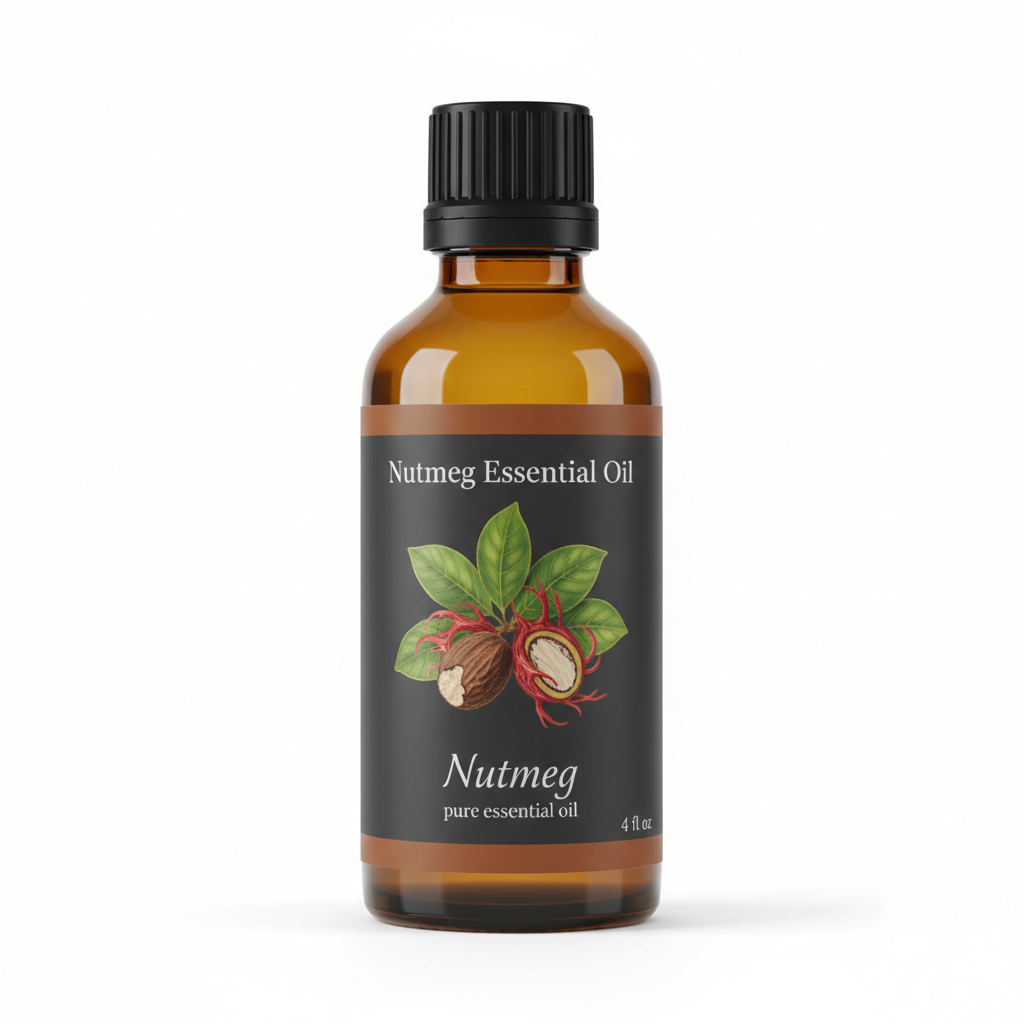
Nutmeg Essential Oil
Our own Nutmeg Essential Oil, in sizes from 0.5 oz to bulk.
From $10.99
Shop Now →Understanding how nutmeg oil is made is useful for several reasons. It helps you evaluate quality when buying, gives context for the aroma profile you smell in the bottle, and explains why reputable producers charge what they do. If you want the full picture on what the finished oil actually is, start with our complete guide to nutmeg oil before diving into production.
A Quick Note on Scale and Safety
This article walks through production at both small-scale (hobbyist) and commercial levels. If you plan any hands-on experimentation, please read our guide on nutmeg oil safety, myristicin, and dilution before you begin. The essential oil is potent, and responsible handling matters from the first step to the last.
What You Are Actually Extracting
Nutmeg essential oil is the volatile aromatic fraction of the dried seed of Myristica fragrans, a tropical evergreen native to the Banda Islands of Indonesia. The seed contains two distinct regions of aromatic interest: the outer scarlet aril (mace) and the inner kernel. Both can be distilled, but they yield oils with noticeably different scent profiles. Kernel oil tends to be warmer, woodier, and more resinous. Mace oil reads as brighter and more floral.
This guide focuses on kernel distillation, which produces the oil most commonly sold as nutmeg essential oil.
Materials and Equipment
The materials list below covers a functional small-batch setup. Commercial operations use the same core components, just at a much larger scale.
Raw Material
- Dried Myristica fragrans kernels, whole or lightly cracked (not pre-ground)
- Source matters: Indonesian (Banda) and Grenadian nutmeg are the two main commercial origins, with subtly different chemical compositions
Distillation Equipment
- Steam distillation still (copper or stainless steel; copper is traditional and many distillers prefer it for its interaction with sulfur compounds)
- Condenser coil or column with a cooling water supply
- Separator (Florentine flask) to collect the oil layer from the hydrosol
- Heat source capable of sustained, even temperature (propane burner, electric element, or steam boiler)
- Food-grade or laboratory-grade water (distilled or deionized preferred)
- Moisture meter (optional but helpful for assessing kernel dryness)
- Digital thermometer
- Amber glass storage bottles with tight caps
- Funnel, pipettes, and anhydrous sodium sulfate (for post-distillation drying, optional)
Step-by-Step: Nutmeg Oil Distillation
Step 1: Source and Inspect Your Kernels
Quality at the still begins at the source. Whole dried kernels should feel heavy for their size, show no visible mold, and have a clean, warm, spicy scent when you scratch the surface lightly with a fingernail. Kernels that smell musty or flat will produce a compromised oil.
Check moisture content. Kernels for distillation should be well-dried, typically below 10 percent moisture. Excess moisture dilutes the oil yield and can introduce off-notes. If your kernels feel soft or pliable rather than firm, spread them on a mesh drying rack in a warm, ventilated space for several days before proceeding.
Step 2: Crack and Prepare the Kernels
Whole kernels distill slowly and inefficiently because the volatile compounds have to travel a long distance through dense tissue to reach the steam. Cracking the kernels into coarse pieces (roughly quartered) dramatically improves oil yield and reduces run time.
Do not grind to powder. Fine powder compacts in the still and restricts steam flow, which can cause uneven extraction and pressure buildup. Coarse and irregular pieces allow steam to percolate evenly through the plant material.
Work in a well-ventilated space. The aromatic release during cracking is pleasant but surprisingly intense.
Step 3: Load the Still
Fill the plant chamber (also called the retort or charge basket) loosely. Packing material too tightly restricts steam circulation and produces uneven results. A general starting point for small stills is to fill the chamber about two-thirds full, leaving space for the material to swell slightly as moisture is absorbed.
If your still uses a water-and-plant-material chamber (a simple alembic), add enough water to generate steady steam for the expected run time. A separate steam boiler connected to a plant-only chamber gives you more control, which is why commercial operations favor that configuration.
Step 4: Begin the Distillation Run
Apply heat gradually. Rushing to a hard boil at the start can cause foaming and push plant particles into the condenser. Bring the system up slowly over 15 to 20 minutes, watching for the first condensate to appear at the output.
Maintain condenser water flow throughout. The condenser needs to keep the vapor cool enough to return to liquid form. If your condensate feels warm rather than cool, increase your cooling water flow rate.
The first fractions to come over are the most volatile, lightest-weight compounds. Nutmeg oil is denser than water in some fractions and lighter in others, which is why a proper Florentine separator is important. It allows continuous separation without manual intervention.
Step 5: Monitor Temperature and Collection
A stable steam temperature in the still chamber (near 100 degrees Celsius at standard pressure) is your target. Significant drops suggest the water level is getting low. Significant spikes can indicate blockage or a pressure issue.
Collect the distillate in clearly labeled fractions if you want to study how the aroma evolves across the run. Early fractions tend to be lighter and more citrusy (dominated by compounds like sabinene and alpha-pinene). Later fractions carry heavier, more resinous notes. Most commercial producers blend the full run, but hobbyist distillers sometimes keep fractions separate for blending experiments.
A typical small-batch run of cracked nutmeg kernels takes two to four hours. Yield varies considerably by origin, freshness, and equipment, but a reasonable expectation for well-dried, high-quality Indonesian nutmeg is roughly 8 to 15 percent oil by weight of dry material. Grenadian nutmeg tends to yield a little lower.
Step 6: Separate and Settle the Oil
Once your run is complete, allow the collected oil and hydrosol (the fragrant water layer) to settle fully in the separator. Nutmeg oil has a density close to water, which can make clean separation slightly fiddly. Patience here pays off. Give the separator at least 30 minutes of undisturbed settling time.
Draw off the oil layer carefully. If you want to remove residual water from the oil, stir in a small amount of anhydrous sodium sulfate, allow it to settle, then filter through a paper filter into your final storage vessel. This step is optional but produces a cleaner, clearer finished oil.
Step 7: Store Correctly
Transfer the finished oil to amber glass bottles, fill as close to the top as practical to minimize air contact, and seal tightly. Store in a cool, dark location. Properly stored nutmeg essential oil has a shelf life of roughly two to three years before oxidation begins to noticeably affect the aroma profile.
Label each bottle with the date of distillation, the botanical source (including origin if known), and the batch weight so you can track yield over time.
What Affects Oil Quality
Not all nutmeg oil is the same, and the distillation process is only part of the story. Here are the factors that matter most:
| Factor | Effect on Oil Quality |
|---|---|
| Kernel origin | Indonesian nutmeg is typically higher in myristicin; Grenadian nutmeg tends to carry more sabinene, giving a slightly fresher top note |
| Kernel freshness and storage | Old or poorly stored kernels produce lower yields and flat aroma profiles |
| Moisture content before distillation | High moisture dilutes yield; too-dry material can scorch on direct-heat stills |
| Particle size | Coarse cracking is optimal; powder reduces airflow and yield |
| Still material | Copper may produce subtly smoother results; stainless steel is more neutral and easier to clean |
| Run duration | Cutting the run too short leaves heavier compounds behind; running too long adds watery fractions |
| Post-distillation storage | Light and oxygen are the main enemies; amber glass and cool storage extend shelf life significantly |
Common Mistakes to Avoid
Over-grinding the Kernels
It seems logical that smaller particles would release more oil. In practice, powder compacts into a dense mass that steam cannot penetrate evenly. Stick to coarse cracking.
Starting with Wet Material
Kernels that have not been properly dried before distillation produce lower oil yields and introduce off-notes into the final product. A little patience during the drying stage is worth it.
Running the Still Too Hot
Aggressive heat can scorch plant material, especially on direct-contact stills. Scorched material contributes harsh, acrid notes that are difficult to remove from the finished oil.
Skipping the Separator
Some beginners collect the distillate in a single vessel and try to separate manually with a pipette. This works, but a proper Florentine separator is a worthwhile investment. The continuous separation it provides results in a cleaner oil with less handling.
Storing in Clear Glass
Essential oils oxidize when exposed to light. Always use amber or cobalt glass for storage, and keep bottles away from heat sources.
What the Finished Oil Smells Like
Fresh nutmeg oil from quality kernels is warm, spicy, and faintly woody, with a bright top note that fades into a deeper, almost balsamic base. It is recognizable as nutmeg but considerably more complex than the dried spice powder most people know. The aroma evolves noticeably as the oil ages in the bottle, generally becoming rounder and slightly less sharp over time.
To understand how that aroma profile connects to the oil's place in cosmetic and aromatic formulation, our article on what the warm spice note actually offers is a good next step.
A Note on Commercial Production
At commercial scale, the steps are the same but the infrastructure is considerably more sophisticated. Large producers in Indonesia and Grenada use dedicated steam boilers feeding multi-hundred-liter distillation vessels. Automated temperature monitoring and computerized logging replace handheld thermometers. Fractional collection and gas chromatography testing allow producers to verify chemical composition batch by batch.
This is why reputable commercial oils come with GC/MS reports. Those reports are your evidence that the oil in the bottle actually came from Myristica fragrans rather than a cheaper botanical or synthetic adulterant. When evaluating any nutmeg oil for purchase, asking for that documentation is not unreasonable. Honest producers expect the question.
The Hydrosol: Do Not Discard It
The water that separates from the oil after distillation is called nutmeg hydrosol. It carries water-soluble aromatic compounds that did not make it into the essential oil fraction. Nutmeg hydrosol has a softer, more diffuse version of the spice's warmth and can be used in facial mists, linen sprays, and aromatic room applications. It is considerably gentler than the concentrated oil and may suit people who find full-strength essential oils too intense for certain applications.
Store hydrosol in the refrigerator and use within six months. Because it lacks the preserving effect of high oil concentration, it is more vulnerable to spoilage than the essential oil itself.
Bringing It Together
Making nutmeg oil is a process that rewards attention at every stage: kernel selection, careful drying, measured cracking, patient distillation, and proper storage. Each decision compounds into the final quality of what ends up in the bottle. For hobbyist distillers, the process is genuinely satisfying. For buyers, understanding it gives you the knowledge to ask better questions and recognize honest sourcing when you find it.
Myristica fragrans traveled across centuries of trade history in its dried kernel form. The essential oil captures something of that same aromatic intensity, concentrated and clarified by heat, water, and time. Worth understanding properly.