Nutmeg Oil Safety Basics: Myristicin, Dilution, Pets, and Sensible Limits
Nutmeg essential oil has a long, layered history. Traders once sailed dangerous routes to secure it. Perfumers still reach for it today. But this is a potent oil, and its reputation deserves honesty alongside admiration. Before you add it to a diffuser blend or a body butter, understanding the fundamentals of nutmeg oil safety will serve you far better than enthusiasm alone.
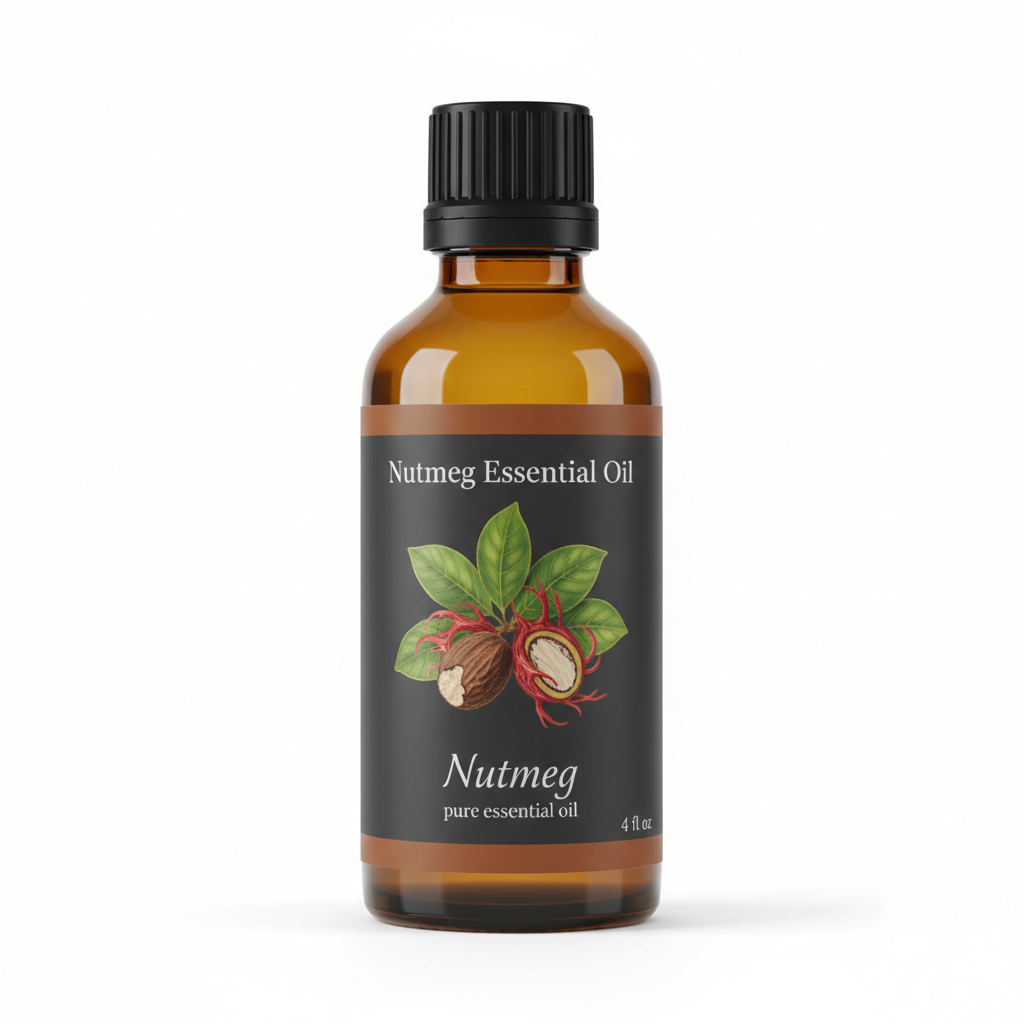
Nutmeg Essential Oil
Our own Nutmeg Essential Oil, in sizes from 0.5 oz to bulk.
From $10.99
Shop Now →This guide walks through the key facts: what myristicin is and why it matters, how to dilute nutmeg oil correctly for cosmetic and aromatic use, which household members are most at risk (including your pets), and the practical limits that keep your routine enjoyable rather than problematic.
If you are new to this oil entirely, the complete guide to nutmeg oil is a good place to start before returning here.
Understanding Myristicin: The Compound Worth Knowing
Nutmeg essential oil contains a naturally occurring compound called myristicin. It belongs to a family of phenylpropanoids and is responsible for some of the oil's distinctive aromatic character. It is also the primary reason that nutmeg oil requires more careful handling than, say, lavender or sweet orange.
Myristicin is present in varying concentrations depending on the oil's origin, the distillation method used, and whether it comes from Myristica fragrans (the common species) or another variety. East Indian nutmeg oil typically contains higher myristicin levels than West Indian types. This is worth knowing when you are comparing products.
At normal cosmetic dilution levels used in a topical product or a brief diffuser session, myristicin is not considered a significant concern for most healthy adults. The issue arises with overuse: applying undiluted oil directly to skin, ingesting any amount of the essential oil, or running a diffuser in a small enclosed space for hours at a stretch. None of those practices are recommended.
Some research has examined myristicin's effects in laboratory settings, and the findings reinforce what aromatherapy safety educators have long advised: respect the dose. Concentrated exposure is categorically different from sensible aromatic use.
Key takeaway: Myristicin is not a reason to avoid nutmeg oil. It is a reason to use it thoughtfully, at appropriate levels, with proper dilution.
Nutmeg Oil Dilution: The Core Skill
Correct nutmeg oil dilution is the single most important practical skill in this guide. It applies to every topical use: massage blends, hair care formulations, body scrubs, and skin-care products. Undiluted essential oil on skin is not a more powerful version of diluted oil. It is simply a more irritating one.
Recommended Dilution Rates for Nutmeg Essential Oil
The following table provides general starting points. These align with widely cited aromatherapy safety guidelines, including those published by the International Fragrance Association (IFRA) and Robert Tisserand's foundational work in Essential Oil Safety.
| Use Context | Suggested Maximum Dilution | Drops per 1 oz (30 ml) Carrier |
|---|---|---|
| General adult body massage | 1% | 6 drops |
| Facial cosmetic products | 0.5% | 3 drops |
| Leave-on body lotion or oil | 1% | 6 drops |
| Rinse-off products (scrubs, wash) | 2% | 12 drops |
| Diffuser blend (per session) | 3 to 5 drops total in blend | N/A |
These figures are conservative starting points for adults with no known sensitivities. Individual responses vary. Always patch test before wider application.
Step-by-Step: How to Dilute Nutmeg Oil Safely
What You Will Need
- Nutmeg essential oil (from a reputable supplier with GC/MS testing available)
- A carrier oil suited to your intended use (jojoba, sweet almond, fractionated coconut, and grapeseed are all solid choices)
- A clean glass measuring beaker or small pitcher
- A glass dropper or pipette for accurate measurement
- A dark glass storage bottle (amber or cobalt blue, with a tight-fitting lid)
- A fine-tip permanent marker or adhesive label for dating and labeling your blend
- Optional: a small kitchen scale if working in grams for precision formulation
Step 1: Choose Your Carrier Oil
Different carriers suit different applications. Jojoba is well-regarded for facial and scalp use because its composition closely resembles the skin's natural sebum. Sweet almond oil is lightweight and suitable for body blends. Fractionated coconut oil absorbs quickly and has a neutral scent that lets nutmeg's warm, spiced aroma take center stage. Grapeseed is a budget-friendly option with a very light feel. Pick one that matches your project.
Step 2: Calculate Your Drops
Use the table above as your reference. For a 1% dilution in 30 ml of carrier oil, you need 6 drops of nutmeg essential oil. For 10 ml (roughly a travel-size roller bottle), that is 2 drops at 1%. Do not estimate by eye. Drop count is your primary dilution tool when you are working in small batches.
If you are scaling up to larger batches for a body lotion or scrub, switching to weight measurements (grams and milligrams) improves accuracy considerably. At that scale, a 1% dilution means 0.6 grams of essential oil per 60 grams of finished product.
Step 3: Add Essential Oil to Carrier, Not the Reverse
Pour your measured carrier oil into the beaker first. Add the drops of nutmeg oil into the carrier. Swirl gently rather than shaking vigorously. This helps disperse the essential oil without introducing excess air, which can shorten shelf life.
Step 4: Patch Test Before Full Use
Apply a small amount of your diluted blend (roughly the size of a coin) to the inner forearm or behind the ear. Leave it undisturbed for 24 hours. If you notice redness, itching, or unusual sensitivity, do not proceed with that formulation. Adjust the dilution downward, or choose a different carrier, and test again.
This step is not optional. Nutmeg oil can cause skin sensitization in some individuals, particularly at higher concentrations. Patch testing costs you one day and potentially saves you significant discomfort.
Step 5: Label and Store Correctly
Write the date, the blend name, and the dilution percentage on your label before you forget. Store the bottle away from direct sunlight, heat sources, and humidity. A cool, dark cabinet works well. Most diluted blends in carrier oil are best used within six to twelve months, depending on the carrier's own shelf life.
Common Mistakes to Avoid
- Applying nutmeg oil neat (undiluted). This is the most frequent error and the most avoidable. Even one or two drops of undiluted essential oil on skin can cause irritation in sensitive individuals.
- Overloading the diffuser. More drops do not mean a better experience. Three to five drops of a blend containing nutmeg oil in a standard ultrasonic diffuser is sufficient. Run the diffuser in intervals (30 minutes on, 30 minutes off) rather than continuously.
- Using older, oxidized oil. Essential oils oxidize over time, especially when stored incorrectly. Oxidized oils are more likely to cause skin reactions. Check the oil's color and scent before use. If it smells sharper or more acrid than it did when new, it may be past its prime.
- Skipping the patch test because you have used nutmeg before. Sensitivity can develop over time, even with repeated exposure. Patch testing is not just for first-time users.
- Confusing culinary nutmeg with the essential oil. A pinch of ground nutmeg in a recipe is not equivalent to a drop of essential oil. The oil is highly concentrated. Do not ingest the essential oil.
Is Nutmeg Essential Oil Safe for Dogs (and Other Pets)?
This is one of the most searched questions about nutmeg oil safety, and the answer is direct: nutmeg essential oil is not considered safe for dogs, cats, or most household pets, and it should be kept away from them.
Pets metabolize compounds very differently from humans. Their livers lack certain enzymes that humans use to process phenylpropanoids like myristicin. What is a low-level aromatic exposure for an adult human can be a much more significant burden for a small animal.
Cats are particularly sensitive to essential oils in general. Their liver function is quite different from that of humans or dogs, and many oils that are manageable for dogs still pose a risk for cats. Nutmeg oil falls into the category of oils that should not be used around cats at all.
For dogs specifically, the myristicin content is the primary concern. Even exposure through a diffuser in a shared space can be problematic if the dog is in the room for extended periods with no ability to leave. Signs that a pet may be experiencing distress from aromatic compounds include excessive drooling, lethargy, unsteadiness, or unusual behavior. If you notice these signs, move the animal to fresh air immediately and contact your veterinarian.
Practical Guidelines for Pet-Owning Households
- Diffuse in rooms your pets cannot enter. A closed home office or bedroom, with good ventilation to the outside, is preferable to a shared living space where pets roam freely.
- Never apply nutmeg oil blends to your pet's skin or coat. This applies even to heavily diluted blends. Essential oil products formulated specifically for animals by a veterinary aromatherapist are a different category, but standard human-use blends are not appropriate for pets.
- Store oils out of reach. Curious animals, especially dogs, may investigate bottles left on low shelves or tables. Dark glass bottles do not communicate danger to a dog. Keep them in a closed cabinet.
- Ventilate generously when diffusing. If you use a diffuser in a shared household, open windows, run the diffuser briefly, and ensure your pet always has access to a room with clean, unscented air.
If you are ever uncertain whether a specific oil or blend is appropriate around your animals, consult your veterinarian before proceeding. This is especially important for households with birds, which are extremely sensitive to airborne compounds of any kind.
Sensible Limits: Who Should Exercise Extra Caution
Nutmeg oil is not appropriate for every situation or every person. Beyond the general dilution and diffusion guidelines, certain groups warrant additional caution.
Children
Children's skin is more permeable than adult skin, and their smaller body mass means even modest exposure represents a proportionally higher concentration. Nutmeg oil is not recommended for use on or around children under 6 years of age. For older children, keep dilutions well below adult levels (no more than 0.5% for topical use) and avoid diffusing in enclosed spaces where children sleep.
Pregnant and Nursing Individuals
Many essential oils, including nutmeg, are generally avoided during pregnancy out of an abundance of caution. Some compounds in nutmeg oil may have properties that make this prudent. If you are pregnant or nursing, consult your healthcare provider before using nutmeg essential oil in any form.
Individuals with Sensitive Skin
If you already know your skin responds strongly to fragranced products, approach nutmeg oil conservatively. Start at 0.5% or lower for topical use. Patch test on an area of skin that is less reactive first, such as the back of the hand, before applying to larger areas.
Those Taking Medications
Some essential oil constituents may interact with certain medications at higher exposure levels. If you are taking any prescribed medication, speak with a qualified healthcare provider before incorporating nutmeg oil into your regular routine. This article cannot assess your individual situation, and it does not replace professional guidance.
Aromatic Use: Diffuser Dos and Don'ts
Diffusing nutmeg oil is one of the most popular ways to enjoy its warm, slightly spiced, resinous scent. It blends beautifully with sweet orange, clove bud, cardamom, sandalwood, and cedarwood. Used in a well-ventilated space with the guidelines below, it can be a genuinely pleasant addition to an evening wind-down ritual or a focused work session.
Dos
- Use an ultrasonic or nebulizing diffuser designed for essential oils.
- Keep sessions to 30 to 60 minutes at a time, with breaks in between.
- Open a window or ensure the room has adequate airflow.
- Use 3 to 5 drops of your total blend in the diffuser, not 3 to 5 drops of nutmeg alone if other oils are also present.
- Clean your diffuser regularly to prevent residue buildup and keep your blends smelling true.
Don'ts
- Do not diffuse in a sealed room for hours at a stretch.
- Do not diffuse around pets, infants, or individuals with respiratory sensitivities without consulting a professional first.
- Do not use a diffuser as a substitute for any kind of professional guidance on wellness concerns.
- Do not assume that because a scent has faded, you can simply add more oil. Allow the recommended session intervals before starting again.
Sourcing Quality Nutmeg Oil: Why It Matters for Safety
Safety is not only about how you use an oil. It also depends on what is actually in the bottle. The essential oil market is not uniformly regulated, and adulterated or mislabeled oils do exist. A product sold as nutmeg essential oil may be diluted with synthetic components, blended with cheaper oils, or simply mislabeled.
When purchasing nutmeg oil, look for suppliers who provide:
- Gas chromatography/mass spectrometry (GC/MS) test results, ideally batch-specific and available on request or published online.
- Clear labeling of the botanical name (Myristica fragrans), plant part used (seed), and country of origin.
- Transparent sourcing information and reputable third-party testing.
Knowing what is in your oil is fundamental to using it safely. An oil with unexpectedly high myristicin content, for example, warrants even more conservative dilution than a standard formula suggests. For a deeper look at what to look for in a quality product, the honest guide to nutmeg oil benefits and qualities covers sourcing considerations in more detail.
Expected Results When You Get It Right
When nutmeg oil is used at appropriate dilutions, with good sourcing and sensible diffusion habits, most adults report a pleasant experience: a warm, enveloping scent that may support a sense of comfort during evening rituals, a subtle spiced note in cosmetic formulations like body scrubs or hair oils, and a grounding quality in diffuser blends that complements citrus and wood notes beautifully.
Skin reactions, headaches from over-diffusion, and sensitivities are the most common outcomes when the guidelines in this article are not followed. Those outcomes are largely avoidable with a little preparation.
For answers to specific questions about this oil, the nutmeg essential oil FAQ addresses fifteen of the most common queries, including storage, shelf life, and blending compatibility.
A Final Word on Sensible Use
Nutmeg oil rewards careful users. Its history is extraordinary, its scent is genuinely distinctive, and it has earned its place in serious aromatic and cosmetic work. None of that requires ignoring the basics of safe handling. Dilute correctly. Patch test. Keep it away from your pets. Use your diffuser in a ventilated space for reasonable intervals. Store the oil properly and know when to replace it.
These are not burdensome steps. They take minutes to practice and quickly become habit. The result is an oil that you can genuinely enjoy, in full confidence that you are using it well.
If you have specific health concerns or questions about whether nutmeg oil is appropriate for your circumstances, please consult a qualified healthcare provider. This guide is educational and does not constitute professional advice.