Nutmeg Essential Oil FAQ: 15 Common Questions Answered
Nutmeg essential oil attracts a lot of curiosity. Its warm, spiced aroma sits somewhere between kitchen pantry and perfumer's shelf, and that unusual position raises genuine questions. What exactly is in the bottle? Is it safe? How do you actually use it? This nutmeg essential oil FAQ gathers the questions that come up most often and answers them honestly, without hype.
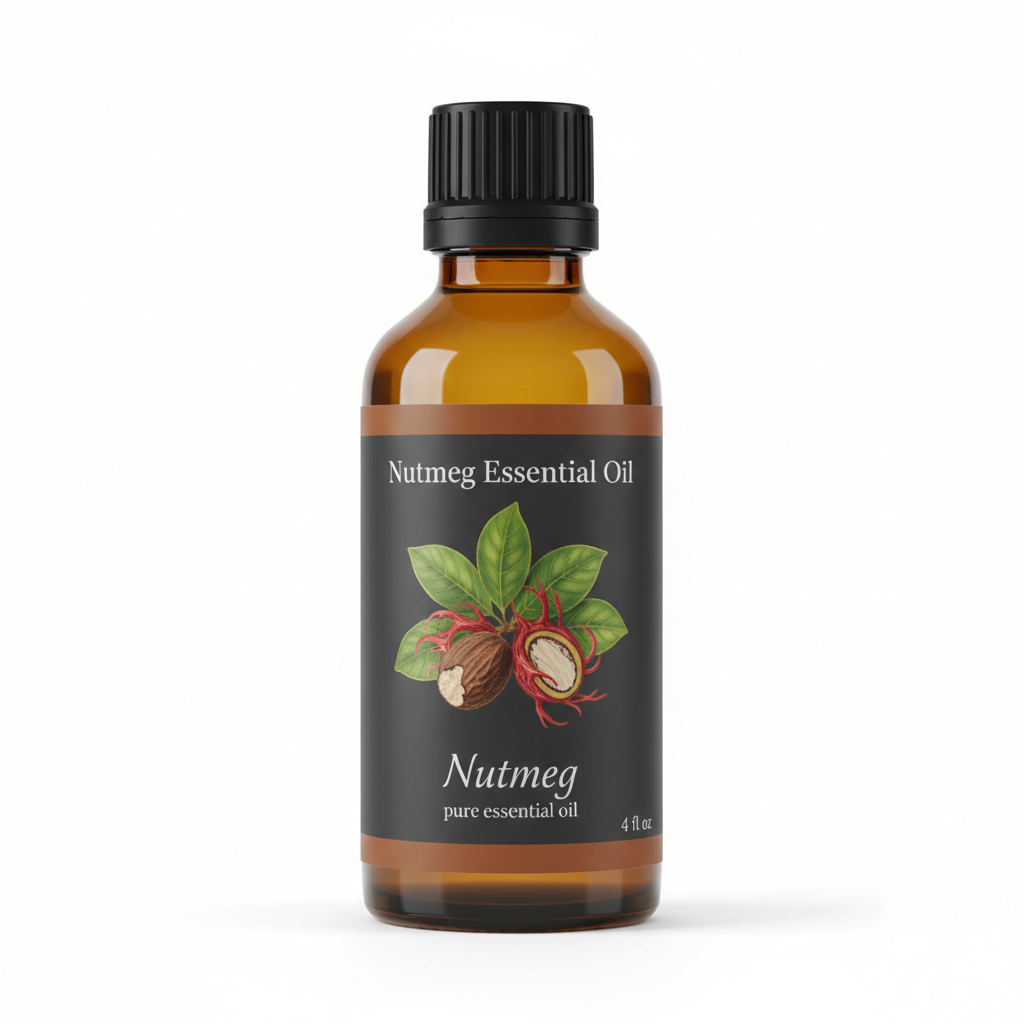
Nutmeg Essential Oil
Our own Nutmeg Essential Oil, in sizes from 0.5 oz to bulk.
From $10.99
Shop Now →Questions are grouped into four themes: the basics, aroma and blending, safe use and dilution, and sourcing and storage. Jump to whichever section matters most to you right now.
The Basics: What Nutmeg Oil Is and Where It Comes From
1. What exactly is nutmeg essential oil?
Nutmeg essential oil is a concentrated aromatic extract distilled from the dried seed of Myristica fragrans, a tropical evergreen tree native to the Banda Islands of Indonesia. Steam distillation pulls the volatile compounds out of the seed, producing a pale yellow to nearly colorless oil with a warm, spiced scent. For a deeper look at the botany and history behind the bottle, see our complete guide to nutmeg oil.
2. Is nutmeg essential oil the same as nutmeg extract used in cooking?
No. Culinary nutmeg extract is typically an alcohol-based flavoring made for food use and sold in very different concentrations. Nutmeg essential oil is a cosmetic and aromatic product, not a food ingredient, and the two are not interchangeable. Always keep essential oils out of food and drink.
3. Is there more than one type of nutmeg oil?
Yes. East Indian nutmeg oil comes from Myristica fragrans grown in Indonesia and is the most widely traded variety. West Indian nutmeg oil originates from Myristica fragrans cultivated in Grenada and carries a slightly softer, sweeter scent profile. A third product, nutmeg expressed oil or nutmeg butter, is pressed rather than distilled and has a much thicker consistency suited to cosmetic formulations rather than diffusion.
4. What does the research say about nutmeg oil's main compounds?
Laboratory analyses consistently identify myristicin, elemicin, safrole, sabinene, and alpha-pinene as dominant constituents, though exact percentages shift depending on origin, harvest timing, and distillation method. Some research suggests these aromatic compounds contribute to the oil's characteristic warm, slightly sweet scent. Our guide to nutmeg's aroma compounds walks through what each constituent brings to the overall fragrance.
5. Can nutmeg essential oil be used for cooking or ingestion?
No. Essential oils are not food-grade products and should never be ingested. Nutmeg oil in particular contains concentrated myristicin, which can be harmful in excessive amounts. Use it for aromatic and cosmetic purposes only, and consult a qualified healthcare provider with any questions about dietary supplements.
Aroma, Blending, and Everyday Uses
6. How would you describe the scent of nutmeg essential oil?
The scent is warm, dry, and richly spiced, with a faintly woody base that keeps it from reading as purely sweet. There is a subtle earthy quality underneath the familiar kitchen-spice note. It reads differently depending on context: in a diffuser blend it lends depth and roundness, while in a personal fragrance it can act as a quiet anchor for brighter top notes.
7. What essential oils blend well with nutmeg?
Nutmeg pairs naturally with other warm spices such as clove bud, cinnamon leaf, and black pepper, though those combinations can become intense quickly, so start with small proportions. It also integrates well with orange, bergamot, and other citrus oils that brighten its heaviness. On the woodier side, cedarwood, sandalwood, and vetiver complement nutmeg's dry base without competing with it.
8. What are some practical nutmeg essential oil uses in the home?
In a diffuser, nutmeg creates a warm, grounding atmosphere that many people associate with cozy autumn evenings or a calm end to the day. Added to an unscented candle base or wax melt, it contributes a long-lasting spiced note that fills a room slowly. For a simple room spray, a few drops dispersed in water and a small amount of alcohol (to help the oil mix) can lend a subtle seasonal warmth to linen or upholstery.
9. Can nutmeg oil be used in DIY cosmetics such as scrubs or lotions?
Yes, when properly diluted, nutmeg oil appears in a range of DIY cosmetic recipes: body scrubs, facial serums, hair oils, and massage blends. The key word is properly diluted. Always follow established dilution guidelines from a reputable aromatherapy organization, and patch-test every new formulation before wider use. At correct dilution levels, the spiced warmth can add a pleasant aromatic character to a wide range of skin-care products.
10. Does nutmeg oil work as a fragrance note in perfumery?
It does, and it has a long history in classical fragrance composition. Perfumers typically classify it as a heart-to-base note that contributes warmth and a slightly medicinal (in the aromatic, not the clinical sense) spice character. It appears in oriental, chypre, and fougere fragrance families. Because it is quite potent, it is used sparingly, usually at one to three percent of a blend.
Safe Use, Dilution, and Who Should Avoid It
11. What is the correct dilution ratio for nutmeg essential oil?
For most adult topical applications, a dilution of 0.5 to 1 percent is widely recommended for leave-on products such as lotions and facial serums. Rinse-off products like scrubs can tolerate slightly higher dilutions, typically up to 2 percent. To put that in practical terms: one percent dilution equals roughly 6 drops of essential oil per 30 ml (1 fluid ounce) of carrier oil. Always check current guidelines from organizations such as the International Fragrance Association (IFRA) or the National Association for Holistic Aromatherapy (NAHA), as recommendations are updated periodically.
12. How do you patch-test nutmeg essential oil?
Mix your nutmeg oil at the intended dilution in your chosen carrier, then apply a small amount (about the size of a coin) to the inner forearm or behind the ear. Leave it uncovered for 24 hours and watch for any redness, itching, or irritation. If any reaction appears, wash the area with mild soap and water and avoid using that formulation. Patch testing is not optional; it is a basic step in any responsible cosmetic routine.
13. Who should avoid nutmeg essential oil or use it with extra caution?
People who are pregnant or nursing should consult a qualified healthcare provider before using nutmeg oil in any form. Those with sensitive skin should start at the lower end of dilution ranges and patch-test carefully. Children require much lower dilution levels than adults, and many aromatherapy organizations recommend avoiding strong spice oils entirely on children under a certain age. If you are taking any medications or managing any health condition, speak with your healthcare provider before adding essential oils to your routine.
14. Can nutmeg essential oil cause sensitization over time?
Repeated or high-concentration exposure to any essential oil can increase the risk of sensitization, where the skin develops a reaction to a substance it previously tolerated. Nutmeg oil, like other spice oils, carries a moderate sensitization potential according to industry safety data. Rotating oils in your routine, staying within dilution guidelines, and avoiding prolonged daily application to the same skin area are practical ways to reduce that risk.
15. Is nutmeg oil safe to diffuse around pets?
This is an area where the evidence is genuinely limited, and caution is warranted. Cats and dogs metabolize aromatic compounds differently from humans, and spice oils in general are flagged by several veterinary sources as potentially problematic for companion animals. Keep diffusion sessions short, ensure the room is well-ventilated, and allow your pet an easy exit from the space. Always consult a veterinarian before using essential oils in a home with animals.
Sourcing, Quality, and Storage
16. How do I know if a nutmeg essential oil is high quality?
A few markers are worth looking for: the label should state the full botanical name (Myristica fragrans), the country of origin, and the method of extraction. Reputable suppliers provide a gas chromatography/mass spectrometry (GC/MS) report, which confirms the chemical profile of the specific batch. Price is also a rough signal; heavily discounted essential oils often reflect poor raw material quality or adulteration with synthetic fragrance.
17. What does "organic" mean on a nutmeg oil label, and does it matter?
Certified organic nutmeg oil comes from seeds grown without synthetic pesticides or fertilizers, verified by a third-party certification body such as USDA Organic or ECOCERT. Whether it matters depends on your priorities. For cosmetic use, some formulators prefer organic to minimize the chance of pesticide residue reaching the skin. That said, even conventional nutmeg oil from a reputable supplier with batch testing is a reasonable choice when certified organic is not available or is cost-prohibitive.
18. How long does nutmeg essential oil last, and how should it be stored?
Most nutmeg essential oils carry a shelf life of two to three years from the distillation date when stored correctly. The enemies of shelf life are heat, light, and oxygen. Keep bottles tightly capped, in a cool and dark location, and ideally in dark amber or cobalt glass rather than clear glass or plastic. For a thorough breakdown of the variables that affect freshness, our guide to storing nutmeg oil covers everything from bottle choice to refrigeration.
19. How can you tell if nutmeg essential oil has gone off?
Oxidized nutmeg oil typically smells flat, musty, or sharp in an unpleasant way rather than warm and rounded. The color may also deepen slightly. Oxidized oils are more likely to cause skin irritation, so if yours smells noticeably different from when you first opened it, it is safer to replace the bottle than to use it in a skin-contact application. Oils that are past their best can still be used in diffusers or room sprays where skin contact is not involved.
20. Is nutmeg essential oil expensive compared to other spice oils?
Nutmeg oil sits in the mid-range of spice oil pricing. It is generally more affordable than high-demand oils like rose absolute or sandalwood, and comparable to clove bud and black pepper. Prices vary meaningfully by origin, with Indonesian East Indian varieties typically priced lower than Grenadian West Indian oils due to volume of production. A 5 ml or 10 ml bottle from a reputable supplier is a reasonable starting point before committing to a larger quantity.
A Few More Nutmeg Oil Questions Worth Answering
21. Is nutmeg essential oil the same as mace oil?
No, though they come from the same plant. Mace oil is distilled from the dried aril, the lacy red membrane that wraps around the nutmeg seed inside the fruit. The two oils share many aromatic compounds but mace oil tends to have a softer, more delicate scent with slightly more floral character. Both are used in fragrance and cosmetics, but they are distinct products with their own GC/MS profiles and pricing.
22. Can nutmeg oil be added to a carrier oil for a scalp or hair ritual?
Yes. Many people incorporate nutmeg oil into scalp massage blends by diluting it in a carrier such as jojoba, argan, or sweet almond oil. The warm spiced scent makes it a pleasant addition to a pre-shampoo ritual. Keep dilution at or below 1 percent for scalp application, and rinse thoroughly. People with color-treated or particularly sensitive scalps should test cautiously given the oil's moderate irritation potential at higher concentrations.
23. Where does most commercial nutmeg essential oil come from today?
Indonesia, particularly the Banda Islands and Sulawesi, remains the dominant global producer of nutmeg and its oil. Grenada in the Caribbean supplies a smaller but significant portion of the world's crop and is especially prized for West Indian variety oil. Supply chains for both origins have become more traceable in recent years as consumer demand for ethical sourcing has grown, and some suppliers now offer direct-trade or single-origin options.
24. Does nutmeg essential oil have a place in seasonal or holiday blending?
Absolutely, and it has been used that way for generations. The spiced warmth of nutmeg blends intuitively with clove, orange, cinnamon, and fir needle to create diffuser or candle combinations that evoke winter gatherings, mulled drinks, and cold-weather kitchens. It also performs well in autumnal blends with patchouli, vetiver, and cardamom. Because it is a supporting player rather than a star in most seasonal blends, a single bottle lasts a surprisingly long time.
25. What is the single most important thing to know before buying nutmeg essential oil for the first time?
Buy from a supplier that publishes batch-specific GC/MS reports. That one step filters out most adulterated, mislabeled, or low-quality products. Everything else, scent preference, bottle size, origin, comes second. A verified chemical profile tells you what is actually in the bottle, and that knowledge is the foundation of any safe and satisfying experience with this remarkable spice oil.