
Nutmeg Oil Benefits, Honestly: What the Warm Spice Note Really Offers
Nutmeg essential oil has a reputation problem. On one end of the internet, it is hailed as a wonder oil with sweeping aromatic and cosmetic applications. On the other, skeptics dismiss it as little more than a pleasant kitchen scent. Neither portrait is accurate. The truth is more interesting and, frankly, more useful.
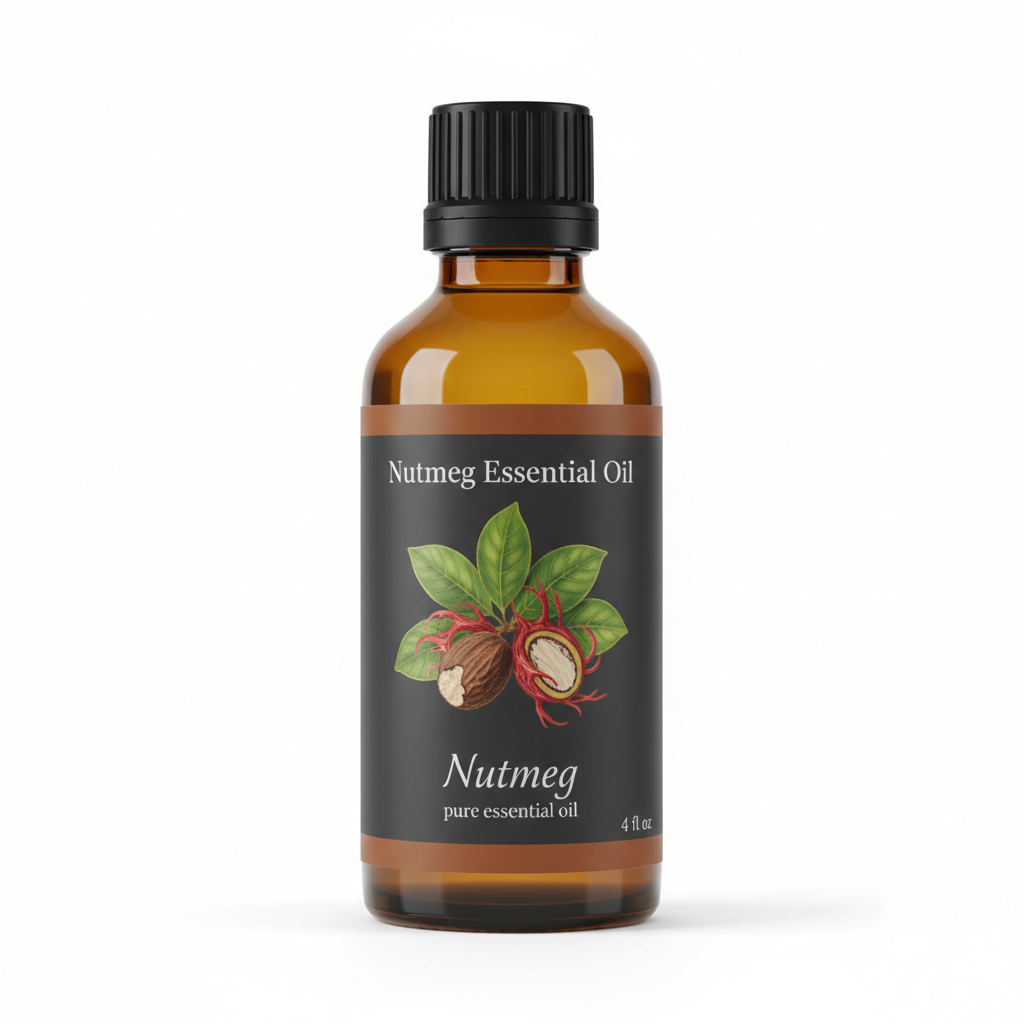
Nutmeg Essential Oil
Our own Nutmeg Essential Oil, in sizes from 0.5 oz to bulk.
From $10.99
Shop Now →This article works through the most common claims about nutmeg oil benefits one by one. For each myth, we look at what the evidence actually shows, where the idea came from, and what you can reasonably expect when you open a bottle. If you are new to this oil entirely, our complete guide to nutmeg oil is a good starting point before reading on.
A Quick Word on How to Read the Evidence
Most published research on nutmeg essential oil and its key compounds has been conducted in laboratory settings or in animal studies. That is a meaningful distinction. Lab findings do not automatically translate to real-world results for people using a diluted oil in a diffuser or a body lotion. Throughout this article, phrases like "research suggests" or "evidence indicates" reflect exactly that gap. They signal genuine scientific interest, not confirmed outcomes.
With that framing in place, let us get into the myths.
Myth 1: "Nutmeg Oil Benefits Are Basically the Same as Eating Nutmeg"
The Myth
People assume that because nutmeg essential oil comes from the same seed you grate over a béchamel, the two are interchangeable. If nutmeg the spice does something in the body, the oil must do it too, and probably more powerfully.
The Reality
Nutmeg essential oil and ground nutmeg spice are chemically quite different products. Steam distillation, the process used to produce most commercial nutmeg oil, captures volatile aromatic compounds: primarily monoterpenes like sabinene, alpha-pinene, and beta-pinene, along with phenylpropanoids including myristicin, elemicin, and safrole. What it does not meaningfully capture are the fixed fats, fiber, and many of the non-volatile constituents present in the whole seed.
This matters because myristicin, the compound most often discussed in both culinary and aromatic contexts, behaves very differently depending on how it enters the body and at what concentration. Research into myristicin as an isolated compound is ongoing, but findings from those studies cannot be applied directly to the experience of diffusing a diluted oil in a living room.
The compounds that give nutmeg oil its distinctive warm, slightly woody, faintly sweet aroma are real. Their effects in that aromatic context are the appropriate frame for most consumers.
Why This Myth Exists
Shared names create shared assumptions. Because nutmeg has a long culinary and folk history, that history gets projected onto the oil. It is an understandable leap, but not an accurate one.
Myth 2: "Nutmeg Essential Oil Benefits Skin by Working Like a Powerful Active Ingredient"
The Myth
Marketing language around nutmeg oil in skincare can sound impressively clinical. Some brands position it as a potent active that visibly transforms the complexion quickly and dramatically.
The Reality
Nutmeg essential oil is used in cosmetic formulations, and there are reasonable grounds for that use, but the evidence base is modest rather than robust. Some research suggests that certain compounds within nutmeg oil may support the appearance of skin when used in properly diluted topical applications. Formulators have noted that its warming aromatic profile blends well in massage and body care products, and that it may help create a sense of invigoration in the skin.
What the evidence does not support is any dramatic, rapid visual transformation. Skin response to botanical oils is gradual, individual, and influenced by dozens of factors including base formulation, dilution, skin type, and consistency of use.
For topical use, proper dilution is non-negotiable. Nutmeg essential oil should always be blended into a carrier oil or cosmetic base before skin contact. A general starting point for body application is a 1 to 2 percent dilution: roughly 6 to 12 drops of essential oil per 30 ml (one ounce) of carrier. Facial applications warrant even greater caution, typically 0.5 to 1 percent. A patch test on a small area of skin before broader application is always advisable, and anyone with sensitive skin should start at the lower end of the dilution range.
Why This Myth Exists
Essential oil marketing has a tendency to borrow language from the pharmaceutical and clinical skincare world. Words like "potent" and "active" imply a level of studied efficacy that most single essential oils simply have not earned through rigorous human trials.
Myth 3: "The Benefits of Nutmeg Essential Oil Make It Safe to Use Undiluted"
The Myth
If something is natural and beneficial, the logic goes, more of it must be better. Applying nutmeg oil straight from the bottle, or in very high concentrations, should amplify its positive qualities.
The Reality
This is one of the more consequential misconceptions in essential oil use generally, and nutmeg oil is a particularly important case. Nutmeg oil contains phenylpropanoid compounds, including myristicin and safrole, that can cause skin sensitization when applied without dilution. Sensitization is a cumulative process: repeated exposure to an undiluted or heavily concentrated oil can create a lasting sensitivity that makes future use uncomfortable or problematic.
Professional aromatherapy guidelines from bodies such as the International Fragrance Association (IFRA) and Robert Tisserand's widely referenced dermal limits work consistently recommend conservative dilution for nutmeg oil, particularly for oils produced from the East Indian variety (Myristica fragrans), which tends to have higher phenylpropanoid content.
The principle here is straightforward: dilution does not weaken nutmeg oil's aromatic character meaningfully. A well-chosen carrier oil, used at appropriate ratios, allows you to enjoy the warm spice note while keeping the experience comfortable and consistent.
Why This Myth Exists
"Natural equals safe" is a persistent cultural assumption. Essential oils are concentrated plant extracts, not mild infusions, and that distinction shapes how they should be used.
Myth 4: "Nutmeg Oil Benefits Are Best Experienced by Ingesting It"
The Myth
A subset of essential oil communities encourages internal use of oils, framing it as a more direct or powerful way to access their properties. Nutmeg oil sometimes appears on these lists.
The Reality
Internal use of nutmeg essential oil is outside the scope of aromatherapy and cosmetic applications, and it is not something this site covers or recommends. The concentration of myristicin and related compounds in the oil is substantially higher than what occurs in culinary amounts of the spice. Ingestion of nutmeg oil is associated with adverse effects in the published literature, and no established consumer benefit justifies the risk.
If you have questions about dietary or internal applications of any essential oil, that conversation belongs with a qualified healthcare provider, not a product label or online forum.
Why This Myth Exists
Some essential oil companies sell oils with dietary supplement labeling in regions where that is permitted. This creates a reasonable but sometimes misapplied impression that ingestion is a standard and safe mode of use across all oils and all brands.
Myth 5: "Nutmeg Oil Smells Too Harsh for Most Aromatic Uses"
The Myth
People unfamiliar with nutmeg essential oil sometimes expect it to smell aggressively spicy or medicinal, like something that would overpower a blend rather than enhance it.
The Reality
This myth is worth setting aside because it keeps a genuinely interesting aromatic material out of people's hands unnecessarily. Good quality nutmeg essential oil has a layered scent profile: warm and woody at the base, with a gentle sweetness and a faint, almost earthy green quality that makes it far more nuanced than ground spice from a tin. It diffuses beautifully in a home setting, blending especially well with citrus oils, cedarwood, clove bud (used sparingly), and warm florals like ylang ylang.
For more detail on what gives nutmeg oil its aromatic character, this deep dive into nutmeg oil's aroma compounds covers the chemistry behind the scent in an accessible way.
In diffusion, nutmeg oil is typically used at low percentages within a blend: 5 to 15 percent of the total essential oil portion tends to add warmth and depth without dominating. Diffusion sessions of 30 to 60 minutes with adequate ventilation are a sensible approach, particularly in smaller rooms.
Why This Myth Exists
Ground nutmeg, freshly grated, has a sharp top note that can be polarizing. The essential oil, stripped of many of the fixed components that contribute to that harshness, presents quite differently.
What Nutmeg Oil Benefits Are Actually Well-Supported?
After working through the myths, it is worth being clear about what the evidence and practical experience do support.
- Aromatic richness in diffusion: Nutmeg oil contributes genuine warmth and complexity to home fragrance blends. It is particularly well-suited to autumn and winter atmospheres, cozy evening routines, and candle or room spray formulations.
- A grounding note in personal care products: Properly diluted nutmeg oil is used in massage blends, body scrubs, and warming balms where its aromatic profile may help support a sense of invigoration and comfort.
- Cosmetic blending versatility: Its mid-to-base note character makes it a useful fixative in natural fragrance work, extending the longevity of lighter top notes in a blend.
- A mood-supporting atmosphere: Some research suggests that warm spice aromas, including those characteristic of nutmeg, may contribute to a sense of comfort and calm during evening wind-down routines. This is a legitimate area of olfactory research, though findings remain preliminary.
These are genuinely useful qualities. They do not require exaggeration to make nutmeg oil worth including in a thoughtful aromatic or cosmetic practice.
A Note on Sourcing and Quality
Not all nutmeg oils are produced equally. The species (Myristica fragrans from Indonesia versus other regional varieties), the part of the plant distilled (seed versus mace), and the distillation method all affect the final chemical profile and aromatic quality. East Indian nutmeg oil, distilled from the seed, is the most commonly available form and the most studied.
When evaluating a product, look for a supplier that provides a gas chromatography/mass spectrometry (GC/MS) report with each batch. This document shows the actual chemical composition of the oil and allows you to verify that what you are buying matches the expected profile. Reputable suppliers make these reports available without hesitation. If a company cannot or will not provide one, that is a useful data point.
Our nutmeg essential oil FAQ covers sourcing questions, batch variation, and what to look for on a certificate of analysis in more detail.
Practical Takeaways
| Claim | Evidence Level | Practical Reality |
|---|---|---|
| Same as eating nutmeg spice | Not supported | Different chemical profile; aromatic use is the relevant frame |
| Powerful skincare active | Modest and preliminary | Useful in cosmetic formulations; gradual, individual results at proper dilution |
| Safe undiluted | Contradicted by available guidance | Always dilute; start at 1 to 2 percent for body use |
| Benefits from ingestion | Not within scope; risks documented | Avoid internal use; consult a healthcare provider for any related questions |
| Too harsh for aromatic use | Not supported by aromatic experience | Warm, nuanced, blends well at 5 to 15 percent in diffusion blends |
| Contributes to warm atmosphere | Supported by olfactory research (preliminary) | Genuinely useful for cozy, grounding aromatic environments |
The Honest Summary
Nutmeg essential oil benefits are real, specific, and most clearly expressed through its aromatic and cosmetic applications. The oil's warm, woody scent profile has a long and well-documented history in perfumery and home fragrance. Its use in body care formulations is supported by reasonable, if still developing, evidence. Its safety profile is manageable when dilution guidelines are followed.
What it is not is a broad-spectrum solution to everything. The most useful framing is this: nutmeg oil is a high-quality aromatic ingredient with a distinctive character, an interesting chemistry, and a rightful place in a thoughtful natural fragrance or body care practice. That is enough to make it worth knowing well.