
Inside Nutmeg Oil: The Aroma Compounds Behind the Warm Spice Note
Crack open a bottle of good nutmeg essential oil and something happens immediately. The scent is warm, yes, but also woody, faintly sweet, and slightly green around the edges. That complexity is not an accident. It is the result of dozens of volatile compounds working together, each one contributing its own aromatic character to the whole. Understanding nutmeg oil chemistry does not require a laboratory degree, but it does reward curiosity. The more you know about what is actually in the bottle, the better equipped you are to use it well, store it correctly, and source it wisely.
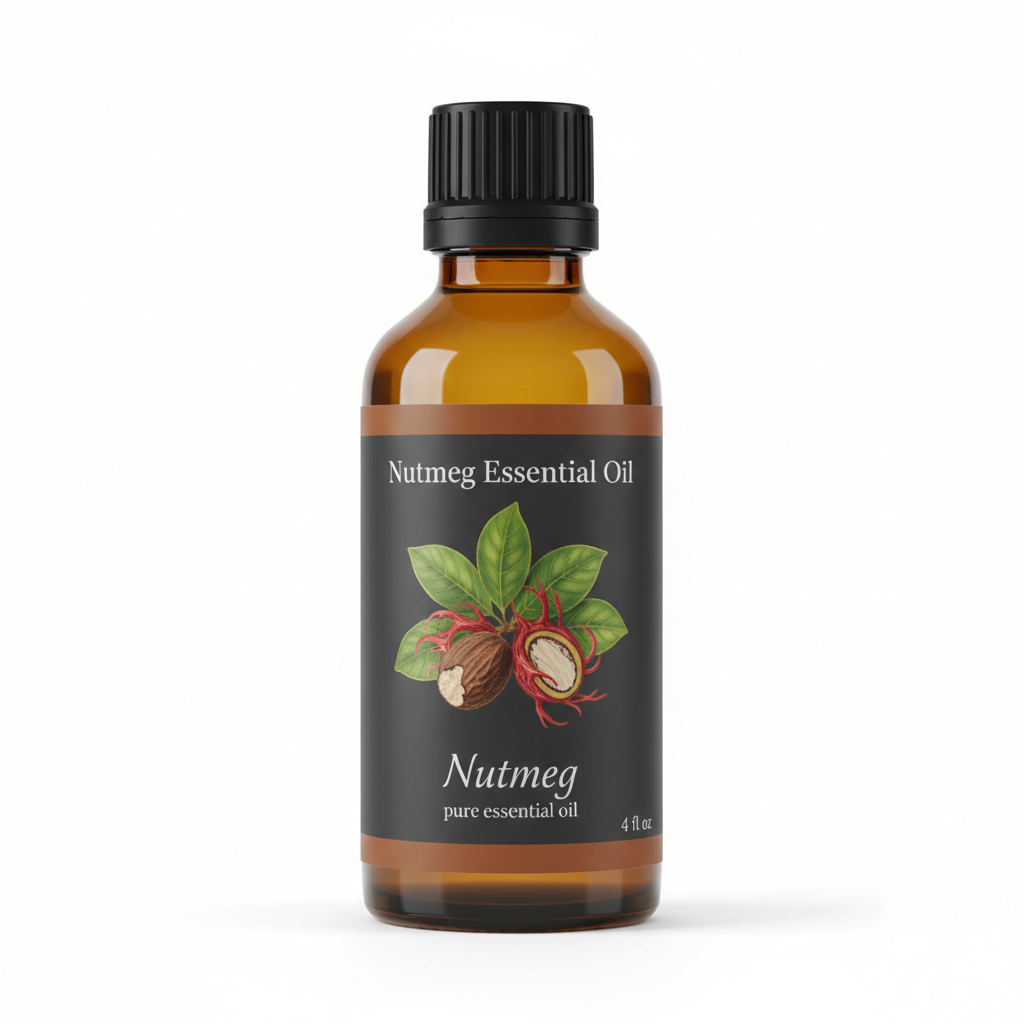
Nutmeg Essential Oil
Our own Nutmeg Essential Oil, in sizes from 0.5 oz to bulk.
From $10.99
Shop Now →This deep-dive moves through the main compound families found in nutmeg oil, looks at what researchers have observed about their properties, and closes with practical guidance on quality and safety. If you are brand new to the oil itself, the complete guide to nutmeg oil is a good place to start before reading further.
How Nutmeg Oil Is Made (and Why It Matters for Chemistry)
Nutmeg essential oil is produced by steam distillation of dried, ground nutmeg seeds from Myristica fragrans, a tropical evergreen native to the Banda Islands of Indonesia. The distillation process carries volatile aromatic molecules out of the plant material and into the finished oil. Compounds that are too heavy or water-soluble to travel with steam are left behind, which is one reason nutmeg oil smells related to, but distinctly different from, freshly grated nutmeg spice.
A separate oil is also produced from the seed's outer covering, called mace, but the two are chemically distinct. The seed-derived oil is the one most commonly found in fragrance, cosmetic, and aromatic applications. The history of that seed is genuinely remarkable, and it shaped the modern spice world in ways that are still visible today.
The Main Compound Families in Nutmeg Oil
Gas chromatography-mass spectrometry (GC-MS) analysis of nutmeg oil consistently identifies three broad chemical families: monoterpenes, sesquiterpenes, and phenylpropanoids. Their proportions shift depending on the origin of the seed, the age of the tree, and the distillation conditions, but the families themselves are reliable markers of authentic oil.
Monoterpenes: The Bright, Volatile Top Notes
Monoterpenes are small, lightweight molecules. They evaporate quickly, which means they dominate the first impression of the oil's scent before giving way to heavier compounds underneath. In nutmeg oil, they typically account for 60 to 80 percent of total composition.
- Sabinene: Usually the single most abundant compound in nutmeg oil, often comprising 15 to 50 percent of the total. It contributes a fresh, slightly peppery, and faintly woody character. Sabinene is also found in black pepper, carrot seed, and spruce oils, which helps explain why nutmeg blends naturally with those aromatics.
- Alpha-pinene and beta-pinene: These two isomers bring a clean, resinous quality that grounds the spice note in something almost forest-like. Combined, they often make up 10 to 20 percent of the oil.
- Limonene: A familiar compound from citrus oils, limonene appears in modest amounts in nutmeg oil and softens the overall profile with a faintly sweet, rounded quality.
- Gamma-terpinene and terpinen-4-ol: These related compounds add herbal, slightly medicinal-adjacent character to the mid-scent. Terpinen-4-ol is the same compound largely responsible for tea tree oil's distinctive note.
Phenylpropanoids: The Compounds That Define Character
This is where nutmeg oil gets genuinely interesting. Phenylpropanoids are a class of aromatic compounds derived from the amino acid phenylalanine, and they give nutmeg oil much of its distinctive warmth and depth. They are also the compounds that demand the most attention from a safety perspective.
Myristicin in Nutmeg Oil
Myristicin is the compound most closely associated with nutmeg, and it is one of the most studied components of the oil. Structurally, it belongs to the phenylpropanoid family and carries a methylenedioxy group that places it in the same broad category as compounds found in dill, parsley seed, and black pepper oils.
In aromatic terms, myristicin contributes a warm, slightly musty, and almost narcotic depth to the scent profile. It is present in most nutmeg oils at concentrations between 2 and 13 percent, though some analyses have found it higher depending on geographic origin and distillation method.
From a research standpoint, myristicin in nutmeg oil has attracted significant scientific attention. Some research suggests it may interact with the central nervous system at high concentrations, which is the primary reason that ingestion of large amounts of whole nutmeg has been associated with adverse effects in historical and clinical case reports. At the concentrations present in properly diluted topical or aromatic applications, this is a very different matter, but the compound's profile is something every knowledgeable user should understand.
A 2013 review published in the Asian Pacific Journal of Tropical Biomedicine observed that myristicin and related phenylpropanoids in nutmeg showed notable activity in various laboratory assays, though the authors carefully noted that in vitro observations do not translate directly to conclusions about human use. That kind of nuance is worth holding onto when reading any research on this compound.
Elemicin and Safrole
Two additional phenylpropanoids appear alongside myristicin: elemicin and safrole. Elemicin contributes a green, slightly anise-like aromatic note and is structurally related to myristicin. Safrole, once used in perfumery, is now restricted in many jurisdictions because of safety concerns identified in animal studies. In quality nutmeg oil, safrole is typically present only in trace amounts, and reputable suppliers will provide GC-MS documentation confirming its levels.
Eugenol: The Warm Spice Anchor
Eugenol is better known as the dominant compound in clove bud oil, but it appears in nutmeg oil in meaningful amounts as well, typically between 1 and 6 percent. It is responsible for the warm, clove-like undertone that many people notice in nutmeg oil, and it is one reason the two oils blend so naturally in spiced aromatic compositions.
Eugenol is generally considered safe at normal cosmetic use levels, but it is a recognized sensitizer at high concentrations and in individuals with specific sensitivities. The International Fragrance Association (IFRA) sets usage guidelines for eugenol-containing materials in leave-on and rinse-off cosmetic products, and formulators working with nutmeg oil should consult those standards.
Sesquiterpenes: The Quiet Foundation
Sesquiterpenes are heavier molecules that evaporate more slowly than monoterpenes. They are rarely the first thing you notice in nutmeg oil's scent, but they contribute to its longevity on skin and in a diffuser. Beta-caryophyllene is the most commonly identified sesquiterpene in nutmeg oil. It is a spicy, woody compound also found in significant quantities in black pepper, copaiba, and clove oils. Research into beta-caryophyllene has grown considerably in recent years, with some studies suggesting it may interact with the body's endocannabinoid system, though again, those observations come largely from laboratory and animal studies rather than robust human trials.
How Geographic Origin Shapes the Chemistry
Nutmeg oil chemistry is not uniform. Two oils labeled "nutmeg essential oil" can have meaningfully different compound profiles depending on where the seeds were grown.
| Origin | Characteristic Profile Notes | Common in Trade? |
|---|---|---|
| Indonesia (Banda Islands, Maluku) | Higher sabinene, moderate myristicin, classic warm profile | Yes, most common |
| Grenada (West Indian type) | Higher sabinene, somewhat lower phenylpropanoid fraction, slightly sweeter | Yes, premium market |
| Sri Lanka | Variable, often higher eugenol relative to Indonesian type | Less common |
West Indian nutmeg oil from Grenada is often considered more desirable in fine fragrance and cosmetics because its phenylpropanoid fraction tends to be somewhat lower, giving a slightly cleaner and softer aromatic profile. Indonesian oil is more widely available and perfectly suitable for most aromatic and cosmetic applications. Both are legitimate. The key is knowing which you have and why it matters for your intended use.
Quality Indicators: What to Look for in a GC-MS Report
A trustworthy supplier of nutmeg oil will provide a GC-MS analysis report for each batch. Reading one does not require a chemistry background if you know what to look for.
- Sabinene: Should typically be the dominant compound. If it is absent or very low, question the oil's authenticity or freshness.
- Myristicin: Present but within the expected 2 to 13 percent range for most origins. Unusually high levels may indicate an adulterated or atypical sample.
- Safrole: Should be at trace levels only. Any report showing elevated safrole is a red flag for quality and regulatory compliance.
- Alpha-pinene and beta-pinene combined: Reasonable levels (roughly 10 to 20 percent) confirm a well-rounded monoterpene fraction.
- Unidentified peaks: A good GC-MS report accounts for nearly all of the oil's composition. Large unidentified fractions warrant questions.
Freshness is also a chemistry issue. Monoterpenes oxidize over time, which changes both the scent and the skin-safety profile of the oil. Proper storage slows that process considerably. The guide to storing nutmeg oil covers the practical details: the right bottle types, temperature ranges, and signs that an oil has passed its useful life.
Safety Profile and Contraindications
Understanding nutmeg oil chemistry is inseparable from understanding its safety profile. Several points deserve careful attention.
Dilution Is Non-Negotiable
Nutmeg oil is potent. For leave-on skin applications, a dilution of 0.5 to 1 percent in a carrier oil is appropriate for most adults. That translates to roughly 3 to 6 drops per 30 ml (one ounce) of carrier. Higher concentrations increase the risk of skin sensitization, particularly given the eugenol and myristicin content.
Patch Testing
Always perform a patch test before using nutmeg oil on larger areas of skin. Apply a small amount of your diluted blend to the inner forearm, cover, and wait 24 hours. Any redness, itching, or irritation means the formulation is not suitable for you at that concentration.
Pregnancy and Children
Nutmeg oil is generally not recommended for use during pregnancy or on young children. The phenylpropanoid fraction, particularly myristicin, is the primary reason for this caution. Consult a qualified healthcare provider before use in these populations.
Ingestion
This is a cosmetic and aromatic ingredient guide. Nutmeg essential oil is not a food product and should not be ingested. The adverse effects associated with large amounts of whole nutmeg in historical records are largely attributed to the concentrated phenylpropanoid compounds, including myristicin. Essential oil is far more concentrated than whole spice.
Drug Interactions
Some research suggests that myristicin may influence certain liver enzymes involved in drug metabolism. If you use prescription or over-the-counter products regularly, speak with a healthcare provider before incorporating nutmeg oil into your cosmetic routine.
Bringing It Together
Nutmeg oil's aromatic complexity is a direct expression of its chemistry. Sabinene gives it lift. The pinenes add depth. Eugenol anchors the warmth. And myristicin in nutmeg oil carries both the compound's distinctive character and its need for respect and care. None of these compounds act alone. The oil works as a whole, which is why a full GC-MS profile matters more than any single number on a label.
For the formulator, the fragrance blender, or the simply curious, knowing what is in the bottle changes how you work with it. You reach for it more intentionally. You dilute more accurately. You store it better. And you appreciate the scent differently when you understand the molecular story behind it.
Always consult a qualified healthcare provider with any questions about personal health before incorporating any essential oil into your routine.