
How to Store Nutmeg Oil: Shelf Life, Bottles, and Freshness
You found a beautiful nutmeg oil. Maybe it came from a small distiller in Indonesia, or you tracked down a cold-pressed expression from the Banda Islands. Either way, the moment that warm, spiced-wood scent hit you, you knew you wanted it to last. Good storage is the difference between an oil that performs beautifully at month eighteen and one that smells flat and vaguely rancid by month six.
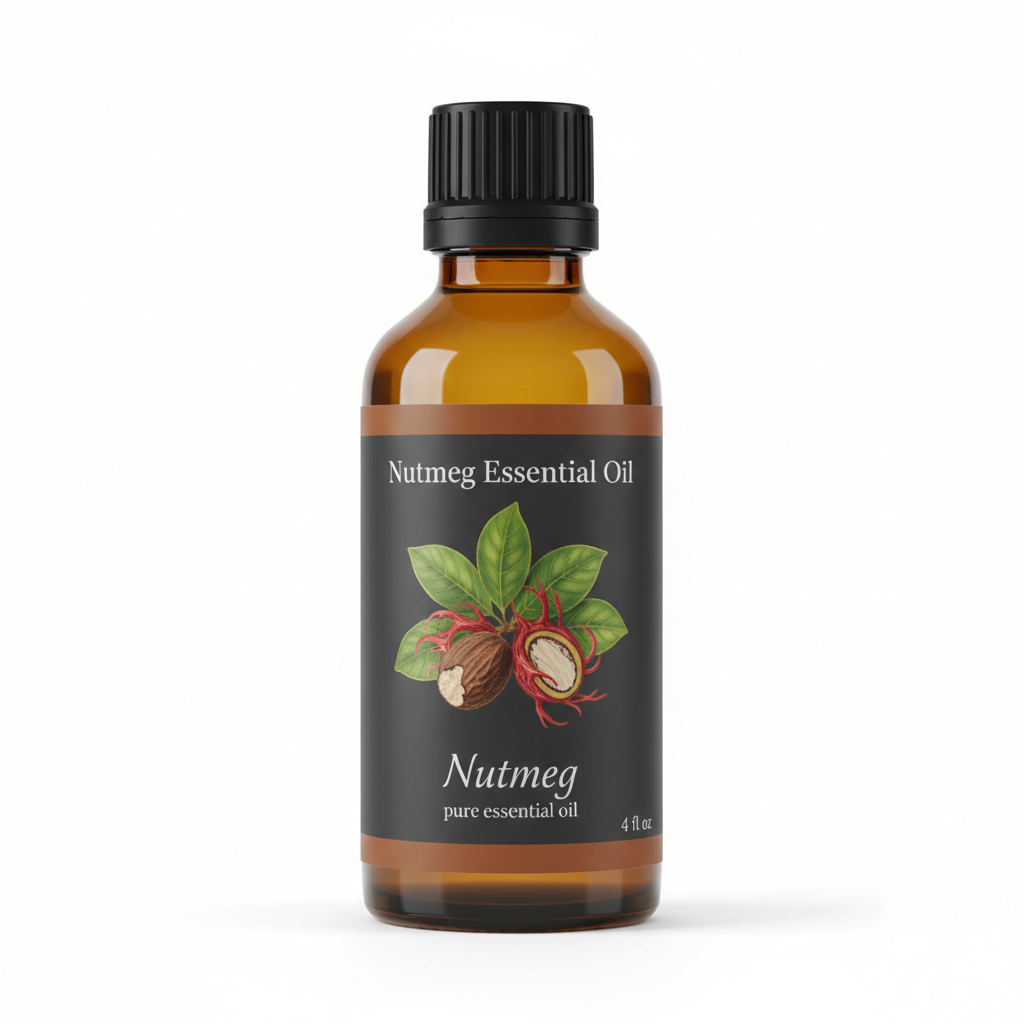
Nutmeg Essential Oil
Our own Nutmeg Essential Oil, in sizes from 0.5 oz to bulk.
From $10.99
Shop Now →This guide covers everything you need to know about nutmeg oil shelf life, the right bottles, and the small habits that protect your investment. No guesswork, no vague advice. Just a clear, practical system you can set up in about fifteen minutes.
If you are new to nutmeg oil and want background on what it is and where it comes from before diving into storage, the complete guide to nutmeg oil is a good starting point. And if you are curious about why this particular spice once sparked wars and reshaped global trade routes, the piece on nutmeg and the Banda spice trade is worth an hour of your time.
Why Storage Matters More for Nutmeg Oil Than for Many Oils
Nutmeg essential oil is rich in monoterpenes, particularly sabinene, alpha-pinene, and beta-pinene. These volatile compounds are responsible for the oil's bright, sharp top notes. They are also the first to degrade. When monoterpene-heavy oils are exposed to heat, light, or oxygen, the oxidation process accelerates noticeably. The result is an oil that smells duller, sharper in an unpleasant way, or sometimes slightly medicinal compared to a fresh bottle.
Nutmeg oil also contains myristicin and elemicin, compounds that contribute to its distinctive warm, slightly woody character. Protecting those aromatic compounds from degradation is the whole point of a good storage system.
What You Will Need
- Dark glass bottles (amber or cobalt blue, 5 ml to 100 ml depending on your batch size)
- Orifice reducers or tight-fitting droppers
- Labels with purchase date and batch information
- A cool, dark storage location (a drawer, cabinet, or dedicated essential oil box)
- Refrigerator space (optional but recommended for long-term storage)
- Nitrogen spray (optional, for advanced users storing larger quantities)
- A small funnel if you are decanting from a larger bottle
Step-by-Step: How to Store Nutmeg Oil Properly
Step 1: Start with the Right Bottle
Glass is non-negotiable. Essential oils dissolve certain plastics over time, which contaminates the oil and degrades your bottle simultaneously. Use amber or cobalt blue glass. Both colours filter ultraviolet light, which is one of the primary drivers of oxidation.
The size of your bottle matters too. A smaller bottle has less headspace, meaning less oxygen sitting above the oil at any given time. If you buy a 100 ml bottle but use nutmeg oil slowly, decant it into several smaller bottles as soon as it arrives. Use one actively, keep the others sealed. This is one of the simplest and most overlooked steps in essential oil storage.
Step 2: Seal It Tightly After Every Use
Oxygen is the primary enemy. Every second a bottle sits open, volatile compounds are escaping and oxidation is occurring. Get into the habit of recapping immediately after each use. This sounds obvious, but in a busy crafting or blending session it is easy to leave bottles open on the counter for five or ten minutes without thinking about it.
Orifice reducers, the small plastic inserts that sit inside the bottle neck, are helpful here. They slow the flow of oil and reduce the opening through which air can enter. Make sure yours fit snugly. A loose reducer is almost as problematic as no reducer at all.
Step 3: Keep It Away from Light
Even amber glass has limits. Direct sunlight, and to a lesser extent bright artificial light, accelerates the breakdown of aromatic compounds. Store your bottles inside a closed cabinet, a drawer, or a dedicated wooden essential oil box. A windowsill display looks appealing but is genuinely hard on your oils.
If you blend at a workbench near a window, keep bottles capped and return them to their storage location when you are done. The blending session might last thirty minutes. The storage habits you build around it will affect the oil for the next year or two.
Step 4: Control the Temperature
Heat accelerates chemical reactions, including the ones that degrade your oil. The ideal storage temperature for nutmeg oil is between 5 and 15 degrees Celsius (roughly 40 to 60 degrees Fahrenheit). In most home environments, that means a cool interior room away from radiators, ovens, or any appliance that generates heat.
For long-term storage, a dedicated section of your refrigerator works well. Place bottles in a sealed zip-lock bag first to prevent any cross-contamination with food. When you take a bottle out for use, let it return to room temperature gradually before opening. Rapid temperature shifts can create condensation inside the bottle, and water introduction is another route to degradation.
Step 5: Label Everything
This step costs almost nothing and saves considerable frustration. Write the following on each label: the oil name, the distiller or supplier, the batch number if available, and the date you opened the bottle. Some people also note the country of origin, which is useful if you are comparing batches over time.
Nutmeg oil from different origins can smell noticeably different. East Indian nutmeg oil (from Myristica fragrans) tends to have a cleaner, brighter profile, while West Indian expressions carry more warmth and weight. Keeping clear records helps you track which sources you prefer and when to reorder before a bottle degrades past its prime.
Step 6: Consider Nitrogen Flushing for Larger Quantities
If you buy nutmeg oil in larger quantities for soap-making, candle blending, or other craft projects, nitrogen spray cans (sold specifically for wine and oil preservation) are worth considering. A short burst of food-grade nitrogen into a partially used bottle displaces the oxygen before you reseal. This is a technique borrowed from the wine world and it works on the same principle: oxygen causes oxidation, nitrogen does not.
This is not necessary for a standard 10 ml retail bottle that you use every week. It becomes relevant for 50 ml or 100 ml bottles that may sit partially used for several months between batches.
Nutmeg Oil Shelf Life: Realistic Expectations
With good storage, nutmeg essential oil typically maintains its aromatic quality for one to two years after opening. An unopened bottle, stored correctly from the start, may remain stable for up to three years. Some sources suggest longer, but because of nutmeg oil's relatively high monoterpene content, erring on the conservative side is sensible.
Signs that an oil has passed its prime include a noticeably sharper or more acrid smell, a thicker or stickier consistency, or a scent that has lost the brightness and complexity of a fresh bottle. Oxidized nutmeg oil is not something you want to use in leave-on cosmetic applications, even in diluted form, as oxidized monoterpenes may be more likely to cause skin sensitivity.
If you are unsure whether an old bottle is still good, smell it against a fresh reference. The difference is usually immediately apparent.
Common Mistakes to Avoid
- Storing in the bathroom: The humidity and temperature fluctuations of a bathroom are poor conditions for any essential oil. Find a cooler, drier location.
- Buying more than you can use: A fresh 10 ml bottle used within a year is more valuable than a discounted 100 ml bottle that sits for three years. Buy in quantities that match your actual usage.
- Transferring to plastic: Even high-density polyethylene can be problematic for prolonged contact. Stick to glass.
- Ignoring the headspace: As the oil level drops, the air-to-oil ratio in the bottle increases. Decant remaining oil into a smaller bottle to reduce headspace.
- Storing near citrus oils: This does not cause chemical contamination if bottles are properly sealed, but citrus oils have their own very short shelf life and are worth storing separately so you do not confuse freshness timelines.
Quick Reference: Nutmeg Oil Storage at a Glance
| Factor | Ideal Condition | What to Avoid |
|---|---|---|
| Container | Amber or cobalt blue glass | Plastic, clear glass |
| Temperature | 5 to 15°C (40 to 60°F) | Near heat sources, direct sun |
| Light | Dark cabinet or drawer | Windowsill, open shelving |
| Oxygen exposure | Tight cap, small headspace | Leaving open, large half-empty bottles |
| Humidity | Dry environment | Bathroom, steamy kitchen |
| Shelf life (opened) | 1 to 2 years | Using past peak without checking scent |
Putting It All Together
Good nutmeg oil storage is not complicated. It comes down to three consistent habits: dark glass, cool temperatures, and minimal oxygen exposure. Build those habits once and your oils will reward you with stable, vivid scent well into their second year.
Nutmeg oil has earned its place in craft and aromatic work over centuries. The distillers who source it from small Banda Island cooperatives, or from Indonesian family farms with generations of knowledge behind them, put real care into the product. A few minutes of thoughtful storage honours that chain of effort and keeps the oil performing at its best when you need it.
Once you have your storage system in place, the next step is putting that well-preserved oil to work. The article on 18 warm ideas for home scenting and craft offers a range of practical starting points, from diffuser blends to candle making and beyond.