
Nutmeg and the Spice Trade: A Short History of the Banda Islands' Treasure
Few spices carry as much historical weight as nutmeg. For roughly three centuries, the dried seed of Myristica fragrans was among the most valuable commodities on earth, worth more per ounce than gold in certain European markets. The story of how it got there, and what humans were willing to do to control its supply, reads less like culinary history and more like a geopolitical thriller. Understanding that backstory adds a surprising depth to every bottle of nutmeg essential oil on the shelf today.
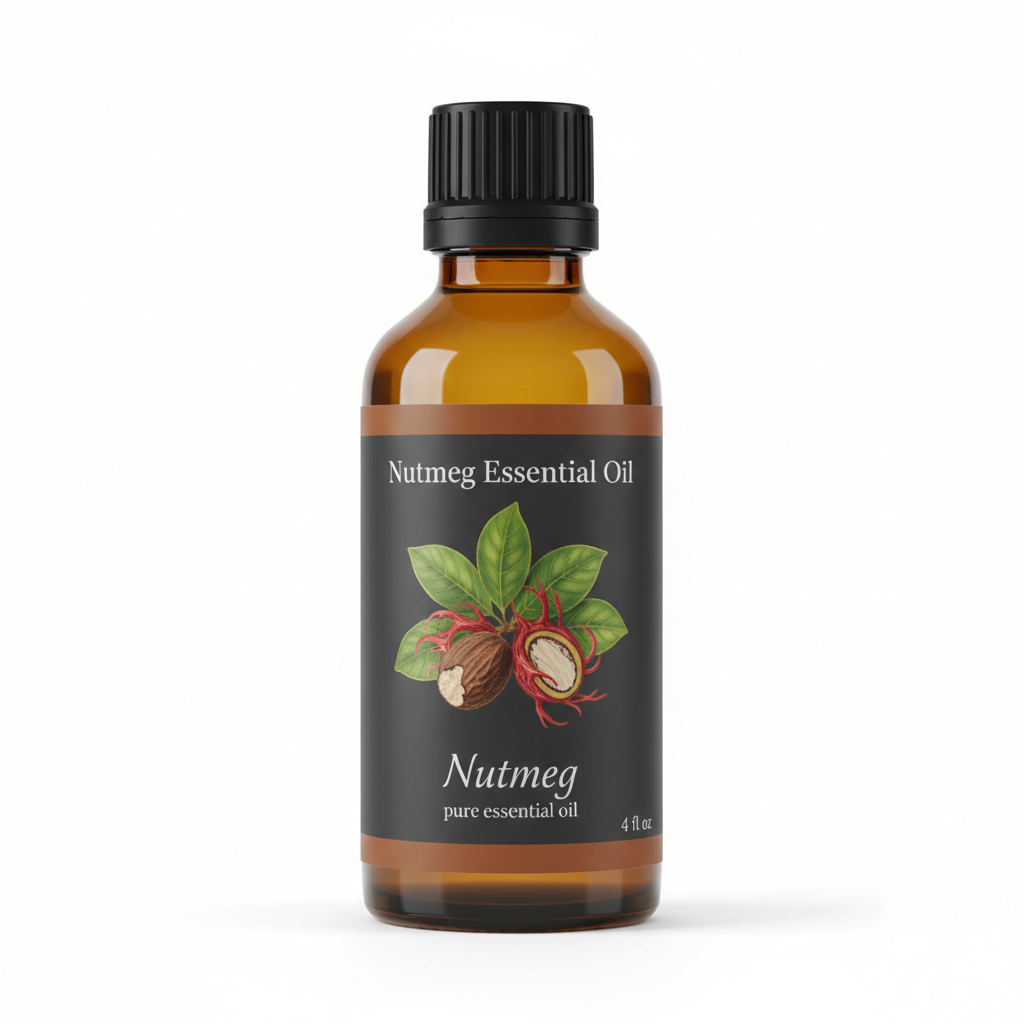
Nutmeg Essential Oil
Our own Nutmeg Essential Oil, in sizes from 0.5 oz to bulk.
From $10.99
Shop Now →The Banda Islands: Where Nutmeg History Begins
The Banda Islands are a small volcanic archipelago sitting within the Banda Sea, part of present-day eastern Indonesia. For most of recorded human history, they were the only place on earth where Myristica fragrans grew wild and in commercial abundance. That geographic monopoly made them enormously consequential.
Arab traders had carried banda islands nutmeg westward long before European ships entered the picture, supplying Venice and Genoa via overland routes through Persia and Egypt. By the time nutmeg reached a European apothecary or kitchen, it had passed through a dozen pairs of hands and multiplied in price at each exchange. The actual source, a cluster of ten small islands covering barely 180 square kilometres, remained largely unknown to European buyers for centuries.
Portuguese navigator Francisco Serrão reached the Bandas in 1512, breaking that information barrier open. Within a generation, Portuguese, Spanish, Dutch, and English merchants were competing fiercely for access. The Dutch East India Company (VOC) eventually seized control of the islands in the early seventeenth century and enforced its monopoly with brutal efficiency. The indigenous Bandanese population was largely killed or expelled. Plantation labour was replaced with enslaved workers. The spice trade nutmeg chapter of this period is one of the darkest in colonial history.
One diplomatic footnote that still surprises people: in 1667, England traded the island of Run (its last Banda foothold) to the Dutch in exchange for a small settlement on the North American coast. That settlement was called New Amsterdam. It was later renamed New York. Nutmeg, in a roundabout way, had something to do with Manhattan.
How Nutmeg Escaped the Islands
The VOC monopoly eventually cracked. French botanist Pierre Poivre smuggled nutmeg seedlings out of the Bandas in the 1770s and established plantations on Mauritius and Réunion. British colonial authorities later introduced Myristica fragrans to Penang, Sri Lanka, Grenada, and parts of southern India. Grenada now supplies a significant share of the global market and even features a nutmeg on its national flag.
Today, Indonesia remains the largest producer, but the spice is grown commercially across Southeast Asia, the Caribbean, and parts of South Asia. That geographic spread has created genuine variation in essential oil character, a point that matters considerably when sourcing for cosmetic or aromatic use.
Chemical Composition: What Is Actually Inside Nutmeg Oil
Nutmeg essential oil is steam-distilled from the dried seed (and sometimes separately from the mace, the red aril that surrounds it). The resulting oil is a complex mixture of volatile compounds. For a fuller overview of the distillation process and oil categories, see our complete guide to nutmeg oil.
The key compound groups found in nutmeg oil include:
- Monoterpene hydrocarbons: Alpha-pinene and beta-pinene are typically the dominant constituents, often comprising 60 to 80 percent of the oil depending on origin and distillation method. Sabinene is another prominent monoterpene in many samples.
- Aromatic ethers: Myristicin is perhaps the most discussed compound in nutmeg research. It is a phenylpropanoid ether present at concentrations generally ranging from 5 to 15 percent in seed-derived oil. Elemicin and safrole are related compounds present in smaller amounts.
- Monoterpene alcohols: Terpinen-4-ol, linalool, and alpha-terpineol contribute softer, slightly floral facets to the overall scent profile.
- Sesquiterpenes: Beta-caryophyllene and other sesquiterpene hydrocarbons appear in modest quantities and add depth to the base note character.
- Oxygenated compounds: Eugenol (also found in clove oil) appears in small amounts and contributes a subtle warm, spicy undertone.
The precise ratio of these compounds shifts based on geographic origin, the age of the trees, harvest timing, and distillation parameters. East Indian (Indonesian) nutmeg oil and West Indian (Grenadian) nutmeg oil are often discussed as distinct market categories, with the West Indian type sometimes reported to carry slightly higher myristicin levels, though batch-to-batch variation within each type can be equally significant.
What Research Suggests About Key Compounds
Scientific interest in nutmeg compounds has grown steadily over the past few decades. It is worth being precise about what that research actually shows, since popular summaries often overstate the findings.
Myristicin
Myristicin attracts the most research attention. Some studies have examined its interactions with various biological pathways in laboratory settings (in vitro or in animal models). Researchers have observed potential effects on oxidative processes and certain enzyme activities. Importantly, in vitro observations do not automatically translate to effects in whole organisms, and no well-designed human trials have established clinical applications for myristicin at the concentrations present in aromatherapy-grade essential oil use. The research is genuinely interesting. It is also genuinely preliminary.
It should also be noted that myristicin is responsible for the psychoactive effects of nutmeg when consumed in very large quantities (discussed further under safety below). This dual character, intriguing in small-dose research, problematic in excess, makes it one of the more studied spice compounds in toxicology literature.
Alpha-Pinene and Beta-Pinene
These monoterpenes are shared with many conifer oils and have been studied for their aromatic and sensory properties. Research suggests that pinene-rich environments, such as forests, may be associated with a subjective sense of calm, though the mechanisms remain under active investigation. In cosmetic formulation, alpha-pinene contributes a bright, resinous top note that rounds out the warmth of the heavier spice compounds.
Terpinen-4-ol
Familiar from tea tree oil research, terpinen-4-ol has been studied for its skin-conditioning properties. Some cosmetic formulators include nutmeg oil partly for this constituent, though concentrations in nutmeg oil are lower than in tea tree, and any skin-related research on terpinen-4-ol should not be directly extrapolated to nutmeg oil as a whole.
Safety Profile and Contraindications
Nutmeg essential oil is generally considered safe for cosmetic and aromatic use when properly diluted. However, it carries a more nuanced safety profile than many common spice oils, and that nuance deserves careful attention.
Dermal Use
The International Fragrance Association (IFRA) and industry bodies such as the Research Institute for Fragrance Materials (RIFM) have reviewed nutmeg oil. Current guidance suggests keeping dermal concentrations at or below 0.5 to 1 percent in leave-on products, though recommendations vary by product type. Myristicin and elemicin are flagged as potential sensitisers with repeated high-level exposure. This makes nutmeg oil a better candidate for rinse-off applications, occasional use products, and diffused aromatic use than for high-concentration daily leave-on applications.
Always conduct a patch test before applying any diluted essential oil to a larger skin area. Dilute in a suitable carrier oil (jojoba, sweet almond, fractionated coconut) before any skin contact.
Oral Toxicity at High Doses
This is the most significant safety note specific to nutmeg. Ingestion of large amounts of whole nutmeg or its oil (quantities far beyond any culinary use) has been documented to cause disorientation, rapid heart rate, and other acute effects. Myristicin is considered the primary agent. Essential oil should never be ingested without guidance from a qualified professional, and nutmeg oil in particular carries a higher concern in this respect than many oils. Keep out of reach of children.
Pregnancy and Nursing
Nutmeg oil is generally listed as one to avoid during pregnancy. Some sources cite uterine-stimulating properties observed in animal research. Out of caution, it is advisable to avoid both topical and aromatic use during pregnancy and to seek guidance from a healthcare provider before use while nursing.
Medication Interactions
If you are taking any prescribed medications, consult a qualified healthcare provider before incorporating nutmeg oil into your routine. Certain spice oil compounds have been studied for potential interactions with liver enzyme pathways that process medications.
Sourcing and Quality Indicators
The nutmeg history covered above is directly relevant to sourcing decisions today. Because Myristica fragrans is now grown across multiple continents under very different farming conditions, oil quality varies considerably.
Geographic Origin
Request the country of origin from any supplier. Indonesian origin (often labelled East Indian) and Grenadian origin (West Indian) are the two most common. Neither is automatically superior, but knowing the source allows you to compare gas chromatography data against regional benchmarks.
Gas Chromatography / Mass Spectrometry Reports
Reputable suppliers provide GC/MS reports for each batch. Look for alpha-pinene, sabinene, and myristicin within expected ranges. Unusually low myristicin alongside elevated synthetic-marker compounds can indicate adulteration. Unusually high myristicin can indicate extended distillation practices intended to concentrate phenylpropanoids, which may affect both scent character and safety margins.
Distillation Method
Steam distillation is the standard approach. Some suppliers specify first-distillation oil versus rectified oil. Rectified oils have been redistilled to reduce certain heavier fractions; this alters the scent profile and may reduce some constituents of interest. Neither is universally preferable, but the distinction matters for formulators chasing a specific aromatic result.
Freshness
Monoterpene-rich oils oxidise with age and air exposure. Check the distillation date, not just a generic expiry date. Store nutmeg oil in a cool, dark location with the cap fully sealed. Most batches are best used within two years of distillation.
For ideas on how to actually use nutmeg oil in your home, our piece on 18 warm ideas for home scenting and craft covers diffuser blending, candle making, and seasonal aromatic rituals. And if you are still working out whether the scent suits your palette, the detailed profile in what does nutmeg oil smell like breaks down every aromatic layer from the bright opening pinene note to the woody, resinous dry-down.
From Banda to Bottle: Why the History Still Matters
The spice trade nutmeg story is not simply background trivia. It shaped global geography, contributed to the founding of colonial plantation systems, and drove botanical knowledge across continents as stolen seedlings were replanted in new soils. The chemical diversity we observe today across Indonesian, Grenadian, and Sri Lankan oils is partly a product of those forced transplantations, each growing environment selecting for slightly different expression of the same species.
Knowing that history invites a more considered approach to sourcing. Small-batch oils from Banda Islands growers do exist, and some buyers specifically seek them out as a way to put economic support back into the original home of the spice. Whether or not that factor influences your purchasing, the chemical and sensory qualities of the oil remain fascinating entirely on their own terms. A spice that once redirected the course of empires turns out to be equally complex in a laboratory flask.
The Banda Islands cover less than 180 square kilometres. For more than a century, they were among the most strategically contested pieces of land on earth. The nutmeg tree that made them so valuable is still growing there today.